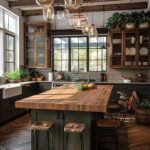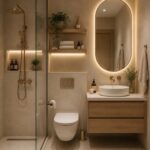
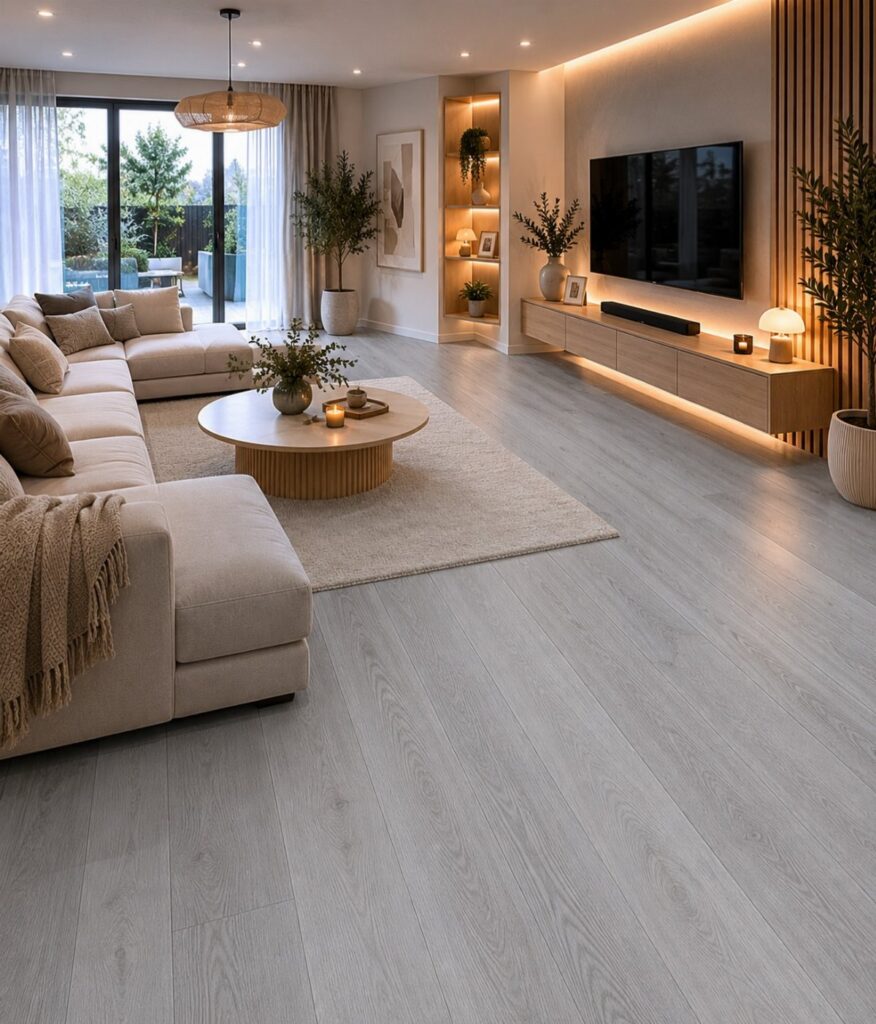
The floors below run from pale blonde white oak through honey brown and natural oak to near-black espresso, with the mid-tones where most budgets and most houses land.
The right pick depends on how much sun hits the boards, how busy the grain you want, and how much of the house the color has to carry.
That same pale ash can feel airy and open in a sun-filled San Diego living room and turn flat and cold in a north-facing den with only gray sky coming through the windows.
1. Smoky Gray Wood Floor Color
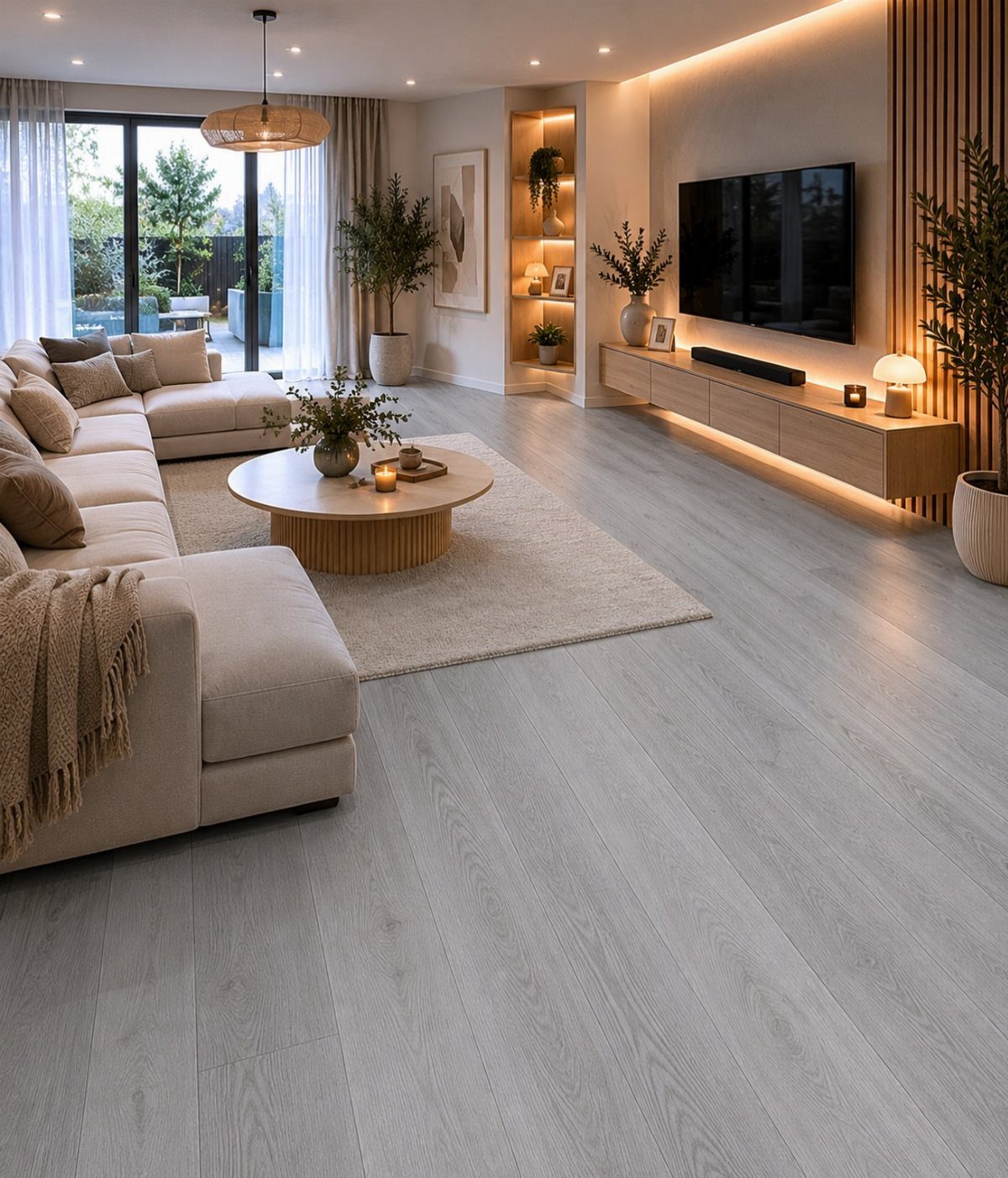
Smoky gray and greige floors sit right where warm meets neutral, which is why they have held on longer than most gray trends.
The undertone matters more than the top color: too cool and the room feels like a showroom, too warm and you have crossed into taupe. Wexford’s Harbor Mist or a Marble-finish white oak both keep that balance.
I would check samples in morning light, at midday, and after sunset. Morning light pulls out the blue; lamplight at night brings the brown forward.
If your walls are already gray, go half a shade warmer on the floor to avoid matching too close.
Best for: open plans where you want one floor to bridge kitchen, living, and hallway without dominating any of them.

[Widely applicable] This products is specially customized by us,high-quality vinyl floor roll have realistic wood grain textures and semi matte surfaces, providing slip resistance and barefoot comfort. By enhancing moisture resistance with a thick aluminum layer, its durable structure is more resistant to wear and moisture than ordinary vinyl stickers, ensuring long-term use without frequent replacement. If you need to purchase better quality products, I believe this vinyl flooring will not disappoint you.Suitable for flooring in bedrooms, living rooms, kitchens, lounges,offices, school classrooms.Of course, you can also DIY it for wall, cabinet, and countertop decoration.

REALISTIC WOOD LOOK: Featuring luxury wood-grain texture, micro-bevel edges, and HD film prints, these luxury vinyl planks perfectly replicate real hardwood floors with a fraction of cost of wood flooring.

Buy 3 items and get a wallpaper installation kit included.
2. Medium Brown Honey Wood Floor Color
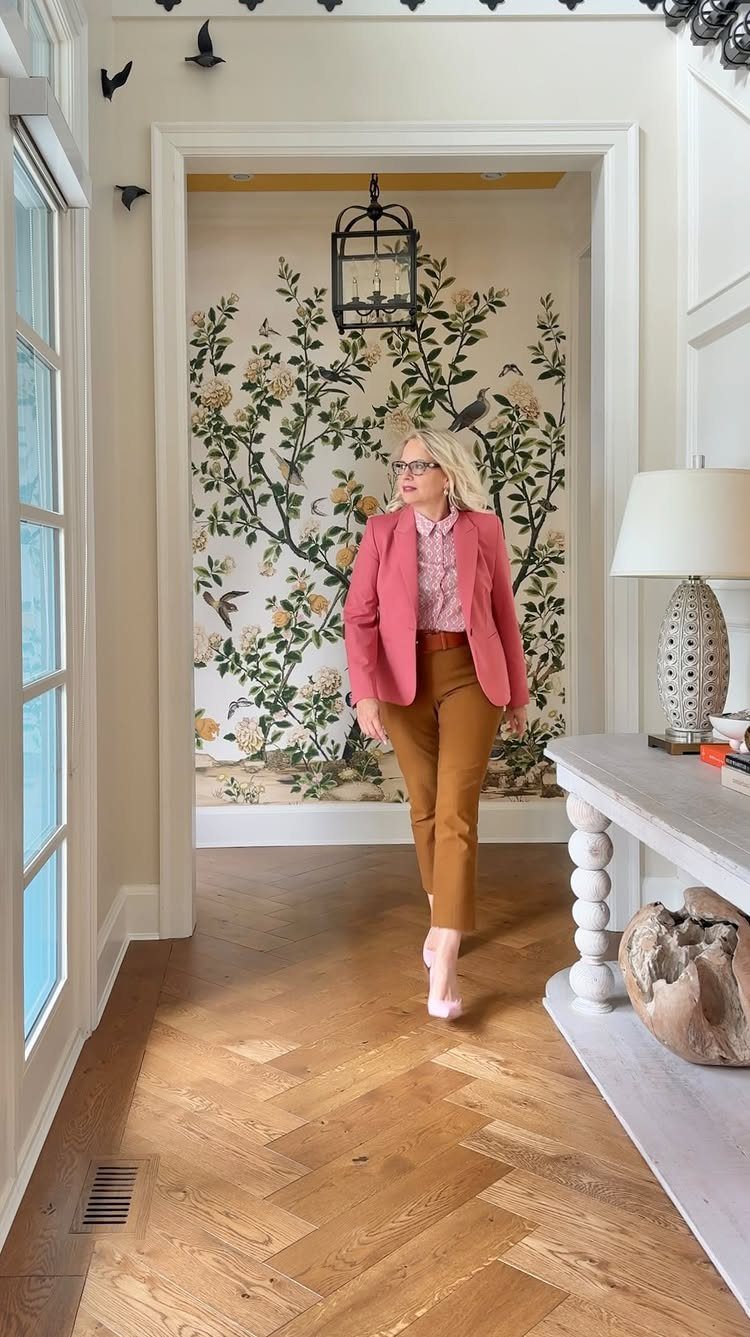
Honey brown herringbone carries more movement than a straight plank, and that pattern is what lets this tone work in both a cottage bedroom and a dressed-up entry.
The medium value hides daily grit better than pale ash, yet it still reflects enough light to keep a long hall from feeling like a tunnel.
Paladin Plus Fresh Pine or Pembridge engineered hardwood both hit this middle register.
What separates the timeless ones from the dated is the balance of red and yellow in the undertone; too much red turns orange within five years, too much yellow goes muddy.
A matte or low-gloss finish softens herringbone geometry enough to live with.
Family homes get the most from this shade. Pet hair, dropped cereal, and the scuff of backpacks all fade against a tone that already holds some variation.

Texture & Durability: Want to refresh your space fast but tired of peel and stick floor tiles that look fake or peel up after days? This one delivers realistic texture and...
3. Light Colored Wood Floors
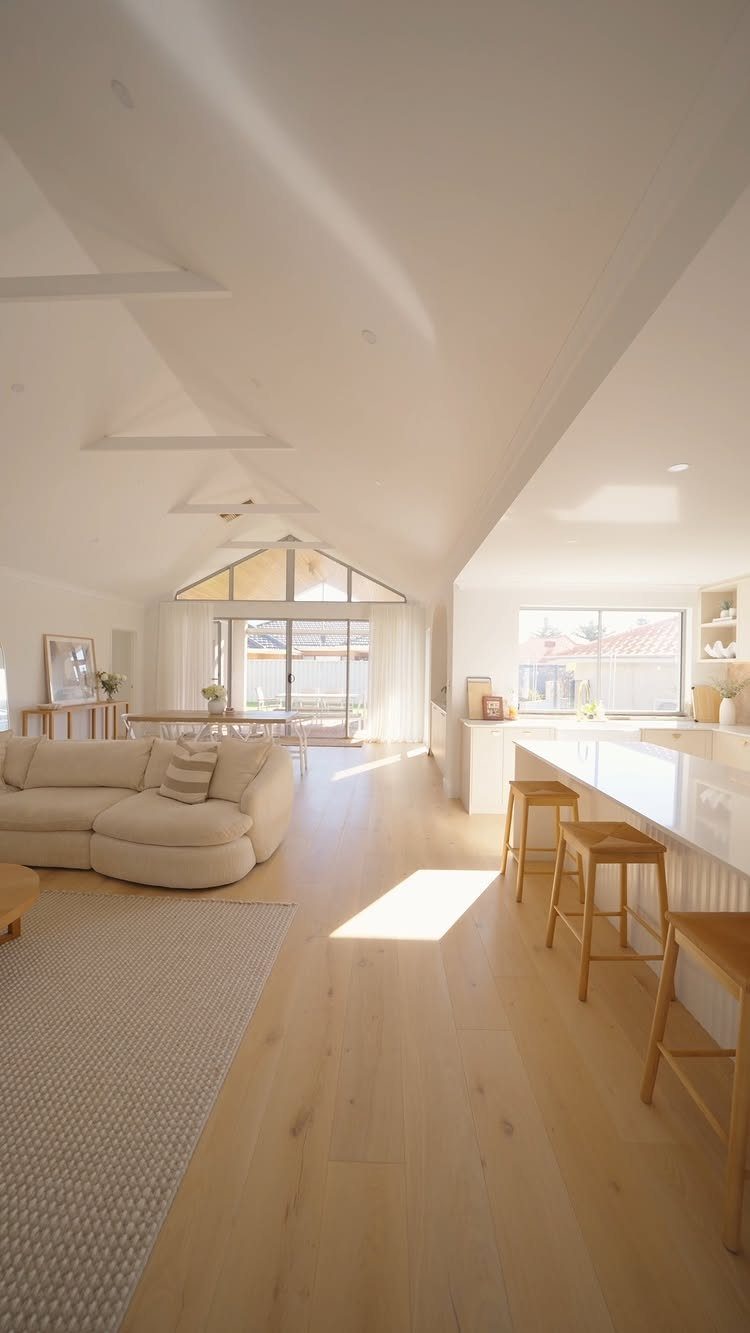
The light floor that looks effortless in a vaulted San Diego living room can read sterile in a north-facing Cleveland den.
Success depends on two checks: how many hours of direct sun the room receives, and whether you are willing to sweep often enough that dust does not register as gray smudges across pale planks.
Ash, maple, and birch each handle light differently. Ash carries more grain activity, which helps hide wear.
Maple goes almost uniform, beautiful until the first heel mark. Birch sits between.
If your space is small and your furniture is minimal, the visual expansion is real; if the room is already large, the effect is less worth the upkeep.
Painted baseboards in a crisp white extend the floor’s brightness upward. That detail matters more than the wood species itself.

HANDCRAFTED FROM GENUINE SOLID WOOD — Unlike veneered or MDF alternatives that chip and peel within months, each lamp is crafted from natural solid wood with visible grain texture unique to every piece, we hand-select knot-free, blemish-free solid wood so what arrives at your door is a genuine piece of natural art, not a mass-produced lookalike. The weighted base (no hollow construction) provides rock-steady stability on hardwood floors, carpet, or tile — no wobble, no tipping risk even in high-traffic areas

Handcrafted Solid Wood Construction: Each lamp is meticulously handcrafted from premium solid wood, showcasing natural grain patterns and ensuring a durable, high-quality finish that adds warmth and elegance to any room

【Why You Trust ELYONA's Ash Wood?】Crafted from 100% FSC-certified solid ash wood, each lamp pole is a unique individual with its own natural grain, preserving the "breath of nature." Our wood is sourced from internationally certified legal forests to ensure ecological stability. that brings organic texture and sustainable luxury to your home. Brushed brass metal with solid wood floor lamp also perfect for Mid-Century Modern, Retro, and Farmhouse styles effortlessly.
4. Natural Oak
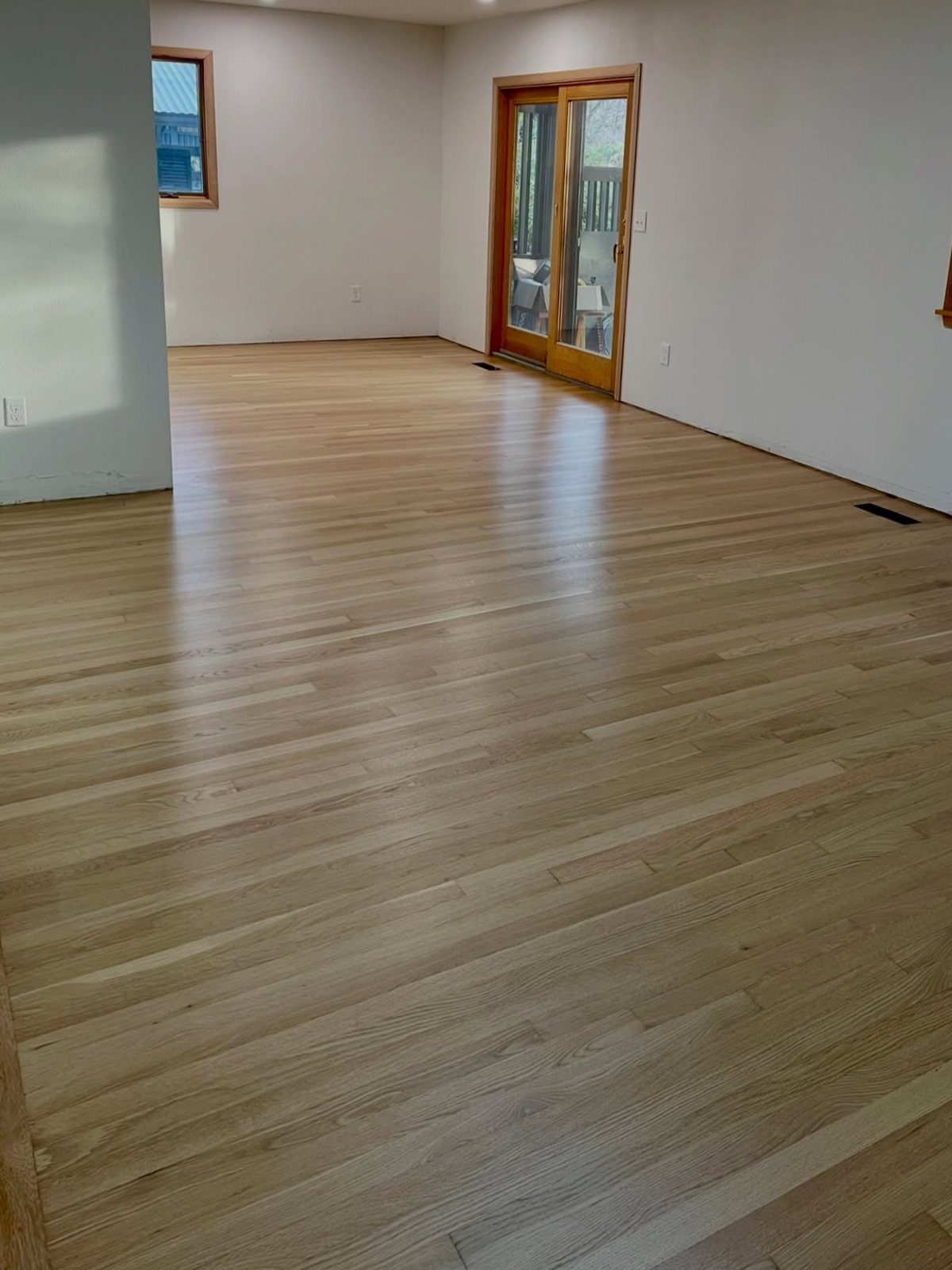
Natural oak is the baseline other floors are compared against, which makes it either the safest choice or the slightly boring one depending on your appetite for risk.
The warm gold visible in an unfinished room like this one will mellow further under oil-based finish, or stay lighter with water-based.
The versatility is practical, not just aesthetic. Oak takes stain evenly if you change your mind later; maple and cherry fight you on that.
It also wears harder than walnut, though not as hard as hickory. For a house that might sell, or one where the next owner’s taste is unknown, that adaptability has value.
I would choose this for a room that already has strong architecture: built-ins, wide trim, a fireplace surround. The floor supports without competing.

[USA-SOURCED WHITE OAK WOOD] Crafted from rough-sawn lumber, each frame is uniquely hand-milled and then highlighted and protected with clear vanish, a non-toxic, natural, and durable furniture-quality finish, showcasing the wood's stunning natural hues. Expect variations in wood grain and pattern, making each piece one-of-a-kind.

Great for Projects White Oak lumber is perfect for a wide range of uses

5. Walnut Hardwood
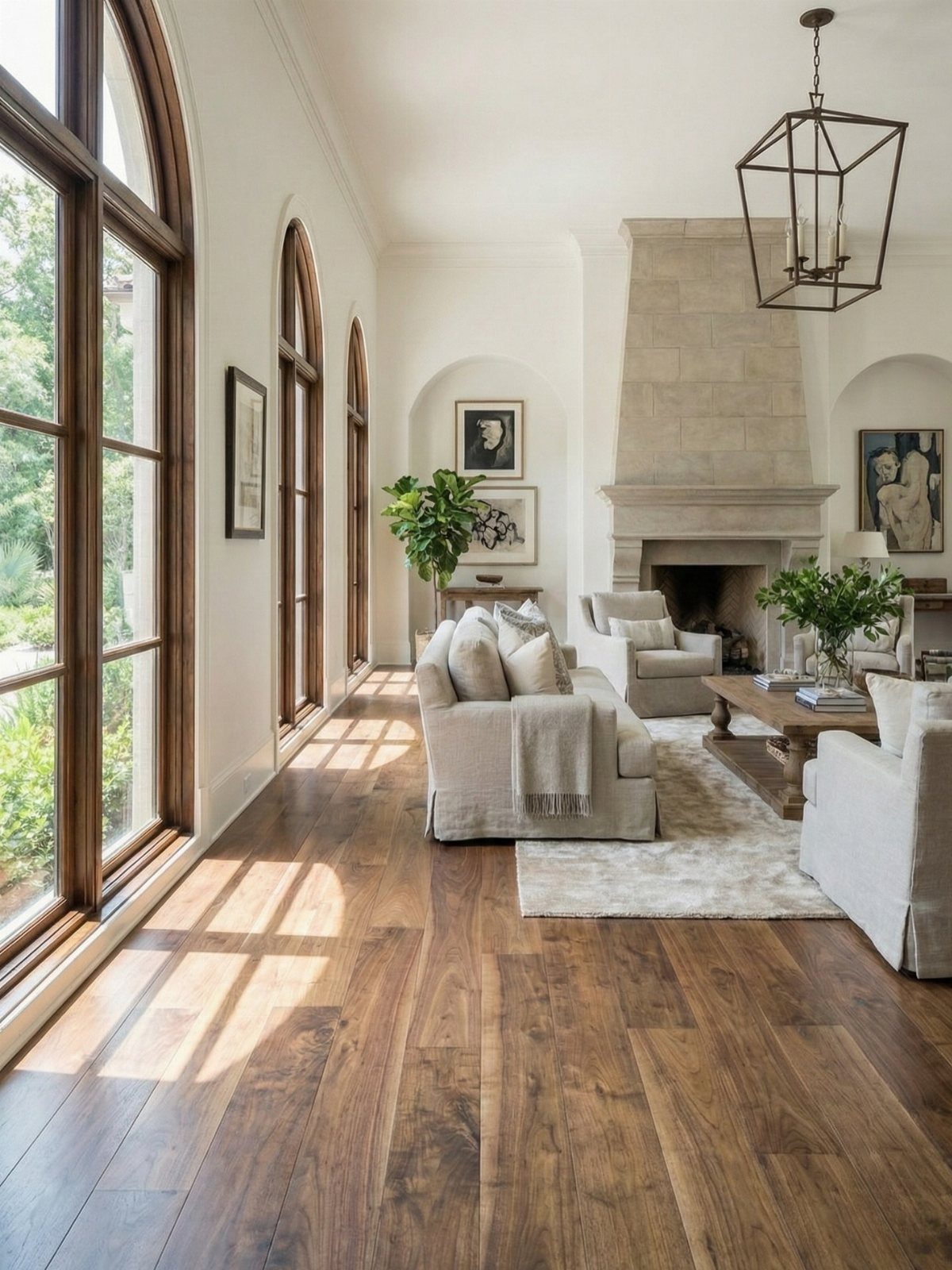
Walnut’s real asset is not the color on day one but the patina it builds.
That deep brown with gold hints grows richer where the sun hits and darker where rugs sit; within a couple of years the floor has a history that manufactured distressing cannot replicate.
Ventasso, modeled on the Italian horse breed, carries the same depth in engineered form. The cost runs higher than oak, and the softness means entry halls with grit-covered boots will dent it.
The floor itself becomes the statement in a living room or dining room.
Jewel-toned upholstery and brass hardware read expensive against this ground. Light walls are not optional; walnut against cream soars, walnut against beige caves in.

Provides richer, more natural color to interior wood furniture, cabinets, doors, trim, floors and paneling

Sleek & Modern Black Finish:Featuring a deep matte black surface with subtle wood-like texture, this flooring adds a contemporary, elegant touch to any space—perfect for modern, industrial, or minimalist home decor styles.

【Suitable Size】:Peel and stick floor tiles each pack measures 36"×6" (1.5sq. ft.) to ensure adequate coverage,with its affordable price and high quality experience, this wood pinstripe floor tiles will be a good choice for your room decoration
6. Espresso Dark Wood Floors
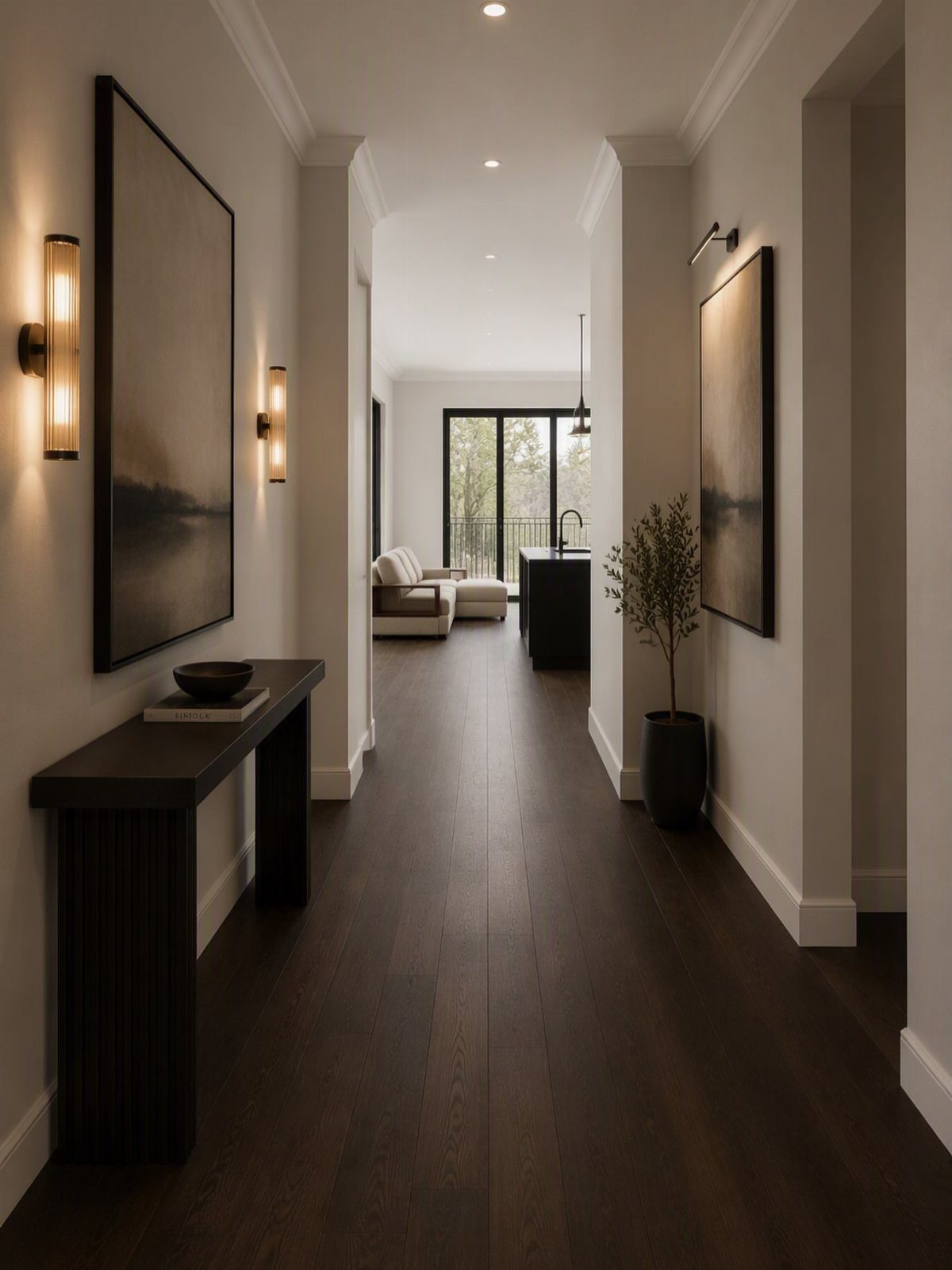
Dark espresso floors do the visual work of a shadow: they push walls outward and make ceiling height feel gained. A black console and dark plank draw the eye toward the bright room beyond.
The risk is maintenance theater. Every dust mote and water spot stages itself against that ground, which is why I would not lay this in a kitchen or a home with young children.
Shaw’s Muse and Bayfront engineered options, or Hartco’s Blackened Brown solid oak, all hit this depth with varying degrees of grain visibility.
Pair with light grout in any adjacent tile, pale wall color, and furniture that sits on legs rather than skirts. The floor needs that breathing room; crowd it and the room turns cave-like.
For formal spaces where the message is restraint and luxury, this tone still delivers after two decades of trend cycles.

LARGE ROLL COVERAGE – Each self adhesive vinyl flooring roll measures 23.6 in x 196.9 in / 60 cm x 5 m and covers approximately 32.3 sq. ft. The continuous roll format provides broad coverage for everyday indoor floor updates.

Stylish - Authentic wood looking and grain texture, adding timeless feature for your home

Large 107.6 Sq Ft Coverage: 3.28 ft x 32.8 ft outdoor flooring roll covers more space per roll and includes installation tape for a budget-friendly patio, balcony, porch, or deck refresh
7. White Oak
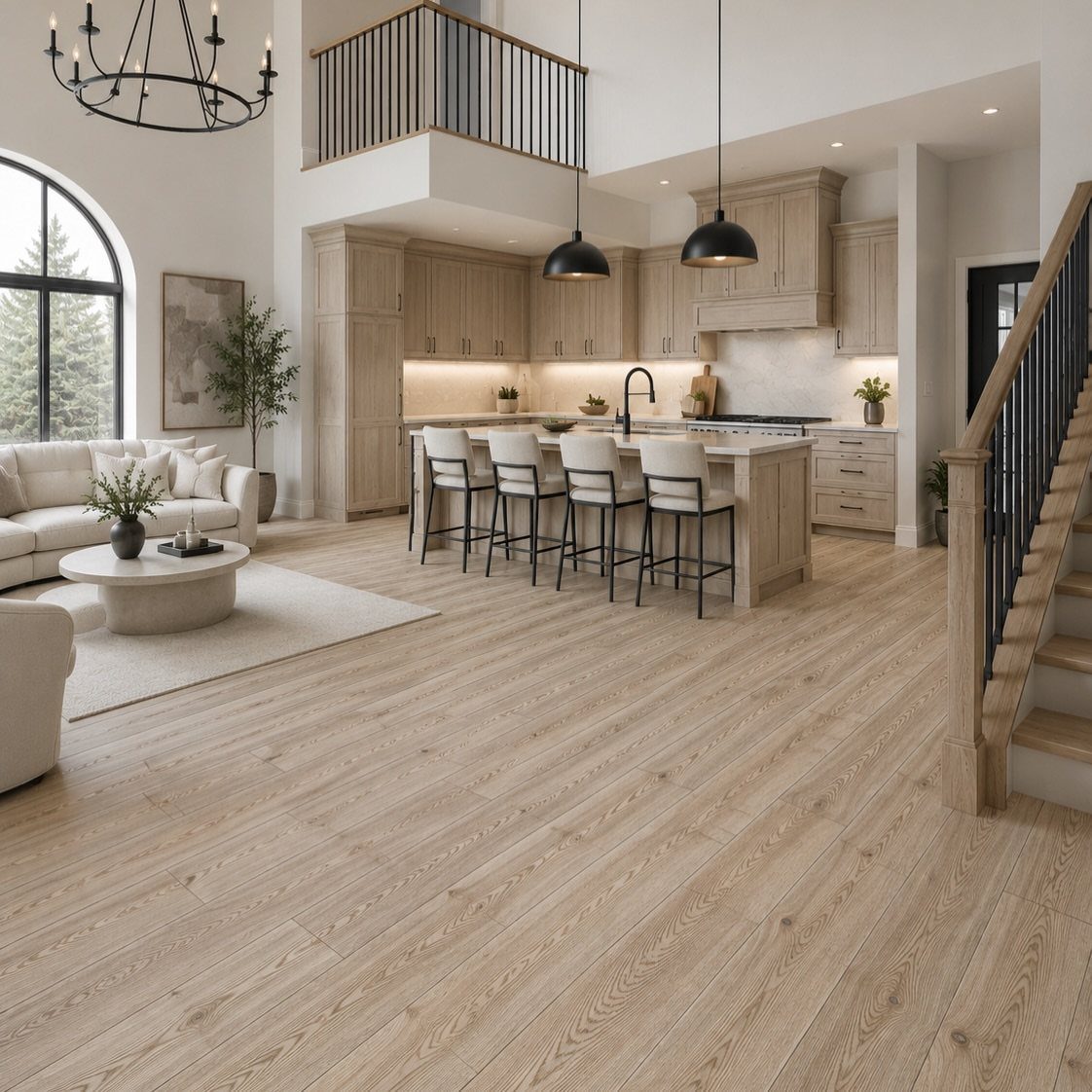
White oak sits right where warm and cool meet, a pale blonde with grain so faint it reads almost as texture rather than pattern.
That neutrality is what saves it from looking dated; it does not lean farmhouse or coastal or Scandinavian hard enough to trap you in one mood.
Wide planks help the tone feel intentional rather than tentative, and engineered options now come in sizes that used to belong only to solid wood.
Solid 3/4-inch stock is available too if you prefer nail-down installation and the option to refinish later.
I would put this in a home where the walls and furniture change often. It handles color shifts without fighting them, though very traditional spaces can feel slightly underdressed against it.
If your trim is already a stark pure white, test a sample beside it; the floor’s softer cast can turn the trim yellow by comparison, and that is a cheap fix to catch early.
Choosing the Right Color
Start with the room’s natural light. Morning sun reads cooler, afternoon sun warmer, and a north-facing space will flatten whatever tone you choose.
Hold samples against the wall at 9 a.m., noon, and 6 p.m. before deciding.
Existing decor matters next. Furniture with warm undertones needs a floor that shares some of that language, not one that fights it.
Your daily life is the last filter. A household with pets, kids, or a side door that drags in grit needs a mid-tone floor that hides the mess between cleanings.
Someone who sweeps daily and wants a gallery feel can risk pale ash or espresso. The right color is the one you will live with, not the one that photographs best.

🏠 Wood flooring tiles: Thickness is 0.06inch (1.5mm). Size 12x12 inch included 4 Tiles, made of vinyl. Light wood peel and stick floor tile, waterproof, removable, groutable, non slip, no special tools needed.


PORTABLE AND ADJUSTABLE - Our barre has double 4-foot bars, 1.5” in diameter, which are fully height adjustable from 6” to 46” to create the perfect personalized workout or dance experience. In case you order a wall-mounted barre, it will have solid wall-mounting arms equipment. This barre is perfect for your home and light commercial use.
Timelessness of Wood Species
Oak, maple, and walnut have stayed popular because they each solve a different problem. Oak’s open grain takes stain evenly, so a floor you install today can shift color down the road without replacing boards.
Maple’s tight grain and pale tone suit spaces where you want quiet floors that do not compete with bold furniture.
Hickory deserves mention for households that beat floors hard. Its tone variation hides damage, and it ranks harder than oak on the Janka scale.
The rustic look is not for every room, but in a mountain house or a kitchen with heavy traffic, it outlasts prettier options.
I would pick oak for resale value, maple for modern spaces, and walnut only where the floor is meant to be the statement.


PREMIUM REAL WOOD VENEER: Crafted from extra clean "A" grade White Oak wood veneer strips, this high-quality veneer edging offers a beautiful, natural wood finish. Ideal for enhancing cabinetry, furniture, shelving, crafts, and more, these wood veneer strips provide durability and an authentic look that seamlessly blends with your projects.

[USA-SOURCED WHITE OAK WOOD] Crafted from rough-sawn lumber, each frame is uniquely hand-milled and then highlighted and protected with clear vanish, a non-toxic, natural, and durable furniture-quality finish, showcasing the wood's stunning natural hues. Expect variations in wood grain and pattern, making each piece one-of-a-kind.
Maintenance Considerations
Lighter woods forgive daily life. Dust, pet hair, and the hairline scratches from a chair sliding back all fade against pale ash or natural oak.
Dark espresso and walnut show every mote; they demand a cleaning rhythm you should honestly assess before buying.
Mid-tones split the difference. Honey brown and smoky gray hide grit better than blackened planks but still ground a room with some visual weight.
The matte or low-gloss finish matters as much as the color; high shine turns a minor scuff into a spotlight.
Water-based finish keeps light floors lighter over years. Oil-based amberizes, which can rescue a too-cool gray or push a warm tone into orange territory.
Test your top coat on a sample, not just the bare wood.

🏠Thick peel and stick floor tile: Thickness is 0.06inch (1.5mm). Size 12x12 inch included 4 Tiles, made of vinyl. Solid black wood peel and stick floor tile waterproof, renter friendly, groutable, non slip, no special tools needed.

【Authentic Wood Grain Appearance】These peel and stick vinyl planks feature lifelike natural wood texture, delivering the elegant look of hardwood flooring at a budget-friendly price. Matches modern, rustic, and minimalist interior styles to refresh your space instantly.

Instantly dries and coats over to hides scuffs, gouges and stains
Investment Value
Timeless flooring pays back at resale. Buyers walk into a medium brown oak or a balanced gray and see a base they can live with; they walk into a trendy tone and calculate replacement cost.
Classic choices attract more offers and firmer bids.
The real investment is avoiding a future overhaul. A floor that works through two furniture rearrangements and a wall-color change saves the cost of a full sand and refinish, or the still higher cost of tearing out and replacing.
Medium brown and gray tones specifically let you update decor without touching the planks.
If you plan to stay, the value is daily. A floor that still looks right years later means one less project on your list, and one less reminder that you guessed wrong on a trend.
Frequently Asked Questions
What color wood is the most timeless?
Natural to medium brown hardwood floors hold that title, with natural oak and warm honey browns leading the pack. These shades carry enough warmth to feel lived-in and enough neutrality to shift with your furniture and paint over the years.
Walnut builds a richer patina over time, but the medium browns ask the least of your decor choices.
What is the most popular hardwood floor color today?
Medium brown is the color showing up most often in new installs right now. White oak has also climbed for light-flooring jobs, and greige or gray-brown tones hang on for modern spaces.
The rarer choices, wine red or burnt orange, read as deliberate rather than safe.
What color wood floor goes with everything?
Natural oak and medium brown neutrals bridge the widest range of styles and wall colors.
White oak stays close to neutral with its pale blonde tone; it never drifts far enough toward farmhouse or coastal to lock you into one look. Even a neutral brown floor needs air around it.
Light walls and furniture with visible legs keep it open; pile on dark built-ins and heavy beige drapes and the same floor turns muddy.