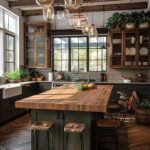
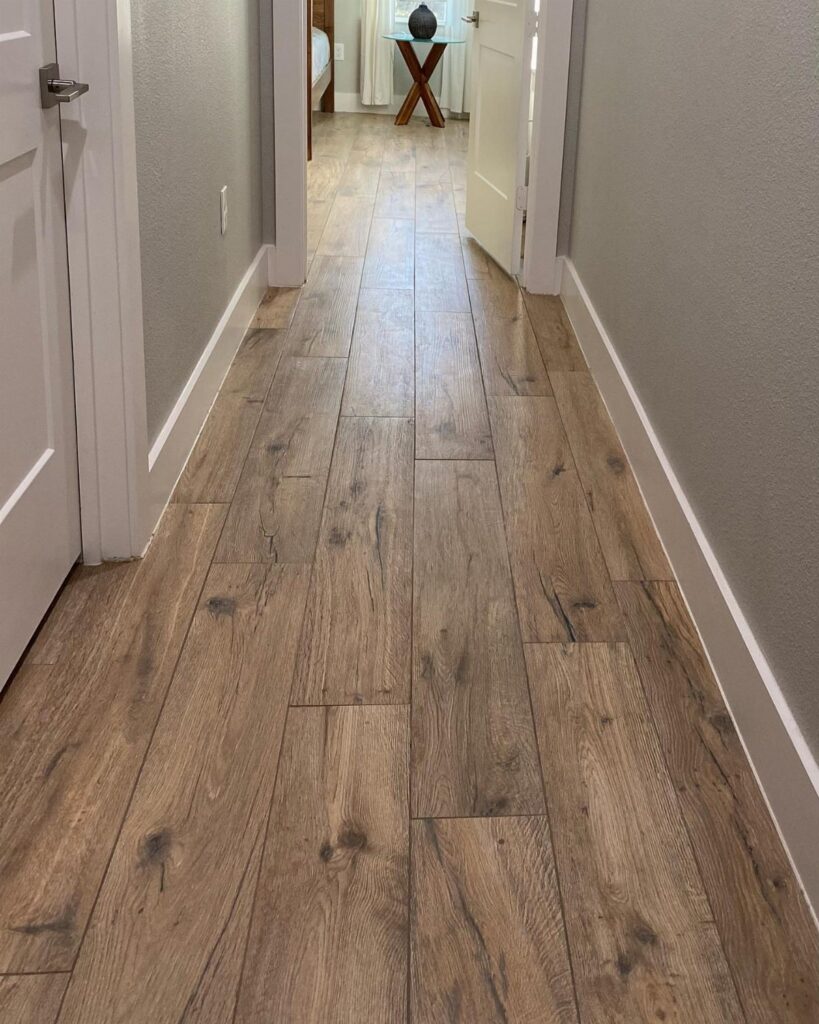
Modern farmhouse floors range from quick laminate weekends to pro-poured concrete that needs days to cure, and the deciding factor is how long you plan to live with your choice.
The 9-inch honey-toned vinyl plank I looked at clicks together in a weekend, while herringbone eats so much more in offcuts that I would not attempt it as a first project unless the room is small and square.
1. Wide Plank Wood Flooring
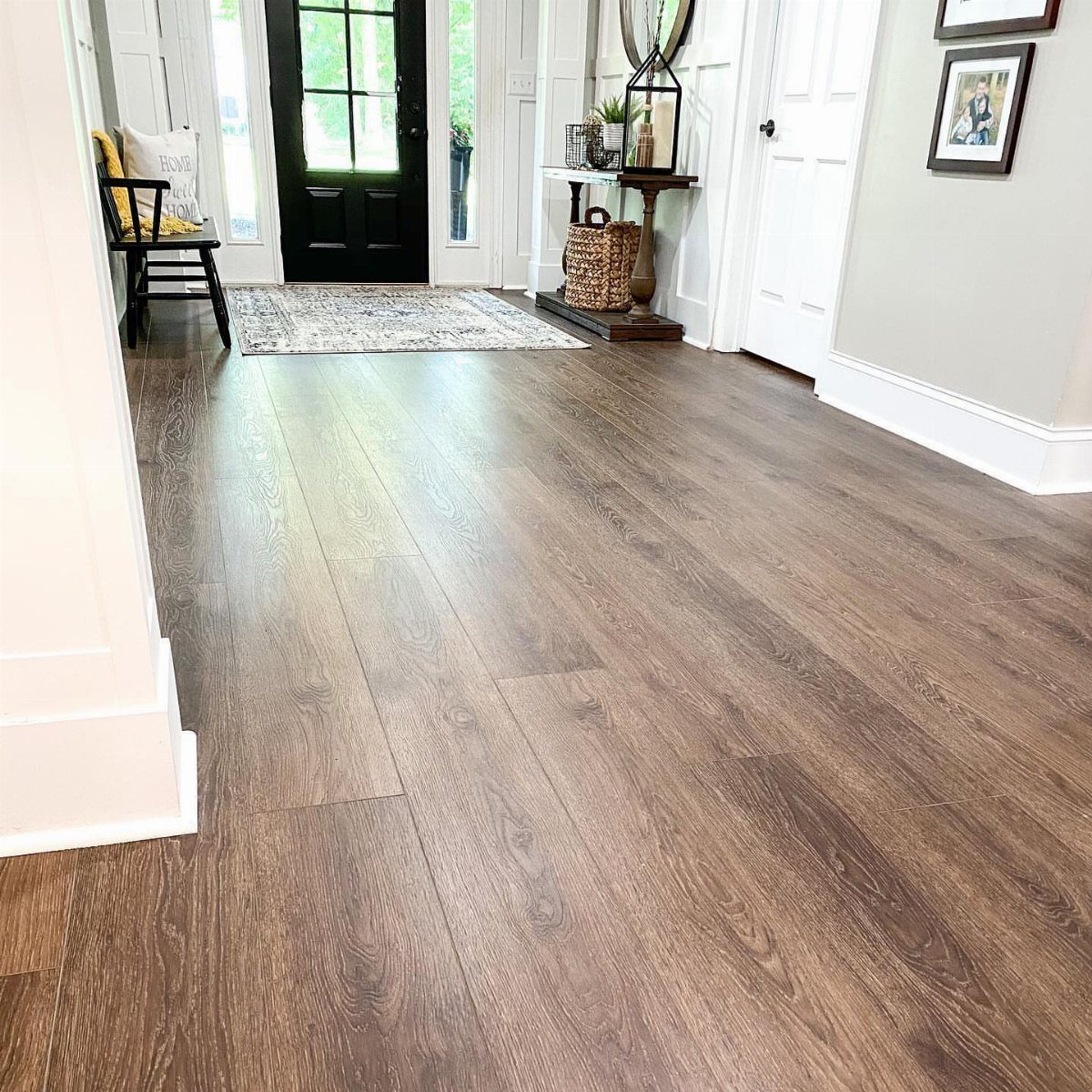
Wide plank boards stretch a narrow room by drawing the eye across instead of forward.
Fewer seams mean your eye travels farther without breaking, and the grain gets to play at a scale that reads as real wood rather than busy strip flooring.
I looked at the 9-inch honey-toned vinyl plank from Macland’s Wayne Parc line for a kitchen project last year. Waterproof rigid-core, warm enough to pair with copper hardware or cream cabinets, and it clicked together in a weekend.
Best for open plans where you want one floor to carry the whole main level, or small entries that need the visual stretch.
2. Farmhouse Laminate Flooring
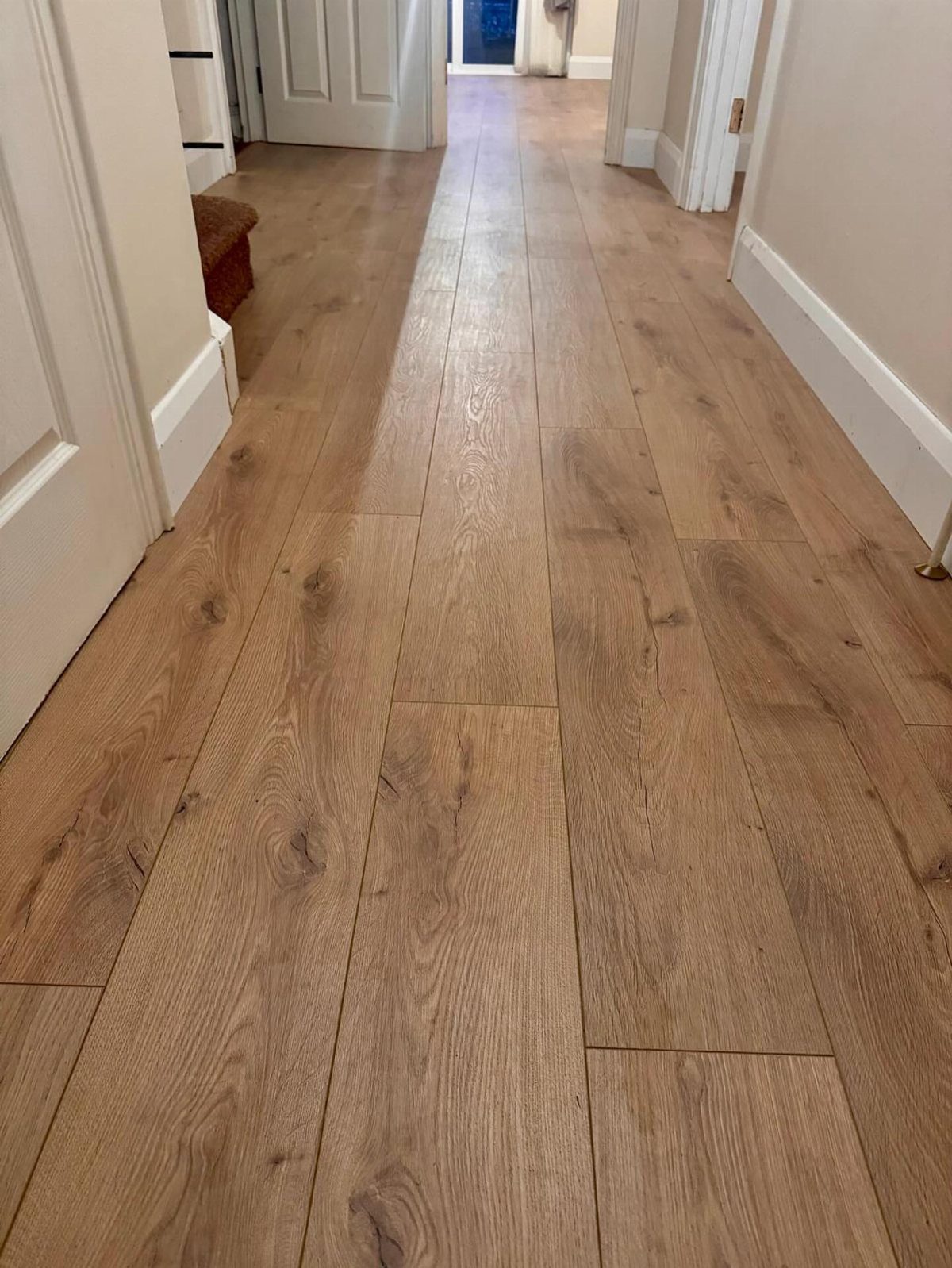
Laminate bought me years in a rental hallway that saw moving boxes, bike tires, and a dog with untrimmed nails.
The light wood grain with visible knots reads as pine or oak from normal standing distance, costs a third of the real thing.
Scratch resistance matters more than you’d think until you drag a chair. The planks float over existing subfloor, so a Saturday with a mallet and spacers finishes the job.
No sanding, no sealing, no waiting to walk on it.
I’d put this in a basement family room or any house with kids under ten. Laminate clicks and hollows unless you lay a quality underlayment, which adds to the material cost but saves your sanity.
3. Rustic Farmhouse Wood Flooring
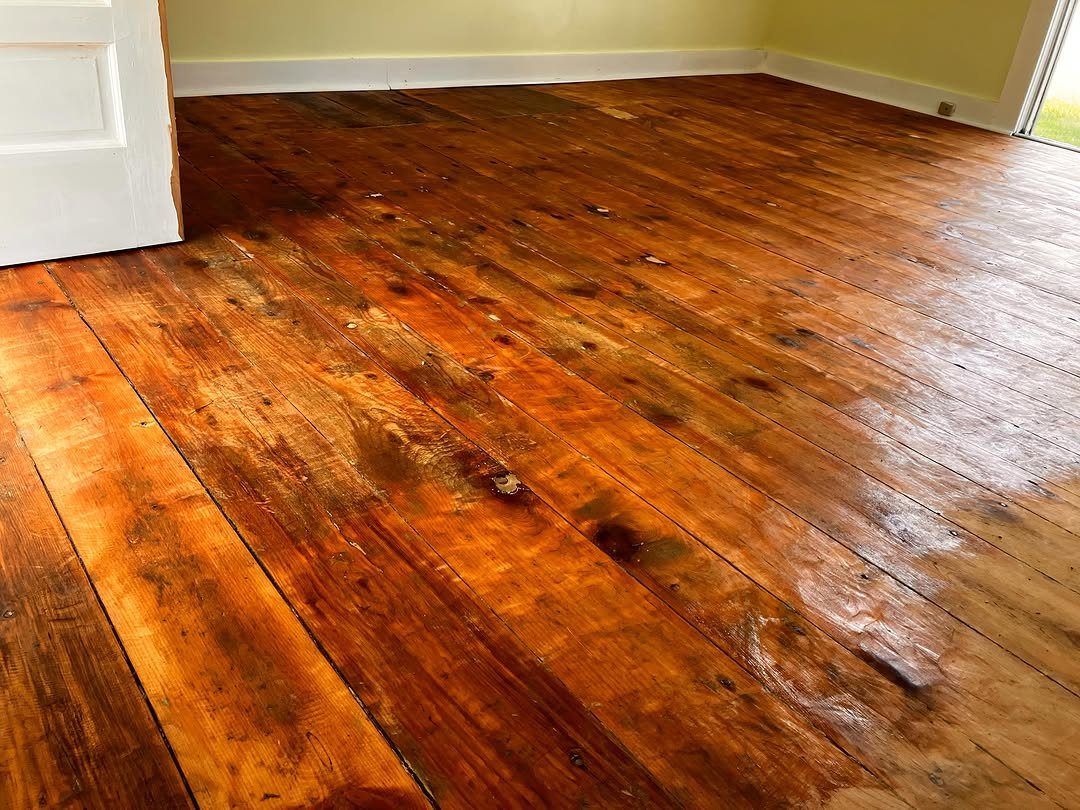
Distressed planks with open knots and uneven coloration hide the dent your toolbox left Tuesday and the water ring from the Christmas tree stand.
You can buy this look prefinished or beat up new boards yourself with chains, screws, and stain layered in patches.
I tried the DIY route once on a small bedroom; it took the better part of a week and my shoulders ached, but no two boards matched, which was the goal.
Amber or reddish tones like these warm up pale walls and white trim without competing. Open grain traps grit, so a vacuum with a soft brush head matters more than a mop.
4. Modern Farmhouse Kitchen Tile Flooring
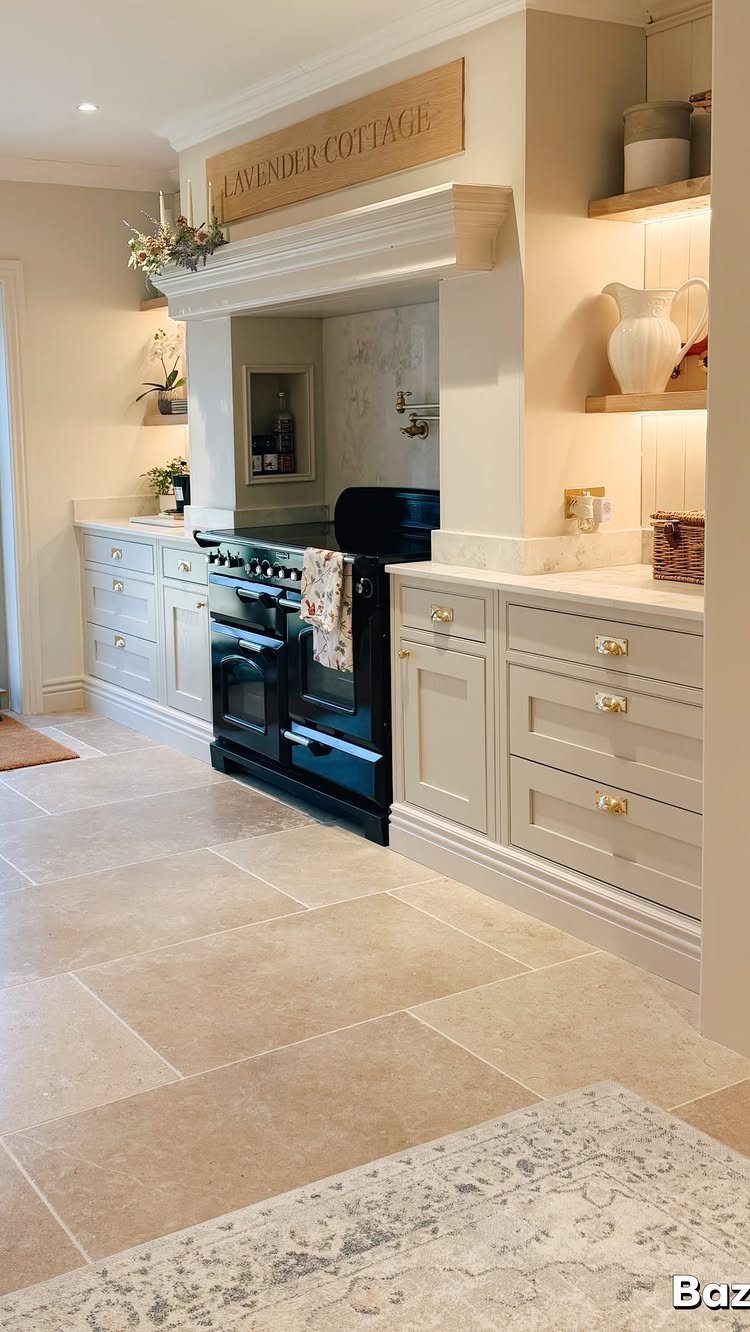
Stone-look tile in a kitchen handles what wood cannot: the overflow from the dog’s bowl, the dropped cast-iron skillet, the steam from a simmering pot that warps laminate over time.
Large-format beige tiles keep the grout lines sparse, which reads cleaner than the checkerboard floors I grew up with.
Porcelain runs higher for material alone; luxury vinyl tile in a similar pattern costs less and spares your knees during install. Both suit painted cabinets and open shelving.
I’d pick porcelain if I planned to stay ten years, vinyl if I’m refreshing to sell or rent. Either way, matte finish hides the film that shiny tile collects by Wednesday.
5. Light Wood Herringbone Flooring
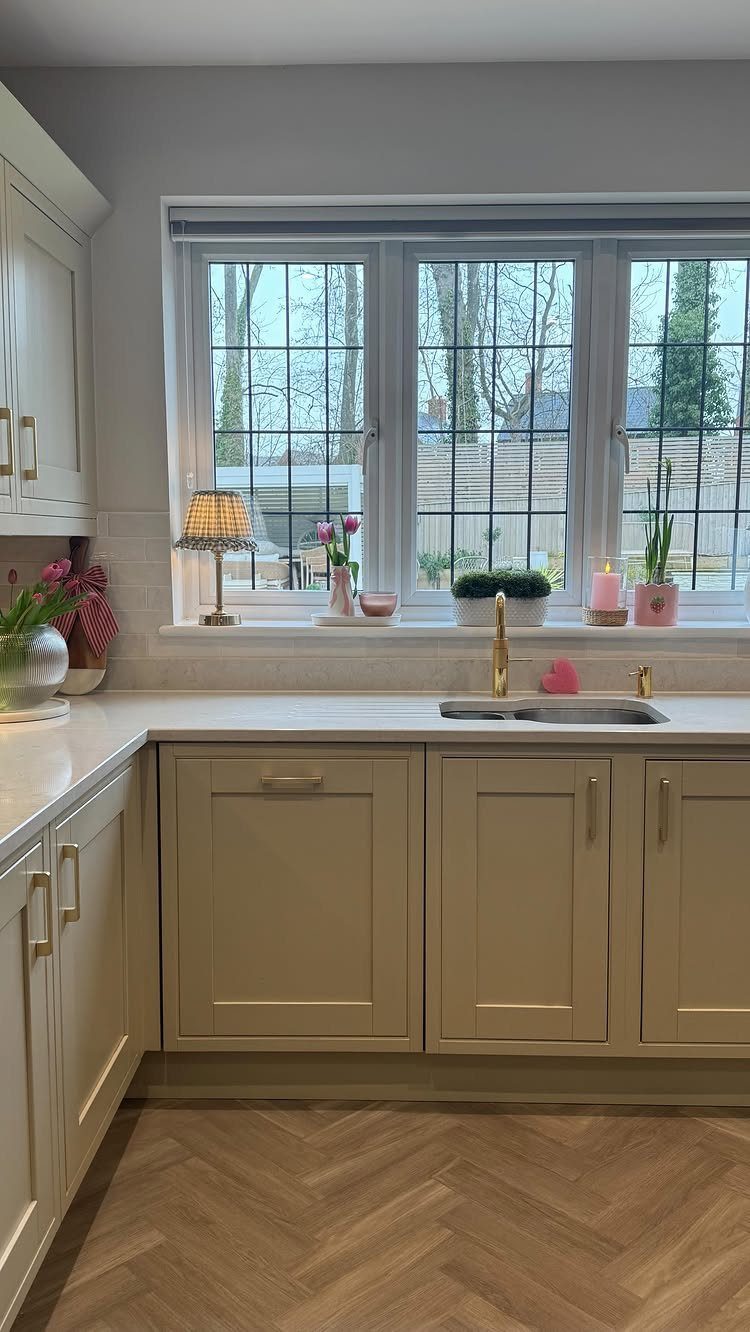
Herringbone at this scale, light wood in a bright kitchen, reads as intentional without shouting. The pattern adds movement to a long galley or a boxy new build where everything else runs straight.
Herringbone costs you more in offcuts than a standard plank layout. Standard plank layout leaves you with usable offcuts; herringbone eats far more, and the cuts must be precise or the zigzag wobbles.
I would not attempt this as a first flooring project unless the room is small and square, like a powder room or laundry.
Lighter tones like the photo’s pair with beige or white cabinetry without darkening a room that already has generous windows. If your kitchen faces north or lacks natural light, this is the direction I’d lean.
6. Dark Wood Flooring
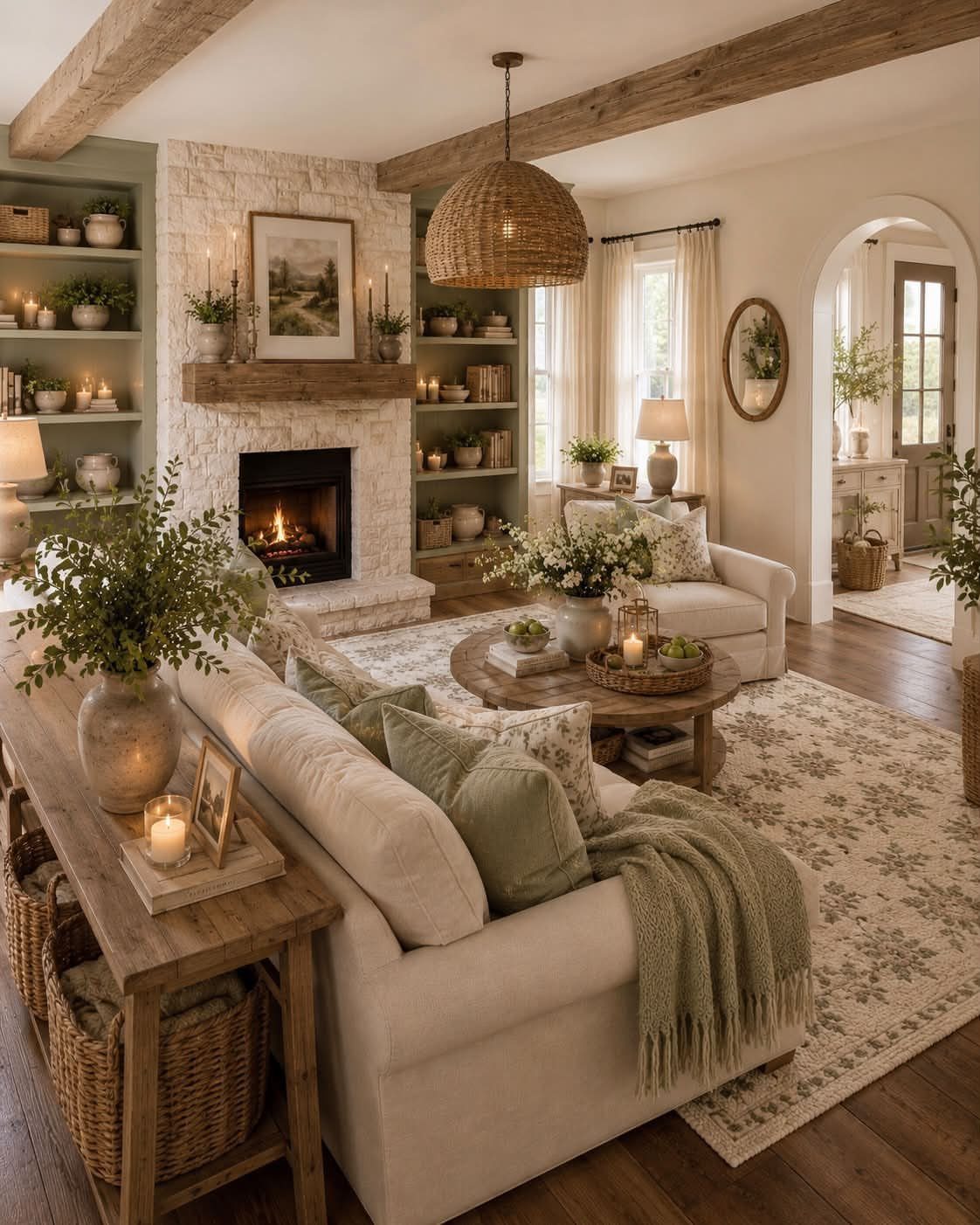
Dark floors against white stone and exposed beams give a room the weight that modern farmhouse sometimes misses. The risk is dust, pet hair, and every crumb showing by noon.
Espresso oak reads dramatic in photos but shows every dust particle and water spot the day after you mop. Beautiful at 7 AM, exhausting by dinner.
The photo softens the effect with a patterned rug that breaks the expanse and a cream sofa that lifts the eye. Without those interruptions, the floor becomes a mirror for lint.
Wide planks in a dark stain suit rooms with strong architectural bones: beams, tall windows, a real fireplace. In a flat-ceilinged suburban box, I’d go medium tone instead.
The stain level matters too; a hand-rubbed oil finish scuffs gracefully, while polyurethane sits on top and scratches white.
7. Polished Concrete Flooring
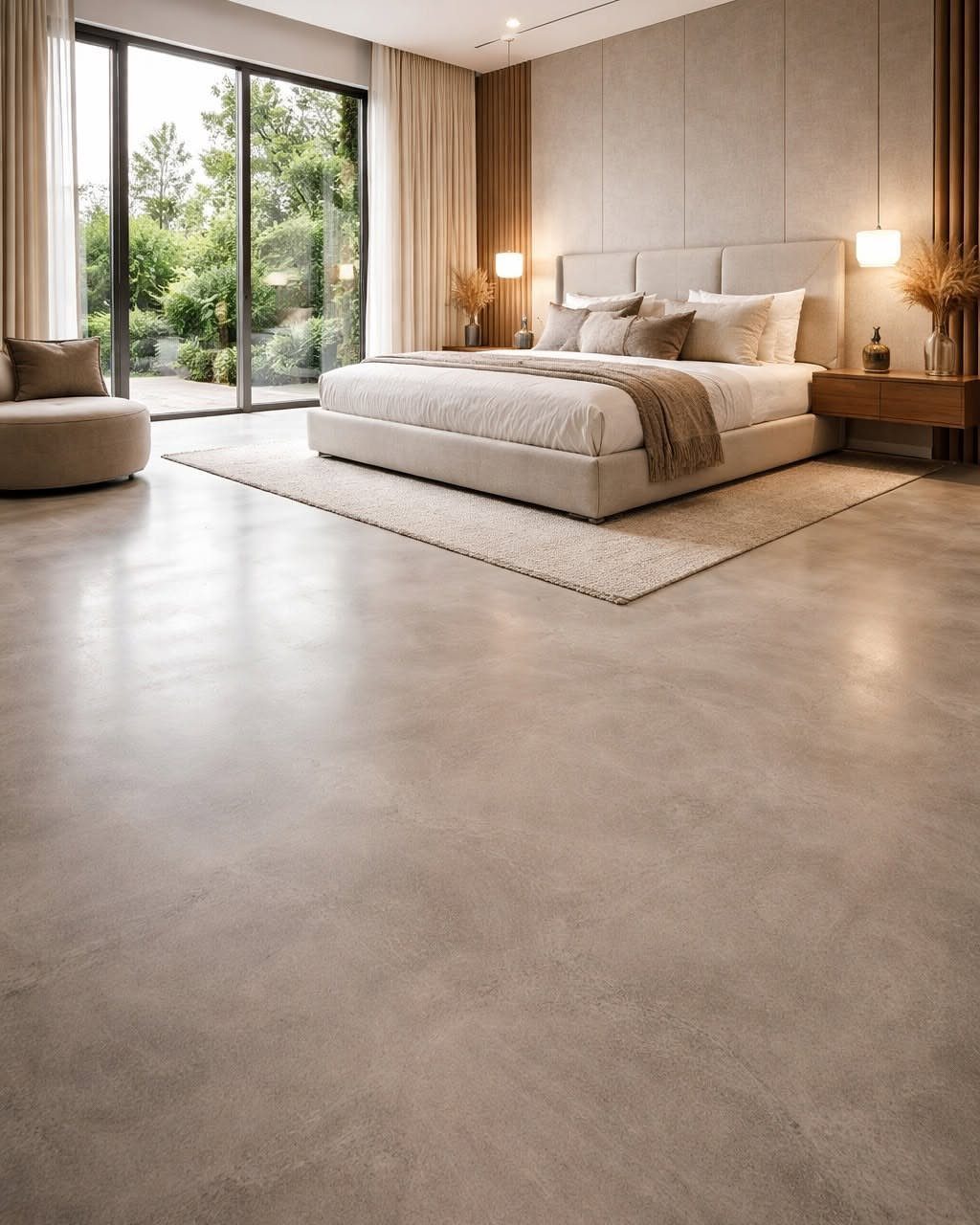
Polished concrete reads cold on paper, but the grey here sits warm against wood slats and linen. The finish works when you want farmhouse texture without the upkeep of wood or the pattern busy-ness of tile.
A pro pour and grind runs higher than laminate, though DIY overlay kits from hardware stores have brought the look down if the slab is already there.
The real cost is patience: proper sealing takes time before you can walk on it, and resealing every few years is non-negotiable in a kitchen.
I would keep this one for open, sunlit rooms where the floor can stay simple. Bedrooms suit it better than kitchens for most hands-on renovators; dropped dishes and concrete do not forgive each other.
Choosing the Right Flooring
Durability, maintenance, and installation speed matter more for farmhouse flooring than the exact species or brand.
A kitchen floor that warps from steam or stains from one spilled glass of red wine undoes the look faster than any style choice builds it.
I would check waterproof construction on anything going near a sink, an entry, or a dog bowl.
Rigid-core vinyl and porcelain tile handle that; standard laminate and solid hardwood do not unless sealed to the edges, which most weekend installs skip.
Matte finish hides what glossy shows: dust, the film from mopping, the scuff where a chair dragged. Low sheen reads as authentic in this style, and it forgives the cleaning schedule of a house that actually gets lived in.
Plank width changes the feel of a room before furniture arrives. Wide planks open a space; narrower strips read as older or busier, which is not the direction I’d take for a modern farmhouse.
Maintaining Farmhouse Floors
Regular sweeping or vacuuming prevents the grit that scratches any finish, farmhouse or not. I use a soft brush head on open-grain wood; beater bars drive debris deeper into distressed planks where it dulls the stain.
Spills need prompt attention on porous surfaces. A rag kept in the kitchen drawer matters more than the cleaner you pick.
Matte finishes hide dust and scuffs better than high-gloss, which is why they suit this style. The low sheen means less frequent mopping to keep the floor looking level, and less mopping means less water exposure at seams.
Skip it and the surface absorbs oil, wine, anything dropped. Mark the calendar when you finish the install; the reminder matters more than the brand of sealer.
Trends in Farmhouse Design
Farmhouse style shifted around the 2010s from barn-replica rustic to something cleaner.
The early phase favored reclaimed everything and distressed surfaces that looked borrowed from actual agricultural buildings; the current version keeps the warmth but adds contemporary lines and open layouts.
Visible grain matters, but distressing should look like character, not damage.
Waterproof construction became standard rather than premium as the style matured. Real families with kids and pets drove that; a floor you cannot walk on without anxiety does not work in a house meant for living.
I would avoid narrow strip flooring or anything that competes with open shelving and painted cabinets for visual busyness. The modern farmhouse floor should sit quietly underfoot, wide and warm, while the architecture and furniture supply the interest.
Frequently Asked Questions
What is the best flooring for a modern farmhouse?
Wide plank wood flooring is the clearest fit, especially in warm honey or natural oak tones with visible grain and a matte finish.
Waterproof rigid-core vinyl or quality laminate handle kitchens and hallways where real wood would suffer, and they install in a weekend without sanding or sealing.
The best choice depends on which room you’re tackling and whether you need the floor to survive kids, pets, or a rental lease.
Is modern farmhouse still in style in 2026?
Yes, though the look has shifted since the early 2010s.
The phase of making every surface resemble a barn has given way to cleaner lines and warmer, more natural materials; wider planks in honey tones rather than gray or artificially bleached strips.
The style now balances the cozy atmosphere people want with finishes that perform for real families.
What trend is replacing modern farmhouses?
Nothing has fully replaced it. The style has matured into what some designers call farmhouse contemporary, keeping the open layouts and welcoming character but dropping the overt rustic kitsch.
Board-and-batten siding, clean gable lines, and multi-lite windows still dominate new builds because the underlying appeal, spacious gathering space with private retreats, has not gone away.
What are some classic floor plans for a farmhouse?
Older farmhouses keep their rooms separate: you walk through a door to get from the kitchen to the living room, and another to reach the dining space.
The kitchen and living area in a modern farmhouse usually sit open to each other, with a big island you can actually work at and a mudroom that has cabinets or hooks already built in.
A porch that wraps the front and a primary bedroom with a decent bathroom tend to show up whether the house is a century old or built last year.