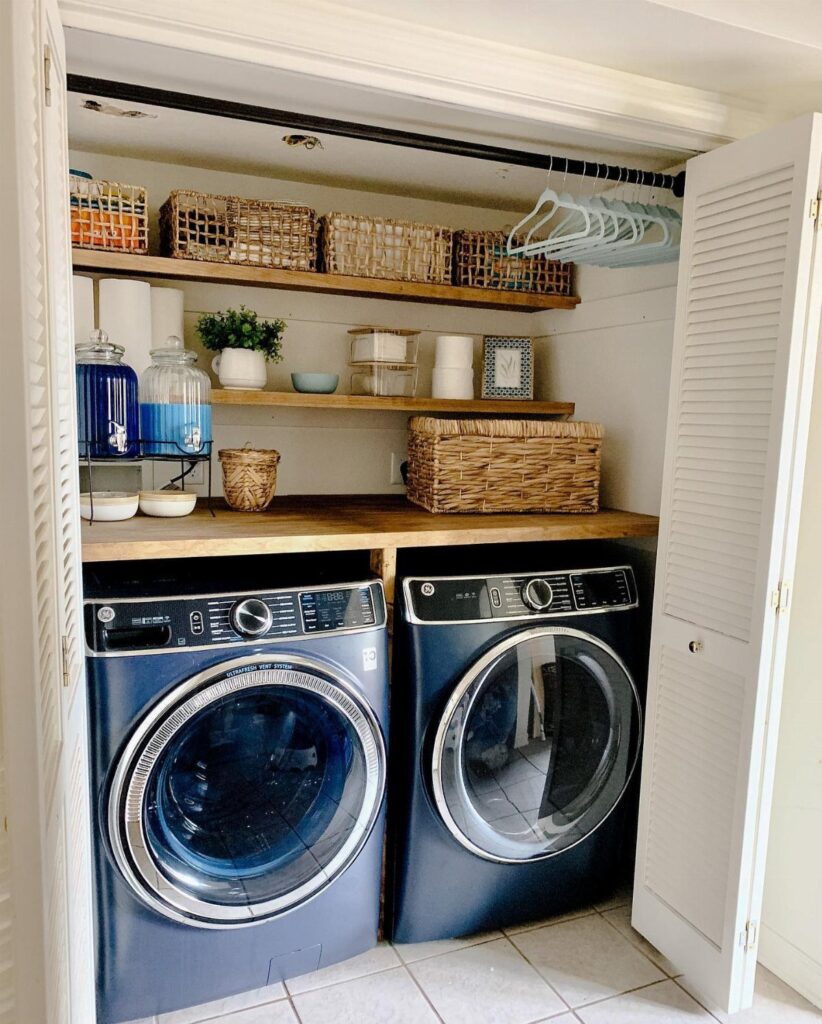
These small laundry closet ideas run from a quick basket swap to full built-in cabinetry that takes a weekend and a second pair of hands.
What decides which one is yours is whether you own the walls or answer to a landlord. Peel-and-stick wallpaper covers one accent wall in two rolls, put up by a first-timer in an afternoon.
1. Baskets on Shelves
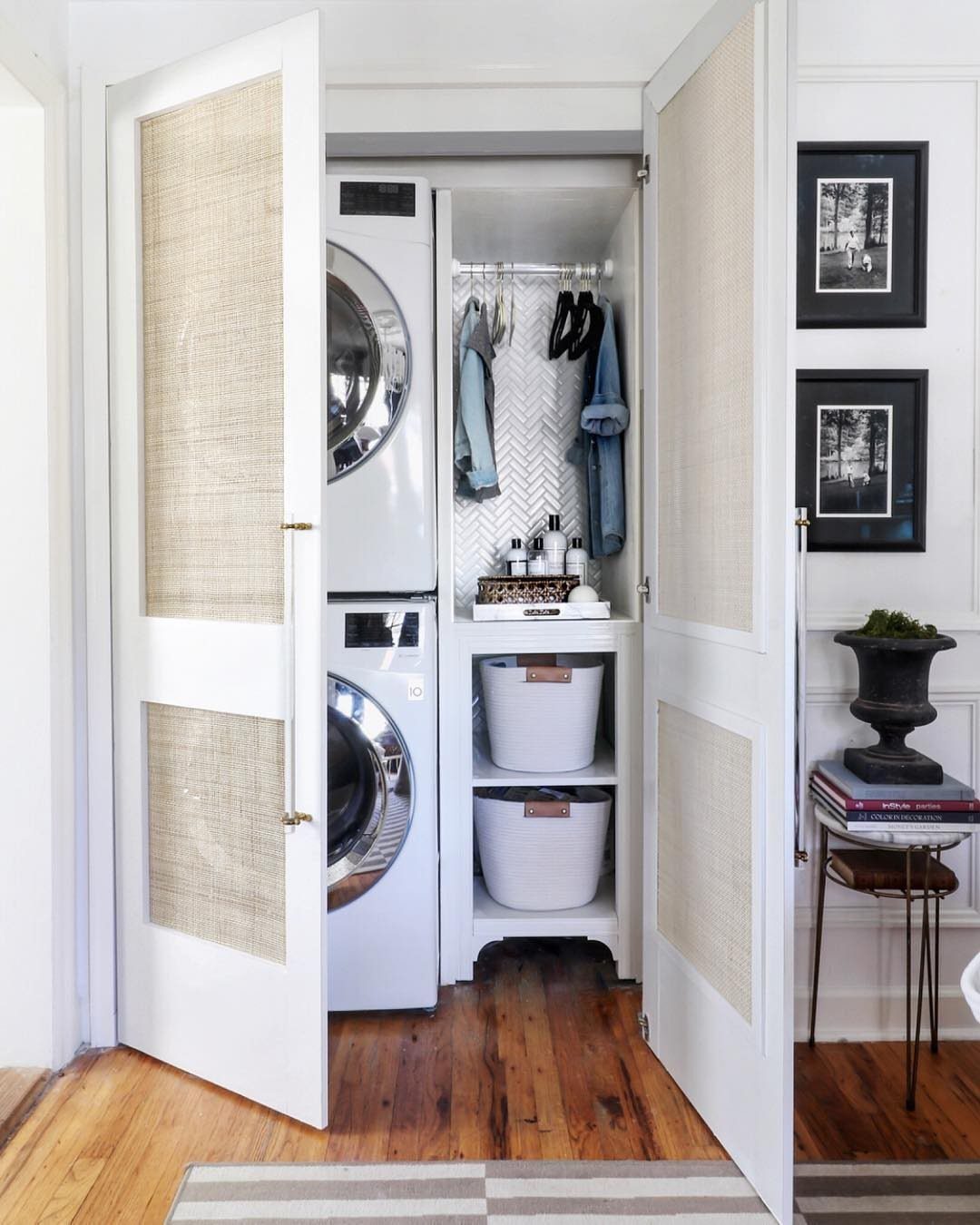
Baskets turn open shelving into something you can actually use without losing socks to the gap between wires. In a small closet, they keep cleaning bottles upright and spare rags from tumbling down behind the washer.
Leave a gap between baskets if your light comes from a single ceiling fixture.
Blocking the whole channel leaves the lower half of the closet in shadow. I would rather run baskets with breathing room than jam them tight.
Fill them light. A basket of light bulbs and dryer sheets pulls down easy; one loaded with gallon jugs of detergent does not.
2. Upgrade Lighting Fixtures
A single flush-mount dome in a closet that size reads basement whether you mean it to or not.
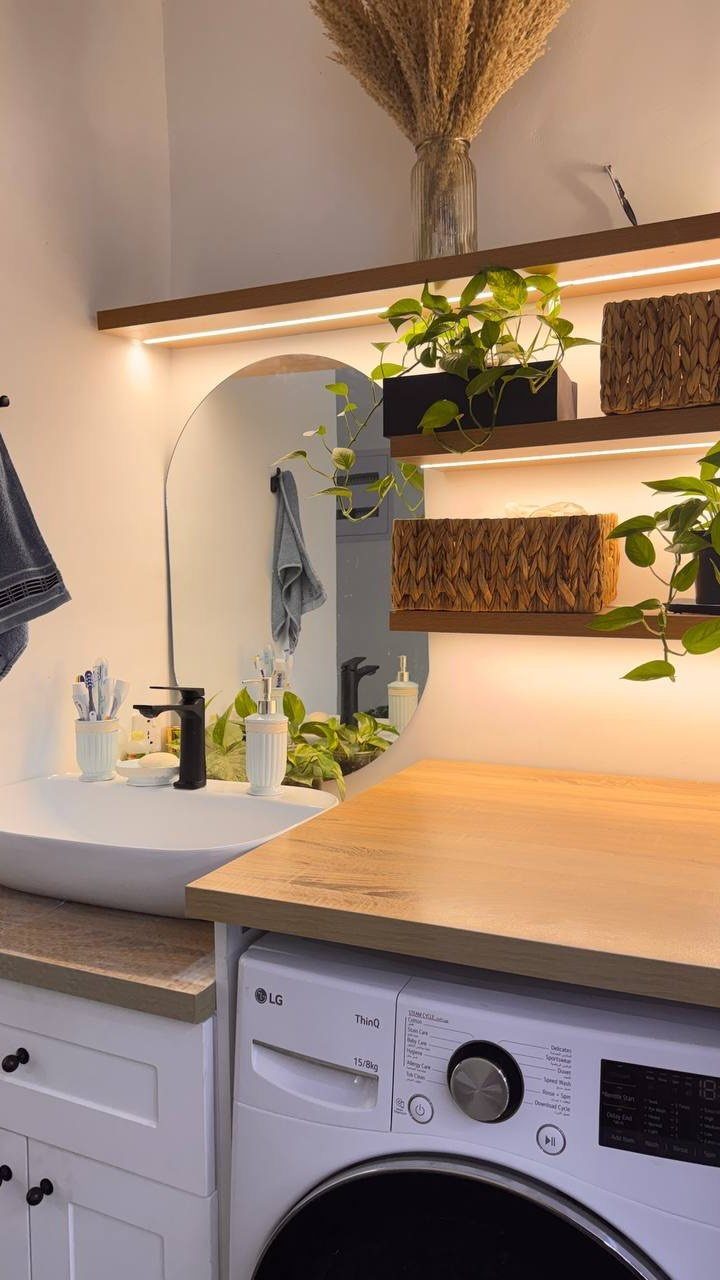
Running LED strips along the underside of each shelf changed how the whole space felt, and the extra light meant I could actually see stains before they set.
Front-loaders and cabinet doors eat clearance fast, so measure your swing space before you fall for a pendant. Semi-flush or flush is usually the only shape that fits without ducking.
The glass dome I found took a standard base and went up fast. I still notice it walking past every time.
3. Use Peel and Stick Wallpaper
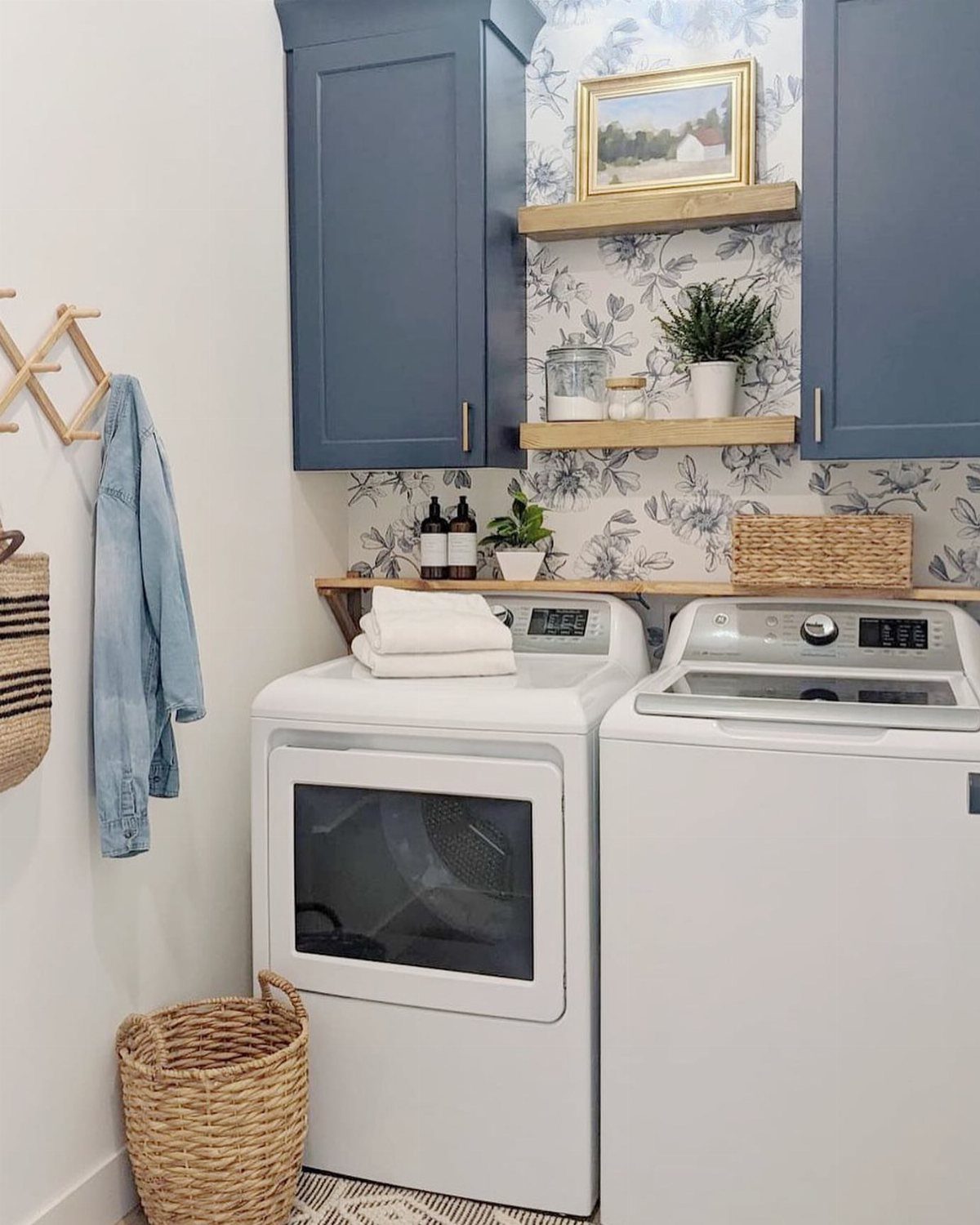
Peel-and-stick wallpaper let me put pattern on the one wall that shows when the closet doors fold back, and I knew I could lift it when the print started feeling dated. Navy floral reads cheerful against white machines without shouting.
Buy from a brand with enough reviews to trust the adhesive release.
Cheap paper tears on removal and leaves you scraping for hours. A smoothing tool is worth buying; my first seam bubbled badly without one.
2 rolls covered the accent wall with paper to spare. First-timer with my mom’s help, it took an afternoon.
4. Curtains Over the Washer and Dryer
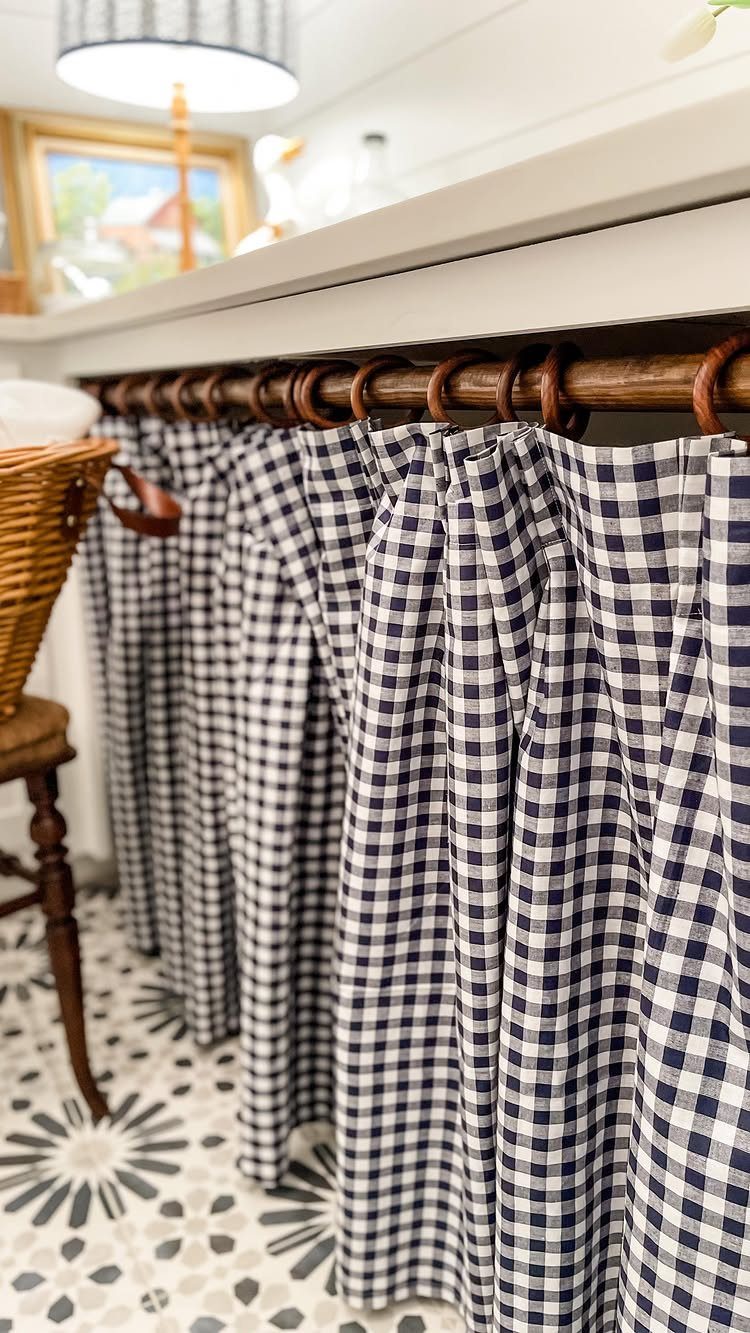
Gingham curtains on wooden rings hide the appliances without the bifold fight every time you need a sock. The rod mounts under a shelf or counter, so the fabric hangs straight and clears the doors.
This suits renters who cannot swap the machines and owners who want the laundry to disappear when company comes. A solid linen or a stripe would read more formal in the same setup.
I would hang them floor-length and wide enough to stack back past the washer sides. Anything skimpy looks like you are hiding something, which of course you are, but you do not have to advertise it.
5. Install Deep Floating Shelves
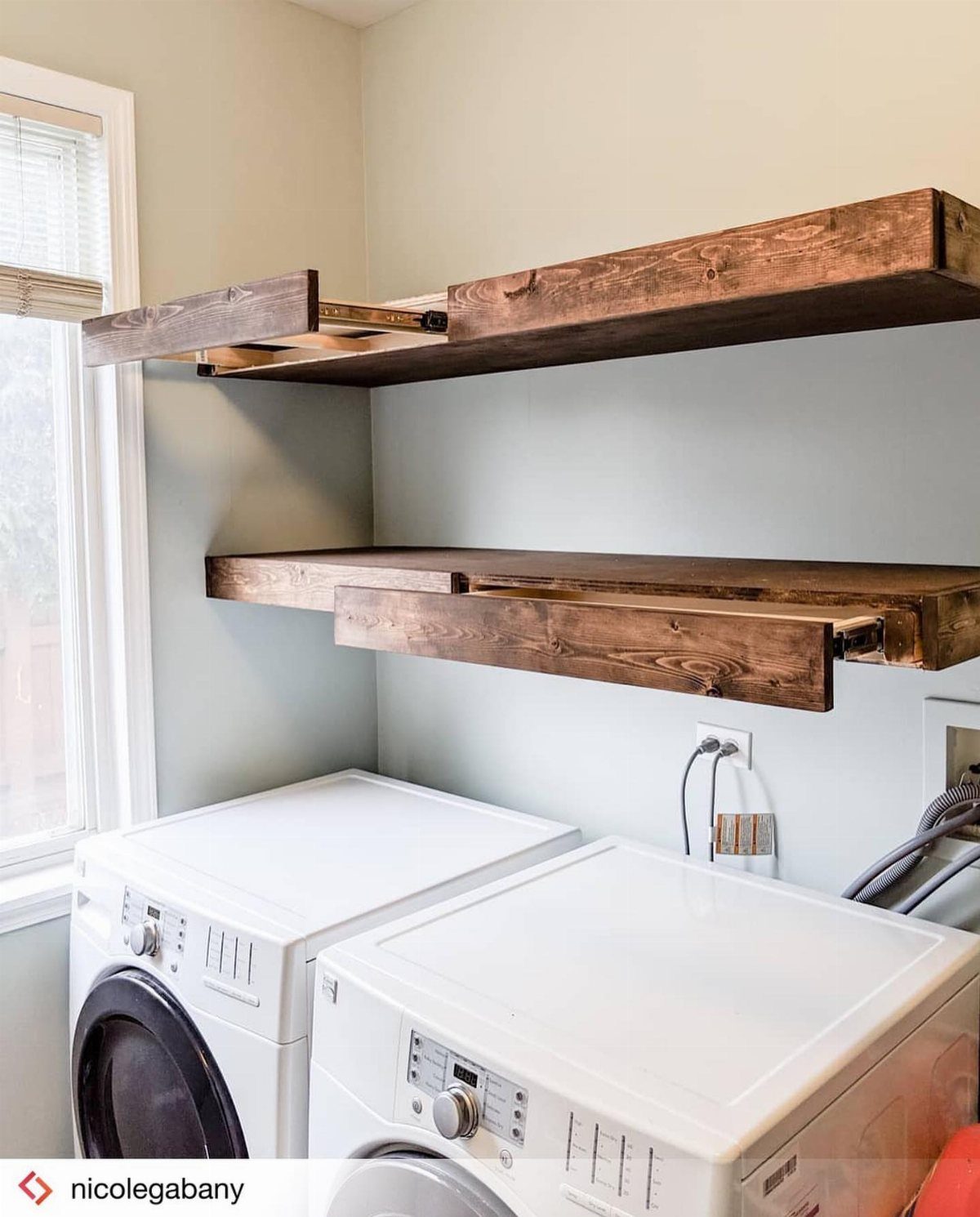
Deep floating shelves at counter height put detergent and stain spray where your hands already are.
That depth swallows a bottle of bleach without it teetering at the lip, and the built-in drawer means dryer balls and mesh bags do not roll off.
Standard wire shelving in most closets sits high enough that you need a step to reach the good stuff. Lower shelves mean daily items live at eye level; reserve the high shelf for backup stock you touch monthly.
Anchor at least one bracket side into a stud.
The plastic anchors that came with my first set pulled loose before long. I replaced them with toggle anchors and slept better.
6. Use Sliding Doors
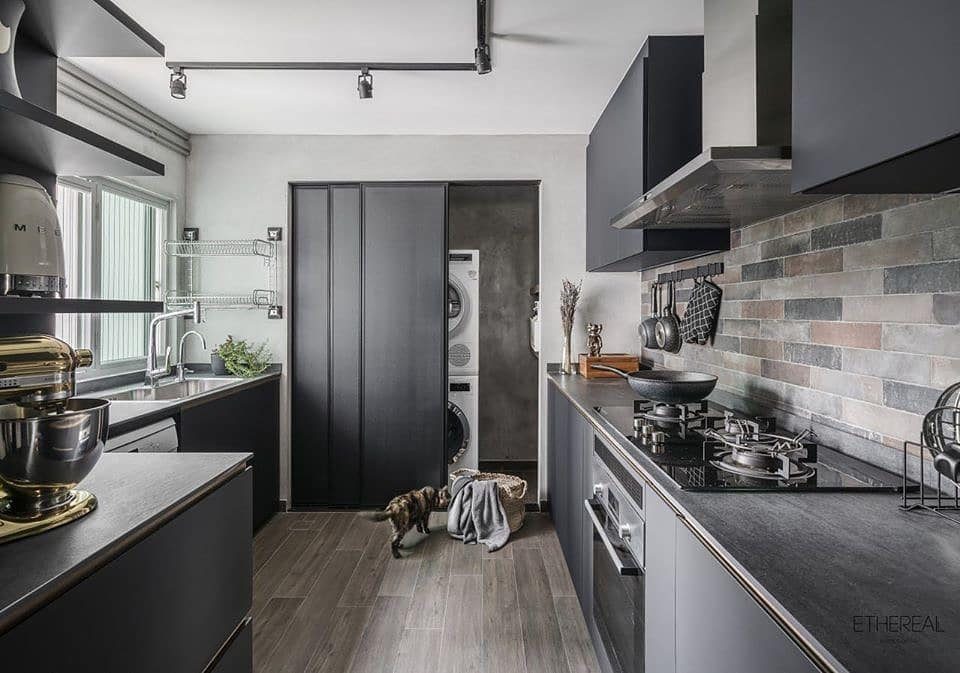
A sliding door on an exterior track solves the hallway door jam where a bifold or swing would collide with bedrooms or the bathroom.
A solid panel in a dark finish reads like a room divider when closed, not a utility cover.
Measure your wall depth before you commit.
The track needs a few inches of flat header, and the door must clear the machines in the open position. Stacked units help here; side-by-side machines need a wider panel and more track.
I would paint the door to match the wall or go deliberately darker. The middle option, a stain that almost matches, usually looks like a mistake.
7. Wall-mounted Drying Rack
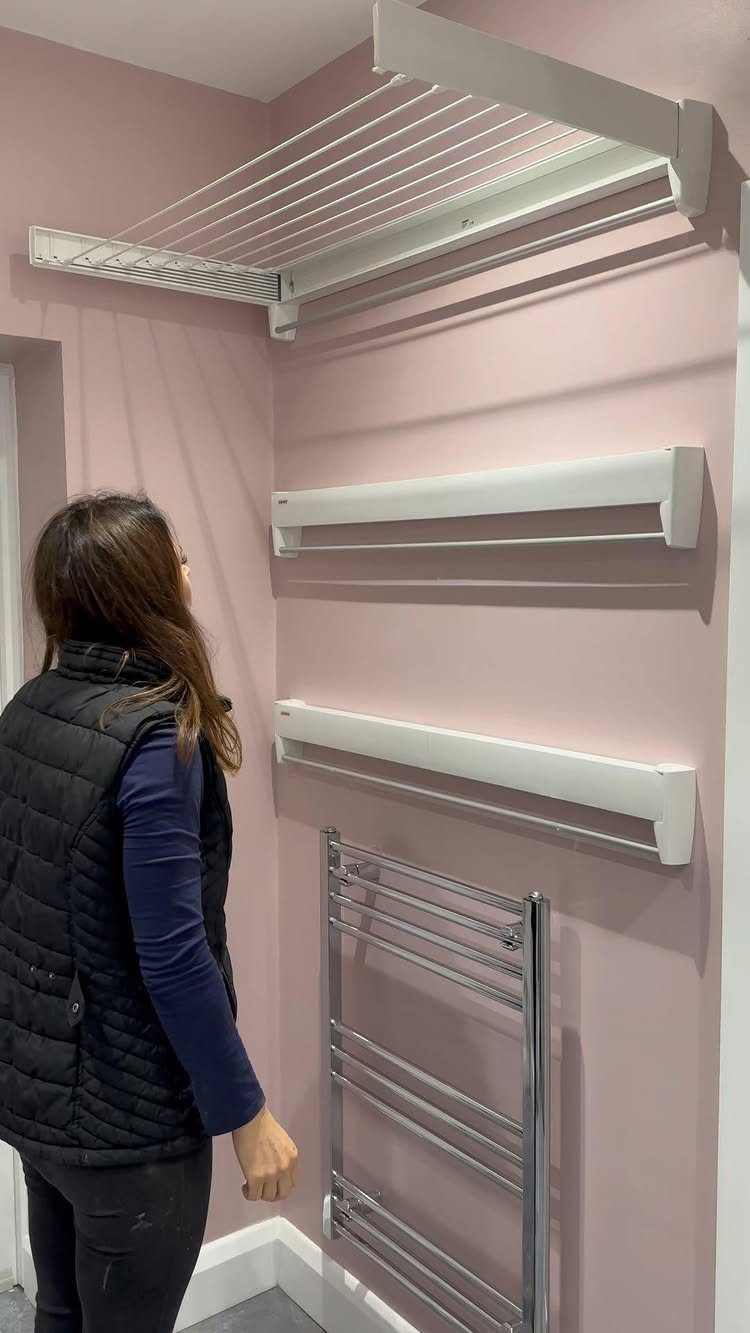
A wall-mounted drying rack folds flat when the delicates are done and gives back the floor space a standing rack would hog. In a closet barely wider than the machines, that matters.
Mount it high enough to clear the washer lid or a pulled-out drawer, but within reach without a step.
The wall above the units is usually dead space because of the depth; a rod or rack there turns it into something useful.
Paint it the wall color if you want it to disappear, or leave it white to read as utility. Either way, check that the folded profile clears the door swing.
8. Stacked Washer Dryer with Louvered Doors
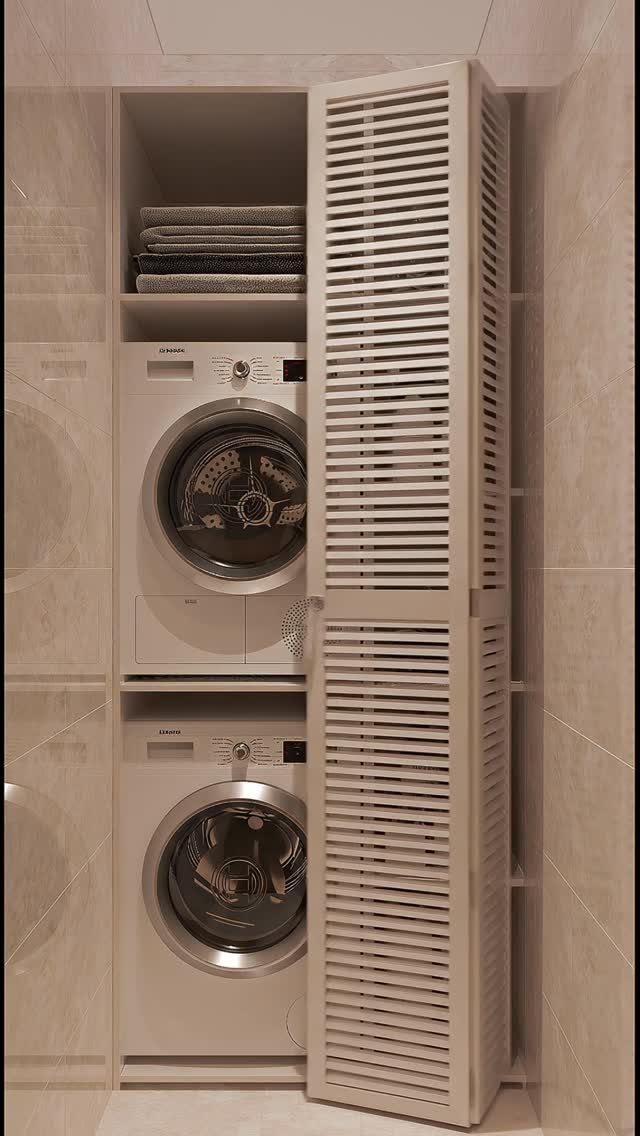
Stacking buys back half the floor width, which turns a closet into a hallway that actually passes. Louvered bifold doors let the machines breathe and hide them behind slats that read cottage more than utility closet.
The stack needs an upper shelf for folded towels; without it, you are wasting the height you just freed.
Check that the door header clears the dryer controls in the open position, and that the track does not block your access to the back panel.
Stacking the pair leaves room for a full-height louvered panel that slides on a single slim track instead of a wide double door.
9. Built-in Cabinetry Around Appliances
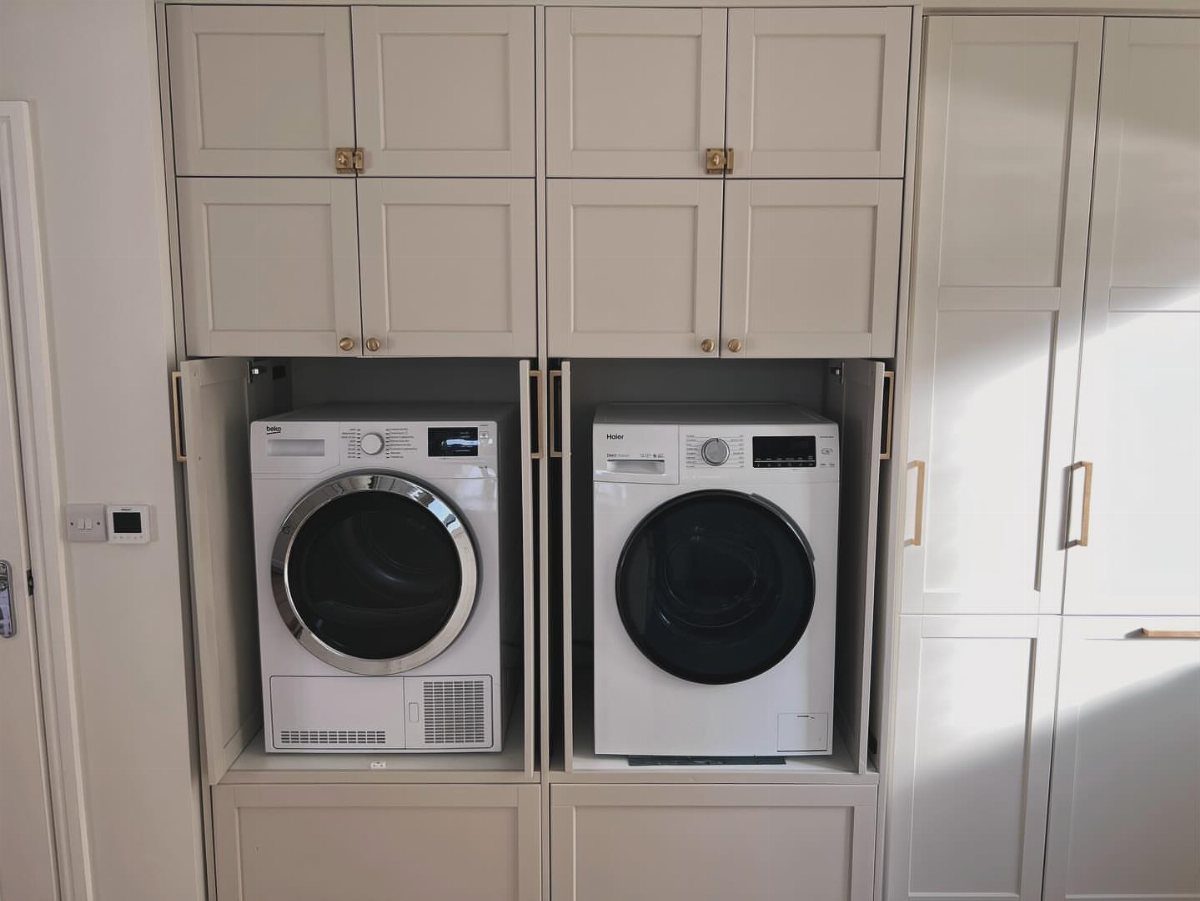
Custom cabinets frame the machines like furniture and swallow the detergent bottles that otherwise colonize every flat surface.
Upper cupboards to the ceiling use height that standard closets leave bare; lower drawers give you pull-out access without crouching behind a door.
Cabinetry that boxes in both appliances and reaches to the ceiling takes real planning, multiple days, and usually a second pair of hands.
Measure the appliance depths with hoses and vents included, or the face frames will read crooked against a proud dryer back. Pocket doors, if you choose them, need side clearance that hinged doors do not.
Renters should stop here. The cabinets are built to the room, and they do not travel.
10. Vertical Laundry Basket Tower
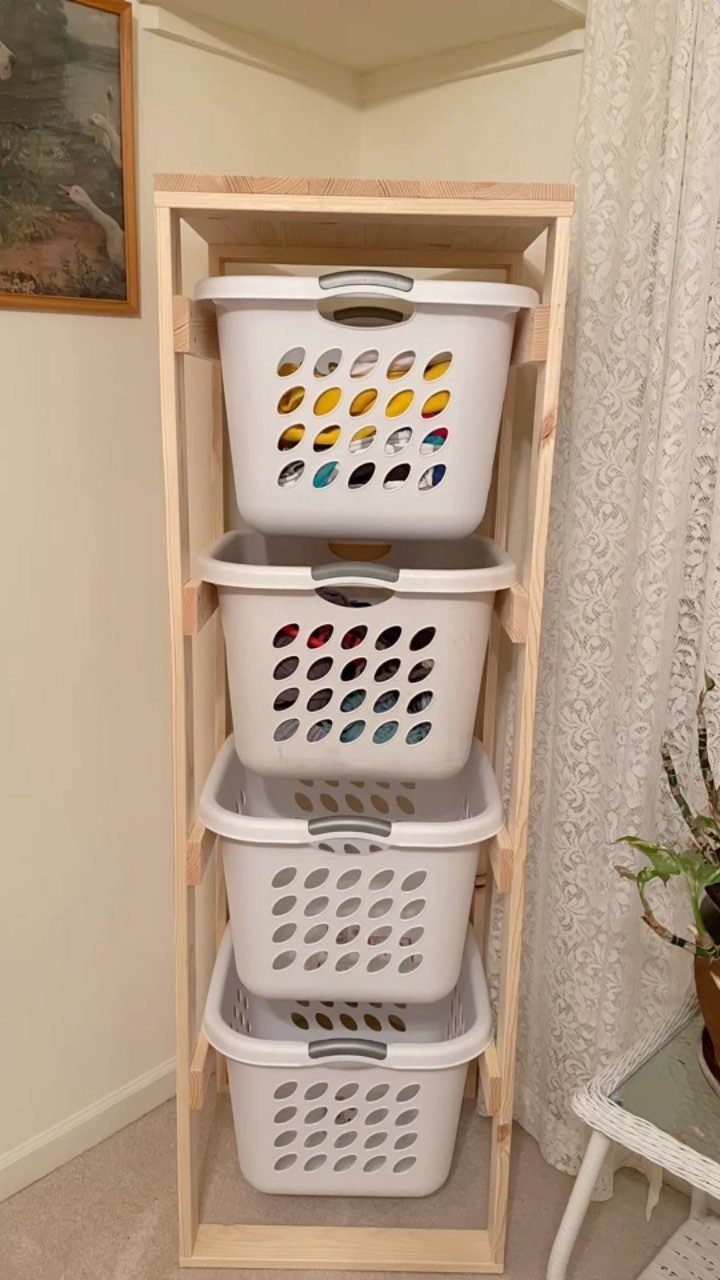
A slim wooden frame stacking laundry baskets sorts lights, darks, delicates and linens in a footprint no wider than the machines themselves. The open tops mean you drop and go; no lid to flip, no door to fight.
Build the frame an inch wider than your baskets so they slide without jamming, and keep the bottom basket high enough to clear the baseboard.
A tower this narrow can tuck beside the washer or against the back wall if the depth allows.
Plastic baskets are cheap to replace when one cracks; woven looks better but sags under wet towels. I would use the plastic and spend the difference on a better wood for the frame.
Use Color to Enhance Space
A single bold move reads louder in a tight laundry closet than in a whole room.
In my laundry closet, the back wall carries navy floral peel-and-stick that I know I will tire of eventually. Until then, it makes opening the doors feel like entering a room that was thought about, not just passed through.
Art above the machines works the same way. An oversized piece or even a framed print you already own turns the wall above a front-loader into something you notice.
Kristen Peña, a Bay Area designer, hung Gucci wallpaper and a large art piece for a client who wanted the space to feel exciting rather than purely useful.
The wallpaper and art added visual interest and made a personal statement.
A cute detergent dispenser or a matching set of bottles on a shelf does the same job smaller. It signals that this corner belongs to the rest of the house, not a separate utility zone you tolerate.
Focus on Lighting
Light in a laundry closet falls into 2 jobs: finding the stain before the dryer sets it, and making the space feel finished when the doors are open.
A semi-flush brass fixture handles both task light and ambient light without stealing headroom. 3 bulbs through glass throw enough lumens to inspect collars, and the fixture itself reads intentional against a plain ceiling.
A single dome fixture does neither job well. It pools light in the center and leaves the corners flat, which makes a small space feel smaller and hides details you need to see.
If your closet opens to a hallway, the fixture is visible from outside the space. Choose one you would hang in a bedroom or entry, not the cheapest utility option.
The wattage matters for function; the finish and shape matter for whether the closet feels like part of the house or an afterthought. Measure your clearance before buying.
Consider Functionality
A laundry closet that does only laundry wastes the wall space you have. The side walls beside stacked or side-by-side machines are usually bare, and that vertical real estate holds more than you would think.
Command broom and mop grippers turn a narrow side wall into storage for an ironing board, a bag, and cleaning tools. A small stool slides between machines when not in use.
Hidden storage behind cabinet doors keeps the visual field calm, but the open wall approach puts tools where your hand finds them.
Amanda Reynal, a Des Moines designer, extended cabinetry to the ceiling to maximize storage without visible clutter. The ceiling-height cabinets give residents ample storage while keeping the room from feeling messy.
The choice is between seeing your tools and hiding them. A closet with only a washer, dryer, and shelf is a closet that has not finished its job.
Frequently Asked Questions
What are some good ideas for organizing a small laundry closet?
Wall-mounted storage turns narrow side walls into useful space. Baskets on open shelving keep bottles upright and rags contained, and a slim tower of stacked laundry baskets sorts lights and darks in a footprint no wider than the machines themselves.
What is the minimum size for a laundry closet?
A laundry closet needs to fit your machines with their hoses and vents included, plus enough depth for the door to close.
Front-load washers run deeper than top-loaders, and that extra inch matters when every one counts. Measure twice with all connections factored in before you plan storage around them.