These 4 unfinished basement storage ideas run from a quick bin swap to a Saturday trolley build, and the right one depends on whether you need to roll your storage around or leave it put.
What they share is a hard line against cardboard and particle board, materials that surrender to basement humidity within a year.
1. Clear Plastic Storage Containers
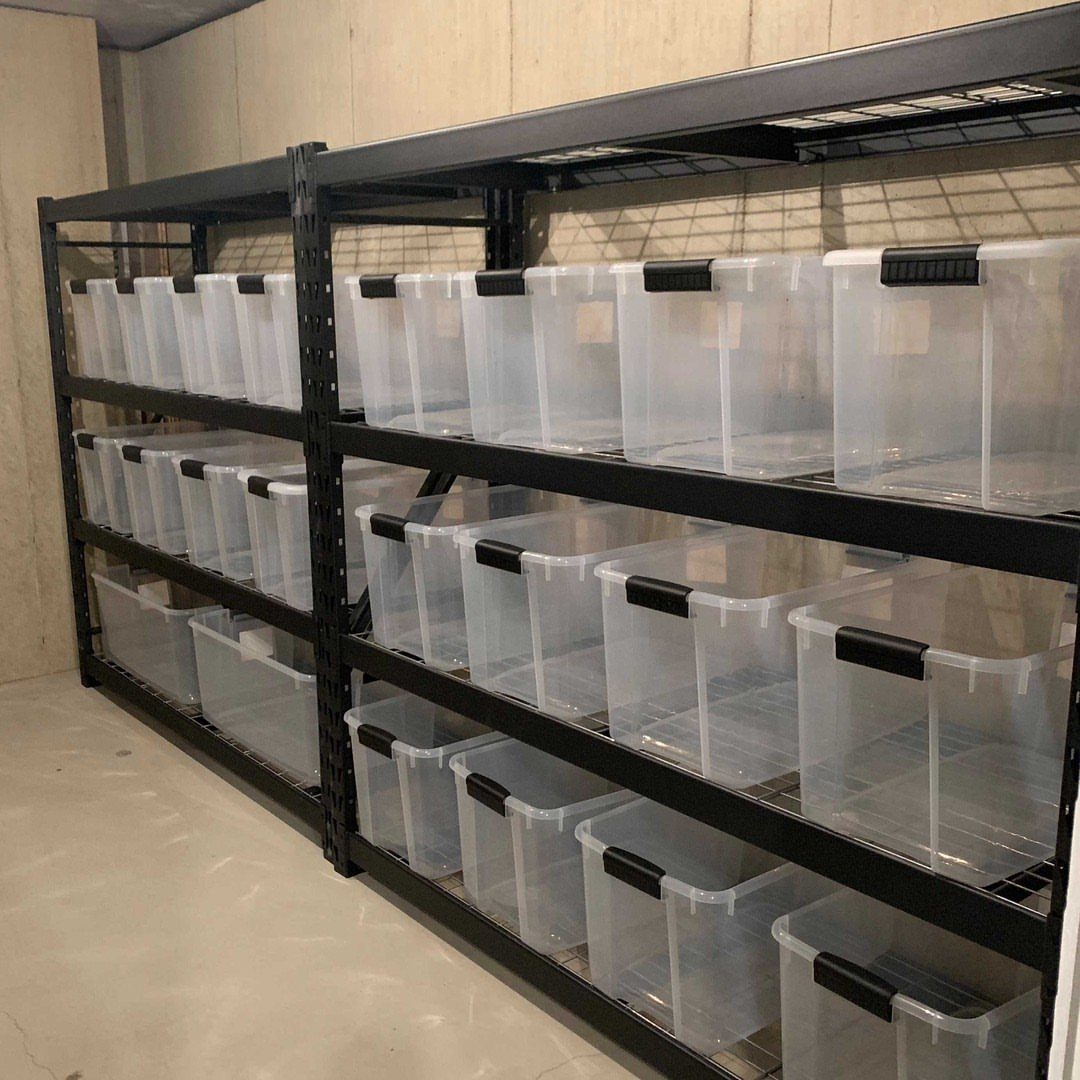
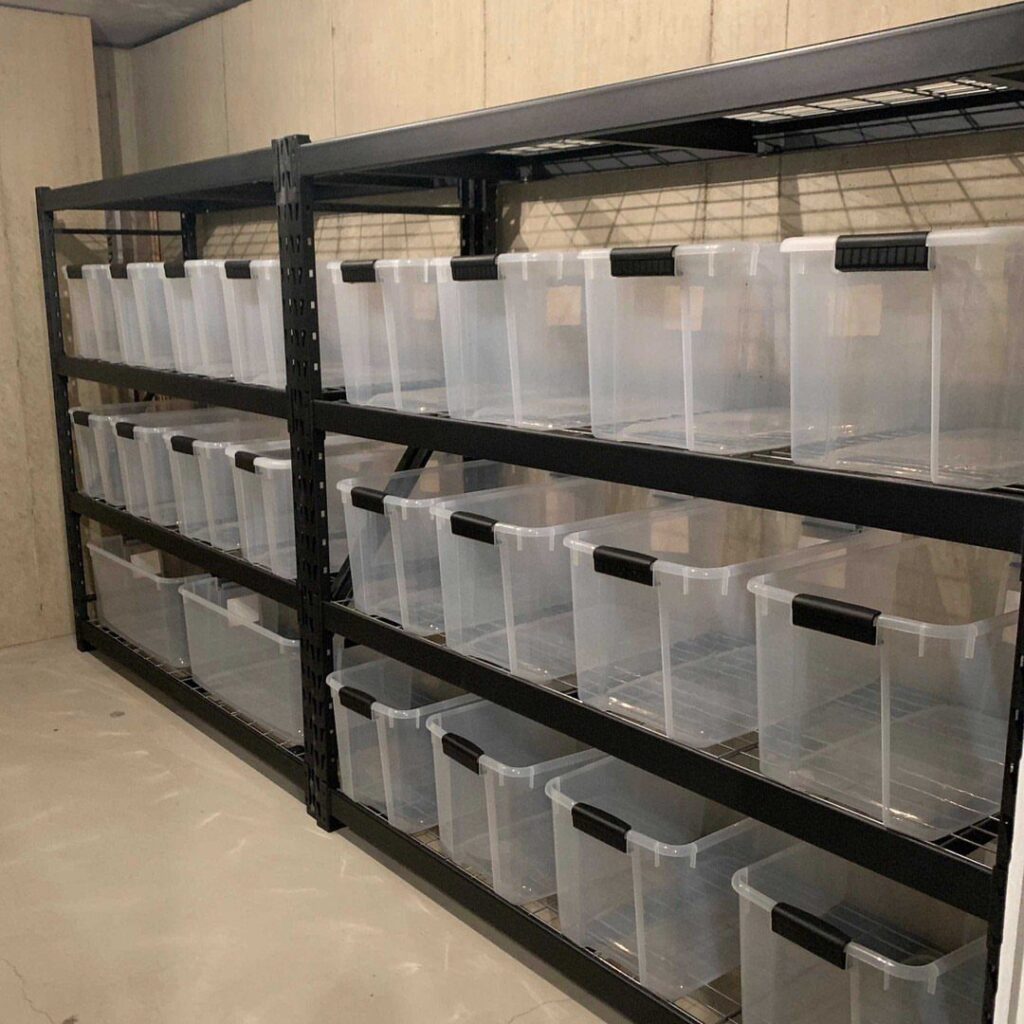
Cardboard in an unfinished basement turns soft and collapses inside a year, even dry ones. Clear plastic bins with latching lids keep the contents visible and keep out dust, humidity, and the occasional spider.
I buy one size so they stack flat on wire shelving and label the short side with what’s inside. Black handles are a grip detail worth looking for; snapping a lid shut with cold hands gets old fast.
Spend the extra dollar or two per bin for the gasketed kind if your basement runs damp. Everything else is false economy.
2. Choose Your Shelving Solution
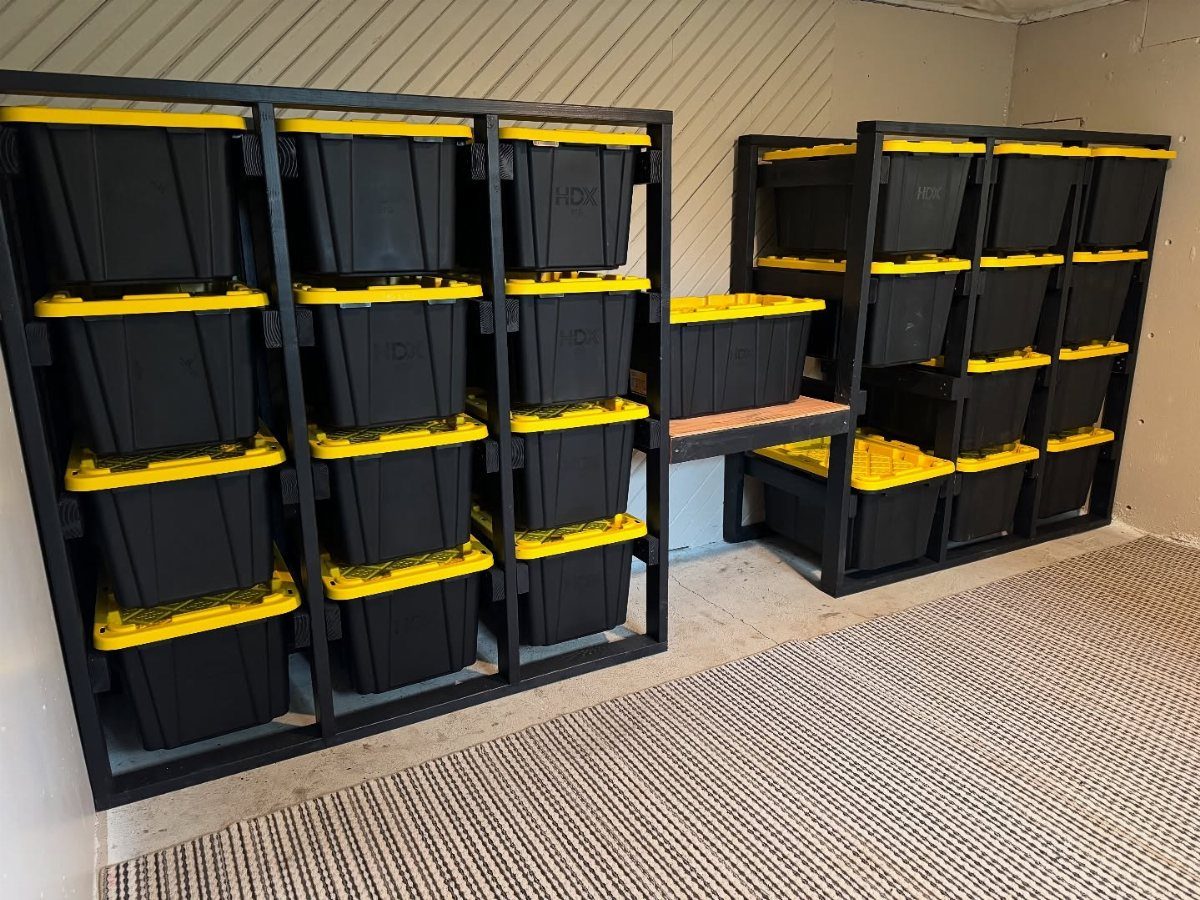
Vertical space in an unfinished basement is usually the only space you own outright. Metal shelving bolts together in an hour and holds more than the floor ever could.
Wood racks look better than they survive down here. In a space without climate control, particle board swells and solid wood bows; metal or heavy-gauge plastic tolerates the humidity cycle that unfinished basements run through.
Measure ceiling to floor before you buy, accounting for the lip of the bin you plan to slide in. Your shelf spacing needs to clear the bin height plus your hand.
Built-in corner units eat the dead space where 2 walls meet. That is where I would start.
3. Portable DIY Trolley
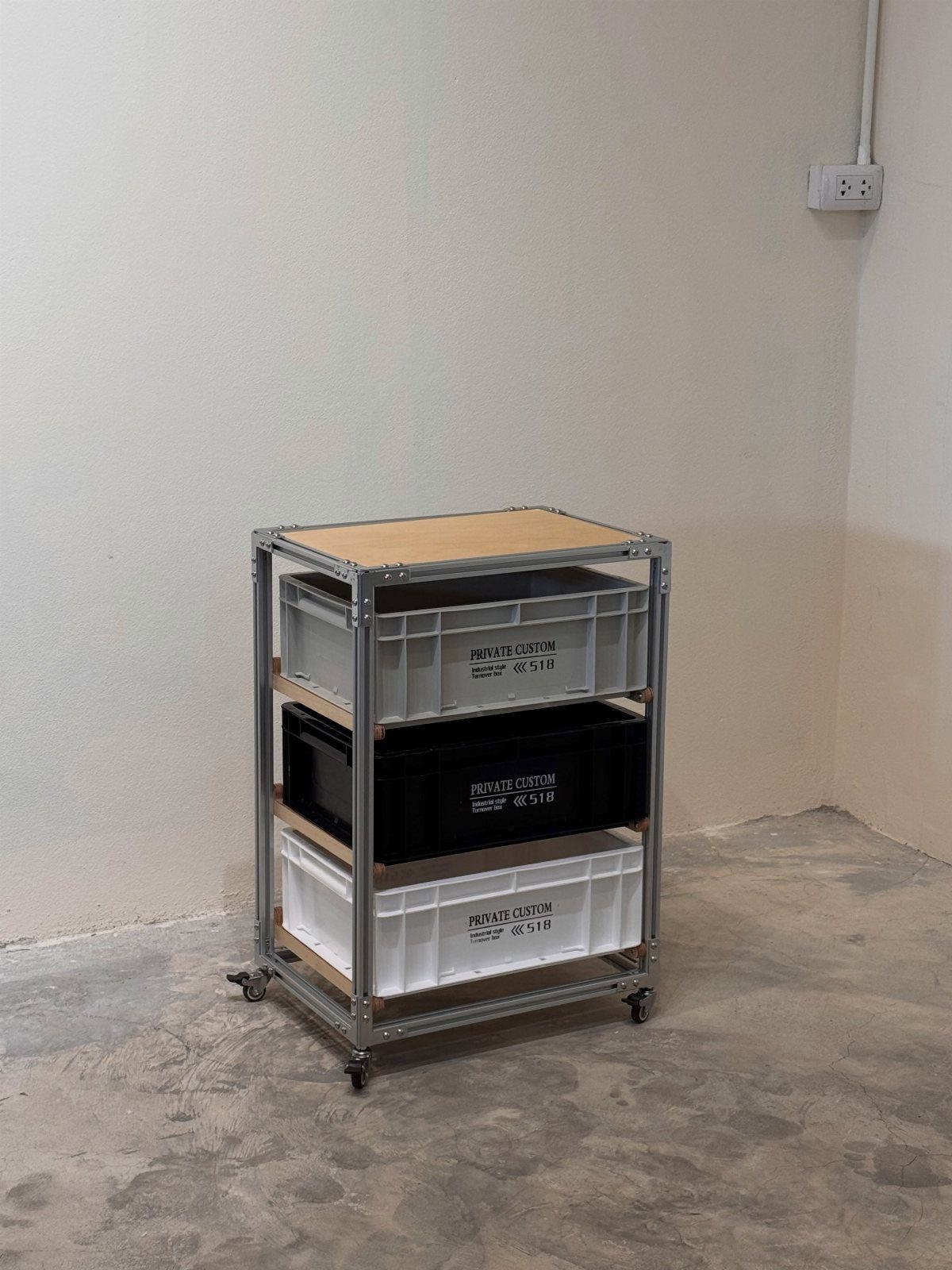
A rolling trolley turns any flat corner into storage that follows the work. 3 shelves on casters hold the tools, cleaners, or garden supplies that otherwise migrate across every horizontal surface in my basement.
An aluminum frame and plywood shelves are lighter than all-steel versions and easier to roll over expansion joints in concrete. I have built these from PVC pipe on the cheap, though the home store versions save a Saturday.
Either way, check that the casters lock; a trolley that drifts while you load it is a hazard on a sloped basement floor.
This suits the reader who needs the same items in 3 places and wants to stop carrying them by hand.
4. Heavy-Duty Stackable Totes
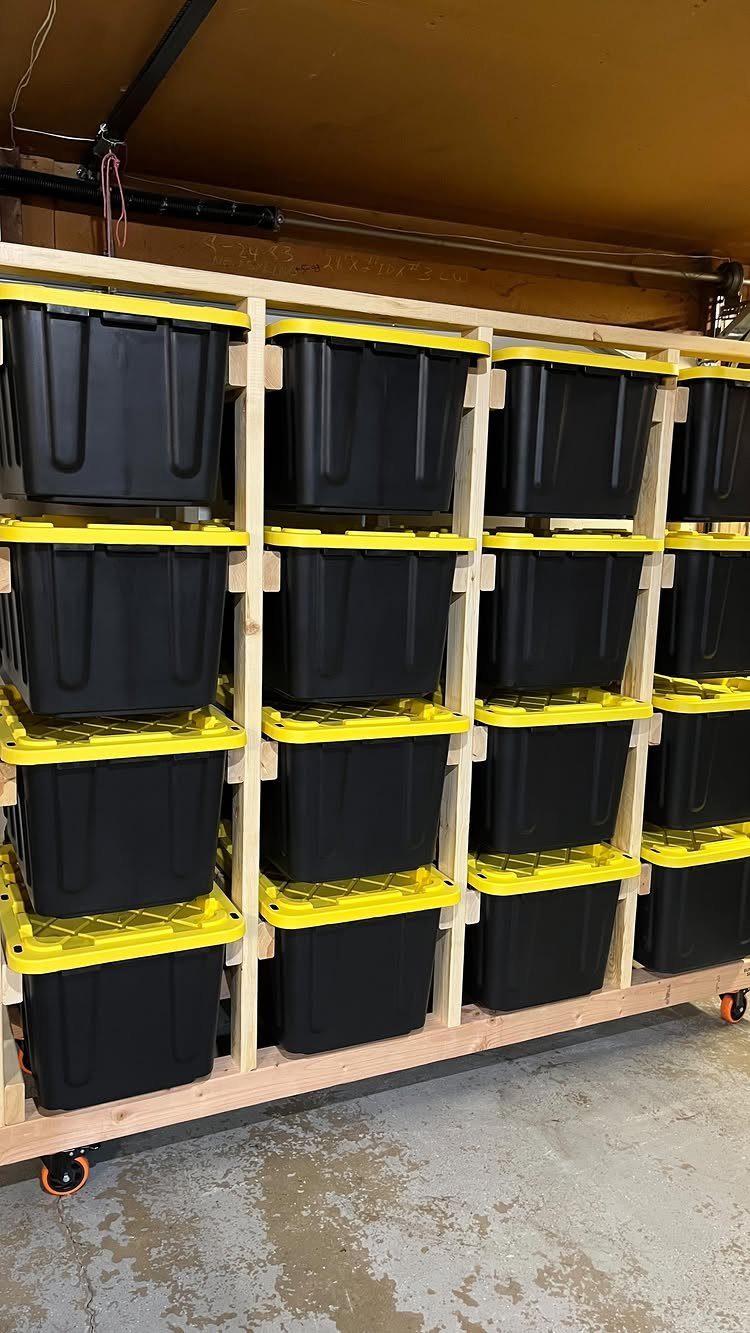
Heavy-duty totes with snap lids stack to the ceiling without crushing what is inside. A rolling wooden rack underneath turns the whole column into something one person can move for sweeping or rearranging.
The rack is shop-built or adapted; the totes are the standard 27-gallon size sold in pairs at every hardware store.
Check that the lid snaps on all sides; a partial seal lets in the same dust you are trying to beat. These trade portability for capacity, so I reserve them for the things I touch seasonally, not weekly.
Storage Container Recommendations
Airtight does not mean waterproof. The gasketed bins I mentioned handle humidity, but standing water from a backed-up drain or a failed sump pump will still get in.
Store anything that cannot handle a flood off the concrete, even if that means a pallet under the lowest tote.
Label the short side, not the lid. You will slide these out to read them, not lift them down from eye level.
A label maker beats tape and marker; adhesive softens in damp basements and peels off in sheets. If you must write by hand, a strip of masking tape on the bin itself lasts longer than tape on tape.
One size stacks better than mixed sizes.
I buy 18-gallon totes for the hardware store’s house brand and nothing else. Odd sizes nest badly and leave gaps where spiders settle.
Organizing Tips
Pegboard in an unfinished basement needs the right backing.
Raw drywall or exposed studs will not hold the hooks; a half-inch plywood frame around the back edges keeps the board off the wall, gives the hooks room to insert, and spreads the load at the corners.
Mount it with masonry screws into the block or tapcon-style anchors, not plastic plugs that walk out of damp concrete.
Categorize by task, not by room. The holiday lights and the tree stand belong together even if they came from different floors of the house.
The same goes for camping gear, paint supplies, or the spare bathroom fixtures you are keeping just in case. Group by what you will grab at once, not by where it used to live.
Vertical space above the washer and dryer is usually wasted.
A short pegboard run there holds the stain stick, the mesh bags, and the dryer vent brush where you actually need them. Keep the board narrow enough that the washer lid still opens fully; measure yours before you cut.
Frequently Asked Questions
What should you not store in a basement?
Electronics and important documents belong upstairs where humidity cannot reach them. If a flood would ruin it, keep it above the concrete: a pallet, a shelf, anything that buys you inches.
How to make an unfinished basement look good?
Organized storage itself improves the appearance more than decorative bins ever could in this space. Metal shelving in one size of clear tote creates clean horizontal lines, and pegboard with proper plywood backing keeps tools off the floor.
Baskets and colored boxes look like clutter against open joists and cinder block; I start with what the space actually has to do.
What are some DIY ideas for basement storage?
An aluminum-frame rolling cart with plywood shelves turns a bare corner into tool storage that moves where the job is.
Pegboard backed with half-inch plywood spreads the load across exposed studs or block. For heavy seasonal items, a shop-built wooden rack under standard 27-gallon stackable totes lets one person move a full column for sweeping or rearranging.