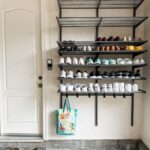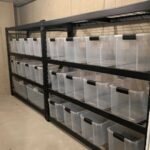
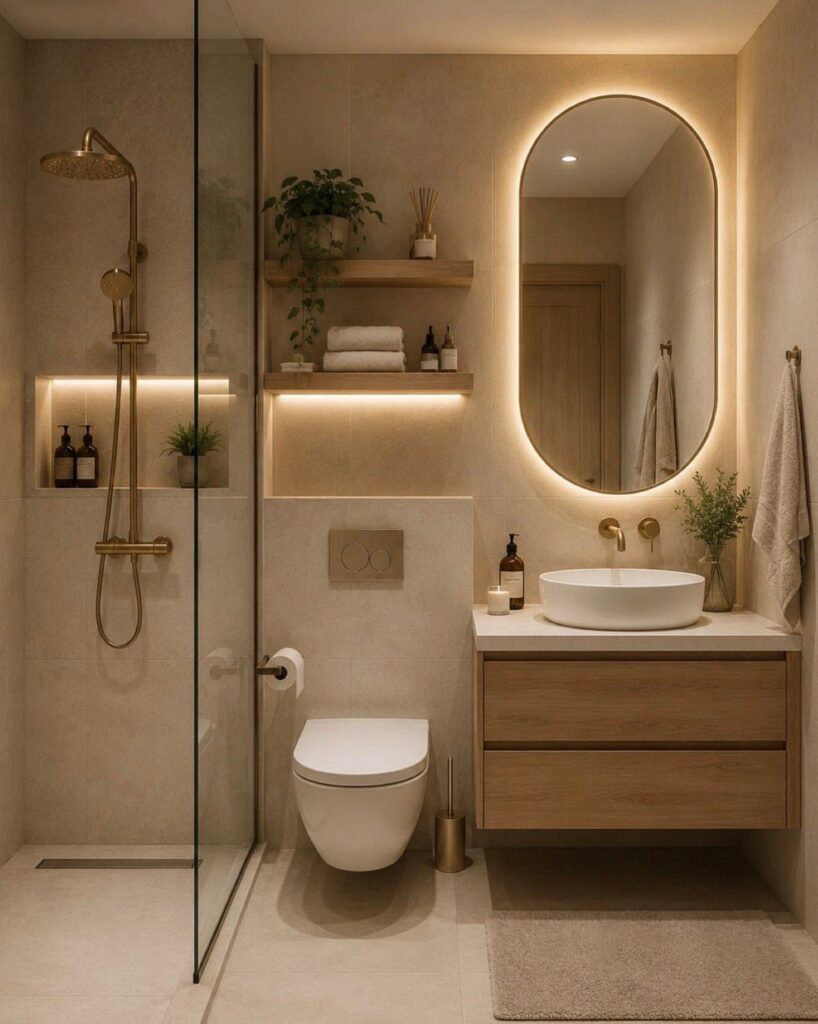
These ideas run from an over-the-door rack to a gut-renovation shower niche, and the one that fits your bathroom depends on whether you own the walls or just the weekend.
The hook width on cheap door racks fits only hollow-core slabs, a detail that matters more in a rental than any finish choice.
1. Over-the-toilet Shelving
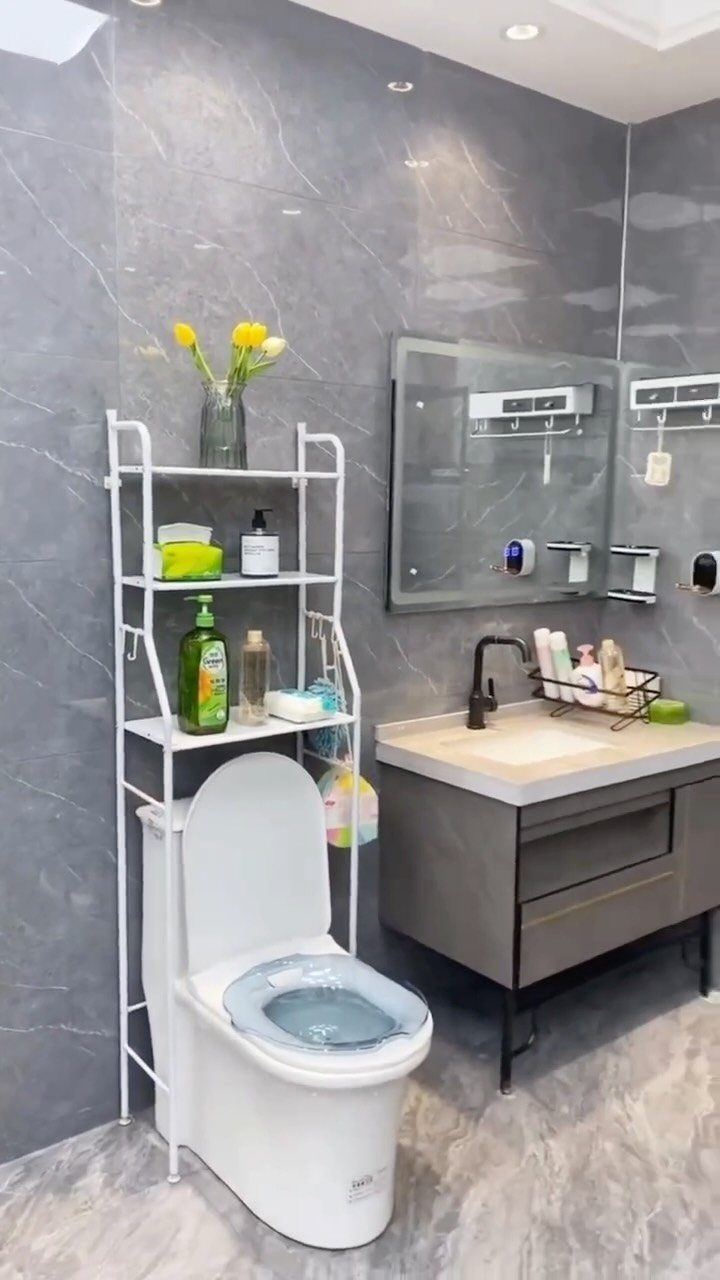
That dead zone above the toilet is often the last place people think to use.
A metal or wood unit spanning the tank gives two or three shelves for spare rolls, small plants, or daily skincare without eating an inch of floor.
I like the ones with a little depth, enough that bottles do not teeter.
Most stand on legs that straddle the tank and lean against the wall; no drilling needed unless you want to anchor the top. In a rental, that matters.
2. Clear Storage Bins
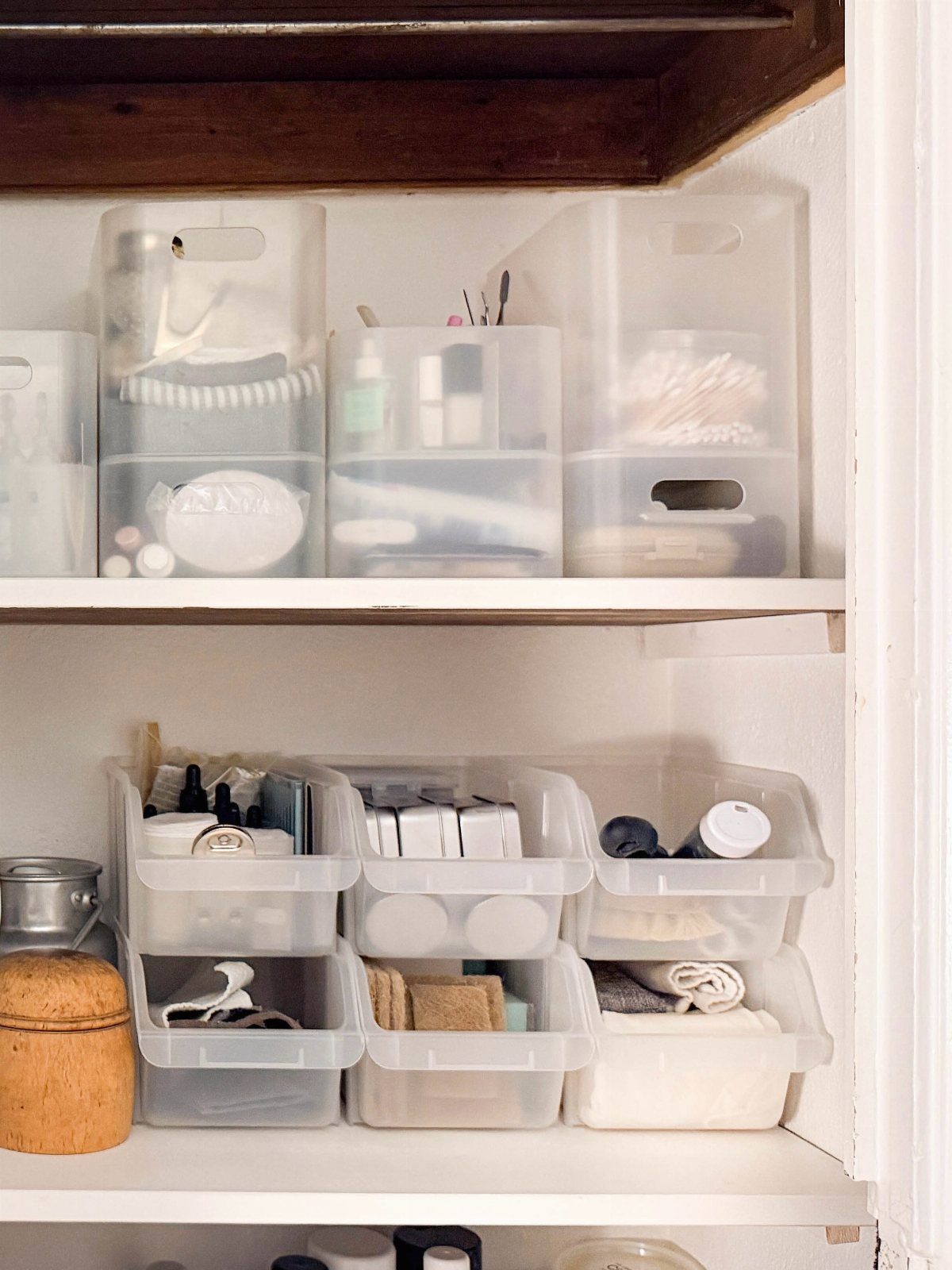
Acrylic or plastic bins turn a dark cabinet into something you can read at a glance. I switched to clear under-sink boxes last year after buying my third duplicate face wash.
The shimmer under a vanity light is a side benefit; the real win is stopping that loop where hidden supplies shrink the room through redundant buying.
Stackable modular sizes keep the space from becoming a cavern of forgotten bottles. Thirty percent growth in clear bin sales over the last decade suggests I was not the only one making that mistake.
3. Built-in Storage
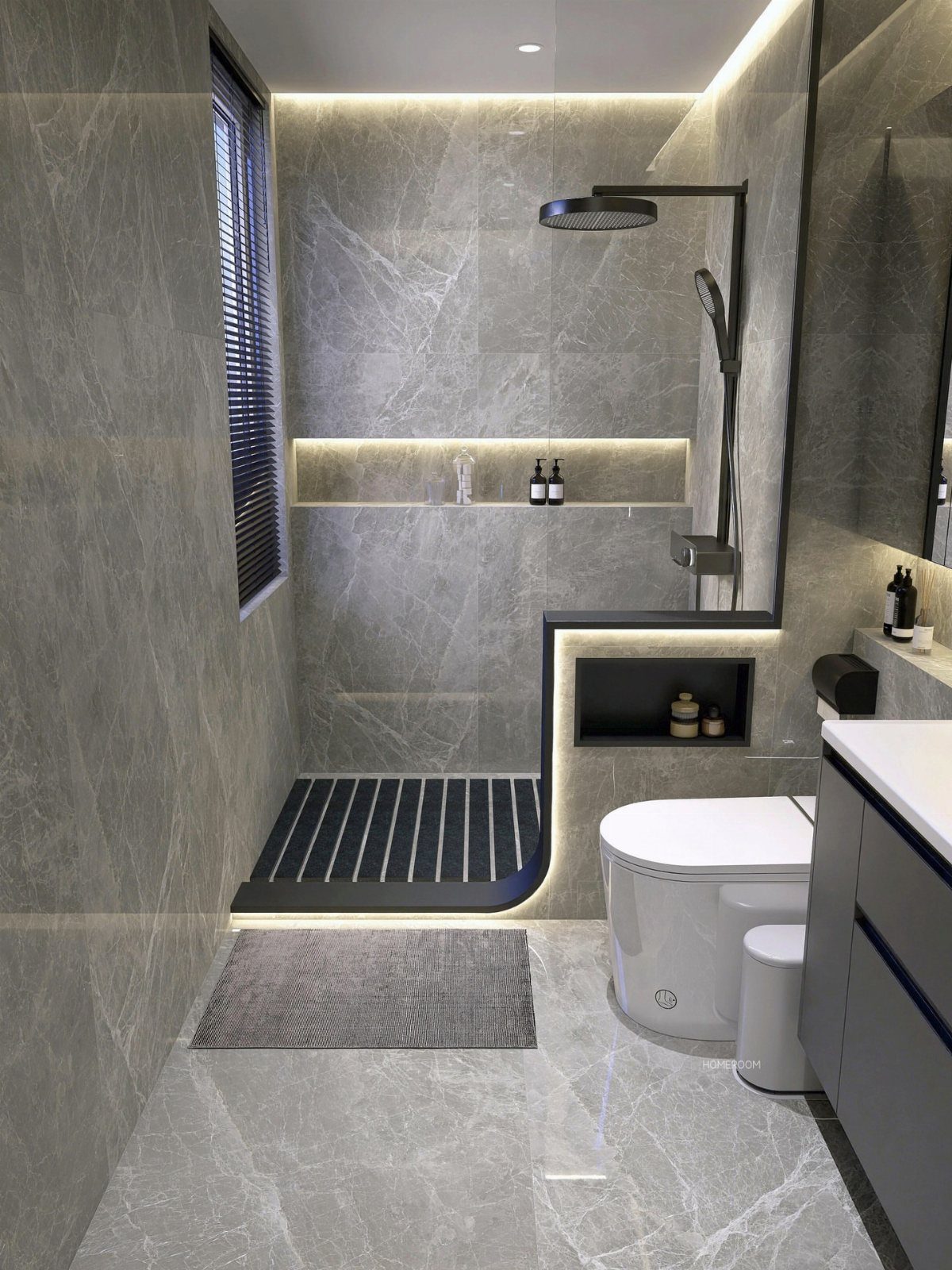
Recessed niches built between studs steal no floor space and no elbow room in the shower. LED strips along the shelf edges turn the niche into soft task lighting after dark.
Wiring that in is a job for renovation timing, not a weekend; the niche itself can be tiled in with a new shower or added to a gut job.
For a quicker version, a mirror with a shallow medicine cabinet behind it gives the same flush footprint. I would choose that in a bath where the walls are staying put.
4. Ladder Shelf
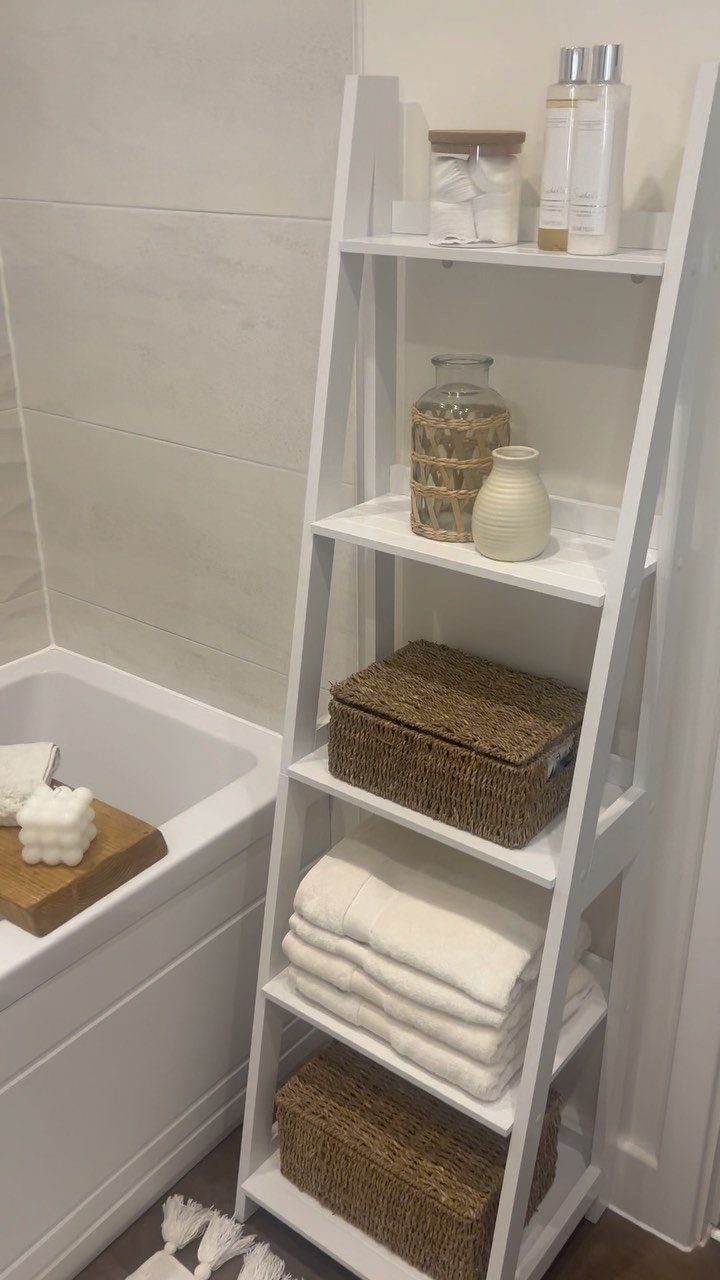
A leaning ladder needs no mounting and moves where the towels pile up.
The rungs hold more fabric than a single bar, and the whole thing tucks beside a tub or into a corner that would otherwise stay empty. Wood warms up a white bath; painted metal suits something moodier.
The one caution is the footprint at the base, which grows with the height, so measure your floor path before buying. Some makers now sell shorter ladders meant to straddle a toilet tank instead.
5. Open Vanity Shelf Baskets
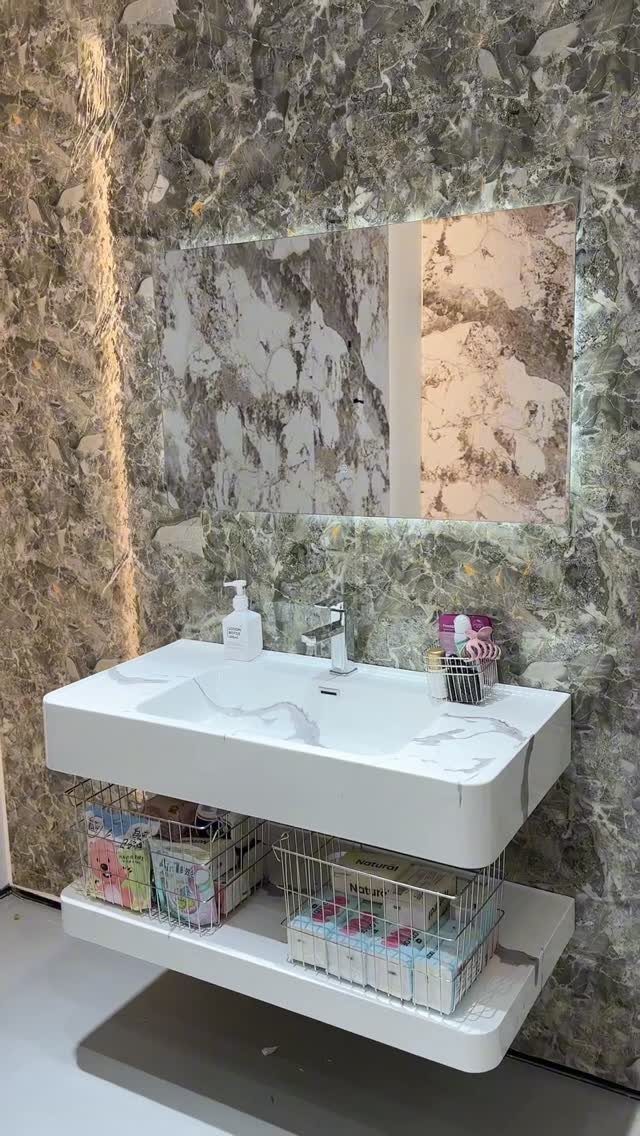
An open shelf under a floating vanity stays airy only if what sits on it behaves. Wire baskets corral the chaos: one for hair tools, one for backup bottles, one for the odd makeup bag.
The gaps in the weave let you scan contents without pulling each bin. I prefer a slightly smaller basket than the shelf depth, an inch of breathing room on each side, so the whole thing slides out without snagging.
Baltic birch plywood edges, left raw, give the same utilitarian honesty to the vanity itself.
6. Over-the-door Hanging Organizer
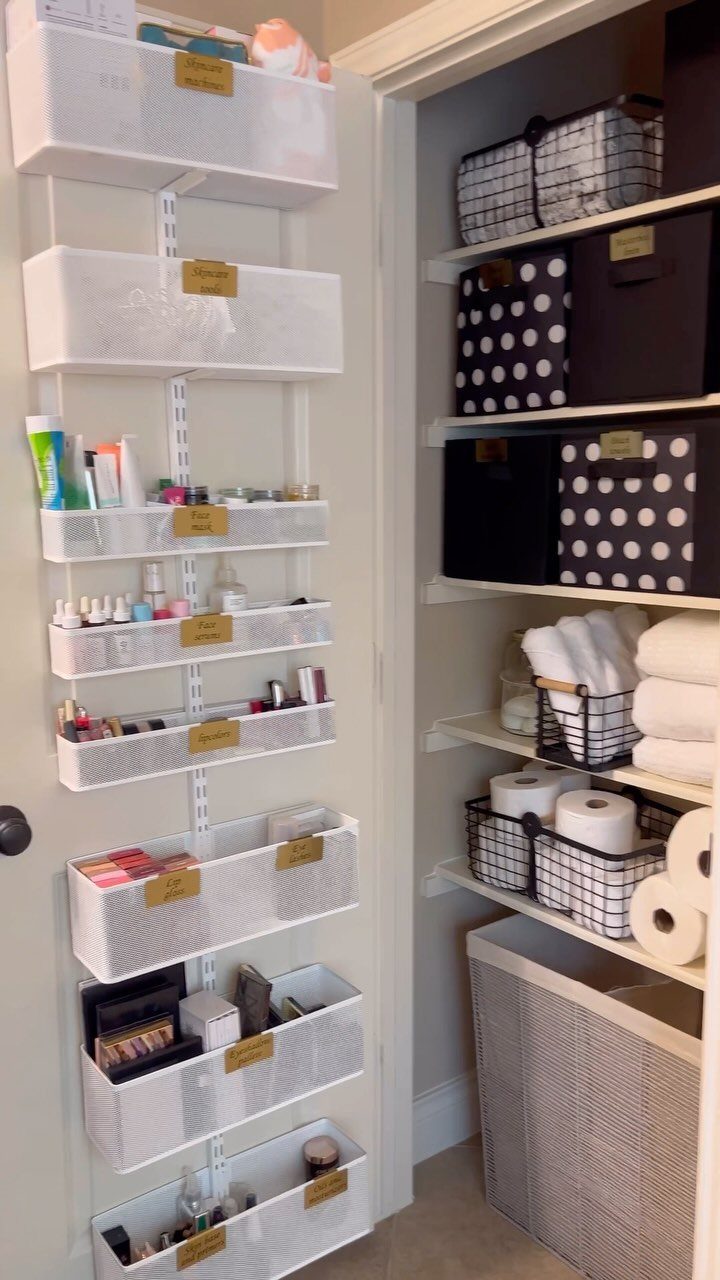
Behind the door is real estate most bathrooms ignore. A multi-tier wire rack with shallow baskets turns that gap into sorted storage for cosmetics, skincare, or cleaning cloths.
The over-the-door hooks mean no screws in the jamb, though I check the hook width against my door thickness; cheap versions fit only hollow-core slabs.
Closed storage elsewhere in the bath, a linen closet or drawer vanity, keeps the daily mess invisible while this holds the working supply. Display only what you reach for every morning.
7. Narrow Wall-mounted Open Shelving
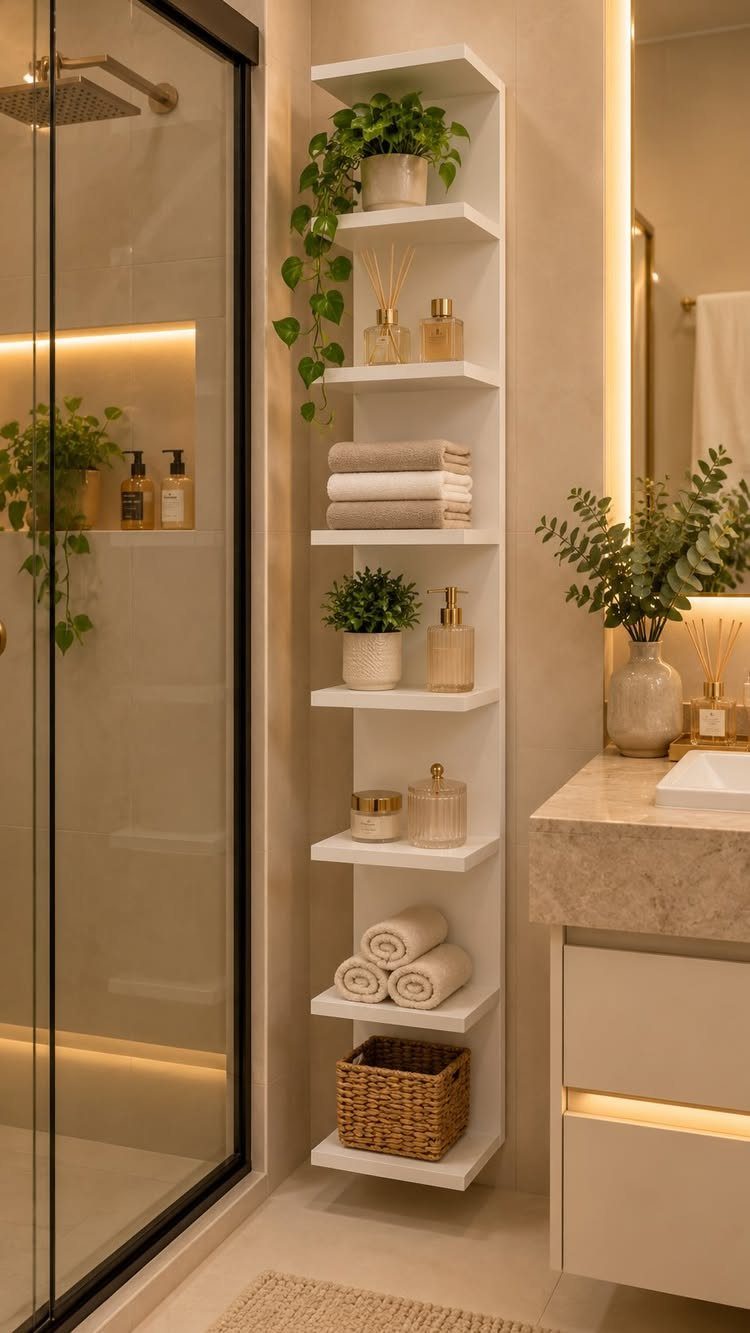
Vertical shelving turns the sliver of wall between shower and vanity into usable depth.
A shallow wall-mounted unit keeps the path clear while giving enough levels for towels, a small plant, and the bottles that otherwise colonize every flat surface. Wall-mounted means no legs eating floor space; studs or heavy-duty anchors carry the load.
I would keep the finish matte white or pale wood so the mass disappears against the tile. In a bath where every inch of wall is spoken for, this gap is often the last one found.
8. Compact Toilets and Sinks
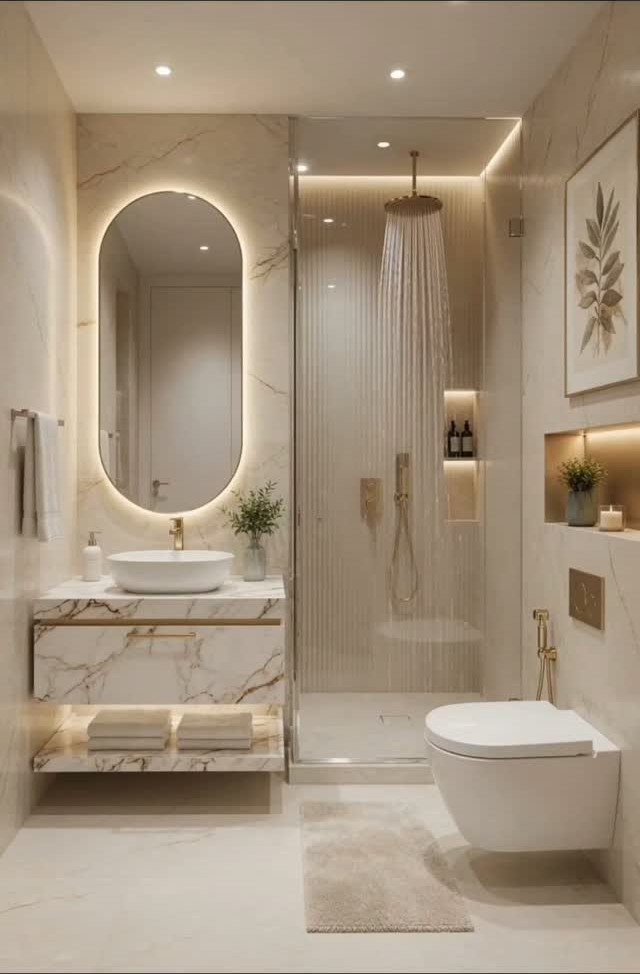
Compact toilets and sinks shave precious inches from the footprint without looking shrunken. A round-front bowl projects less than an elongated one; a wall-mounted tank hides in the stud bay entirely.
A compact toilet paired with a floating vanity gave Brett Masterson’s 650-square-foot apartment its breathing room. For a gut job, consider in-wall carriers for both; for a swap-in, measure the rough-in first, standard sizes exist but mismatches cost a return.
9. Floating Vanity
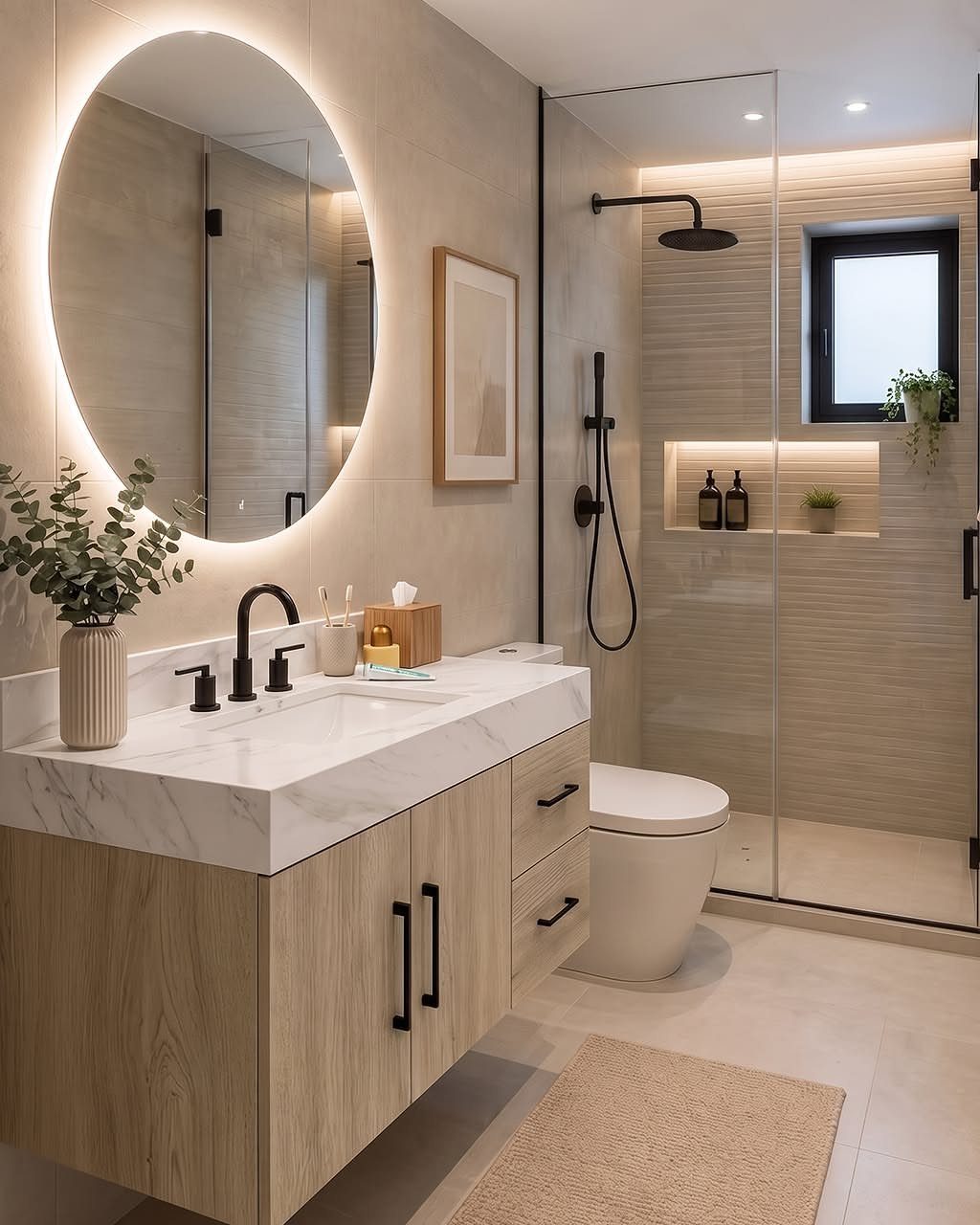
A floating vanity leaves the floor visible all the way to the wall, and the eye reads that emptiness as square footage gained. Wall brackets or a steel carrier frame bolt to studs; the counter and vessel sit on top.
I like this most in a bath where the floor tile is worth showing off. The trade is storage volume, since the drawer stack stops at the counter line.
10. Shower Niche
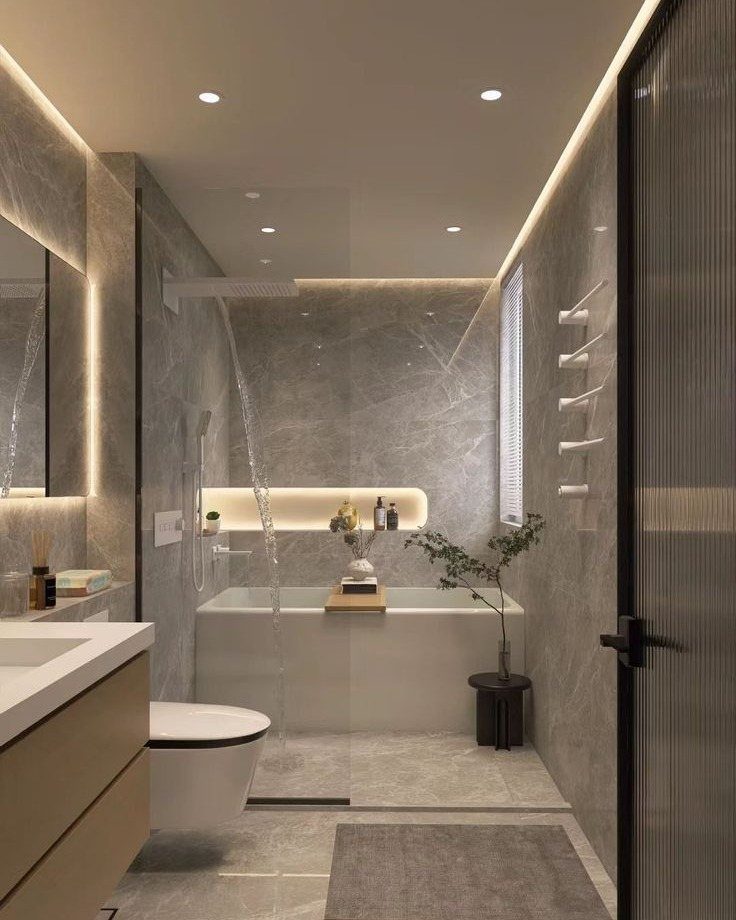
A shower niche is tiled storage that never rusts, never falls, and never needs a suction cup.
For a new build or gut renovation, the framer boxes out the stud bay and the tiler finishes the interior in the same marble as the surround; waterproofing the seams is the step that separates lasting work from a leak.
In a retrofit, a surface-mounted stainless box with silicone adhesion is the honest alternative. Either way, one niche at shoulder height beats a caddy that slides down the rail every third shower.
11. Towel Hooks
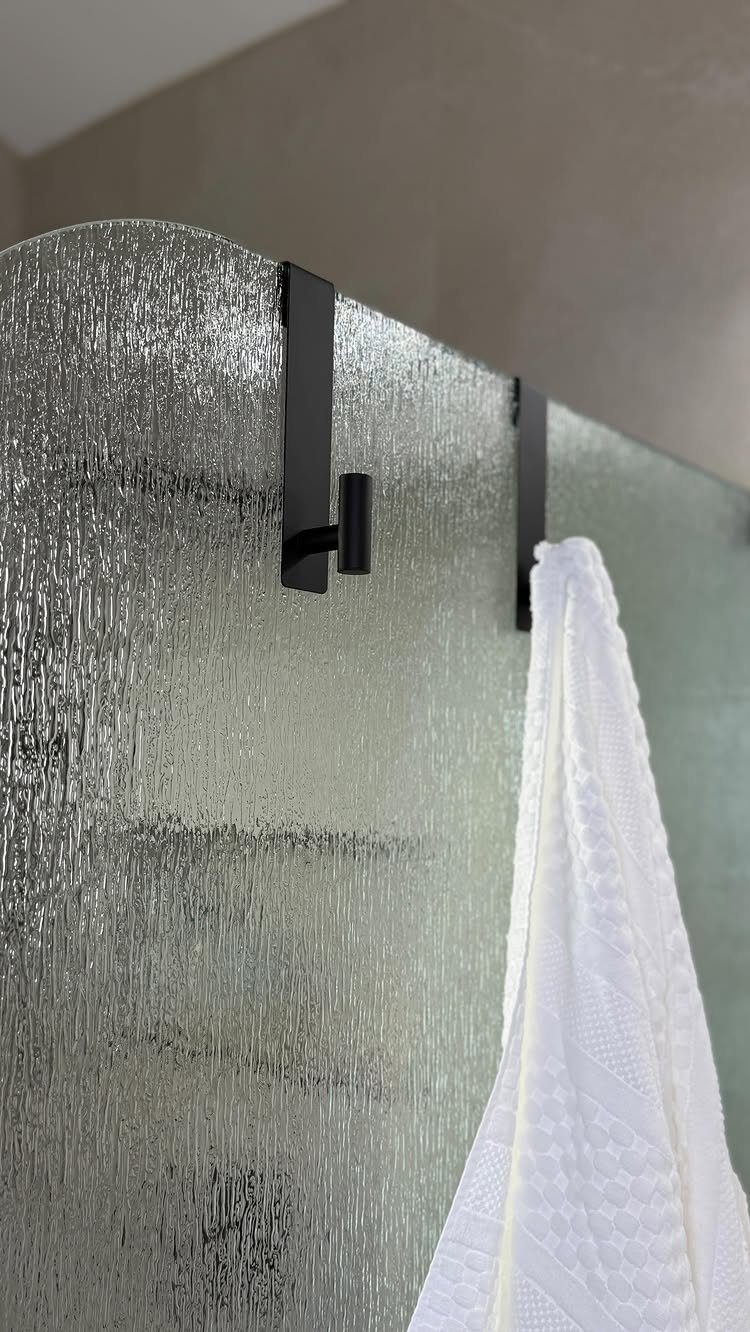
A hook holds a towel in the thickness of the wall, where a bar needs projection and a clear run beside it.
I switched to hooks in my own bath after measuring how much wall a folded towel on a bar actually consumes.
For hand towels, one hook; for bath towels, enough hooks so yesterday’s dries while today’s hangs. Skip the full rack entirely if the room is tiny.
12. Wall-mounted Faucet
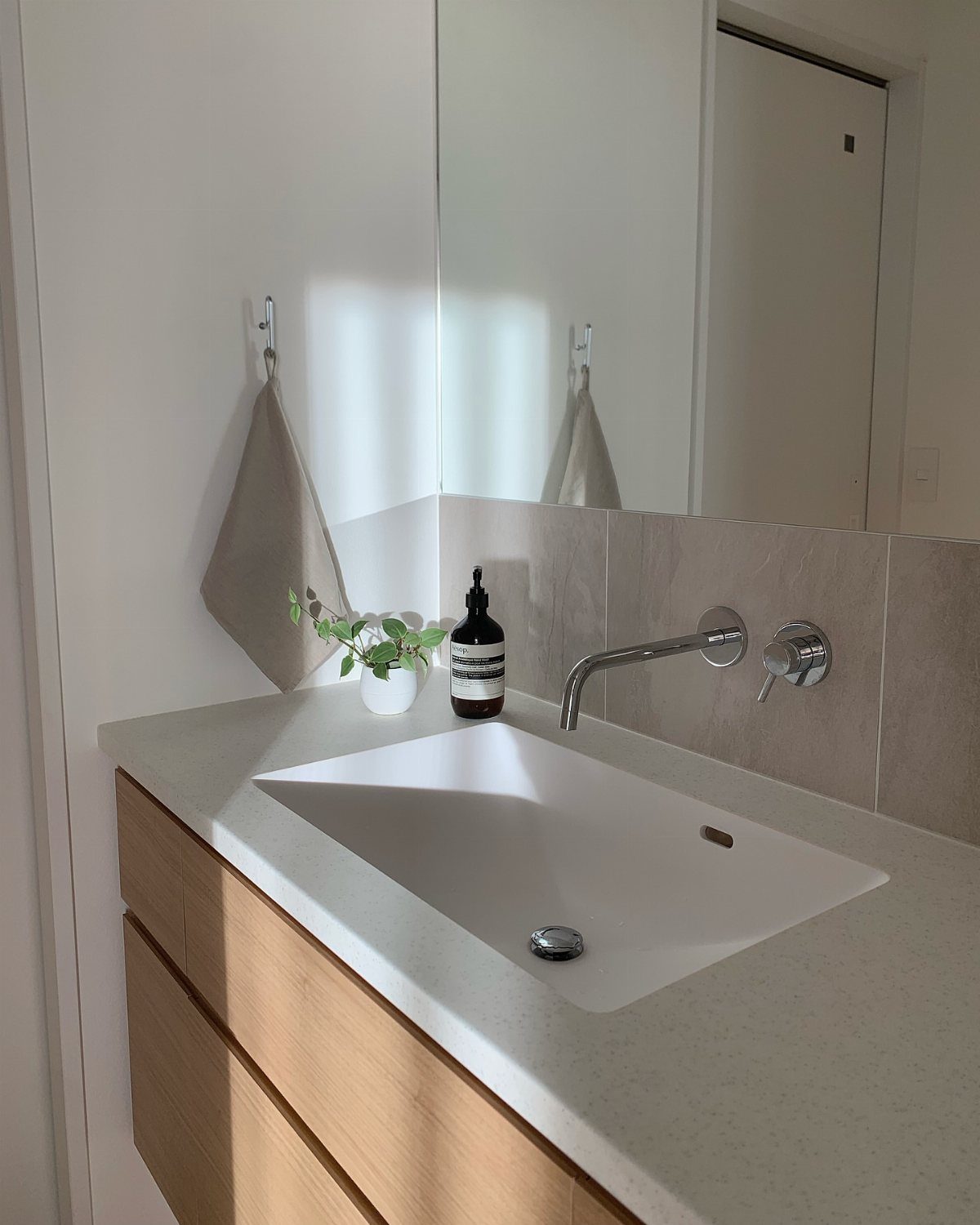
A wall-mounted faucet moves the hardware off the counter and into the wall, which gives back deck space where soap and a toothbrush cup live.
Rough-in height is the detail to nail, too low and the water hits the rim, too high and it splashes.
I would plan this only for a new counter or a full replacement, since moving the supply behind tile is not a weekend. The bonus is cleaning: no base to trap hard-water scale.
13. Curved Surfaces
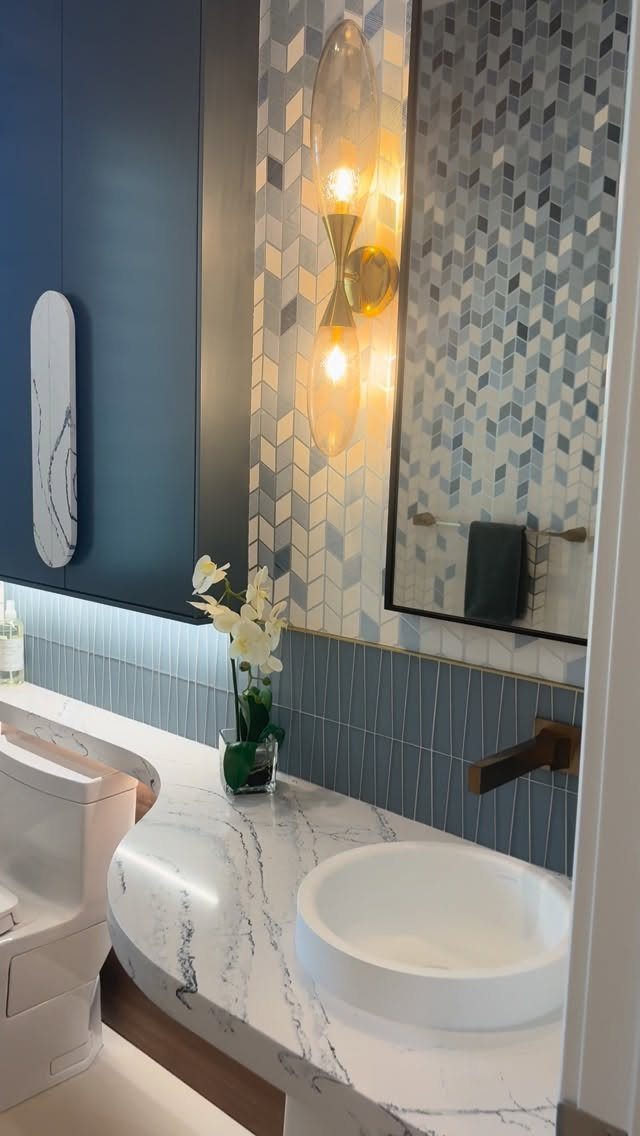
A curved vanity edge or rounded shower enclosure lets a body move past without the hip-check a sharp corner invites.
The visible counter shows the idea: a continuous sweep of surface that reads as one gesture instead of a box jutting into the room.
In a bath where the door swings within inches of the sink, that missing corner is walkable space reclaimed.
I would choose this for the tightest layouts, where the difference between brushing past and banging into something is half an inch of radius.
The trade is fitting; a curved piece costs more to fabricate than a straight one, and not every vanity line offers it.
14. Light Colors on Walls and Fixtures
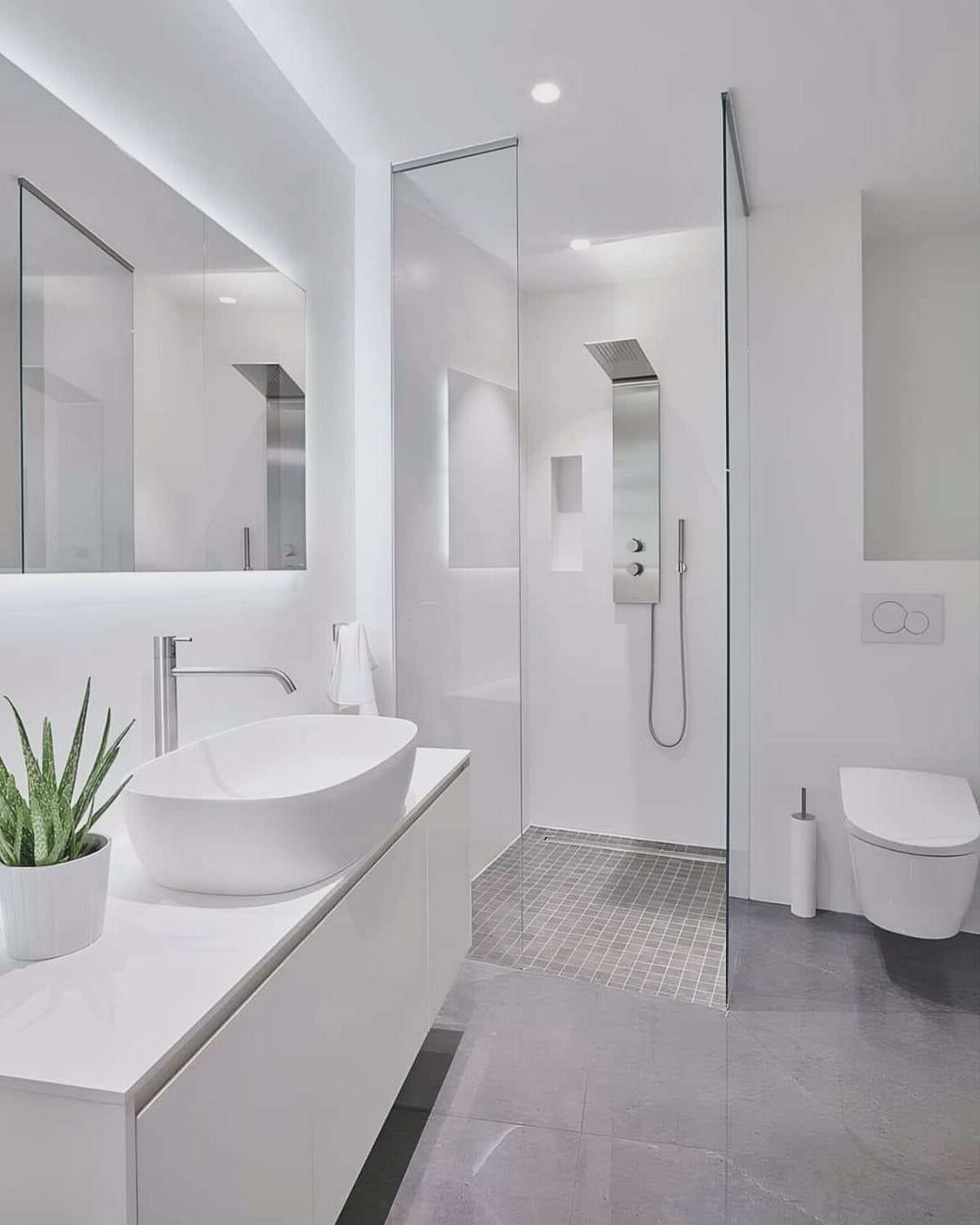
White or pale surfaces bounce light around a room that has little to spare. The visible bath shows the effect: walls, fixtures, and even the floor working as reflectors so the single source multiplies.
A soft mint or warm gray keeps the brightness without the clinical edge pure white can carry. I would paint the ceiling the lightest shade of all, since it receives the least direct light and darkens fastest.
The limit is texture; glossy tile or semi-gloss paint reflects more than matte, but either reads lighter than a saturated color swallowing the same photons. In a windowless bath, this is the first move before any storage goes up.
Psychological Impact of Clutter
High physical clutter raises cortisol levels, the stress hormone that spikes when your environment feels out of control. A small bathroom amplifies the effect because there is nowhere for the eye to rest.
I notice the difference most on mornings when the counter is clear versus mornings when 3 product bottles sit out; the second version starts the day with a low-grade friction I cannot name until I remove them.
The fix is not perfect order.
It is reducing the number of decisions your brain makes before coffee. A visible inventory, whether clear bins or open shelving, turns searching into recognizing.
That shift from active hunt to passive scan is what lowers the cognitive load. In a room you enter twice daily, that saved attention adds up.
Importance of Vertical Space
Vertical storage does not just add capacity; it changes how the room feels. Eyes travel upward naturally in tight spaces, and open shelving high on the wall carries that gaze past the floor clutter.
Designer Madelon Oudshoorn Spaargaren used this in her Amsterdam home, fitting shelves into an existing niche that would otherwise stay dead. The result reads as openness rather than storage added.
I would look for the gaps first: above the door frame, the sliver beside a medicine cabinet, the wall facing the toilet.
A shelf above eye level holds items you reach for weekly, not daily, which is honest storage rather than pretend convenience. The mistake is filling every vertical inch; leave some wall bare so the room still breathes.
Material Considerations
Bathroom storage lives in a micro-climate that regularly hits 90°F with humidity to match.
Powder-coated steel survives this because the coating seals the metal; raw steel rusts in months. Tempered glass, used in shower niches and some shelving, handles thermal shock without the fracture risk of standard glass.
I moved away from wood that traps moisture unless it is sealed constantly. Bamboo works only if the finish is intact; one chip and the fiber swells.
The shift toward clear acrylic or plastic, up 30% in sales over the last decade, makes functional sense in this environment. The material does not corrode, and the contents stay visible in a room where searching means touching damp surfaces.
Frequently Asked Questions
What are good storage options for a small bathroom?
Vertical shelving, clear bins, and compact fixtures are the most effective choices. Over-the-toilet units add two or three shelves without touching the floor, while clear acrylic boxes under the sink stop redundant buying by letting you see what you own.
Wall-mounted open shelving turns narrow gaps between fixtures into usable depth, and a floating vanity keeps the floor visible so the room reads larger.
What to do with narrow space in a bathroom?
A shallow wall-mounted shelf turns slivers of wall into vertical storage without eating floor space.
Matte white or pale wood keeps the visual weight low against tile, and leaving an inch of clearance on each side of a basket means it slides out clean without catching on anything.