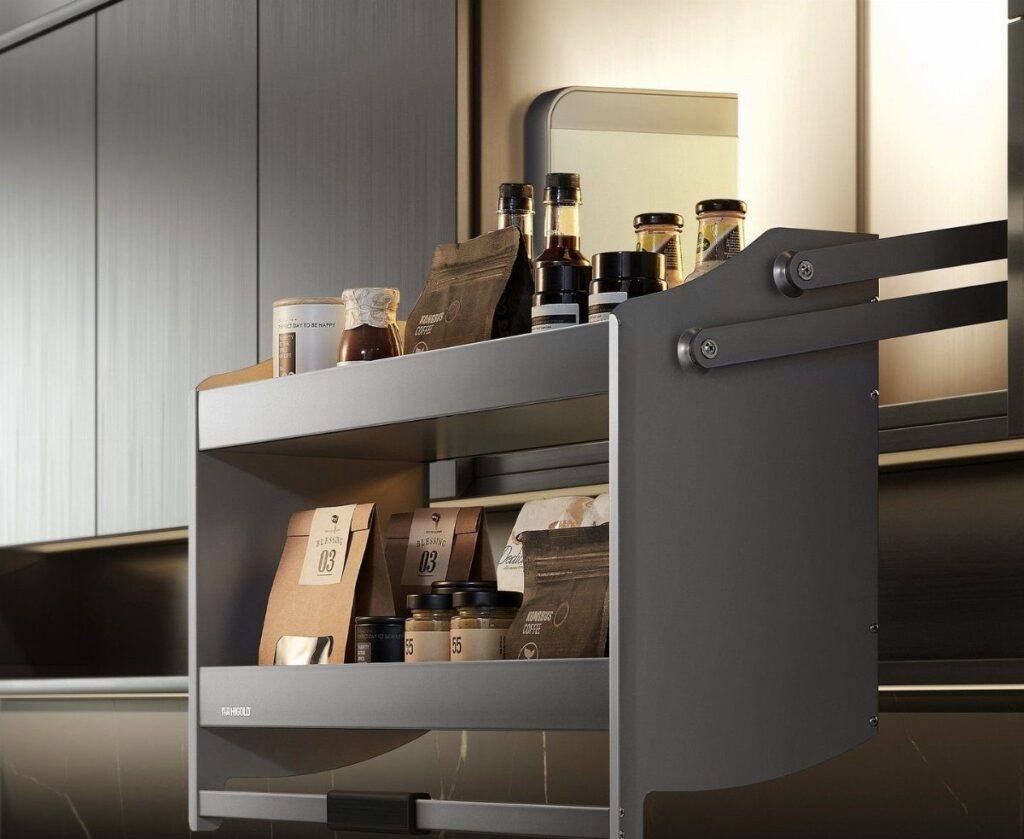
Pull-down upper cabinet hardware runs from basic shelves to custom builds, and what you actually store in that cabinet is what shapes the choice.
A single cook with spice jars needs a different system than a household loading heavy dishes onto pull-down trays.
1. Space-saving Pull-down Shelf
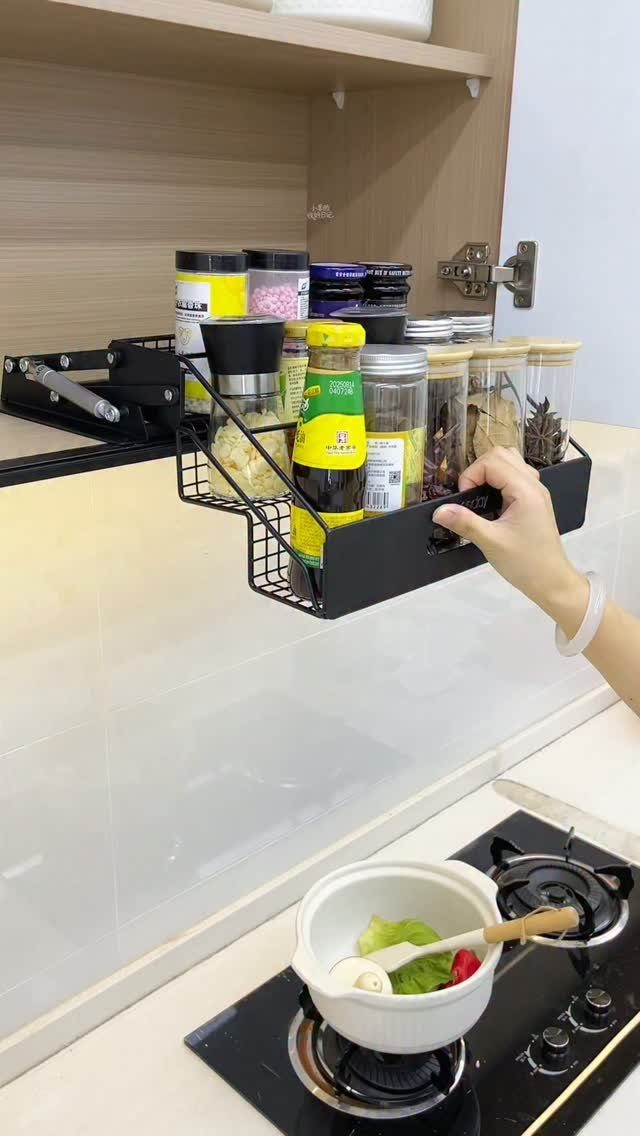
A black metal frame lowers a single shelf on a simple hinge and glide system, bringing jars and small pots right to counter level.
This suits kitchens where cabinet depth is shallow and every inch of vertical space matters; the mechanical arm folds flat when you push it back up.
Install one in a cabinet above your main prep area so spices and cooking oils sit where you actually chop. Several brands make versions for standard upper cabinets, though the hardware dimensions vary so measure your interior depth before ordering.
Check that your cabinet interior is deep enough for the hardware to fit and close inside it; shallow cabinets leave you with a shelf that won’t retract properly.
2. Tiered Pull-down Trays
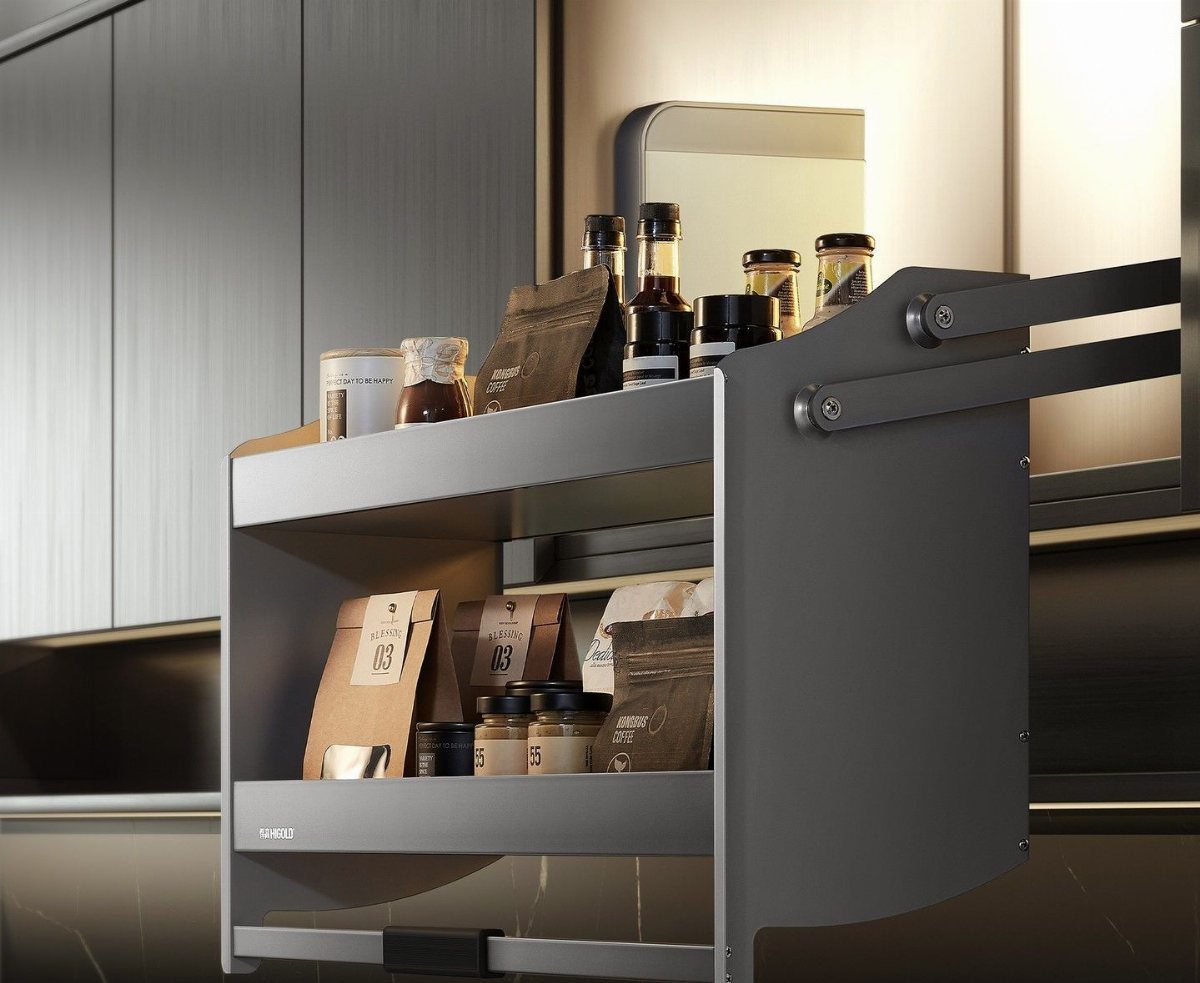
Multiple trays that move together let you sort pantry items by size and reach everything at once without restacking.
HIGOLD hardware runs on a gas-strut assist, so the pull feels light even when both trays are loaded. I would mount this in a cabinet above the coffee station, with mugs on top and beans or filters below.
Measure your cabinet height first. These need enough clear interior space to lower fully, and shallow European-style cabinets often do not have it.
3. Heavy-duty Pull-down Shelf
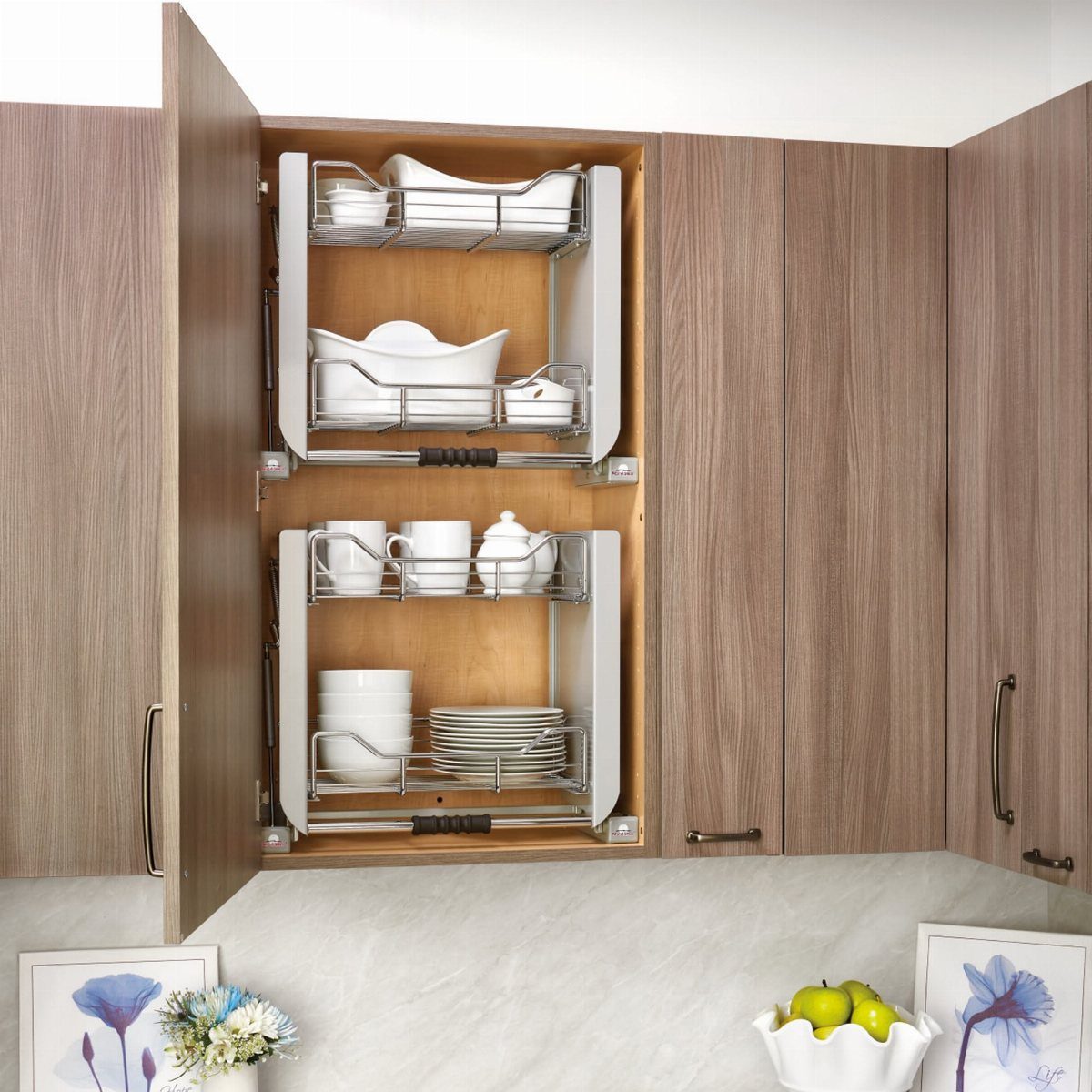
These carry the load that standard pull-down hardware cannot, and a white dual-tier unit holds ceramic plates and bowls without strain.
Rev-a-Shelf makes a 24-inch chrome version rated for heavier storage, with a frame that bolts to the cabinet sides rather than the door.
The key difference is in the mounting: side-braced units transfer weight to the cabinet box itself, not the hinges.
Installation takes longer than it looks and you will need a second pair of hands for the initial hang. The mechanism comes assembled; the puzzle is aligning side bolts level in cramped upper-cabinet space.
4. Pull-down Spice Rack
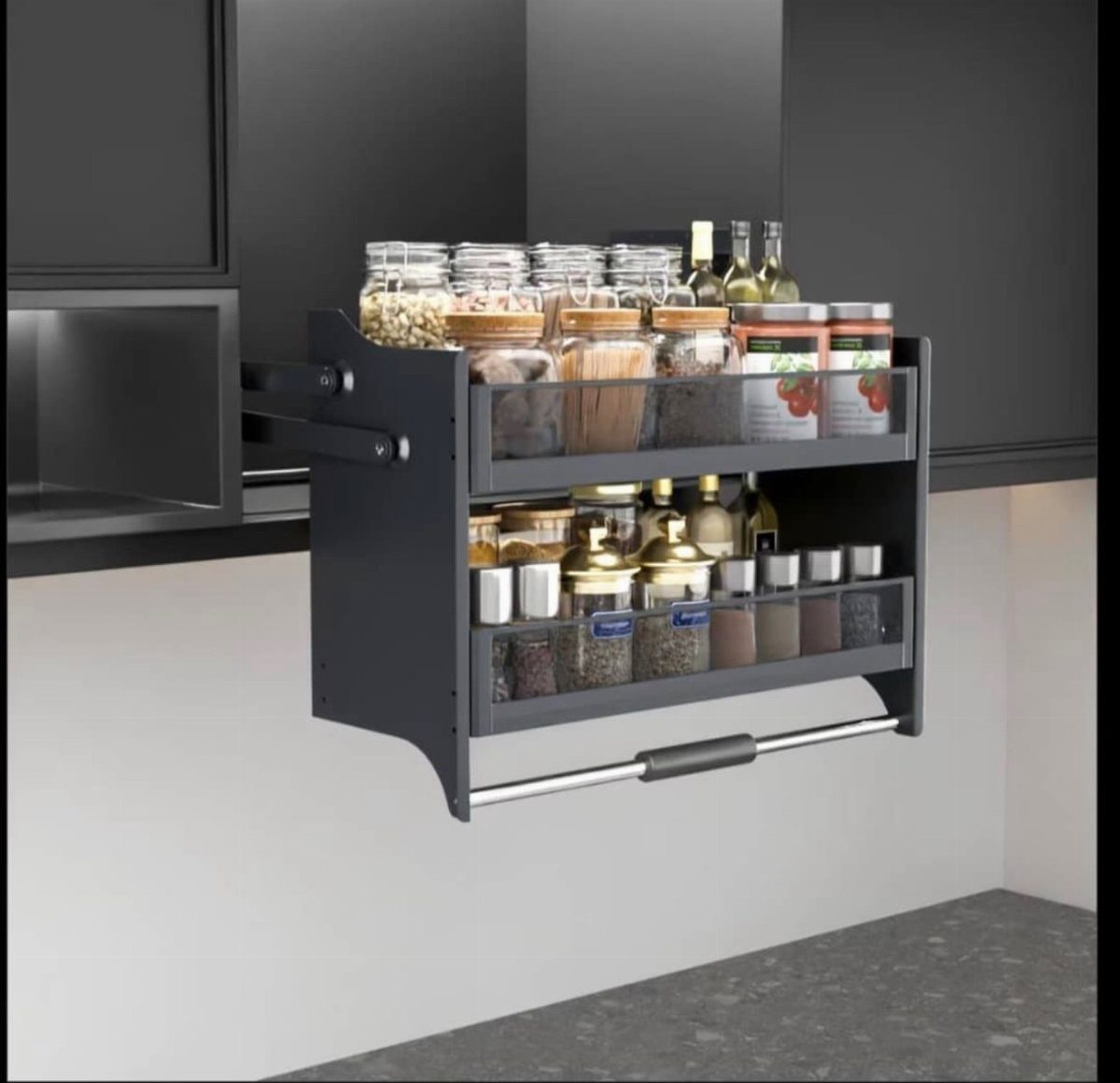
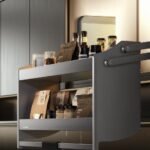
A dedicated spice rack keeps small jars from vanishing behind cereal boxes and brings them to eye level when you pull.
A charcoal-grey unit uses 2 tiers with a guard rail, sized for small spice jars and taller oil bottles behind them.
I like this over the counter where I actually cook, not across the kitchen where I store dry goods.
The DropoutCabinets 8001 version mounts to the back of a cabinet door instead, which is worth considering if your cabinet interior is already crowded: door-mounted racks swing out with the door and do not use the lowering motion, but they free shelf space for larger items.
Either way, count your jars before choosing. A rack sized for a moderate count looks wrong half-empty, and overflows when overstuffed.
5. Custom Pull-down Cabinet
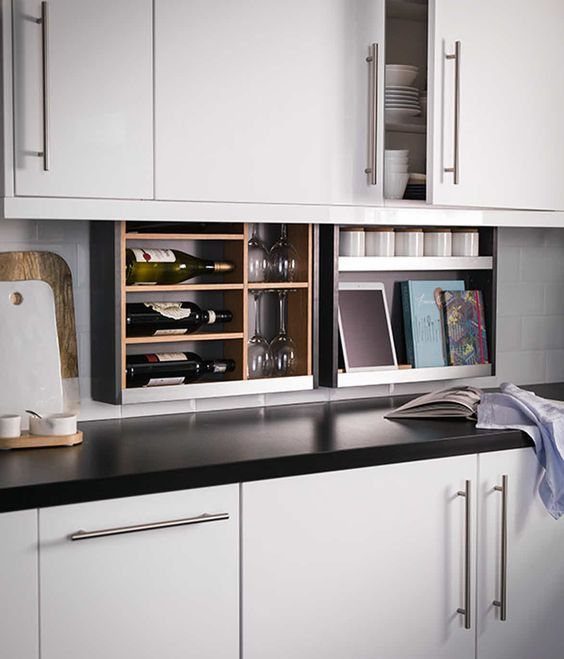
A built-in unit tailored to what you actually store, rather than a generic rack adapted after the fact.
A white kitchen has open pull-down shelving sized for wine bottles and glassware, with a slot for a tablet at the back: the dimensions follow the contents, not the other way around.
Custom work starts at measuring what you own and deciding what you reach for.
A cabinetmaker builds the frame, then hardware like the HIGOLD or Rev-a-Shelf systems lower it. The result costs more than off-the-shelf pull-downs, but the storage fits precisely.
I would only go custom after living with standard hardware long enough to know what it failed to hold. The gap between a good generic system and a bespoke one narrows every year as more sizes enter the market.
Installation Tips for Pull-down Shelves
Weight ratings matter more than the marketing suggests.
A shelf rated for what sounds like a generous weight limit fills up fast once you load it with ceramic dinner plates and bowls. Check the rating against what you actually own, not what you hope to store.
Side-mounted frames bolt through the cabinet box itself, which is why they handle heavier loads.
Door-mounted hardware hangs from the hinges, and standard kitchen hinges were never built for that. I have seen a cabinet door sag from the weight after a short time.
Most pull-down mechanisms need enough interior cabinet height to lower fully.
Measure before ordering, not after the box arrives. The install itself is straightforward if you have a second person; the awkward part is holding the assembled frame level while you mark bolt holes in cramped upper-cabinet space.
Benefits of Pull-down Cabinets
The real gain is not reaching high shelves without a stool.
It is using the shelf you already have instead of leaving it half-empty because getting to the back is too much trouble. A pull-down brings the back corner to your chest, and that changes what the cabinet can hold.
Tall cabinetry becomes practical for daily items, not just holiday dishes. I would rather store my everyday plates in a high cabinet with a pull-down than in a low cabinet where I bend every time.
The safety angle matters more as cabinets get taller.
A standard upper cabinet with a high ceiling puts the top shelf out of easy reach. A pull-down removes the ladder, the reach, and the risk of a dropped dish on your way down.
Materials for Pull-down Mechanisms
Metal frames dominate the market for good reason. A black or charcoal powder-coated steel frame resists the humidity and temperature swings of a kitchen better than wood, and the thin members leave more room for contents.
Chrome finishes cost more and show water spots; I would pick powder coat near a sink or range.
Wood appears in custom builds where the frame itself is the visible finish.
A cabinetmaker can match the interior to your existing cabinetry, but the hardware still runs on metal struts or hinges. The wood is aesthetic; the mechanism is not.
Wire baskets ventilate better than solid trays, which matters for root vegetables or anything damp.
Solid trays keep small items from tipping through. The notes I found lean toward wire for general storage and solid trays for spices or oils.