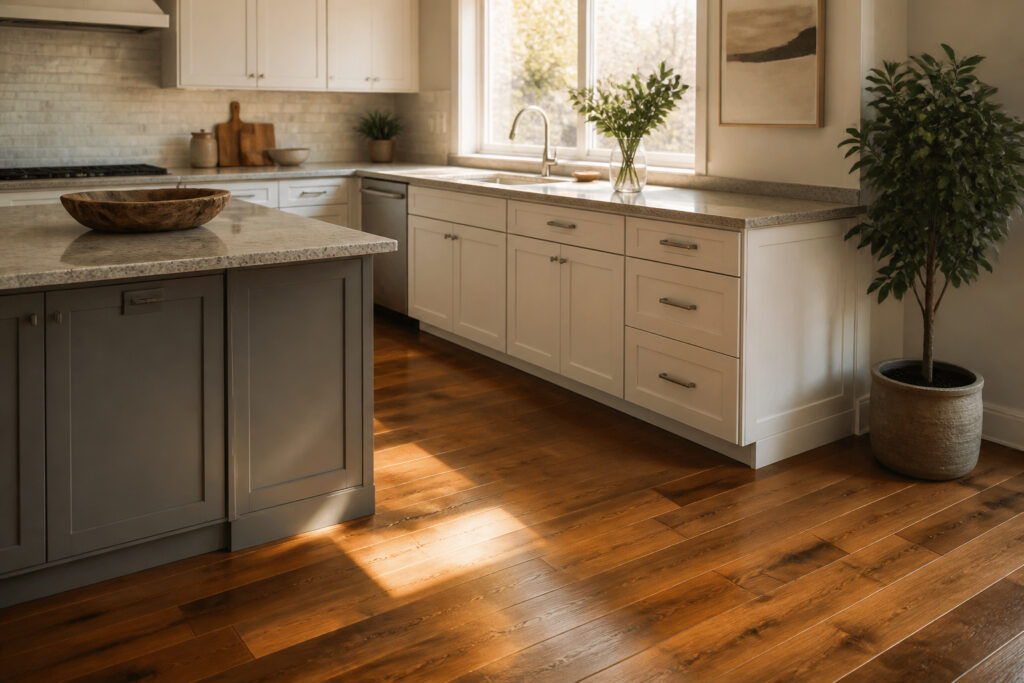
Engineered hardwood wins for long-term owners who want real wood underfoot and the option to refinish decades later. LVP wins for busy households, wet rooms, and anyone installing it themselves on a Saturday.
The flip is moisture. A slow leak under my dishwasher ran all weekend and the vinyl shrugged it off; engineered hardwood in that same spot would have cupped or separated its veneer.
That same veneer thickness, 4–6mm on quality planks, is what lets engineered hardwood outlast LVP across 50-plus years.
What Engineered Hardwood and LVP Actually Are
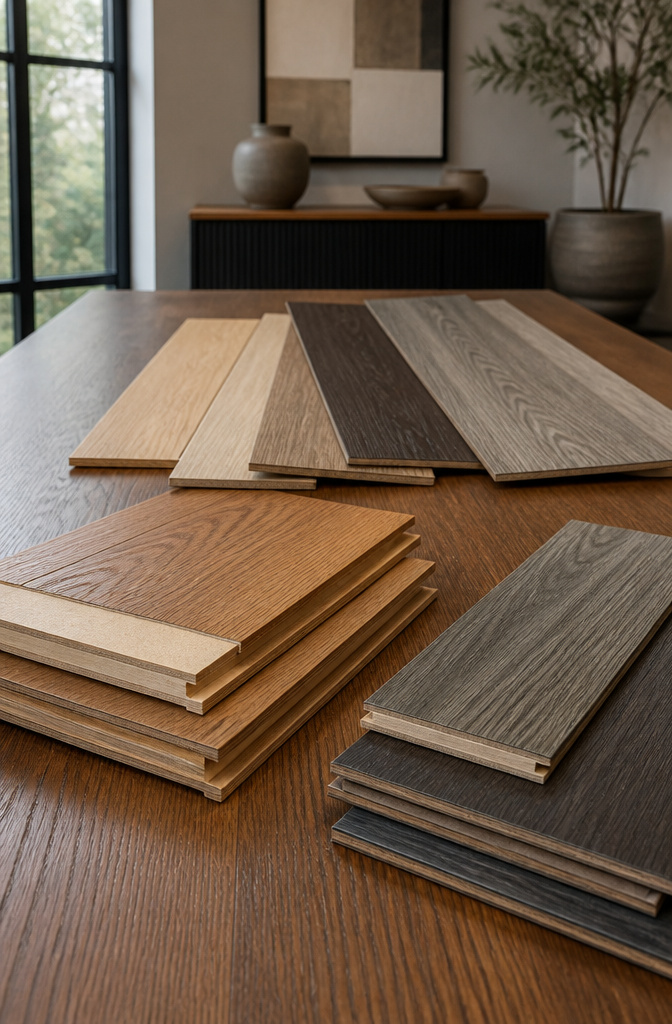
Engineered hardwood starts with a real wood veneer, 3mm to 7mm of actual oak, maple, or hickory sliced from the tree and bonded over a plywood, HDF, or LVL core.
The grain in each plywood layer runs a different direction, which keeps the plank from swelling or shrinking the way solid hardwood does.
That backing layer underneath adds stability and some moisture resistance, but the headline is still wood on top, wood-like behavior throughout.
LVP is built from the bottom up: a backing layer, then a vinyl core in one of two formulas. WPC mixes recycled wood pulp with PVC for a softer, thicker plank with waterproofing built in.
SPC trades that for limestone powder blended with PVC, giving it dimensional stability measured at over twenty times that of laminate.
Above the core sits a printed design layer, the photograph that makes it look like wood or stone, and the whole thing is capped by a clear wear layer measured in mils.
6 to 30 mils thick, where 6 is residential light-use territory and 30 is commercial-grade armor against scratches and stains.
The distinction that matters for every comparison after this one: engineered hardwood is wood all the way through its working surface, then engineered for stability below.
LVP is a photograph protected by plastic, with performance numbers decided by how thick that plastic cap is.
1. How They Look and Feel Underfoot
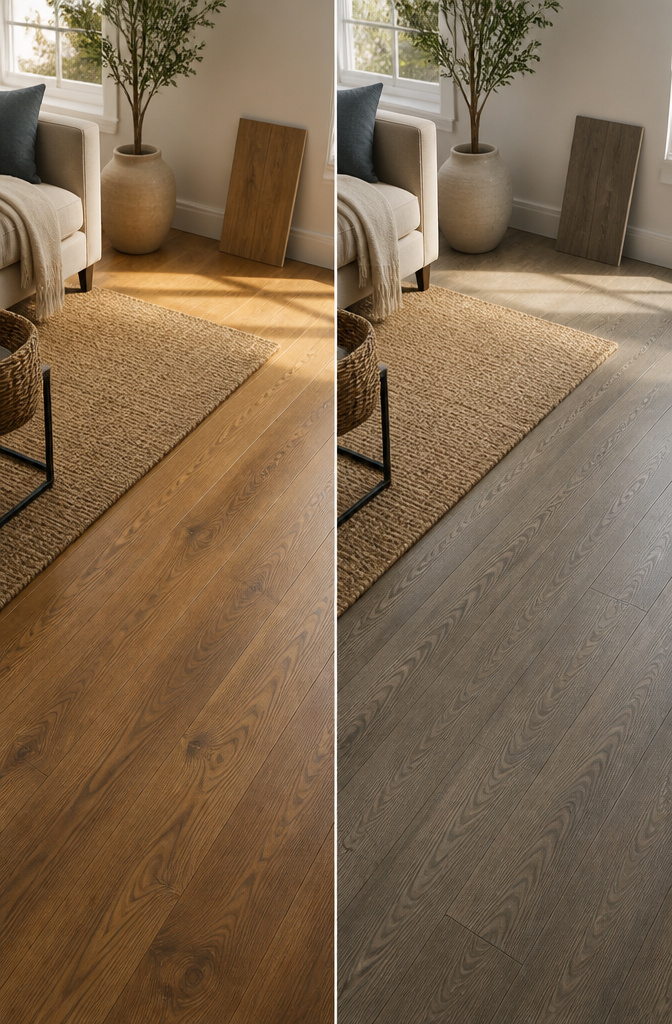
Engineered hardwood carries the warmth and slight give of real oak or maple under bare feet, a texture that synthetic materials still only approximate.
The veneer comes from actual trees, which means the grain varies plank to plank in ways no printed image fully duplicates.
LVP has narrowed the gap considerably; embossed-in-register technology now raises the grain texture on high-end planks, and an attached underlayment adds cushioning that older vinyl lacked. But the surface remains a printed photograph of wood, not wood itself.
For resale, that distinction still lands on hardwood’s side. Buyers respond to authentic material, and engineered hardwood can be refinished or restained to shift tone with changing décor.
LVP offers thousands of prefixed styles, yet once the color is chosen, it is fixed; painting it is not recommended. The daily difference is quieter but persistent.
On winter mornings, LVP runs cooler and harder underfoot. The comfort gap shrinks with quality underlayment, though for some the authentic feel remains decisive.
2. Durability and What Happens When They Wear
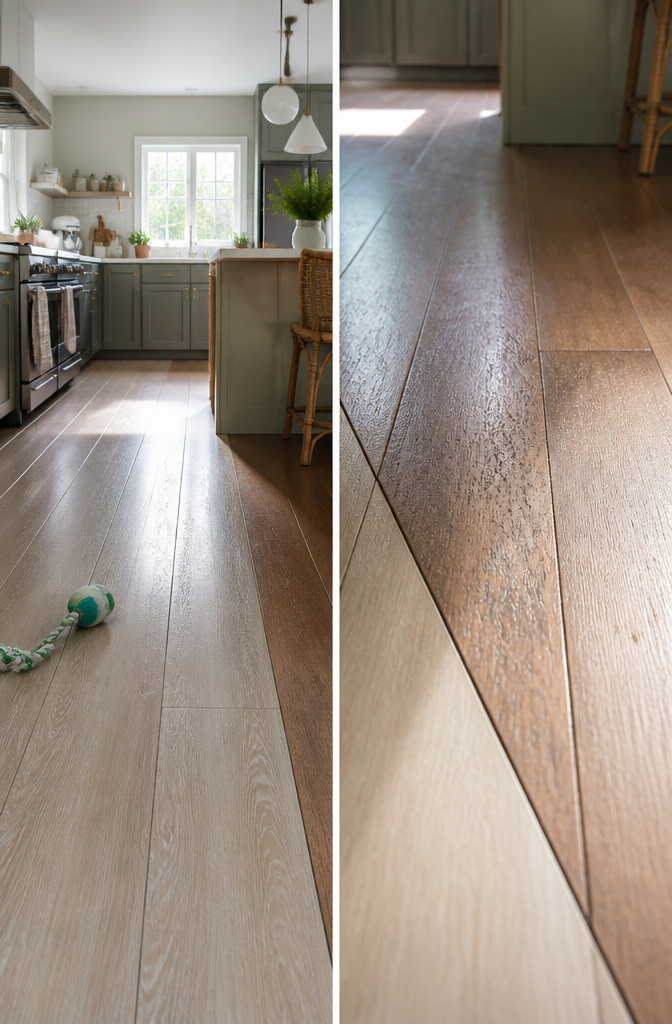
The wear layer on LVP is what lets a 70-pound dog scramble after a tennis ball without leaving permanent evidence.
Most quality planks carry a 12-mil to 20-mil wear layer, and that plastic surface shrugs off scratches and shallow dents that would mark engineered hardwood.
In a busy hallway or a kitchen with a clumsy Labrador, that difference shows up in year three, not year fifteen.
Engineered hardwood gives up ground on daily abuse. The wood veneer scratches more readily, and a dropped cast-iron pan can dent the surface where LVP might bounce back.
What engineered hardwood offers instead is a second life. A veneer of 4–6mm can be refinished multiple times, and a 6mm veneer might survive up to ten sanding cycles.
Thin veneers at 1–2mm limit you to one to three refinishes, if any.
That refinishing gap drives the lifespan split. LVP runs 15–30 years before replacement, with lower-end products sometimes failing in five.
Engineered hardwood spans 20–90 years, the wide range depending almost entirely on veneer thickness and how often you refinish. The floor you can sand down and seal again behaves more like furniture you keep than flooring you replace.
3. Water Resistance and Where Each Can Go
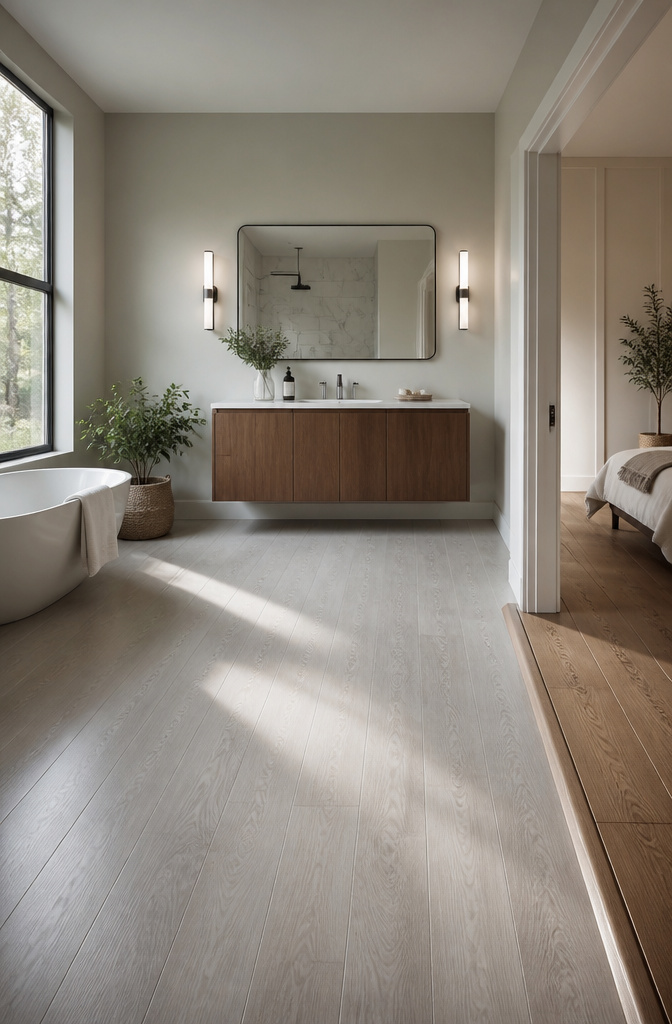
LVP is fully waterproof, and that single property reshapes where you can put it. The synthetic core blocks water from penetrating the material itself, so spills, humidity, and even some standing water won’t warp or swell the planks.
Kitchens, bathrooms, basements, and laundry rooms are all on the table without special precautions.
Engineered hardwood handles moisture better than solid hardwood because its layered construction resists some warping, but it is not waterproof. Prolonged exposure causes damage: warping, cupping, or separation of the veneer layer.
Spills need immediate cleanup, and standing water is a real threat.
The question of engineered hardwood in kitchens or bathrooms comes up constantly. A kitchen with careful cleanup habits can work, though it demands more vigilance than most busy households manage.
Bathrooms are a harder pass; the combination of splashes, humidity spikes, and the near-certainty of eventual overflow makes the risk outweigh the look for me. If the room has a toilet or a tub, LVP is the safer bet.
Some manufacturers now offer waterproof engineered hardwood, Robbins with its HydroGuard line among them. These are worth watching if you want real wood in a moisture-prone space, but they remain exceptions rather than the norm.
4. Installation: What a Weekend Actually Takes
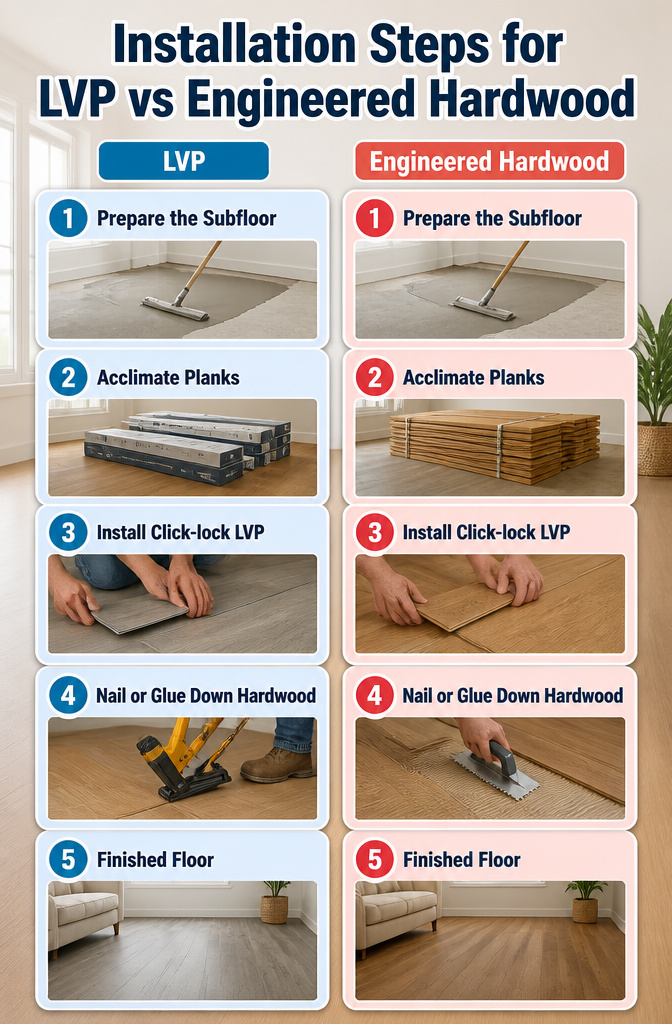
Click-lock LVP snaps together into a floating floor, which means you can walk on it the same evening you start.
The whole system sits on top of the subfloor without glue or nails, and the tools you need fit in a small toolbox.
My own install in a 10-by-12 bedroom took about six hours, including the time I spent filling a low spot near the closet with self-leveling compound.
That prep step matters: LVP shows every bump and seam underneath, so an hour smoothing the subfloor saves a day of regret later.
Engineered hardwood demands more patience and usually more hands.
The planks need an acclimation period inside your house before they go down, and the install itself calls for a flooring nailer or specialized adhesive, plus the skill to use either without splitting the veneer.
Professional rates run $3.00–$10.00 per square foot versus LVP’s $1.00–$5.00, and that gap is mostly labor. For a renter or a first-time owner with a Saturday and a borrowed miter saw, the math leans one direction.
5. Cost Per Square Foot and Total Project Price
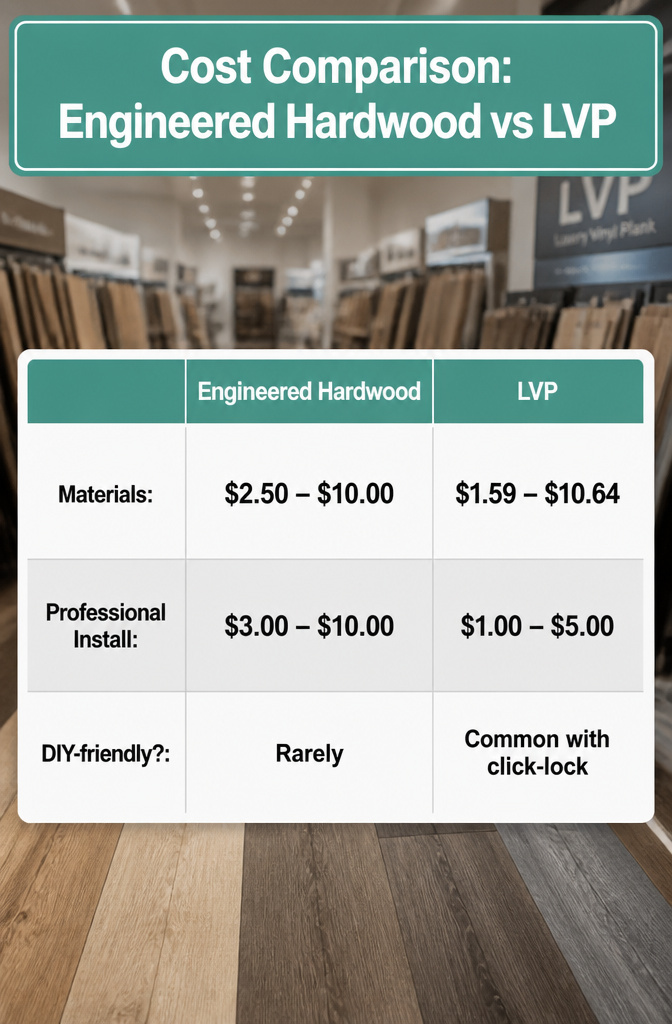
Engineered hardwood materials run $2.50 to $10.00 per square foot, with installation adding another $3.00 to $10.00. LVP materials sit at $1.59 to $10.64 per square foot, and installation costs $1.00 to $5.00.
The ranges overlap enough that either one can end up the bigger bill depending on what grade you pick.
| Engineered Hardwood | LVP | |
|---|---|---|
| Materials (per sq ft) | $2.50 – $10.00 | $1.59 – $10.64 |
| Professional install (per sq ft) | $3.00 – $10.00 | $1.00 – $5.00 |
| DIY-friendly? | Rarely | Common with click-lock |
LVP is usually cheaper overall, especially when you factor in labor. A click-lock LVP system goes down fast enough that a weekend with a miter saw and a rubber mallet can erase the install line entirely.
Engineered hardwood, particularly glue-down or nail-down, demands more skill and more specialized tools.
No material always costs more; prices overlap too much. Some put premium LVP above mid-grade engineered hardwood, while others reverse that.
Your actual cart total decides it: a $7.00 LVP with underlayment and trim can meet or beat a $4.00 engineered plank once the pro install quote lands.
6. Keeping Them Clean Over Years
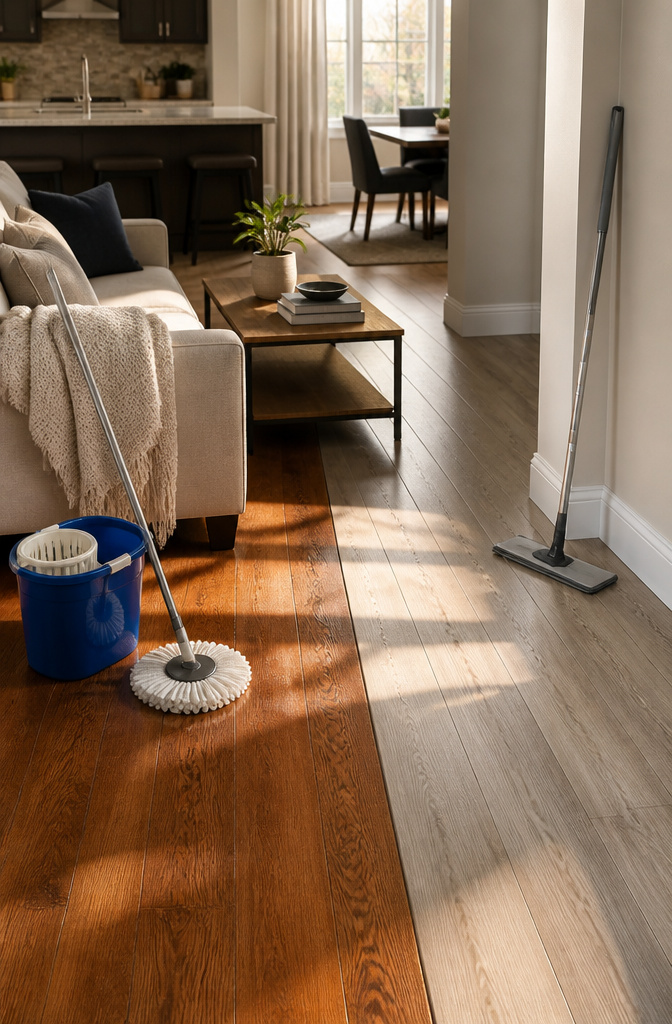
Daily care looks almost identical between the two. Both get swept or vacuumed, and both handle a damp mop with the right cleaner.
Engineered hardwood wants a wood-specific formula and a light touch with water; LVP shrugs off a wet mop and mild cleaner without much worry. Spills on engineered wood need immediate attention, since moisture seeping between planks can cause warping.
LVP’s near-waterproof surface makes that particular panic unnecessary.
The real separation happens over years, not mornings. Engineered hardwood with a 2mm wear layer or thicker can be refinished when scratches or dullness set in, and a 3mm-plus veneer can handle multiple refinishings.
That capacity stretches its lifespan past 50 years with decent care. LVP has no such option.
Once the wear layer goes, the whole floor goes too. Budget LVP may need replacement in 5–10 years; premium lines typically last 20–30 before a full tear-out becomes the only fix.
Environmental Impact and What I Check For
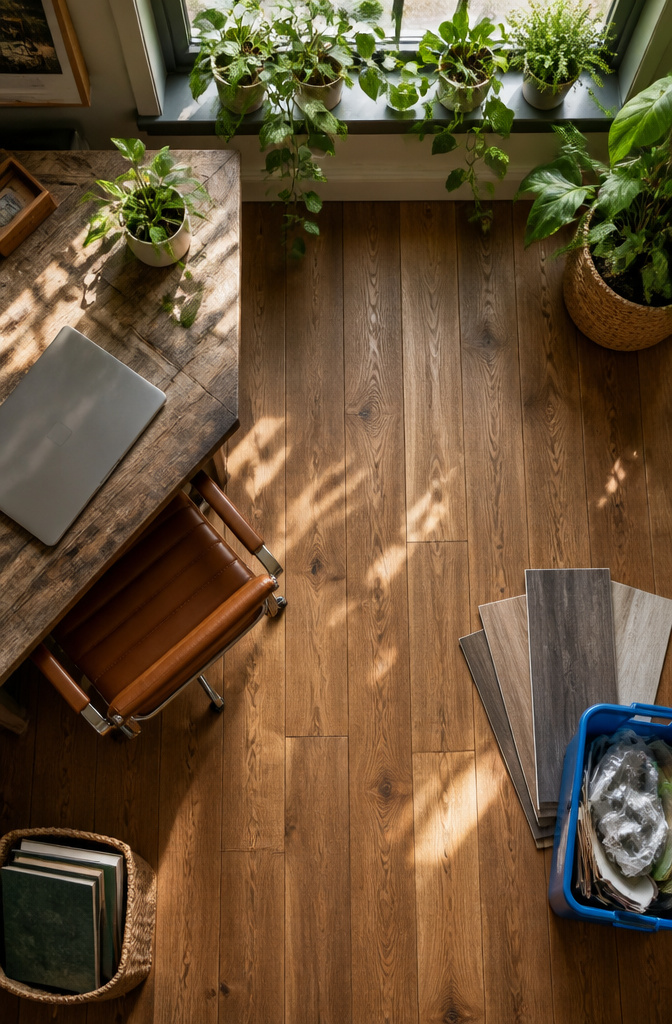
Engineered hardwood carries the edge on sustainability because it uses real wood, and manufacturers like Mullican plant two or more trees for every one harvested.
FSC-certified options exist from multiple producers, so the chain of custody is trackable if that matters to your project.
LVP is synthetic through and through. Some brands offer recyclable lines, but most of it heads to landfill eventually, and where all that vinyl ends up in twenty years is still an open question.
The product lasts a while, then it does not.
I have not found specific environmental certifications for LVP manufacturers in my own searching, so I do not claim to know more than I do.
The honest play is this: if keeping materials natural and replaceable ranks high on your list, engineered hardwood is the clearer match.
If you need the water tolerance and the lower price point of LVP, you are trading some of that away.
Which I Choose for What Room
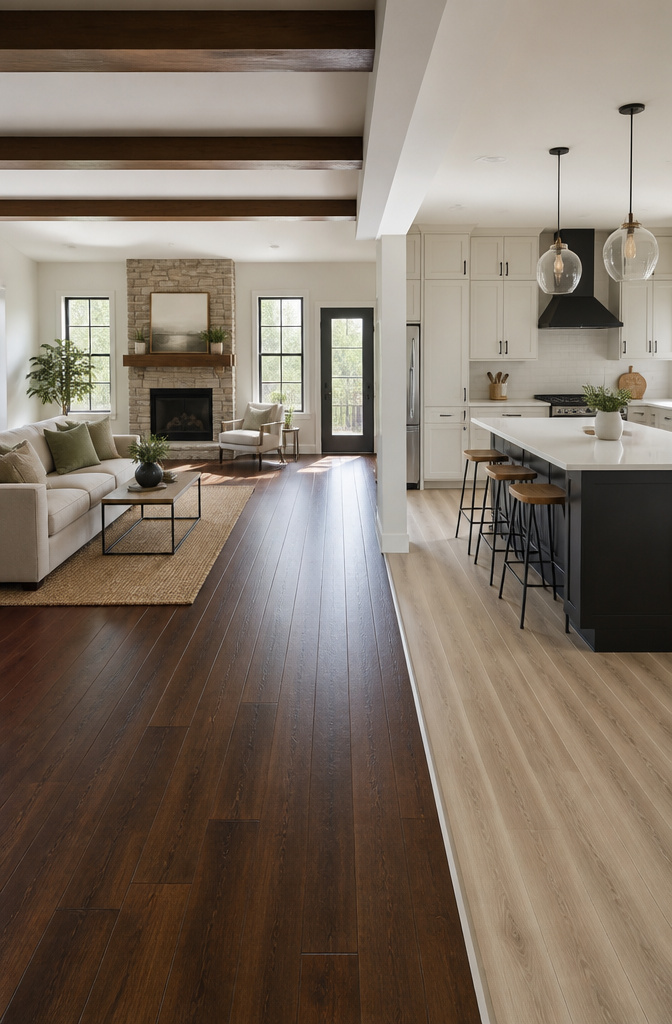
In my own place, engineered hardwood went into the living room and the main bedroom where dry air and lower traffic let the real wood surface matter most.
LVP took the kitchen, the bathroom, and the basement stairs where moisture and grit never stop.
A year after that install, a slow leak under the dishwasher ran for most of a weekend before I found it; the vinyl came through with no swelling at all, which settled my opinion on where each material earns its keep.
For a rental, LVP in every room is the move I would make again. LVP runs $2.50 to $5 per square foot against engineered hardwood’s $4 to $10, a gap that matters when you are not staying long enough to see resale value.
In a first home you plan to sell, engineered hardwood in the dry, visible spaces adds the warmth buyers notice, and the higher upfront cost spreads across years you will actually live there.
The mistake I watched a friend make was engineered hardwood in a ground-floor entryway. Salt and slush from four months of Midwest winters dulled the finish faster than two years of living-room use did mine.
High-traffic zones that stay dry still favor hardwood if you accept the maintenance; high-traffic zones that get wet or dirty demand the synthetic core.
Resale Value and When That Matters
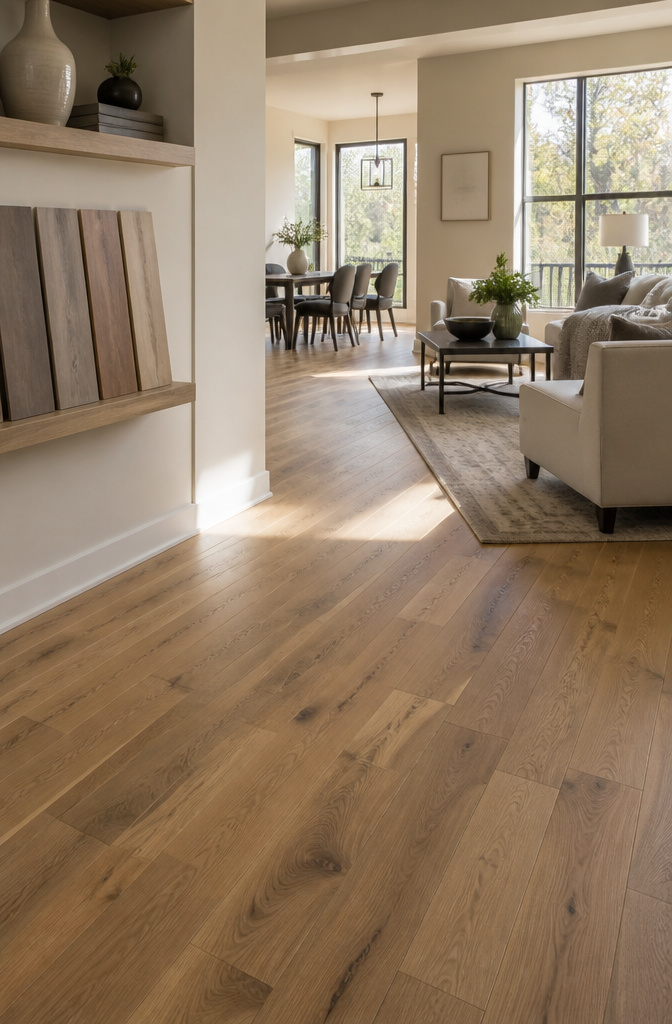
Engineered hardwood carries the resale premium because buyers read it as real wood, even with the plywood core. LVP can look convincing, but it will not add value to your home the way engineered hardwood does.
That gap matters less than you might think, though.
A renter installing flooring with a landlord’s permission, or a first-home owner likely to sell in five to ten years, is looking at a shorter window than the decades it takes for hardwood’s longevity to pay off financially.
High-quality LVP lasts 20–30 years; engineered hardwood with a thick enough veneer can be refinished and push past 50. The math only favors hardwood if you stay long enough to need that second cycle.
I factor resale in only when the timeline stretches past fifteen years or the neighborhood expects hardwood. For a quick refresh before a probable sale, I have put in LVP without regret.
The buyers still saw clean, current floors. They just did not pay extra for them.
Frequently Asked Questions
Which lasts longer, engineered hardwood or LVP?
Engineered hardwood lasts longer, typically 20 to 90 years versus 15 to 30 years for LVP. The gap widens because a thick veneer, 4mm or more, can be sanded and refinished multiple times.
LVP has no refinishing option; once the wear layer thins out, replacement is the only fix.
Is LVP cheaper than engineered hardwood?
LVP is usually cheaper overall, though the ranges overlap enough that either can win depending on grade. Material costs run $1.59 to $10.64 per square foot for LVP against $2.50 to $10.00 for engineered hardwood, and professional installation adds $1.00 to $5.00 versus $3.00 to $10.00.
The bigger savings come from DIY click-lock installs that skip labor entirely.
Can engineered hardwood be used in kitchens or bathrooms?
Engineered hardwood can work in a kitchen with careful cleanup habits, but bathrooms are a harder pass.
The material handles average moisture better than solid hardwood thanks to its layered core, yet it is not waterproof; prolonged exposure causes warping, cupping, or veneer separation. Any room with a toilet or tub favors LVP, which blocks water completely.
Is LVP used in high-end homes?
High-end LVP with thick wear layers and embossed-in-register texture has made its way into upscale spaces, but it still does not carry the resale premium of real wood.
Buyers respond to authentic material, and engineered hardwood can be restained to shift with changing décor where LVP’s color is locked in place.
What are the disadvantages of luxury vinyl plank?
LVP cannot be refinished, so once scratches wear through the clear cap or the printed layer fades, the whole floor must be torn out.
It runs cooler and harder underfoot than wood, and while it imitates grain texture well, the surface remains a photograph rather than actual wood.
Most brands also lack strong environmental certifications, and the synthetic material heads to landfill at end of life.
What are the downsides of engineered hardwood flooring?
The wood veneer scratches and dents more easily than LVP’s plastic wear layer, and moisture is a constant threat; spills need immediate cleanup and standing water can ruin planks.
Installation demands more skill, with acclimation periods and either a flooring nailer or specialized adhesive. Professional labor runs two to three times the cost of LVP installation.
Which flooring is better, engineered wood or LVT?
Engineered wood wins for dry, visible spaces where warmth underfoot and resale value matter, and where you plan to stay long enough to refinish.
LVT, or LVP in plank form, wins for moisture-prone rooms, busy rentals, and anywhere you need waterproofing and fast DIY installation. The right choice depends on which room and how long you will live with it.