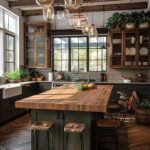
The ideas below range from a weekend paint job on existing cabinets to a full herringbone install with angled cuts and extra material ordered.
A white or navy cabinet can turn muddy or cold against the wrong undertone in a dark floor, so I hold a sample board on the actual boards at noon before I buy a gallon.
1. Two-tone Cabinet Layouts
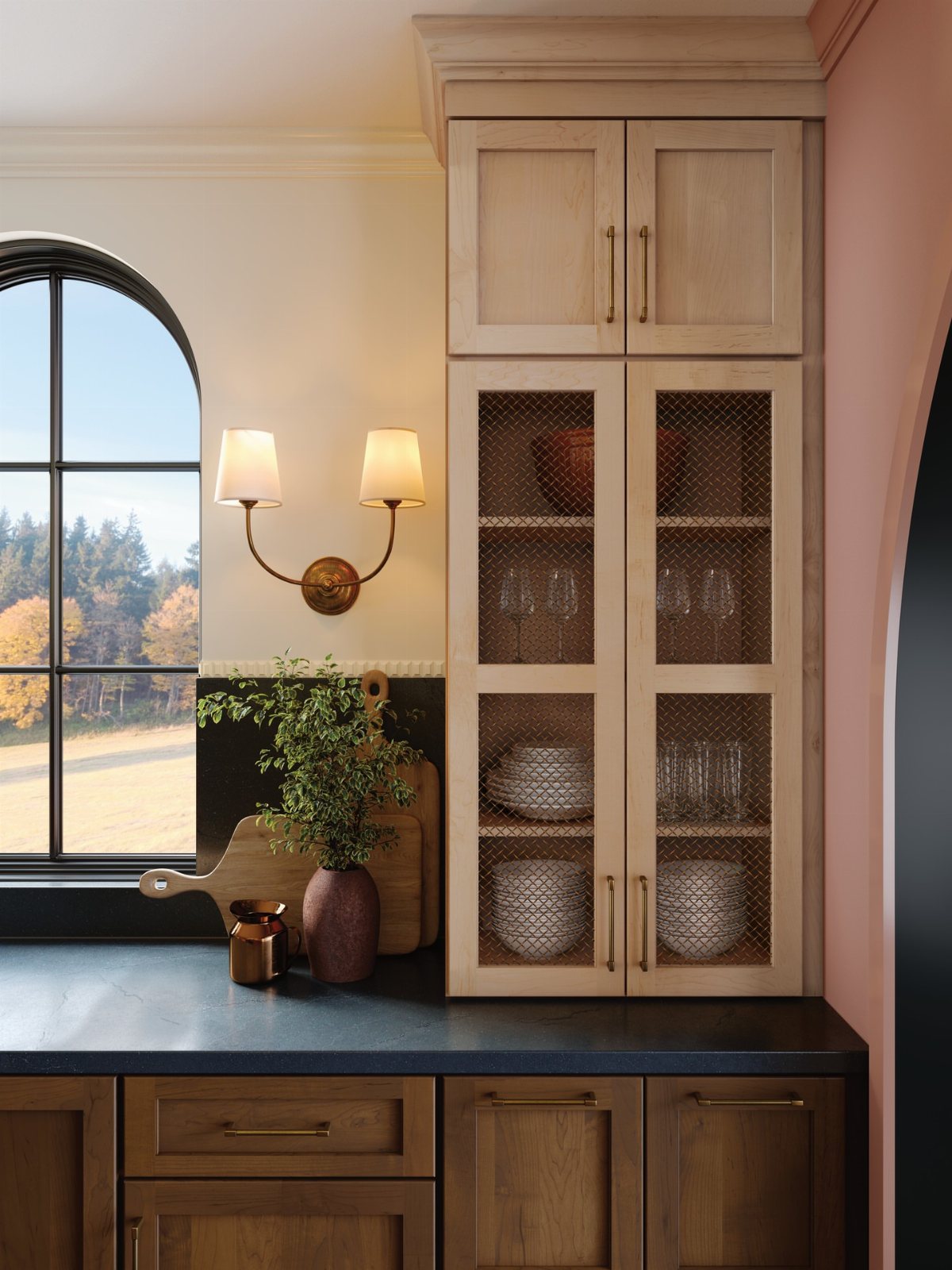
Two-tone cabinets split the color load so neither the floor nor the cabinets dominate. Light uppers keep the ceiling feeling high; dark lowers ground the room and hide scuffs where traffic is heaviest.
I like this split for renters who can paint cabinet faces but not replace flooring, since it works with whatever dark wood is already down. The mesh glass in the uppers adds air without open-shelf dusting.
If your kitchen has no island, use the darker tone on the base cabinets along the back wall and keep the sink run light.
2. Contrast with Light Cabinets
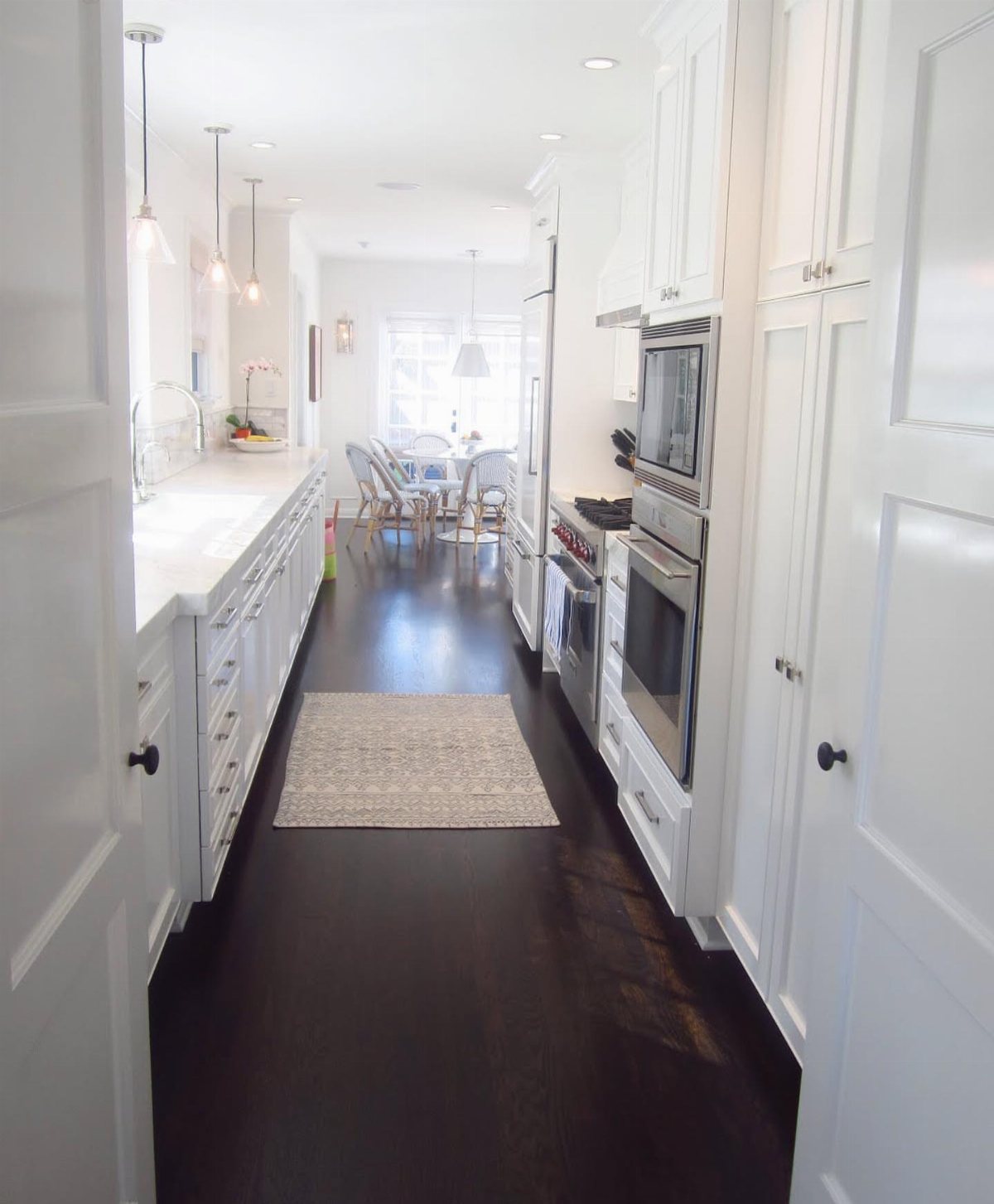
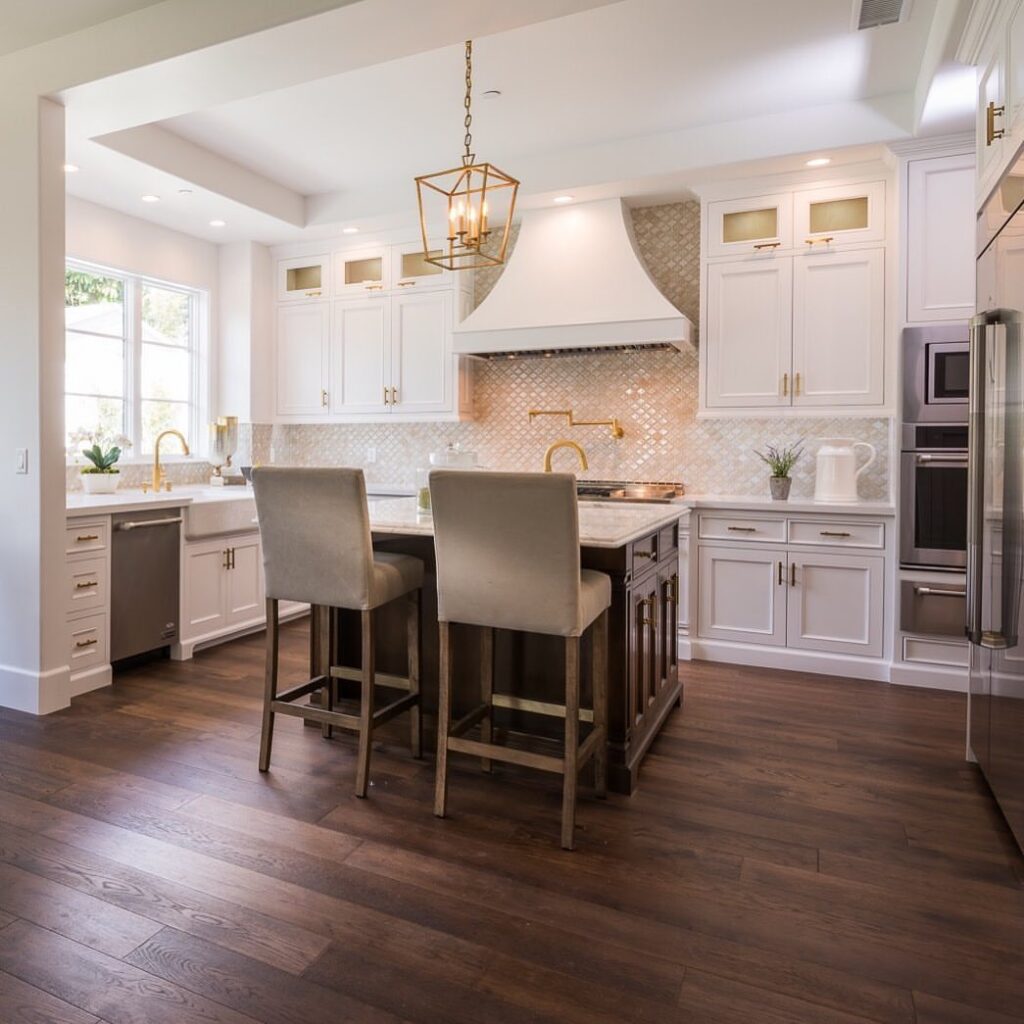
White cabinets against dark floors give the cleanest contrast and the most flexibility for changing everything else later.
The risk is a sterile feel, which is where texture comes in: shaker doors, a patterned rug, or stone counters with some movement.
Galley kitchens especially need this lift, since dark floors in a narrow space can read as a tunnel without something bright breaking the sightline.
I would check the undertone of the white against the floor in daylight before committing; a cream that matches the wood’s warmth reads intentional, while a stark white can look like a mistake.
3. Herringbone Dark Wood Floors Kitchen
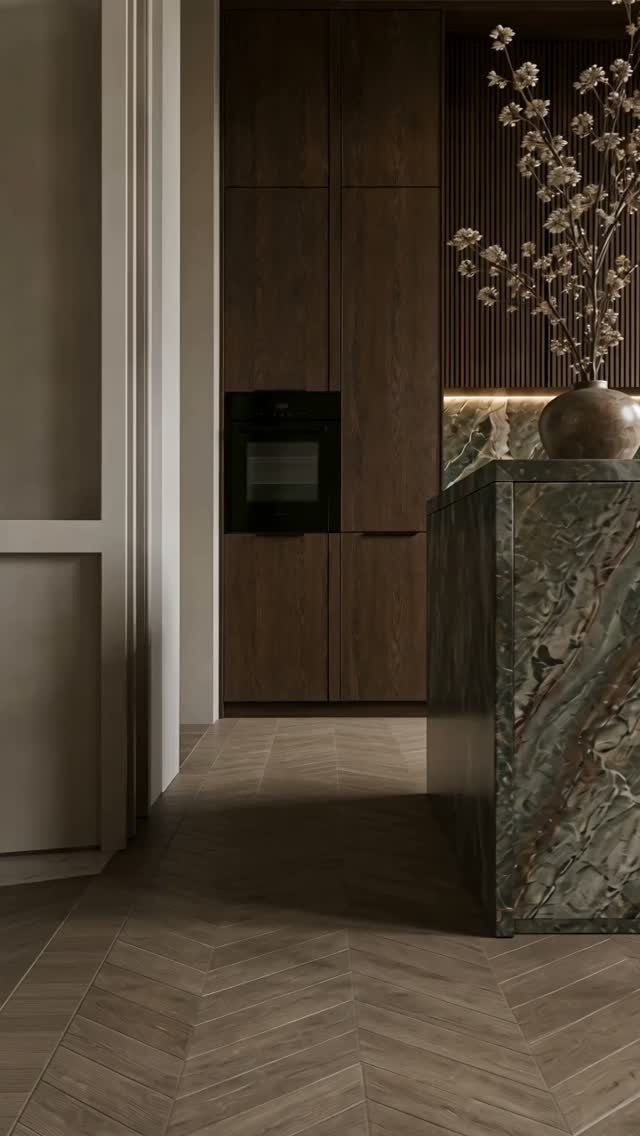
Herringbone costs more in labor and in waste because every plank ends at an angle, so order extra material and expect the installer to charge for the time.
The floor itself reads as a rug without needing one, which matters in kitchens where rugs near the stove are a hassle. Dark wood shows the geometry sharply; a mid-tone oak would lose the lines.
This pattern needs a flat, stable subfloor, so old houses with bounce or slope may need prep first. I would not attempt this as a first flooring project, the angles are unforgiving and the starter row sets everything.
But thanks to the variety of wood grains, finishes, and installation methods, dark wood floors look good in just about any culinary space.
— Hunker
4. Navy Blue Cabinets
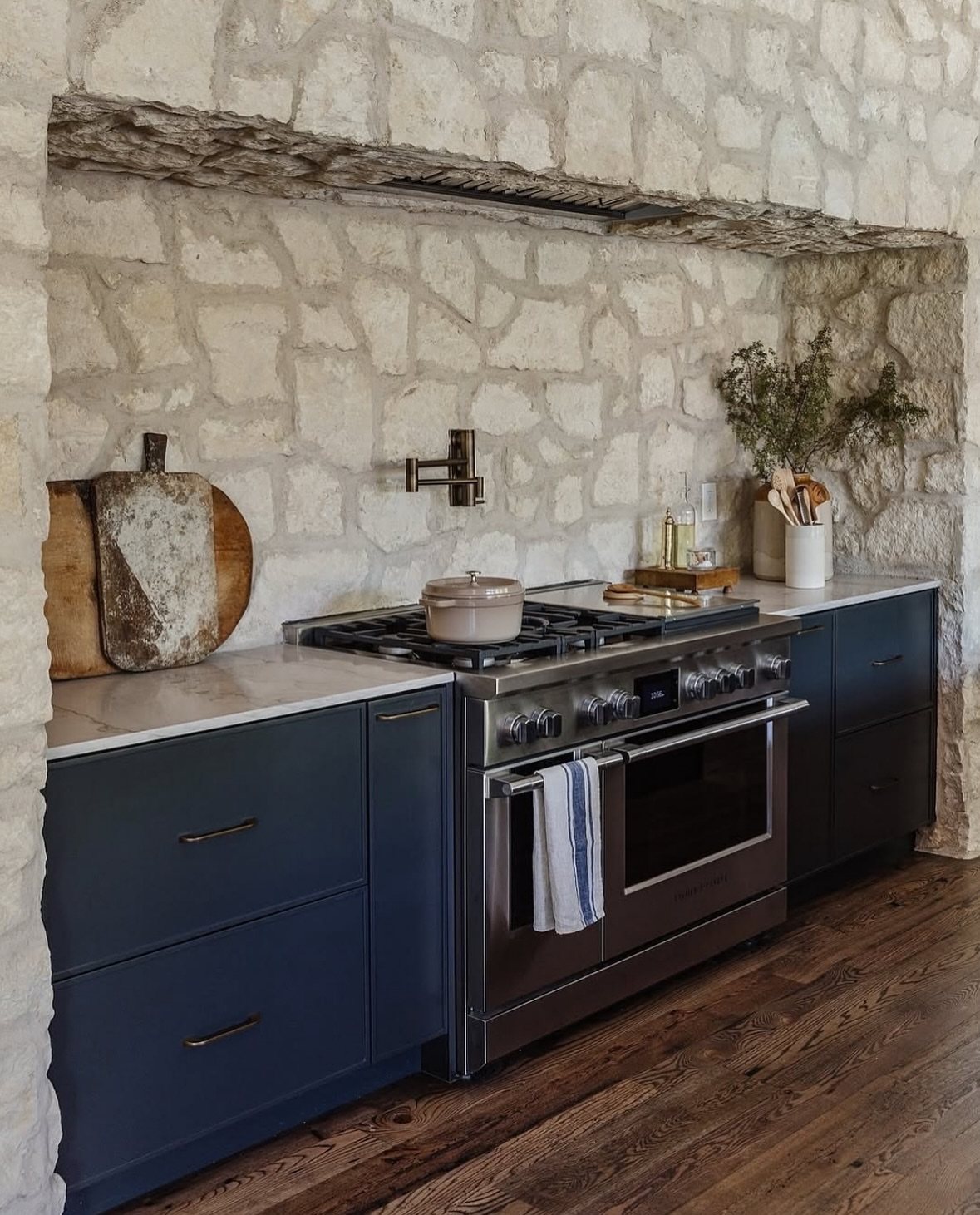
Navy sits between black and blue, so it reads as color without the brightness that fights dark wood. The white backsplash and counter are non-negotiable here; without them, navy and dark brown merge into one dark mass.
I would check the navy in evening light, since it can read near-black and lose the point. Cherry and other warm red-toned woods fight navy; sage green quiets the red where blue would turn the contrast loud.
5. Light Wood Cabinet Pairing
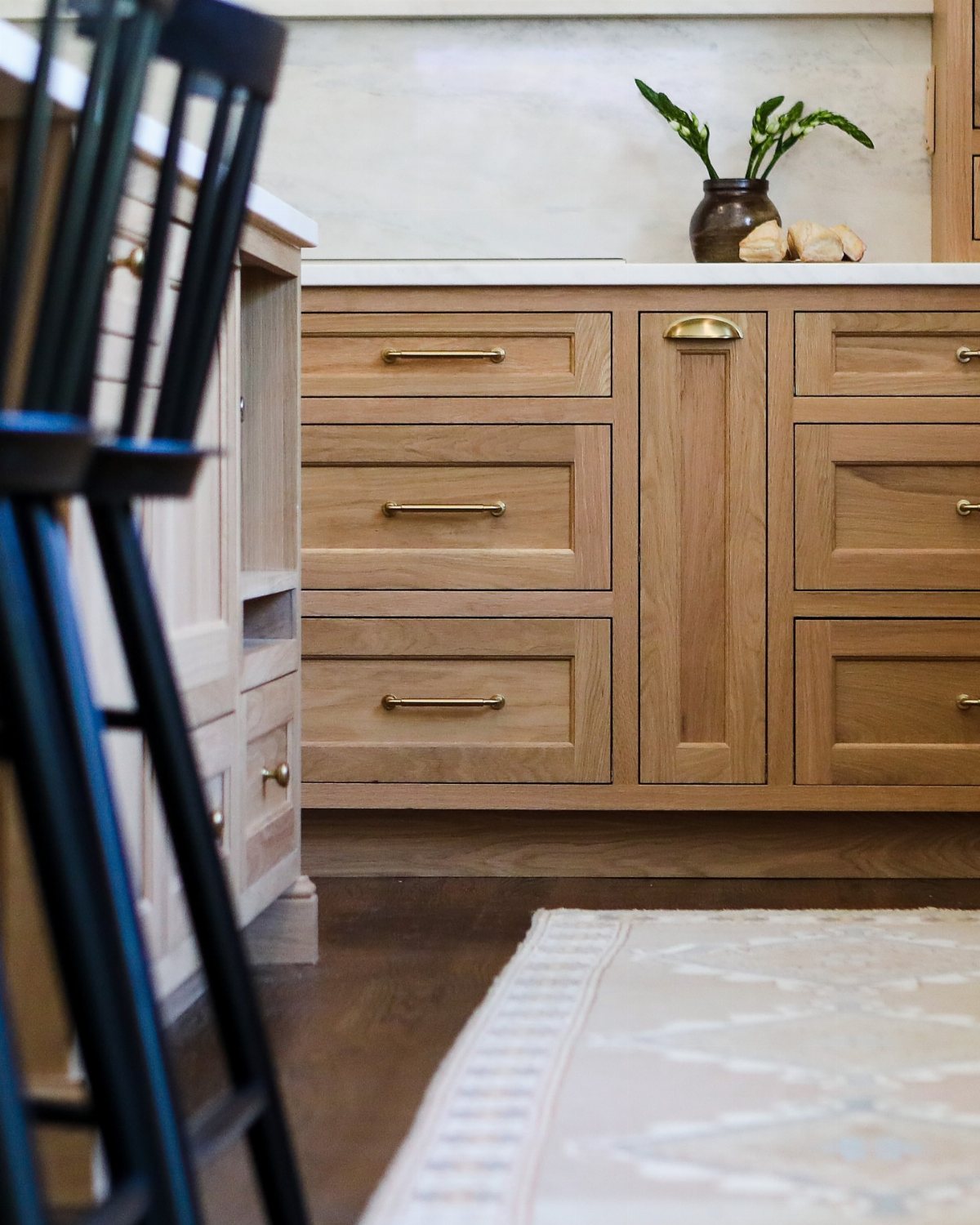
Light wood cabinets with dark floors give a warmth that all-white lacks, and brass hardware bridges the two wood tones without matching either exactly.
The runner is doing real work here; without it, the transition from dark floor to light cabinet can feel like a collision.
I would spend the rug money before upgrading the hardware, since the floor-to-cabinet meeting is what you see first. Oak, ash, or birch all work; avoid anything with a gray wash that pulls cool against the floor’s warmth.
This pairing suits kitchens with some natural light, since both elements need to read as intentional rather than leftover.
6. Open Concept Living Continuity
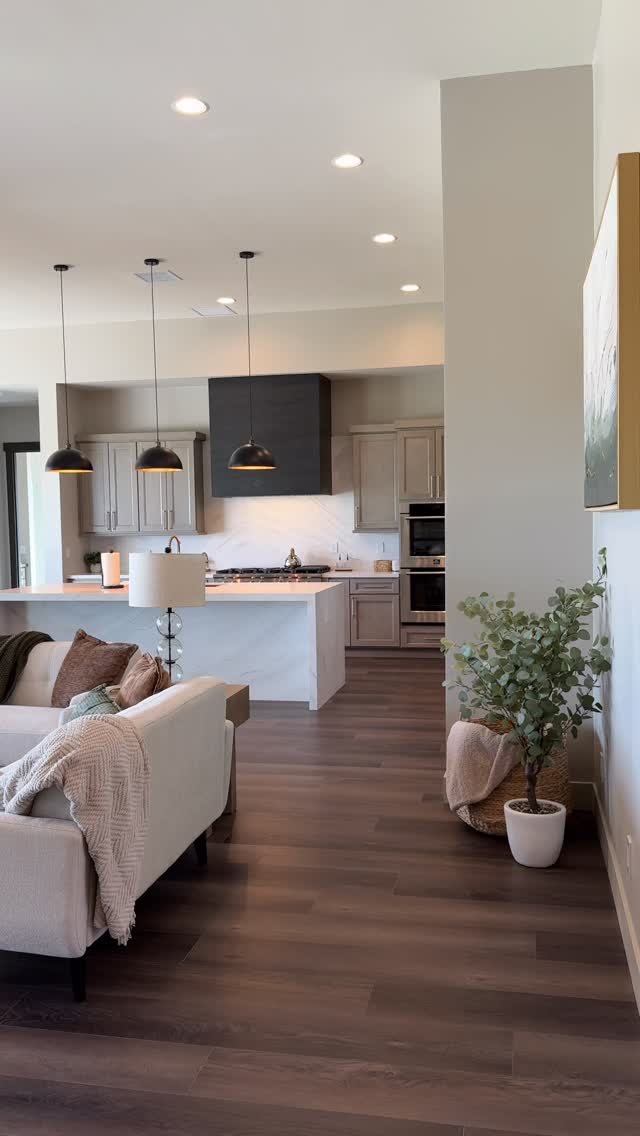
Running the same dark plank from kitchen through living room makes two zones feel like one designed space instead of two rooms shoved together.
The visual weight of dark wood helps here; light floors in open plans can feel like a floating platform.
Every spill, crumb, and footprint travels with you in an open plan, so the kitchen end needs the same care as the living room end.
I would lay the planks the long way, following the sightline from sofa to island, since crosswise boards chop the space back into pieces.
Recessed lighting and pale furniture keep the living end from going cave-like; plan your fixture and furniture colors with the floor already in mind, not after.
Choosing the Right Wood Species
White oak takes a dark stain without blotching, and its hardness stands up to the scuffing and dropping that kitchens dish out.
Natural walnut gives the richest color without any stain at all, which saves a step and avoids the maintenance of touched-up stain over time.
Hickory is the hardest of the three and handles dropped pots and dragged chairs, but the color variation runs stronger; some planks will read lighter against the dark ones, which is either character or distraction depending on your tolerance.
Engineered hardwood works for kitchens with concrete subfloors or radiant heat where solid plank would fail. I would pick white oak for a first kitchen floor project, since forgiving stain application matters more when you are learning.
Impact of Kitchen Size
Dark floors in a small kitchen with no windows and dark cabinets will read as cramped; the same floor in a kitchen with multiple windows and light cabinets does not shrink the room at all.
The floor adds warmth and intimacy either way, which is the trade for that potential compression. Light cabinets, a light counter, and a light backsplash are the countermeasures, reflecting what light enters rather than absorbing it.
A slightly darker island adds depth without undoing the expansion; it sits in the middle ground between wall cabinets and floor rather than competing with either.
I would test cabinet swatches against the actual floor in the actual room, since a greige that reads warm in the store can turn flat and cold under LED fixtures.
Resale Value Considerations
Kitchen color swings buyer offers more than any other room, with a gap of nearly $8,000 between the choices that sell and the ones that sit.
Sage green scored near the top in every room tested, so it is the safer bet if a sale is coming up and you need to please most buyers.
These figures come from kitchen color broadly, not cabinet color alone, so treat them as directional rather than guaranteed return on a cabinet repaint.
Cabinet color is one piece among many; the floor and the cabinets have to work together for the whole kitchen to read as updated rather than patched.
Visual Weight of Dark Floors
Dark colors recede visually, which pushes the cabinetry, counters, and appliances forward in a way an all-neutral kitchen never manages. The floor itself becomes the quiet ground that lets other choices stand out.
Frequently Asked Questions
Are dark wood floors out of style in 2026?
No. Dark wood floors still read as a designed, permanent choice rather than a passing trend. Dark wood floors still read as a standard kitchen choice in 2026, not as something that needs hiding or updating.
Pairing matters more than the floor itself: light cabinets, two-tone layouts, and hardware that fits the era keep the look current without replacing anything.
What color kitchen cabinets look best on dark wood floors?
White and cream give the cleanest contrast and the most flexibility for changing everything else later. Sage green pairs well with warm red-toned woods like cherry, softening the contrast without losing it.
Light wood cabinets add warmth that all-white lacks, though both need natural light to read intentional rather than leftover.
Are dark wood floors a good idea?
Yes, if you accept the maintenance. Dark floors recede visually, which pushes cabinets, counters, and appliances forward in the space.
They add grounding that light floors can lack. Textured or matte finishes hide some dust better than glossy ones.