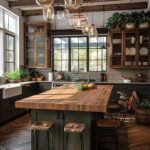
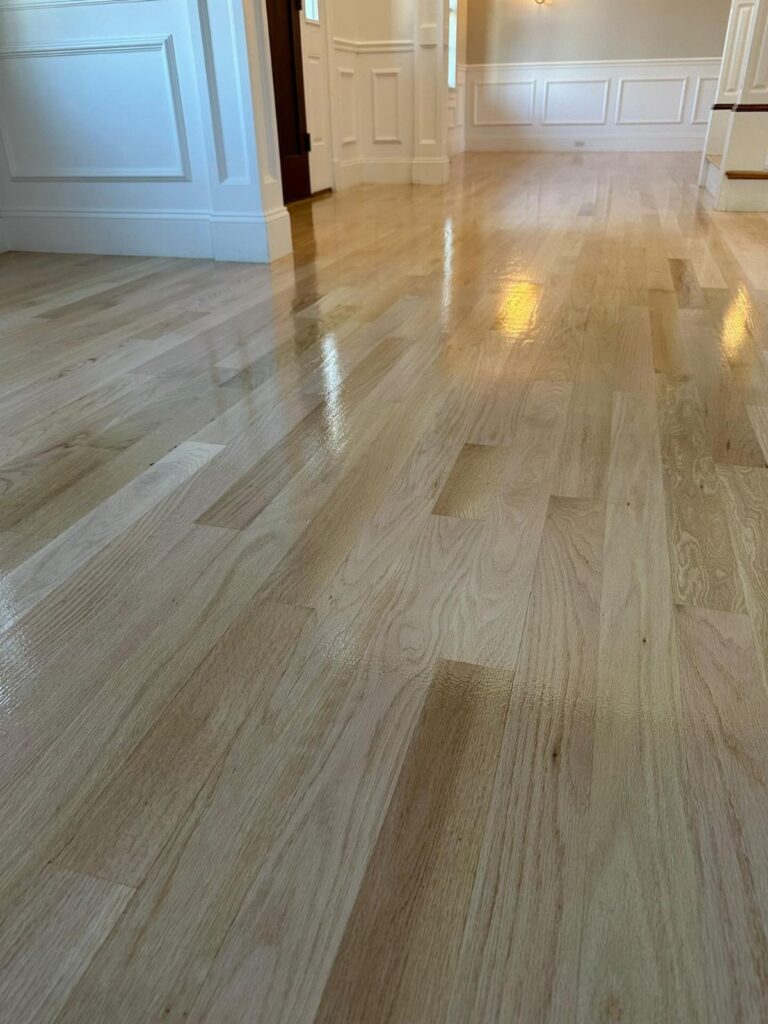
The ideas below start with finishes you can refresh yourself and run through patterns that take skilled installation, so the range is wide enough to match both your patience and your budget.
Oiled finishes let you fix scratches in the kitchen with a rag and a refresher coat, while parquet basketweave reads formal enough for a dining room that only sees guests on holidays.
Engineered planks wear down differently depending on how much real wood sits on top, and that top layer runs anywhere from barely there to more than a quarter inch.
1. Oiled Hardwood Floor Finishes
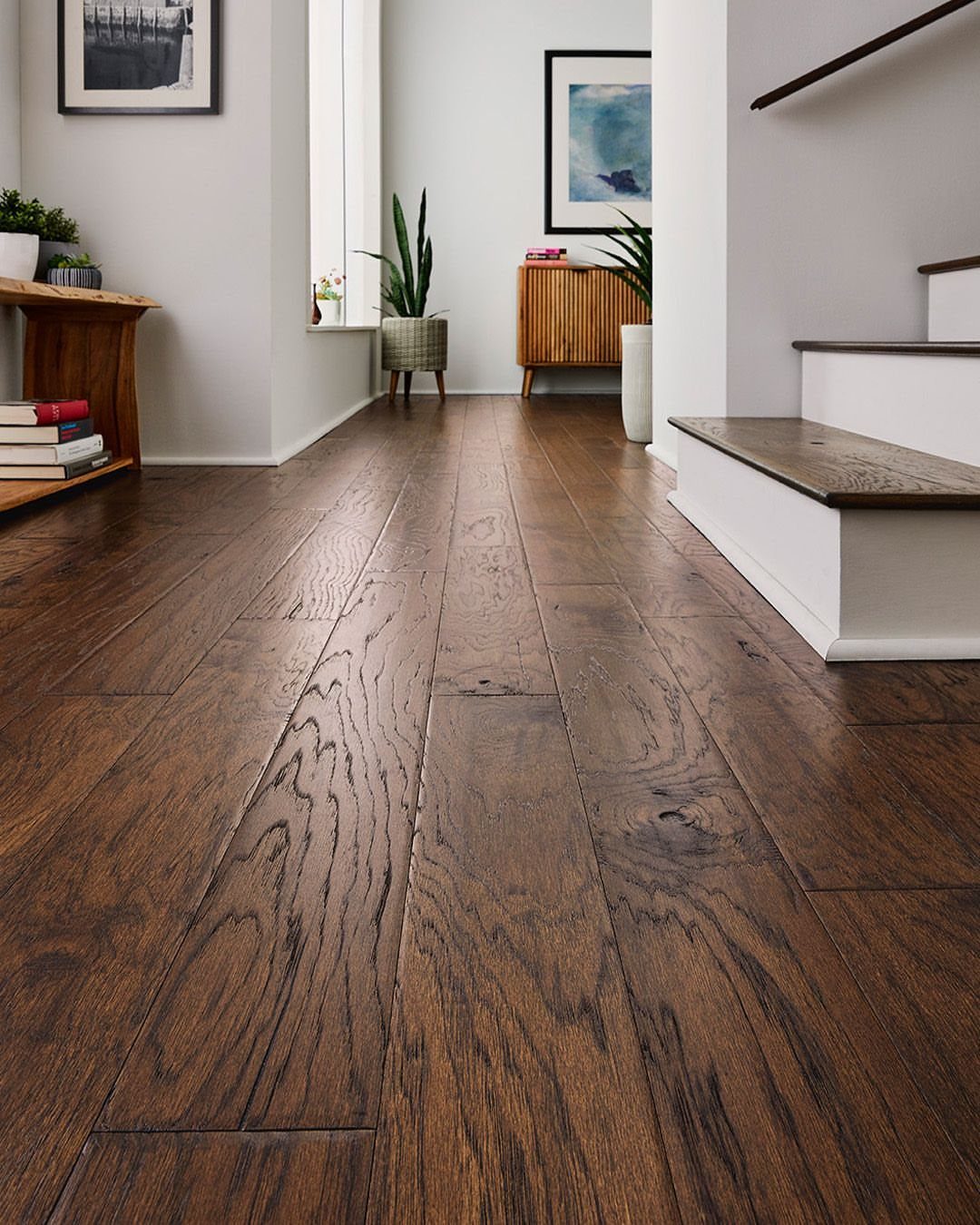
An oil finish gives hardwood that soft, satin sheen where you can almost feel the grain through the light.
The real advantage comes later: when traffic wears a path near the front door or the dog’s nails leave their mark, you touch up just that spot instead of sanding the whole room.
A rag and fresh oil will blend the repair into the surrounding boards in an afternoon. This suits anyone who wants the warmth of natural wood without the maintenance anxiety of a high-gloss polyurethane that shows every scratch.
I’d pick it for entryways and kitchens, where life happens fast and floors take the hit.
2. Fully Custom Hardwood Floors
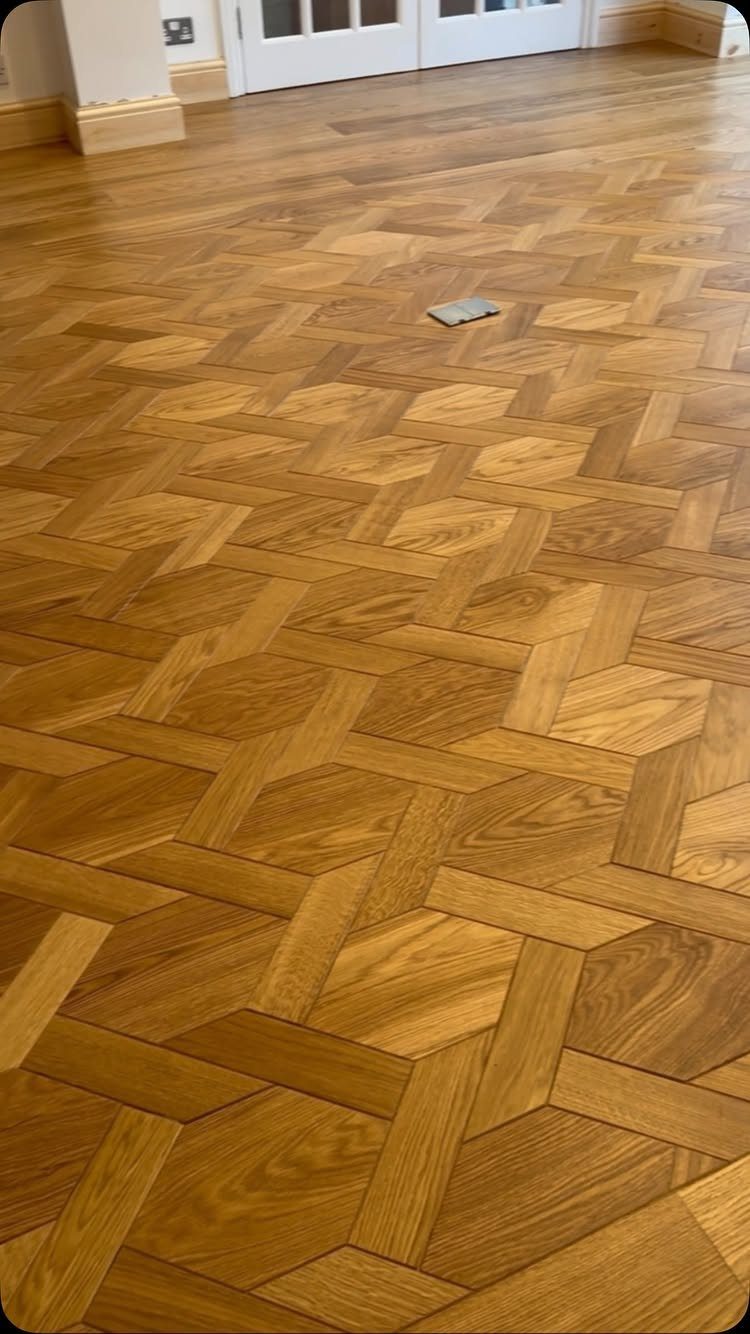
Some rooms need a floor that no one else has. A fully custom job starts with the plank itself, pairing White Oak with a stain mixed only for your space, then builds the pattern from there.
Two distinct patterns can sit side by side without either one losing its character, each complementing the other. That kind of restraint takes planning.
Budget runs higher here, and the timeline stretches; you’re ordering samples, waiting for proofs, approving a one-off.
A custom floor in a modern farmhouse or any space where the surface anchors the whole house gives visitors something to stop and study.
3. Smoky Gray Floors
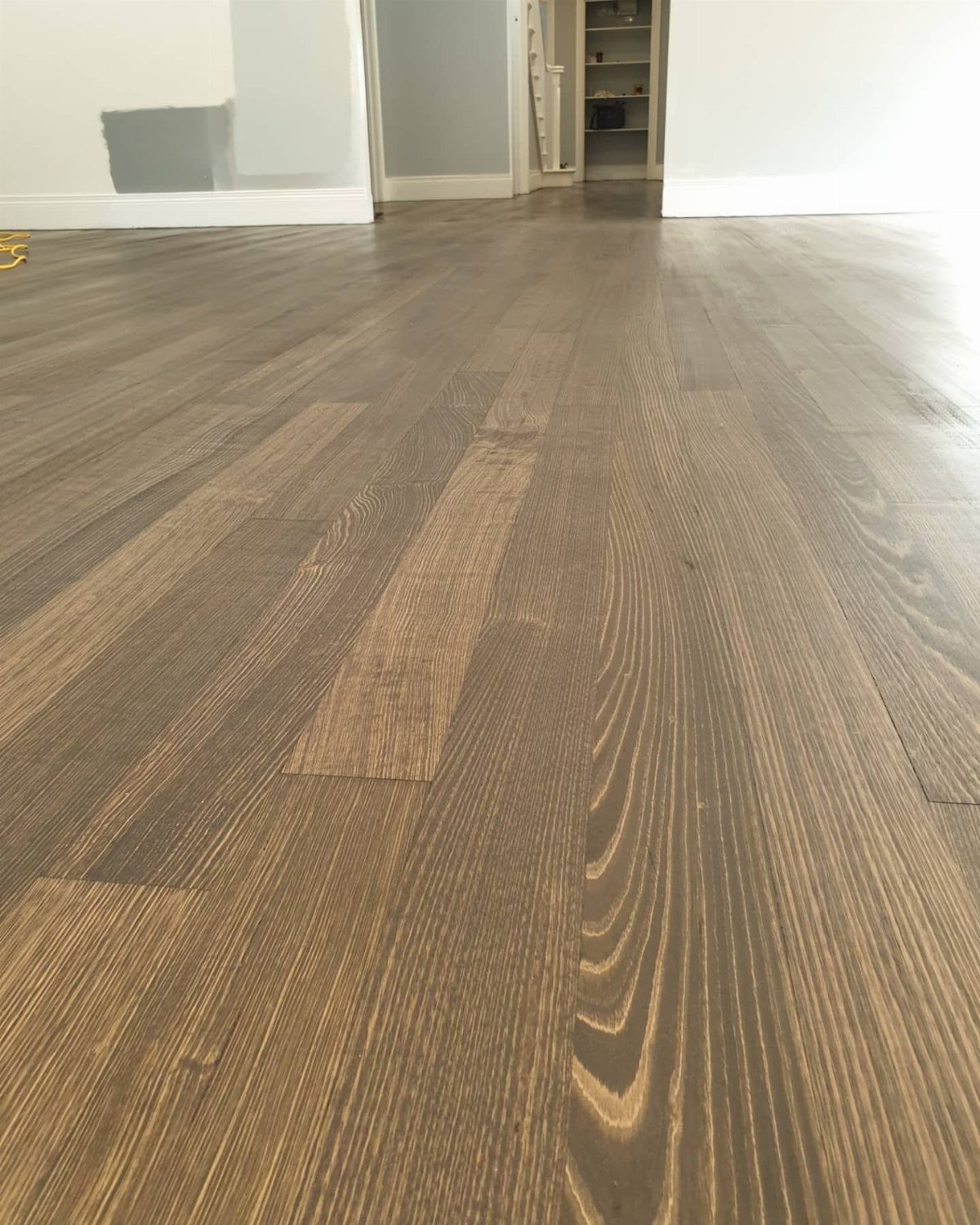
Gray floors have settled in as more than a passing trend, and the smoky versions, the ones with warmth still moving through them, are what work long-term.
Flat gray reads cold and dated now; a tone that carries some brown or beige underneath stays flexible as your furniture and paint colors shift.
The stain pairs naturally with metal, glass, and concrete if your taste runs industrial or minimalist.
Check your light before committing: north-facing rooms can push the gray cooler than you expect, and what reads balanced in a loft with big windows may turn flat in a smaller space.
I’d test a patch and live with it through morning and evening.
4. Whitewashed Floors
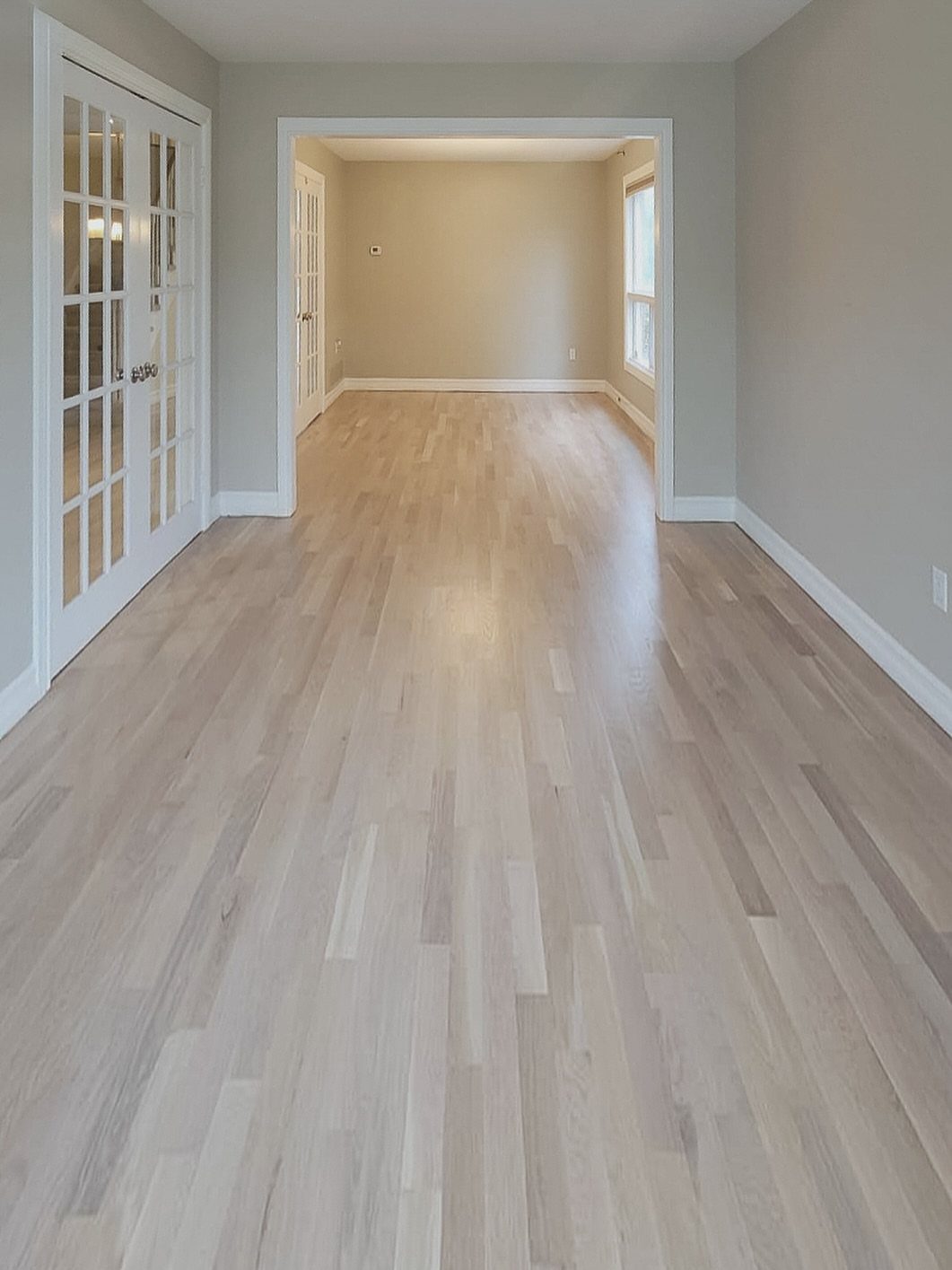
Whitewash is old enough to count as tradition, dating back to colonial floors where the goal was brightening a dark room before electricity.
The modern version keeps that airy, open feel and works especially well where you want to amplify whatever natural light you have. Small rooms gain visual square footage; spaces you’re prepping to sell read clean and move-in ready.
The finish layers easily with either cool or warm palettes, so your wall color and textiles can shift without fighting the floor. Check how the tone plays against your existing trim, though.
A creamy white baseboard next to a cooler whitewash can look accidental rather than intentional.
5. Dark Stains
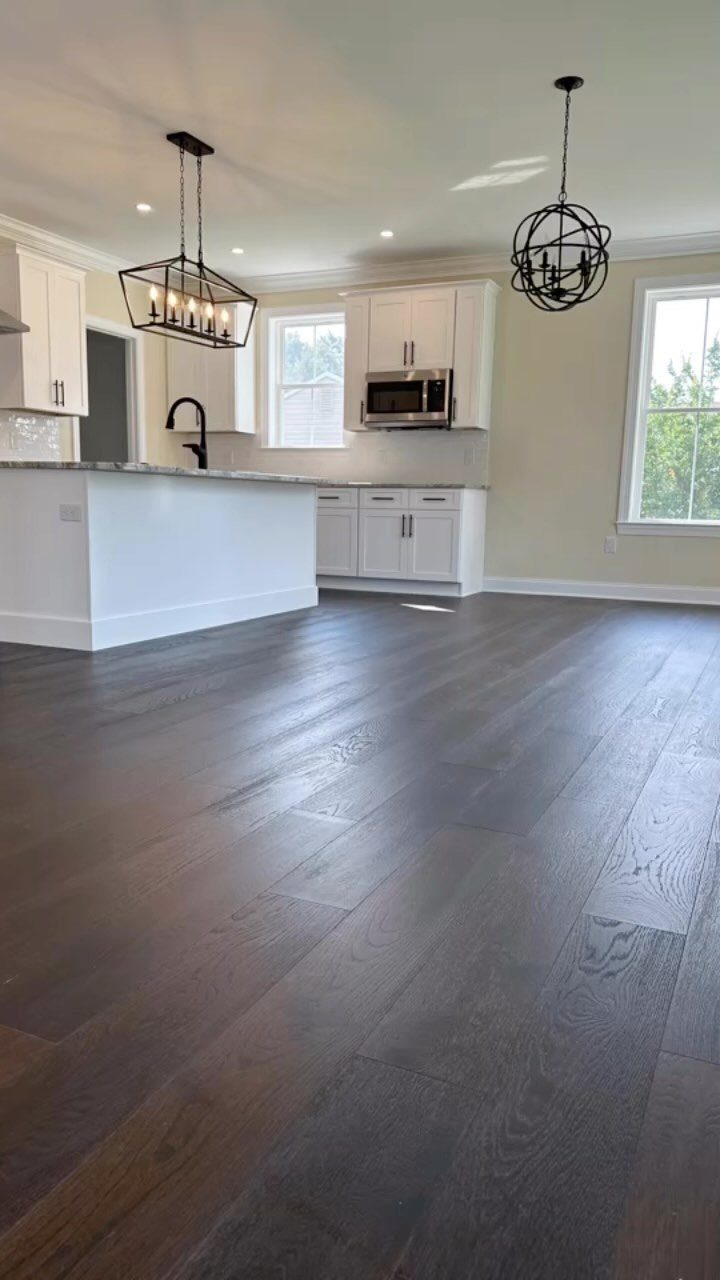
Dark stains have held their ground as a statement choice, and the key to keeping them from swallowing a room is what you put above them.
Light walls, pale furniture, and white cabinetry create the contrast that makes this work; without that balance, the floor becomes a black hole that drags the ceiling down.
Wide planks show the grain still moving through the stain, which matters, because an opaque, flat dark reads as paint rather than wood.
I’d reserve this for spaces with good natural light and enough square footage that the floor can breathe. In a compact apartment, the same stain can feel like a stage set closing in.
6. Light White Oak Floors
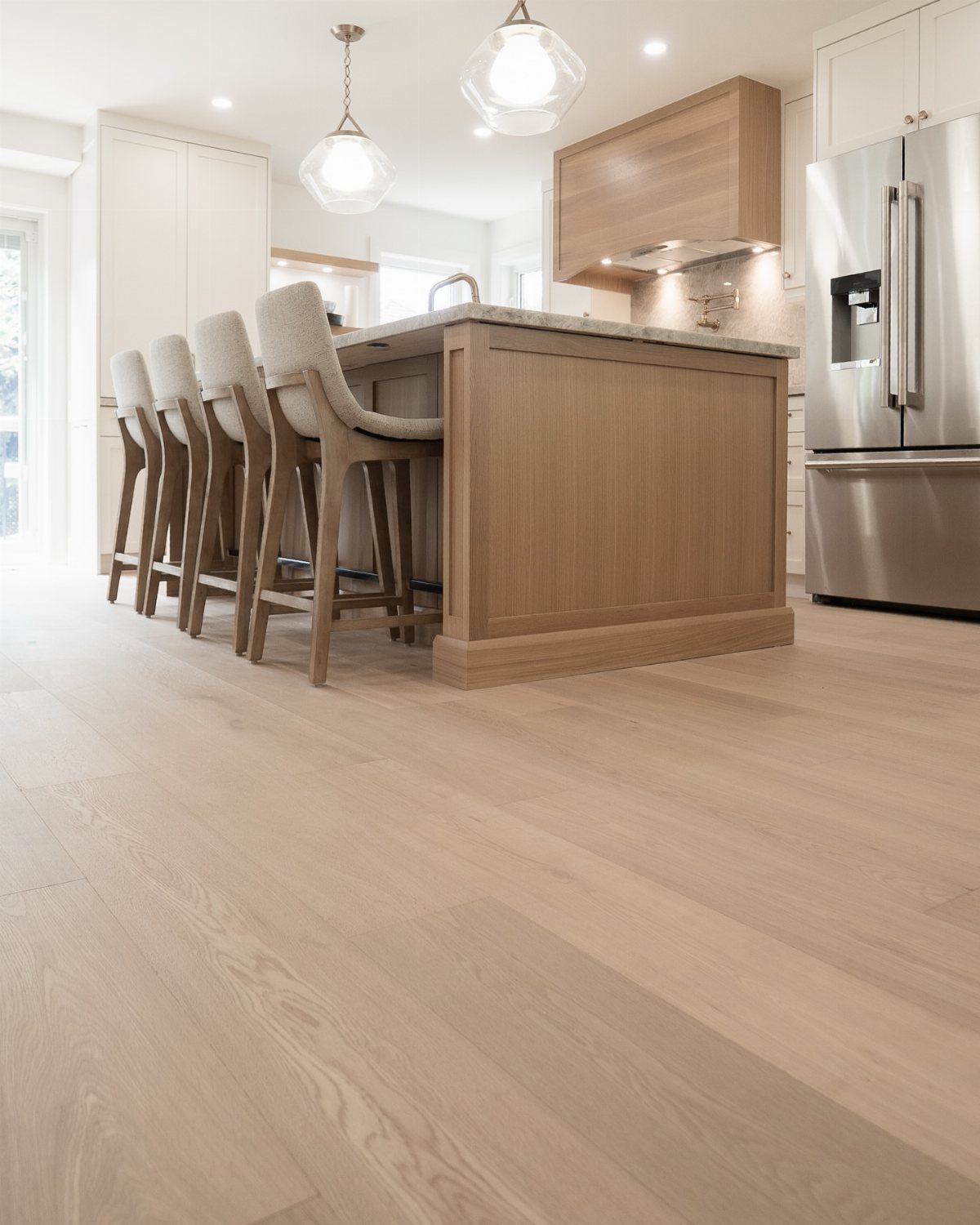
Light White Oak carries a tone that reads as relaxed the moment you walk in, and it has the rare quality of working with any style you layer on top.
Wide planks keep the grain visible but quiet, a background rather than a statement. This is the floor for someone who changes their mind: the light, optimistic base will carry Scandinavian furniture now and something heavier later without clashing.
Timelessness has its own cost; this look is common enough that you may want to distinguish it through plank width or a subtle wire-brushed texture.
For a kitchen or living area where you spend real hours, the brightness pays off in mood as much as resale value.
7. Painted Pattern
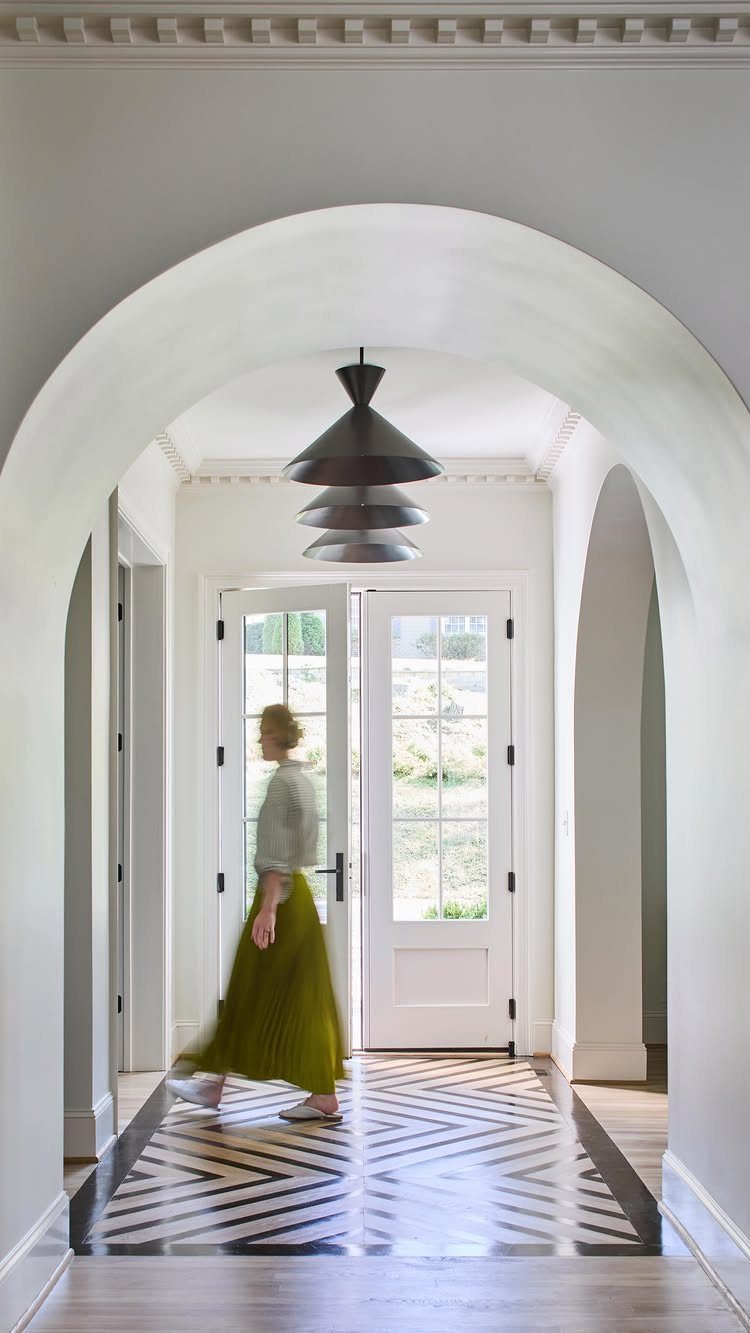
Painted pattern floors let you keep existing boards and still get something nobody else has. Two colors work, or one color over the natural wood left bare.
A chevron painted in quiet black and white reads as classic rather than trendy against white walls.
This suits a weekend project with paint and tape, and the budget stays in the low hundreds. You will sand, prime, mark your geometry with a laser level, then paint and seal.
The work is tedious; the result is immediate.
I’d pick this for a hallway or small room where the floor is sound but ugly. A large space with heavy furniture traffic will need touch-ups sooner than you’d like.
8. Herringbone Pattern
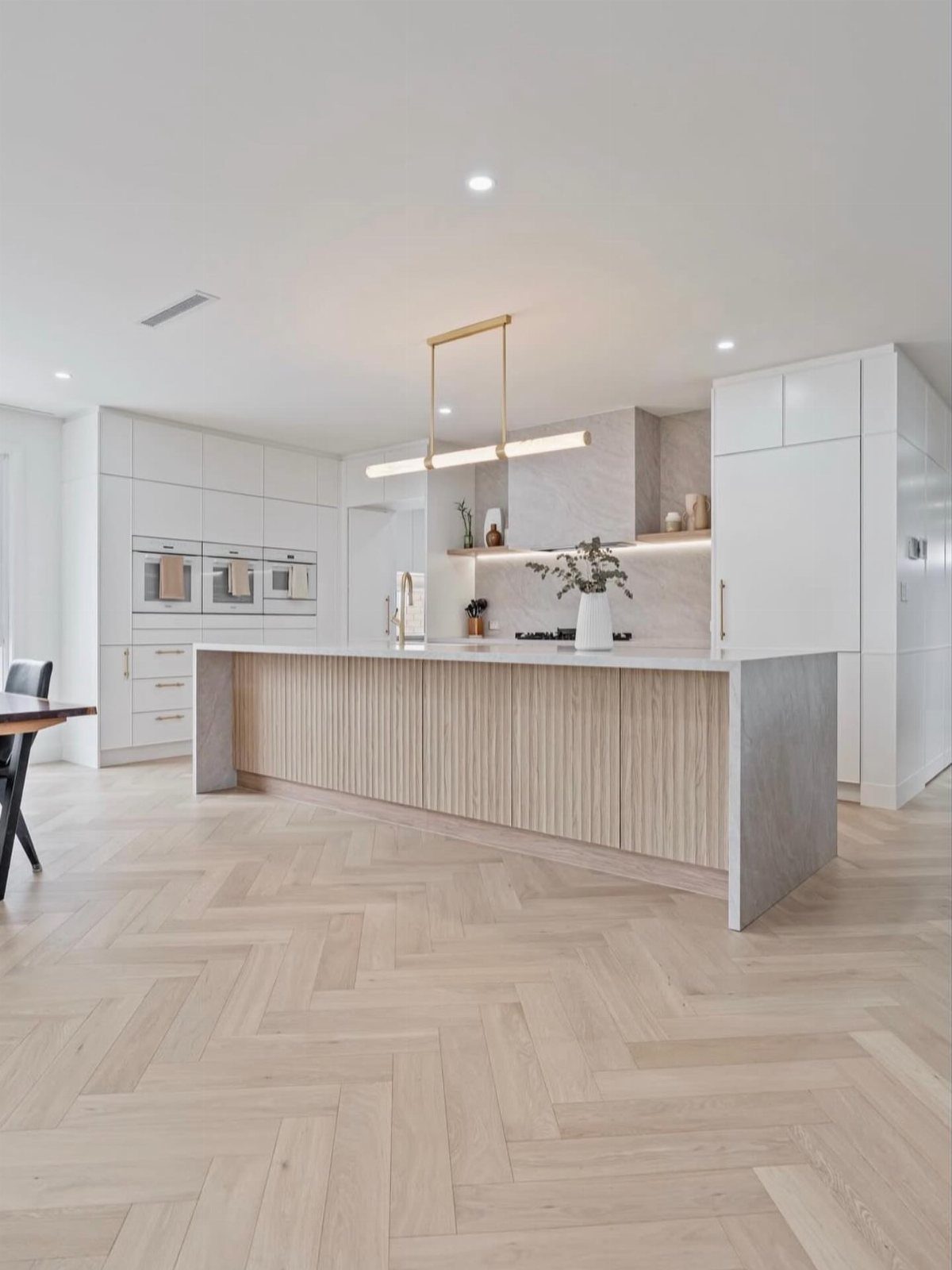
Herringbone reads as custom even when the boards are standard. The pattern catches light differently across the day, so the floor keeps moving as you move through the room.
Pale wood keeps herringbone geometry from feeling busy against an island and cabinets.
Installation takes longer than straight lay; labor runs higher if you hire it out, or plan a full weekend instead of a day if you are doing it yourself.
You buy the same planks, just cut at angles and fitted carefully at the edges.
This one trades some of the calm of plain flooring for visual interest.
I’d use it in a room that already has strong lines, like the kitchen here, rather than adding it to a space full of pattern and color elsewhere.
9. Medium Toned Wide Plank Hardwood
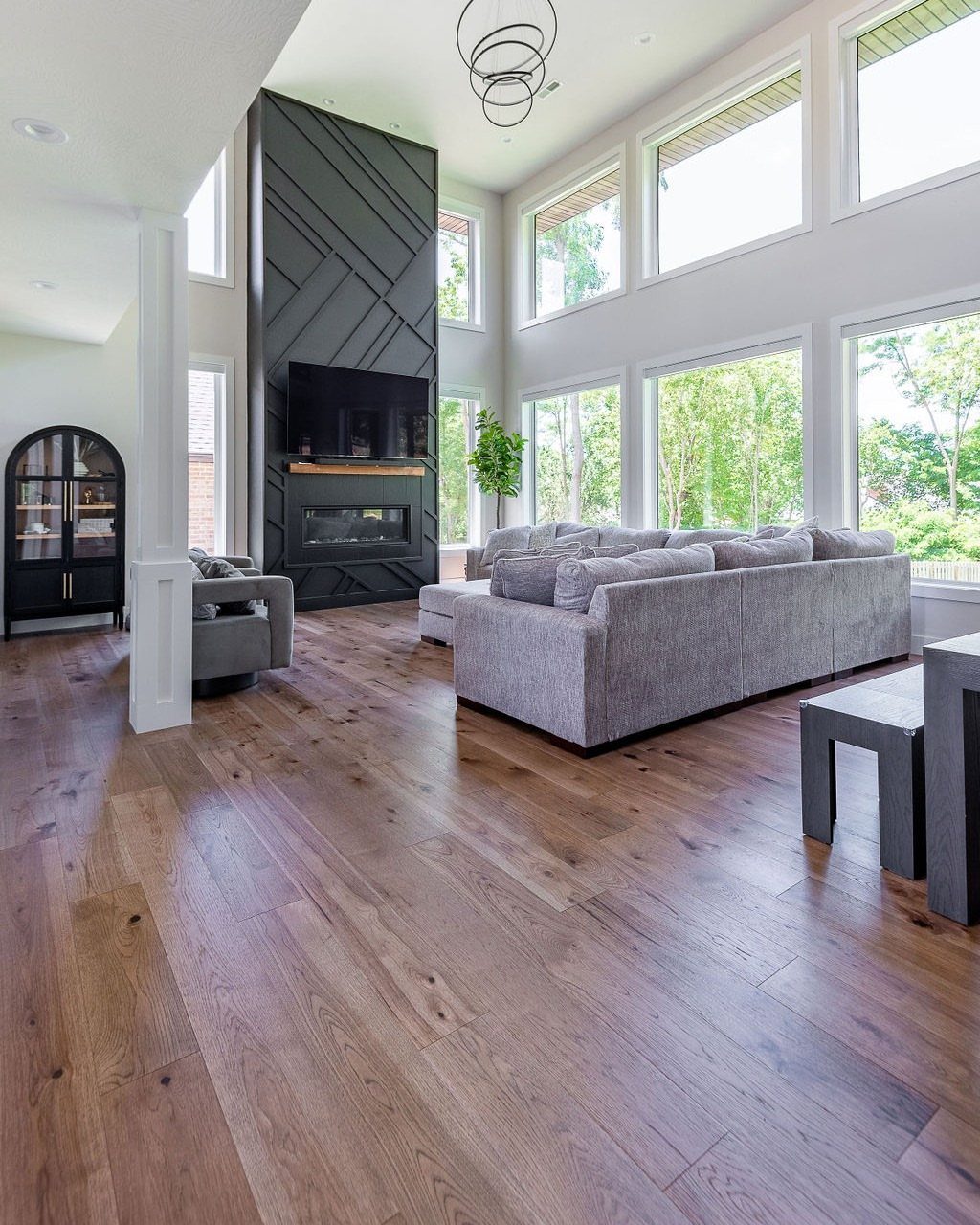
Wide planks at medium tone hide the small sins of real life better than pale or dark extremes. Grain and knots are not flaws; they are what keep wide plank from reading as laminate.
Boards at 6 to 8 inches across, in a tone between honey and walnut, warm a room without dating it.
Solid hardwood at full thickness gives you refinishing options decades out. Engineered runs thinner, with a wear layer that ranges from paper-thin up past six millimeters.
Thicker wear layer means more sandings later.
This is the safe choice that does not look safe. I’d steer a first-time buyer here over gray or white oak; it forgives scuffs, matches most furniture eras, and sells when you move.
10. Parquet Basketweave Flooring
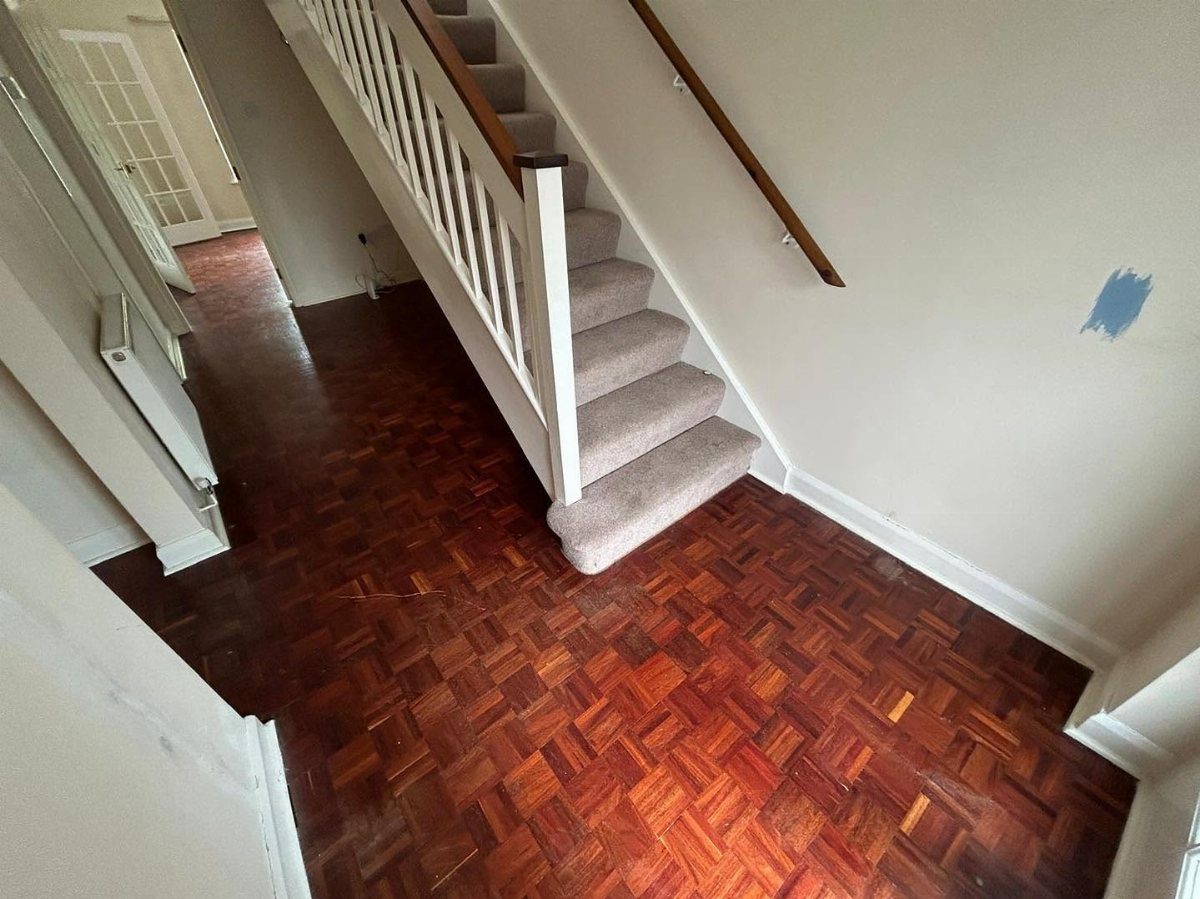
Basketweave parquet is the most formal pattern here, and the most forgiving of imperfect subfloors because the small pieces lie flat where long planks might telegraph every bump. A reddish tone reads traditional; the geometry reads deliberate.
You buy parquet as tiles, small squares made of fingers laid in the weave. Installation is glue-down or nail-down, more puzzle than carpentry.
Refinishing is harder than long boards because the grain runs in alternating directions; each small strip sands differently.
This suits a period house or a room you want to feel finished and old. I’d use it in an entry or dining room, not a kitchen where grease and water collect in the seams.
Hardwood Floor Maintenance
A hardwood floor outlives its finish. Solid boards handle multiple full sandings and refinishes over their lifetime, while engineered planks need a thick wear layer to survive even one.
Thinner layers than that lock you into the current surface.
The maintenance that delays refinishing is simple but specific. Dry-mop or vacuum with the beater bar lifted; water is the enemy, and wet-mopping swells seams.
Use a cleaner matched to your finish type, oil or polyurethane, because the wrong solvent strips what it should protect.
Refinishing costs less than replacement and fixes real damage: scratches, dents, the gray pallor that UV leaves near windows. I’d plan a maintenance schedule the way you’d schedule paint touch-ups, before the wear becomes obvious.
Catching it early keeps the work spot-sized instead of room-sized.
Choosing Hardwood Flooring
Start with species, grade, stain, plank size, and construction. Those five variables carry more weight than any single trend.
Species sets hardness: White Oak takes abuse, Walnut dents more easily but rewards you with grain. Grade determines how many knots and color variations the mill allows; clear grade reads modern, rustic grade reads lived-in.
Stain shifts the same wood across decades of style, from honey warm to ash cool. Size changes the room’s scale: wide planks fewer seams, narrow planks more movement.
Construction splits between solid, which you can refinish repeatedly, and engineered, which handles humidity better but locks you to its wear layer.
I’d collect samples you love before talking to anyone. Walk them through your actual light, morning and evening, against your actual walls.
A flooring expert sorts faster once you arrive with a direction already in hand. The perfect floor is not the one with the most options; it is the one that still looks right after you move the furniture in.
Sustainability in Flooring
Sustainability in flooring is not a separate category. It shows up in the species you choose, the construction you buy, and how long the surface lasts before replacement.
Domestic species like White Oak and Maple travel shorter distances than exotic imports, and many grow under managed forestry programs in the US and Canada. Reclaimed wood skips harvesting entirely; the patina comes from prior use, not factory distressing.
Engineered construction uses less solid timber per square foot, which matters for slow-growth species. Lifespan splits the difference: a thick wear layer lets you refinish, a thin one sends the plank to landfill sooner.
I’d check that number, usually printed in millimeters on the sample spec, the same way I’d check plank width.
A floor that outlasts several replacements is the greener choice, regardless of certification labels. Maintenance extends that span; refinishing instead of replacing keeps material out of the waste stream.
Frequently Asked Questions
What is the prettiest hardwood floor?
That depends on your taste and the room. I lean toward light White Oak for its easy warmth, or a smoky gray tone with some brown still moving through it, since both stay flexible as your furniture changes.
A fully custom stain and pattern will always draw the eye if you want something no one else has.
What is the newest trend in hardwood floors?
Oil finishes are what I’d watch right now. The satin sheen is softer than polyurethane, and when a spot wears through you fix it with a rag and more oil instead of renting a sander for the weekend.
Gray tones with real warmth still have staying power, not the cold industrial look from five years back.
I’ve also seen more painted geometry, chevron and herringbone, in kitchens and hallways where the floor is asked to carry some visual weight.
What is the highest quality hardwood flooring?
Solid hardwood at full 3/4 inch gives the most room to sand down later. That’s the practical reason it outlives the people who install it.
Engineered planks run thinner, and the wear layer varies from paper-thin to over 6 mm. More wood on top means more sandings before you hit the plywood below.
The grade matters too: select or prime grades keep knots minimal for a clean look, while character or rustic grades let the grain and mineral streaks show.
What flooring do luxury homes use?
High-end spaces often reach for fully custom hardwood, starting with a plank like White Oak and mixing a stain only for that room, then building a pattern from there.
Walnut and oak in wide boards turn up too, often wire-brushed so the grain catches the light, or laid in formal parquet basketweave for an entry or dining room where you want the floor to announce itself.