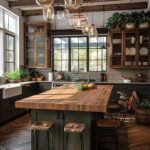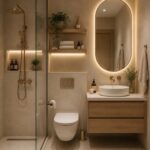
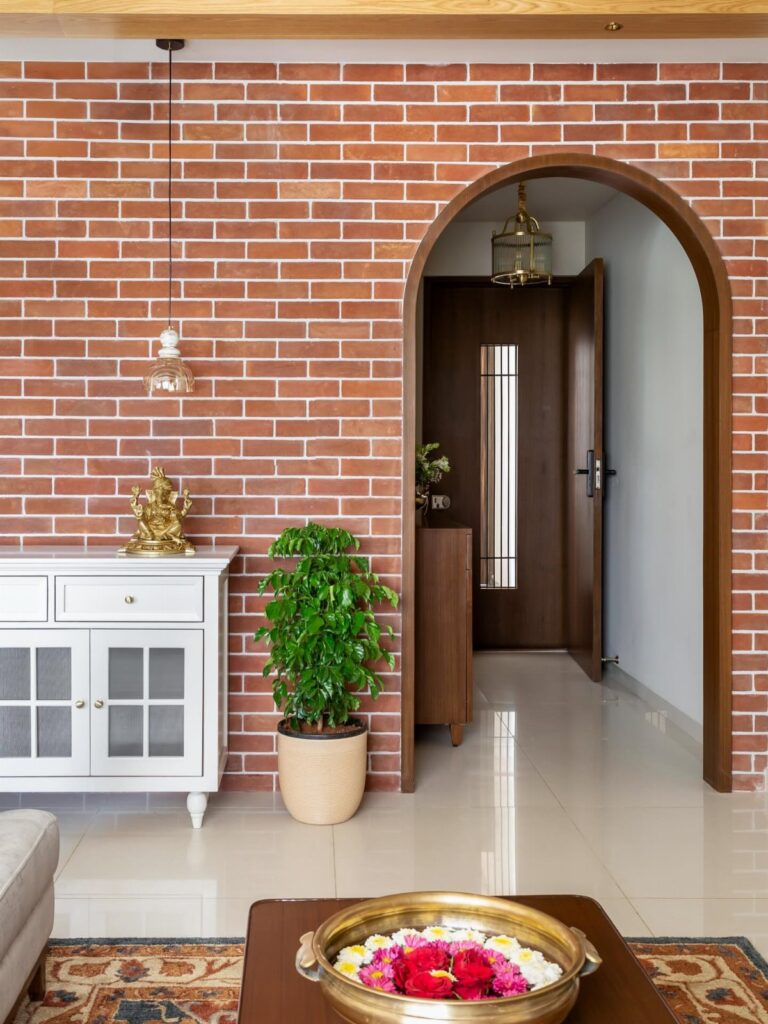
The ideas below run from a single afternoon with a gallon of matte black paint to a full weekend mortaring thin brick veneer, with chevron wood and herringbone falling somewhere between depending on how patient you are with a miter saw.
What settles the choice is not budget or skill level but the wall’s actual job in the room: some ideas push the ceiling higher, some absorb light so objects advance, and one turns the surface into something you write on daily.
1. Brick Accent Wall
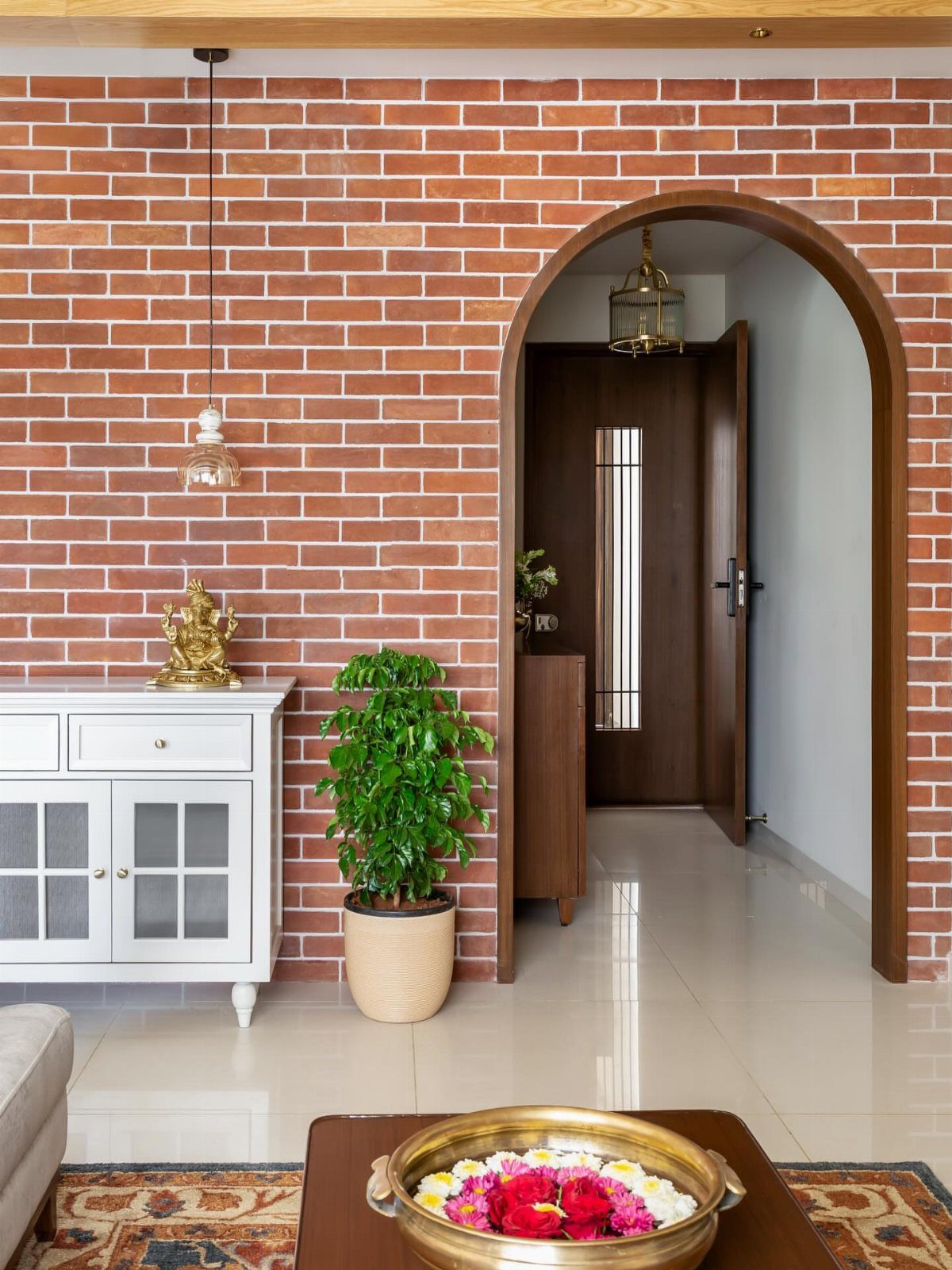
A brick wall works best when it reads as found architecture rather than applied decoration. Brick works best when it runs continuous through an arched doorway, not as a panel hung on flat drywall.
If your house has no brick to expose, thin brick veneer goes up with mortar like tile and costs a fraction of full masonry.
Materials run a few dollars per square foot and the job eats a full weekend, longer if you are cutting around outlets or casing.
The warmth comes from variation in the brick itself, so mix from several boxes as you lay it rather than running color-straight.
Red brick behind a desk with a wooden top and a brass lamp is the pairing I keep coming back to. Painted brick loses what makes this idea worth the trouble.

【Specifications】Each piece measures 8.54” x 2.2” x 0.1”. With standard 3/8” spacing, 15PCS cover approx. 2.54 sq.ft. Perfect for testing or small projects.

Size and Weight: Size of each brick is 2.4" x 7.9",and weight is about 0.5 lb. 40 piece thin brick cover about 7 sq.ft
2. Chevron Accent Wall
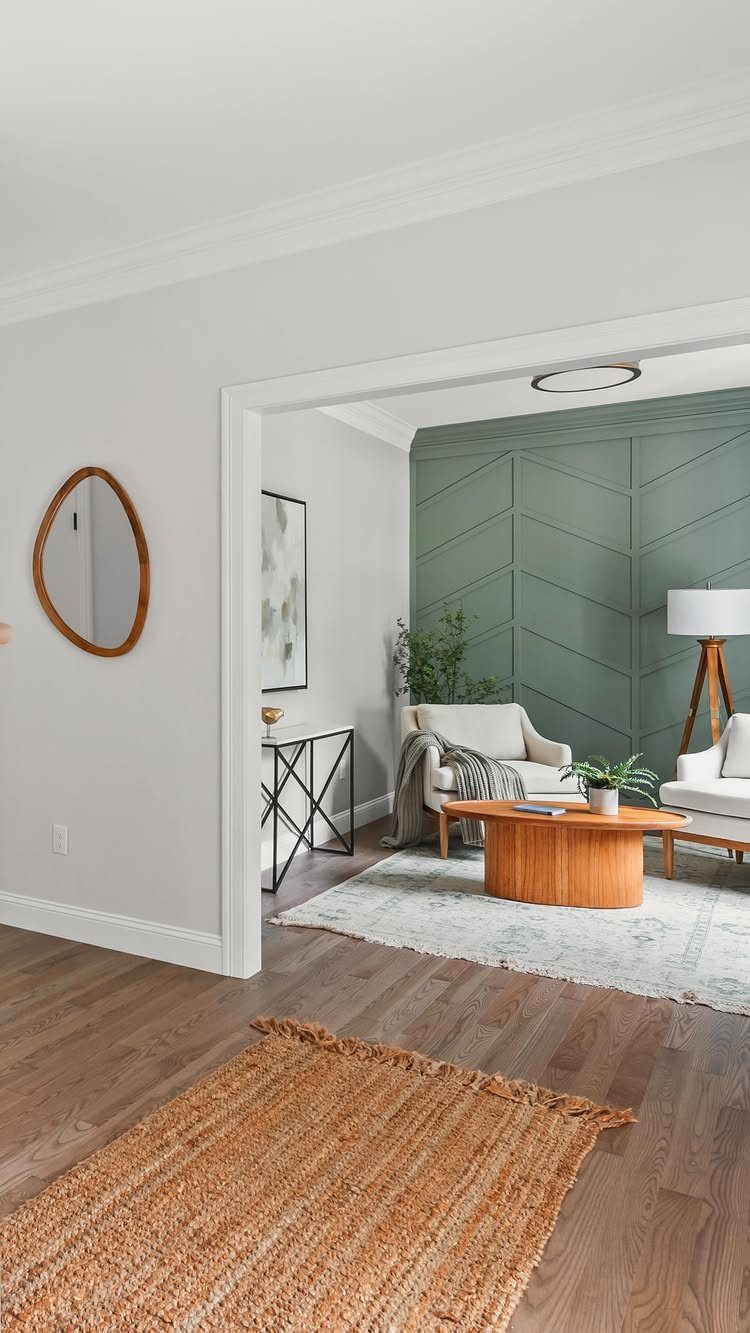
Paint gives you color choice; stained wood gives you grain. Both read as chevron because of the angled joints, and both demand the same patience with layout.
I would not attempt this without a miter saw and a spare blade. The angle has to stay exact across the whole wall or the pattern wobbles, and even a small error compounds fast at that scale.
A painted version lets you caulk and touch up; stained wood shows every gap.
Smaller rooms handle this better than open plans. The pattern pulls the eye along the wall, which can make a long rectangle feel like a corridor if you are not careful.

Premium Real Wood Wall Planks: 100% Real Solid Wood Wall Planks With Natural Patterns and Dents, the Surface Of Wood Backsplash Planks Is Processed With High Temperature Carbonization, the Real Wood Wall Planks Is Non-Toxic, Sterilized and More Safe For Children, VOC Free Process Ensures These Square Backsplash for Walls Are Safe To Use In Home

High-Quality Wall Panels: Our acoustic panel set is crafted with high-density polyester fiber, premium medium-density fiberboard, and a solid wood veneer. This combination provides an elegant look, superior sound damping, and excellent sound deadening, significantly improving room acoustics

Premium real wood wall panels: beautiful hand-selected fine Asian teak wood wall panels
3. Wood Planked Wall
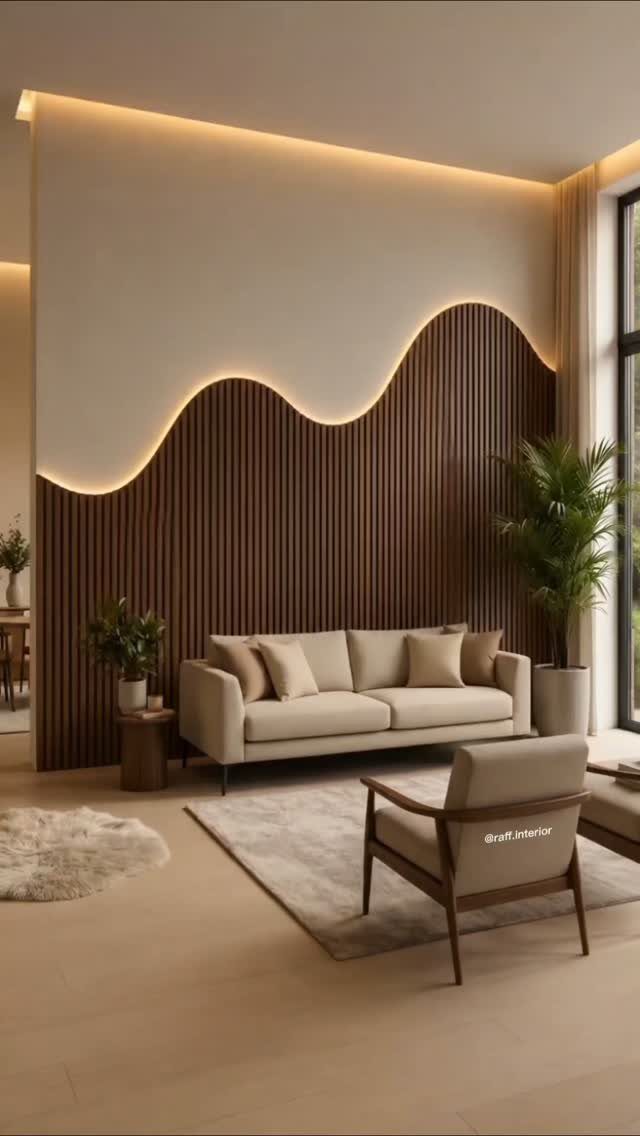
Those curved slats are set off by the backlight, but the idea works without wiring if you mount the planks half an inch out from the wall on painted spacers. The shadow line does most of the visual work.
Reclaimed wood gets the credit for this look, though I have seen new cedar fence pickets, sanded and oiled, do almost the same thing for cheap in a short run.
The reclaimed route costs more in time than money; you are pulling nails, checking for lead paint, and losing pieces to rot.
New wood is faster and more uniform, which the wavy arrangement actually needs, since irregular planks would fight the deliberate curve.
Vertical slats make a ceiling read higher. Horizontal ones widen a narrow room.
The wavy path here is harder to execute but no more expensive; it just takes a template and a jigsaw.

[ESSENTIAL QUARTER ROUND CUTTING TOOL] The Warmtree miter shears are expertly designed for fast, clean, and professional cuts. Perfect for cutting quarter round, PVC trunking, chamfer, weather stripping, and softwoods (like Pine). It also functions efficiently as a light-duty pipe cutter for your home improvement and DIY projects. (Note: Max cutting thickness is 0.4 inches; not suitable for hardwood or metal).

Enough Quantity and Dimensions: The package includes 13 DIY wood trims, The wooden trim is delicately designed to suit every cut according to different thoughts, Ensuring a nice finishing touc
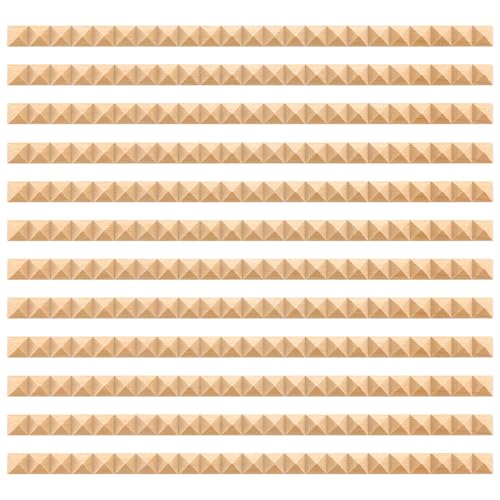
Enough Quantity and Dimensions: the package includes 12 DIY wood trims, each with a measurement of 0.71 inches in width, 15.75 inches in length and 0.2 inches in thickness; The wooden trim is delicately designed to suit every cut according to different thoughts, ensuring a nice finishing touch
4. Matte Black Wall
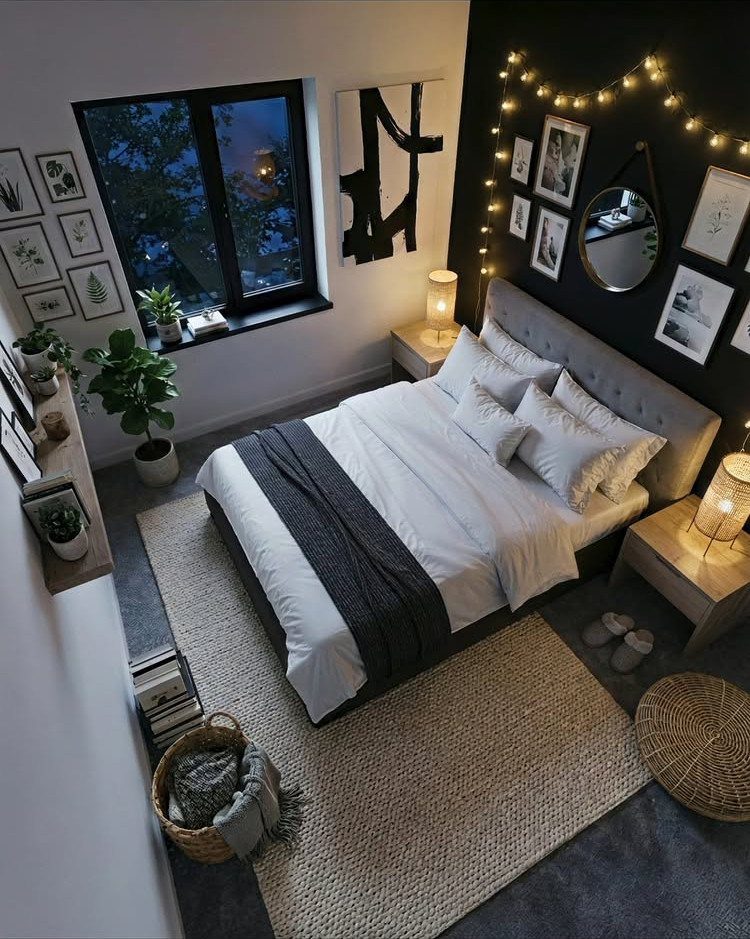
Black paint reads as depth rather than color, which is why that bedroom photo works with white bedding instead of looking like a cave.
The fairy lights are doing structural work too; they break the plane so the wall does not flatten into a void.
Matte finish is the specific choice here, and it matters more than the paint brand. Eggshell or satin would catch window glare and read as dirty gray.
True matte absorbs light and lets objects in front of it advance. I have used Benjamin Moore’s "Black Panther" and Sherwin-Williams’ "Tricorn Black" both; either runs about a gallon’s worth and needs two coats over light primer.
This is the fastest idea on this list. A single wall, taped well, takes an afternoon plus drying time.
The risk is the commitment. Start with the wall behind your bed, where you spend time looking at it without having to work against it.

Real Wood Wall Planks: 100% Real Barn Wood Wall Planks With Natural Knots and Dents, the Surface Of Wood Shiplap Planks Is Processed With High Temperature Carbonization, the Real Wood Wall Shiplap Planks Is Non-Toxic, Sterilized and More Safe For Children, Voc Free Process Ensures These Stick on Shiplap Planks For Walls Are Safe To Use In Home

RECLAIMED WOOD ACCENT: Real reclaimed and recycled wood, naturally-weathered wood paneling adds a beautiful, rustic accent to your walls

🪵 Authentic Reclaimed Barnwood: Made from 100% authentic, real weathered wood, reclaimed in Oklahoma, USA for true rustic character.
5. Chalkboard Accent Wall
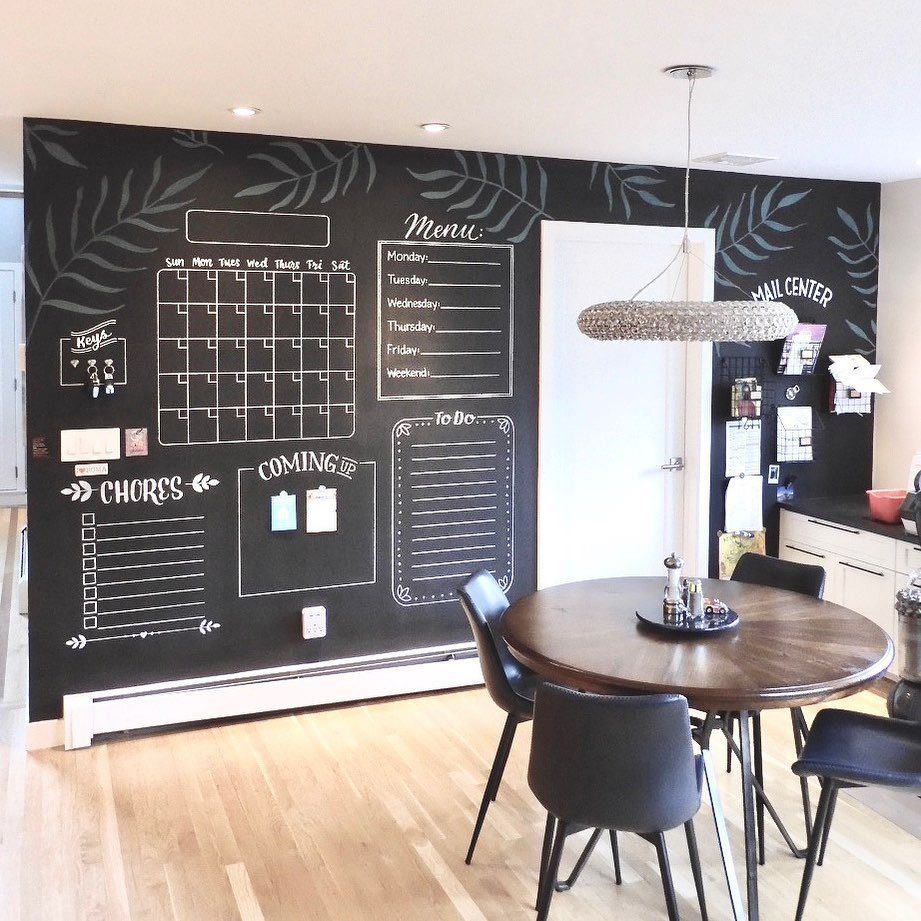
Chalkboard paint turns a wall into something the household uses rather than something the household dusts.
I would not use this in a room with south-facing windows; the black surface heats up and chalk paint can soften in direct sun.
The actual paint is cheap per quart and one coat over a dark primer, but the surface prep is what separates usable from frustrating. Smooth drywall is easiest.
Textured walls need a skim coat first or the chalk catches in the bumps and never erases clean.
A playroom wall at child height is the obvious use. I think it works better in a kitchen or dining area, where adults keep the schedule and the wall earns its keep daily.

Made in United States

Weather and corrosion resistant coating protects exterior/interior surfaces like wood, metal, concrete, masonry and more

Specialty Repair: Portable, quick drying, water resistant, Precise application; professional for fixing scratches and imperfections on exterior metal, wood, wall, furniture, cabinets, and enamel appliances, etc
6. Herringbone Wall
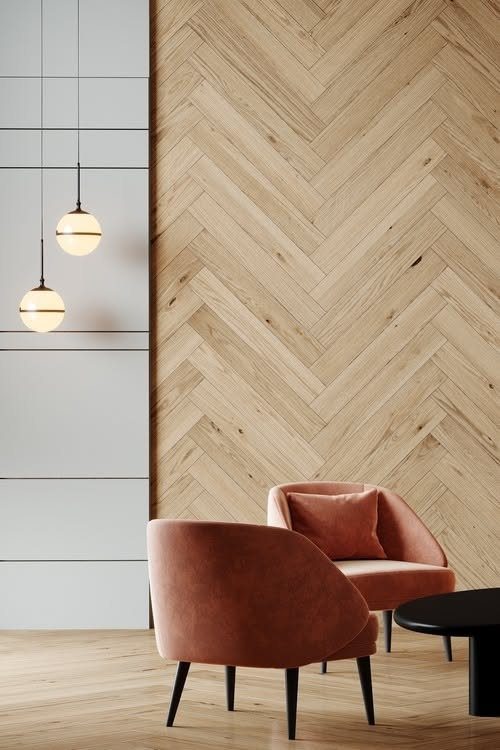
Herringbone reads as formal without being fussy, which is why it survives from parquet floors to this light wood wall behind two armchairs. The pattern is just rectangles perpendicular to each other, but the eye reads it as movement.
Wood strips are the traditional material, a few inches wide and cut to equal lengths. Paint is cheaper and lighter; you can tape the pattern on a flat wall and fill every other rectangle.
I would pick wood for a room with natural light and paint for a basement or interior room where shadows do not exist anyway.
The layout is the hard part. Start with a center vertical line and work outward, or the pattern drifts.
Dry-fit the first several pieces before any adhesive or nail goes in; herringbone is unforgiving of cumulative error.
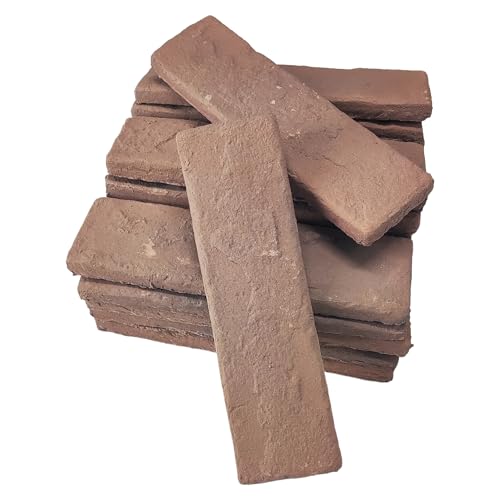
Size and Weight: Size of each brick is 2.4in x 7.9in ,and weight is about 0.5 lb. 20 piece thin brick cover about 3.5 sq.ft

TRUE-TO-NATURE 3D REALISM: Crafted from premium high-density polyurethane (PU), our faux stone wall panels perfectly replicate the rugged texture, deep crevices, and color variations of natural stone. Unlike cheap foam or flat wallpapers, these 1.18-inch thick 3D artificial rock veneers fool the eye and touch, instantly upgrading your space with a high-end, realistic masonry aesthetic.

TRUE-TO-NATURE 3D REALISM: Crafted from premium high-density polyurethane (PU), our faux stone wall panels perfectly replicate the rugged texture, deep crevices, and color variations of natural stone. Unlike cheap foam or flat wallpapers, these 1.18-inch thick 3D artificial rock veneers fool the eye and touch, instantly upgrading your space with a high-end, realistic masonry aesthetic.
7. Stripes Accent Wall

Vertical stripes pull the eye upward and make a ceiling feel higher than it is, which matters in apartments and starter homes where every inch counts.
A black-and-white stripe reads as graphic rather than playful, so it works past the nursery stage.
Painter’s tape is what separates a stripe wall from a mess.
I press the edge with a plastic card after sticking it down, then seal the seam with the base coat color before brushing on the contrast shade; paint bleeds into the gap and leaves a crisp line.
Wider stripes need fewer passes and forgive a slight wobble. Narrow ones look hand-painted fast, so I save them for spaces where I want that energy.
This idea suits renters who can paint and repaint before move-out, or anyone who wants pattern without committing to wallpaper removal later.

𝗛𝗘𝗥𝗥𝗜𝗡𝗚𝗕𝗢𝗡𝗘 𝗦𝗧𝗬𝗟𝗘 𝗪𝗜𝗧𝗛 𝗔𝗧𝗧𝗜𝗧𝗨𝗗𝗘 𝗮𝗻𝗱 𝗮 𝗦𝗧𝗢𝗥𝗬. At Timberchic, we’ve done the hard work for you to produce these classic herringbone pattern planks. The alternating direction of the rectangles creates a visually striking and dynamic effect. Whether you're designing a feature wall or upgrading an entire room, our peel-and-stick wood panels for interior wall decor create a sophisticated, bold statement. The pre-cut 12” boards and strong 3M adhesive backing make installation perfect for DIY home decor—easy, secure, and fun.
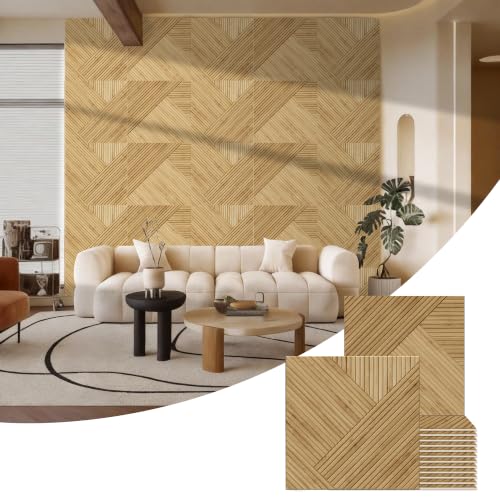
Professional Grade Acoustic Clarity-Silence the distractions and elevate your audio. Engineered with 100% high-density polyester fiber, BUBOS panels excel at neutralizing mid-to-high frequency reflections and flutter echoes. Whether you are tracking vocals in a recording studio, hosting executive Zoom calls, or immersive gaming, experience a balanced, studio-quality environment where every word is crisp and clear.

Modern and Elegant Design - The wood slat wall panels have been carefully designed to effortlessly transform any space, enhancing the surroundings both visually and acoustically. The wood panels help to create an environment that is not only quiet but beautifully contemporary, soothing and relaxing. Furthermore, our slat wall panels can be installed horizontally or vertically and cut to any shape allowing for creativity and a unique look to fit your aesthetics.
8. Concrete Accent Wall
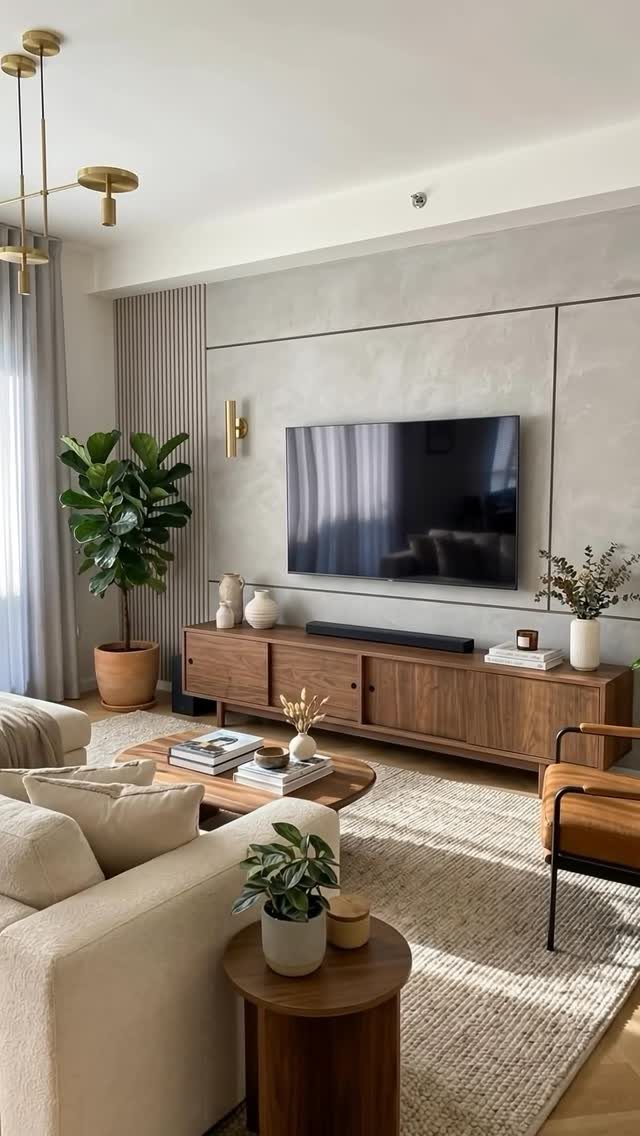
A concrete finish reads as intentional industrial, not unfinished, when it sits next to wood this warm.
Panels that carry the visual weight of real concrete come at a fraction of the thickness, which matters for mounting a TV without anchors rated for hundreds of pounds.
Floating wood shelves set into the same wall are worth copying: the wood softens the grey, and the concrete makes the grain look richer by contrast.
Warm pendant light aimed at the shelves does more than task lighting; it picks up the tone of the wood and keeps the room from feeling like a garage after dark.
This one trades away the cozy textures that carry a whole house. I would use it in a single room, a media wall or a home office, and keep the rest of that space in softer materials.

20 Beech Wood Trim Pieces: Includes 20 unfinished 3D decorative trim pieces made from solid beech wood—each measuring 15.7" long, 0.7" wide, and 0.35" thick—perfect for custom crafting and home upgrades

Package includes: The total length of each Unfinished scalloped wood trim is 15.75 inch / 40 cm, the width is 2.17 inch / 5.5 cm; If you need a decoration with a unique scalloped wavy edge, it will be a very good choice; Not only they enhance the aesthetic of your space, but they also are versatile enough to be applied for a range of DIY projects

Complete DIY Wood Trim Set: Includes 50 pieces of unfinished scalloped wood trim, offering everything needed to start your creative project right away. Perfect for various painting and decorative applications, allowing you to enjoy DIY crafting and share fun moments with family or friends
9. Natural Wood Logs Wall
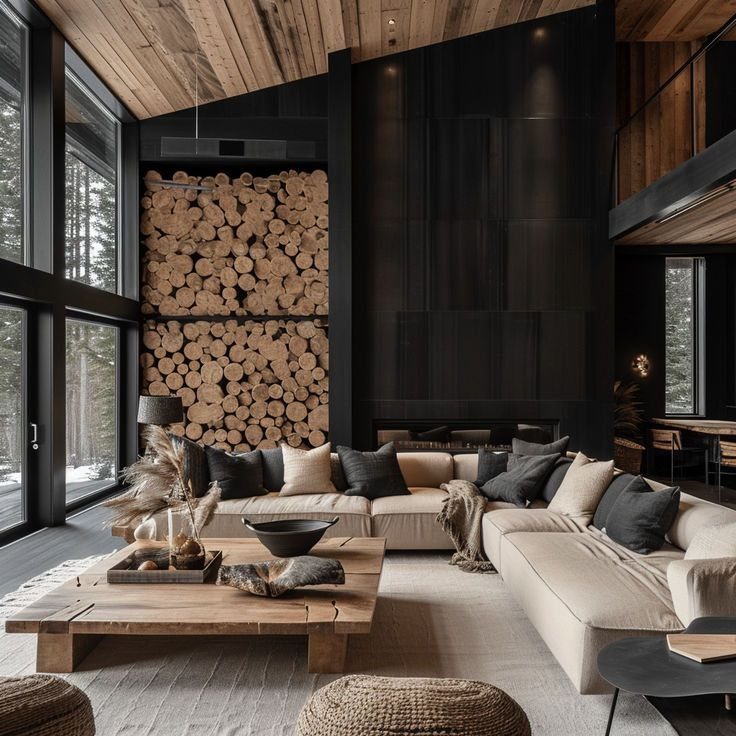
Stacked round logs fill a tall recess like a three-dimensional painting, one that changes as the light moves across the end grain.
The two rectangular sections keep the arrangement from reading as a woodpile that got out of hand; the negative space between them is as deliberate as the logs themselves.
Size matters more than species here. Logs thick enough to stand on edge without rolling, cut to a consistent depth, stack flush and hold their grid.
A floor-to-ceiling niche is ideal but not required; a shorter section above a fireplace or along one side of a hallway gets the same effect at half the material.
I would seal the cut ends with a matte finish to keep the color from going orange with age.
This idea asks for a wall that can take the weight and the depth. In a small room it becomes the only statement, which is the point.

Reclaimed Wood Panels: Reclaimed wood paneling for walls is designed to create accent walls, feature walls, and interior spaces; these wall board panels feature a barnwood look with rustic color variations, reflecting the unique story of each piece

Stylish and Modern: The tendy slat design combined with various wood finishes update interior decor in a big way

ACHIEVE A PROFESSIONAL, WHITEWASH RUSTIC LOOK WITH REAL WOOD SHIPLAP PANELS – NOT PVC OR FAUX WOOD: Transform your space with ease using our weathered whitewash shiplap wall planks. Crafted from solid wood, these authentic wood planks features authentic wood grain, natural knots, and a lightly brushed texture for a rustic, weathered look. Perfect for accent walls, distressed wood planks, and decorative wood panels for walls. A rustic look with real character - not synthetic imitation!
DIY Options
The painted options need only tape, rollers, and patience with drying time. The wood patterns ask for a miter saw and a willingness to measure twice.
Even the brick veneer goes up with mortar and a trowel, not a mason’s license.
The real question is which project matches your tool collection and your tolerance for dust. I would not start with herringbone unless you already own a nail gun and a level you trust.
Stripes or matte black paint are the entry points: cheap, fast, and reversible when your lease ends or your taste shifts.

WHAT'S IN THIS 10 PIECE PAINT KIT FOR WALLS: includes one plastic paint tray; one 9 inch roller frame; one 4 inch mini roller frame; two 9 inch microfiber roller covers (1/2 inch nap); two 4 inch microfiber roller covers (1/2 inch nap); one 1 inch flat brush; one 1.5 inch angle sash brush; one 2 inch angle sash brush

Efficient Performance: 3/8-inch nap holds an ample amount of paint for time-saving convenience and fast, even paint application

Efficient Performance: 3/8-inch nap holds an ample amount of paint for time-saving convenience and fast, even paint application
Accent Wall Trends
Accent walls stay current because they solve a problem that does not go away. Renter or owner, most of us live in boxes with identical walls and no architectural interest.
One treated surface breaks the monotony without the cost of molding or the commitment of wallpaper.
What changes is the material people reach for. The shift is gradual enough that a wall you build this year will not look dated by next; the format itself carries the idea, not the specific material of the moment.
Color Choices
The matte black wall in the list is proof that neutral does not mean safe.
If you want pattern without shouting, the herringbone wall in pale wood does the same work. The geometry supplies the interest while the tone stays quiet.
I would pick that pairing for a room where you already own furniture with some visual weight; let the wall recede enough to frame it.
Easy Updates
The list includes two ideas that disappear without a trace when your lease ends or your mood changes. Chalkboard paint covers over like any flat finish.
Painted stripes take an afternoon to roll white and another to return to base. The herringbone wall in paint rather than wood is similarly reversible; you are filling taped rectangles, not removing nailed strips.
This is the practical case for starting with one wall instead of four. A single treated surface costs less in materials and less in labor to undo.
A single accent wall can go from taped off to final coat between Saturday morning and Sunday evening, with time for the first coat to dry overnight. A full room would have eaten the whole weekend and still needed touch-up.
Frequently Asked Questions
What is the rule for accent walls?
An accent wall should read as found architecture rather than applied decoration.
A color or material should start and stop at real boundaries: a headboard wall, a fireplace surround, a doorway you walk through, not an arbitrary rectangle floating in the middle of a flat wall.
The best ones earn their keep by doing structural work, such as making a ceiling feel higher or giving the eye a place to rest.
Are accent walls out of style in 2026?
The ones that last do actual work for the room, like a chalkboard wall that holds grocery lists and calendars, or a dark wall that makes a white ceramic lamp or a pale wood frame stand out.
Trends come and go; a wall that solves a problem or changes how you use a room does not date the same way.
What is the best wall to do an accent wall?
The wall behind your bed or sofa is the easiest call, since you face it during the hours you are actually in the room.
A media wall or home office also works well, especially for heavier textures like concrete or stacked logs that need a wall that can take the weight and depth.
In a tight room, choose the wall that fixes what bothers you: vertical boards draw the eye up from a squat ceiling, horizontal boards push the walls apart in a narrow space.