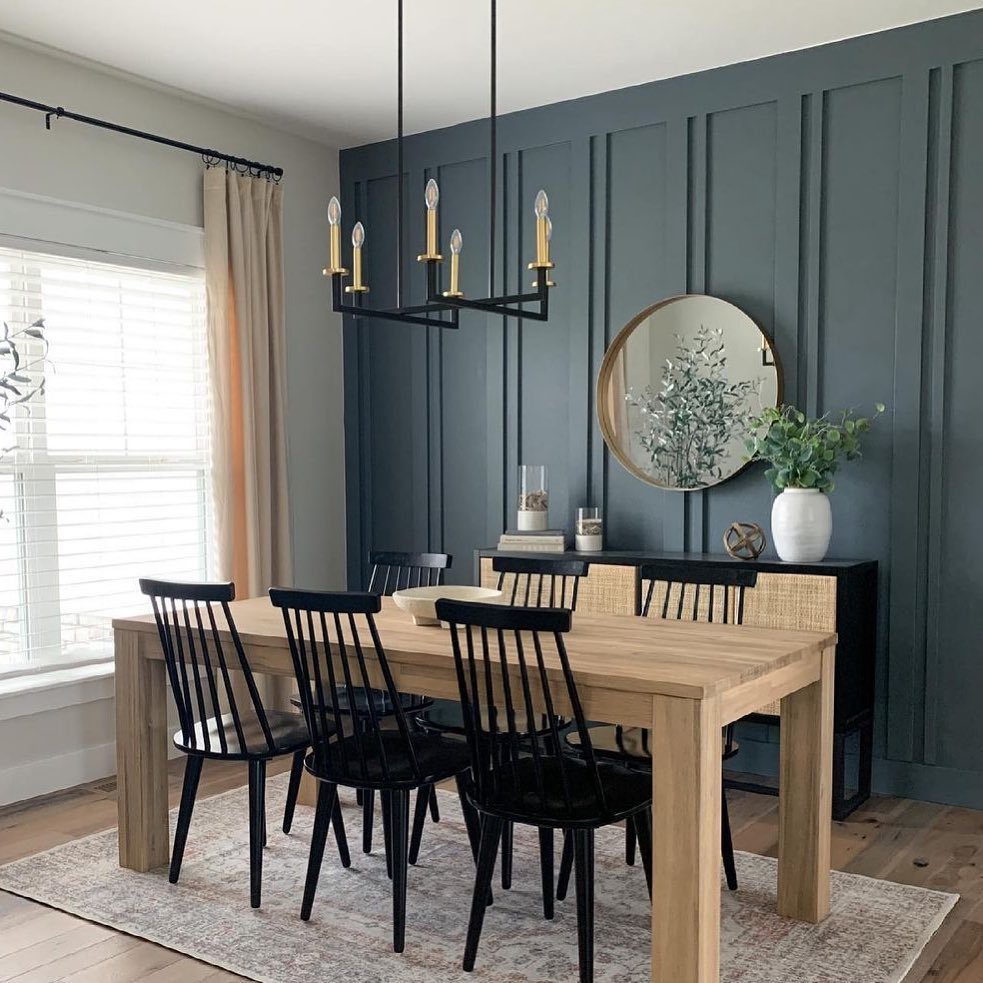
These ideas run from a single accent wall behind a sofa to full-height hallway treatments, with most costing somewhere between a few boards of pine and a couple gallons of paint.
Half-height works when you want paint or paper above the boards; floor-to-ceiling is where the architecture itself should carry the room.
One builder I studied kept batten gaps between 11.5 and 13 inches by calculating per wall, not averaging across the room, because door frames and outlets rarely cooperate with one repeating number.
1. Painting Board and Batten Walls
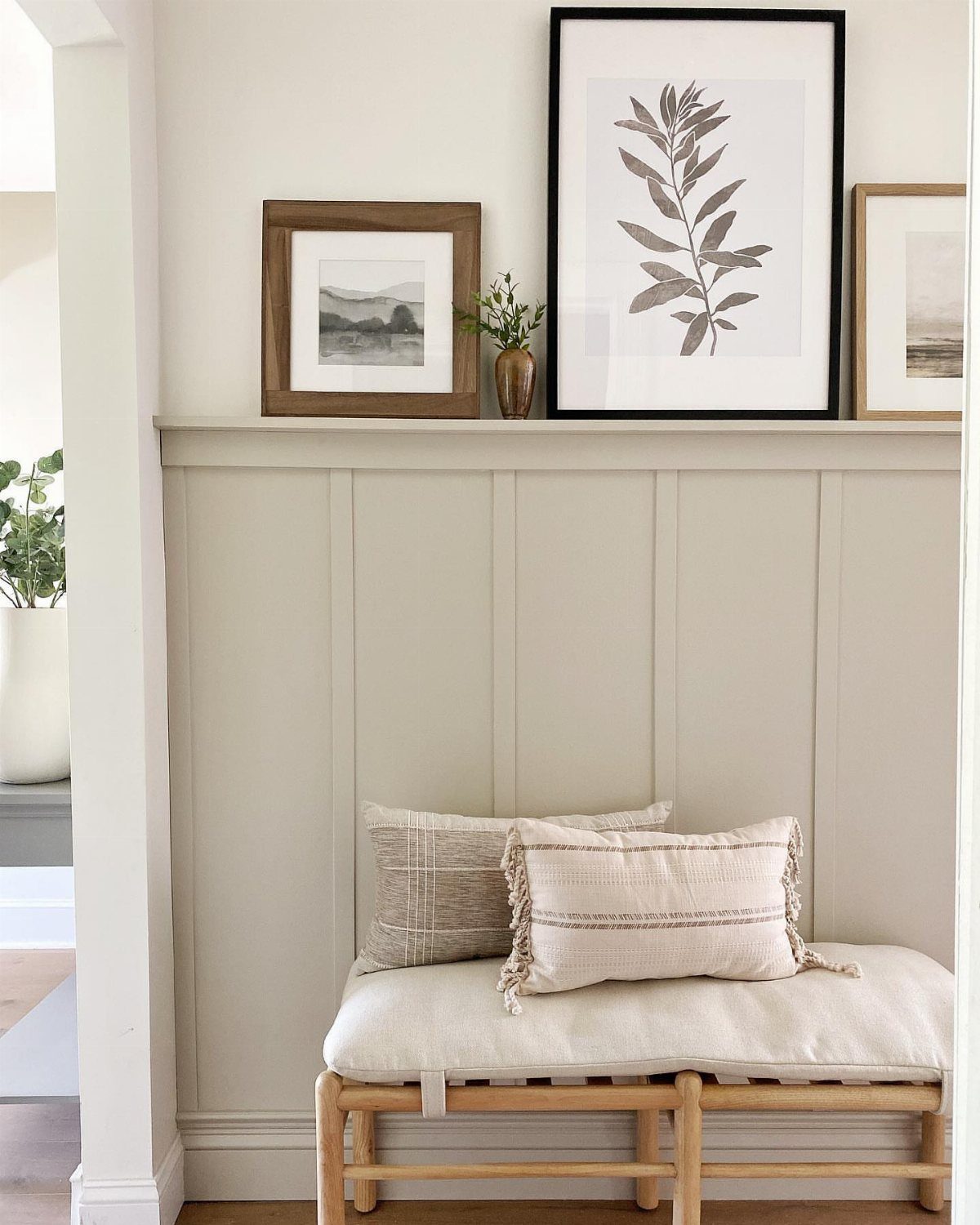
Satin or semi-gloss paint holds up on board and batten the same way it does on trim, which is why most painters reach for it here.
I prime bare boards first, then spray if the room is large enough to justify masking everything off; hand painting works fine but needs a second coat and more patience around edges.
The finish matters more than the color: flat paint collects fingerprints on vertical surfaces, and the ledge along the top rail is a dust magnet that cleans easier with some sheen.
I’d skip anything below satin unless you enjoy touching up scuffs every few months.
2. Half the Wall Height
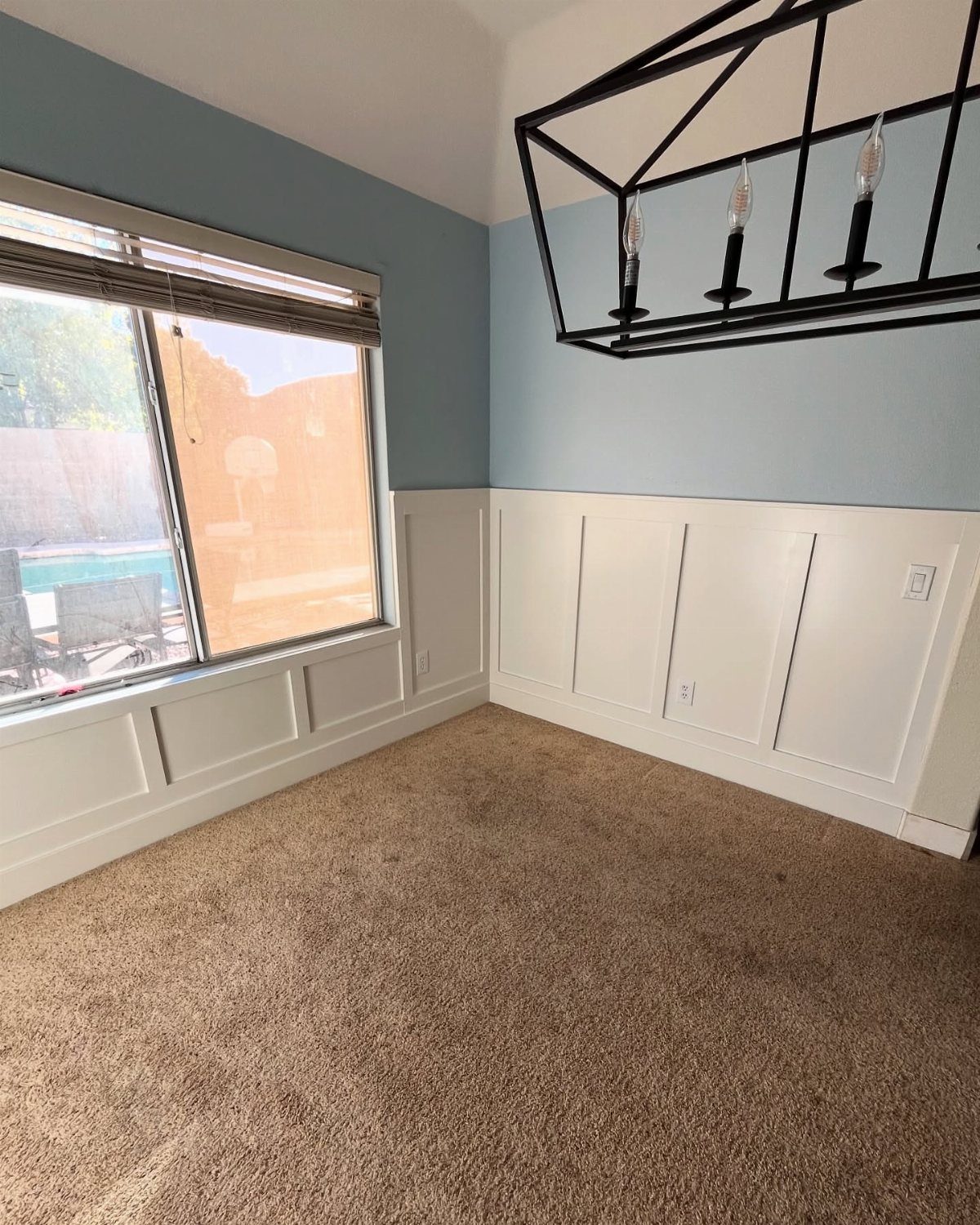
Running board and batten to about half the wall height keeps the proportion from feeling squat or stretched, and it leaves room for paint or wallpaper above.
Batten spacing works best when calculated wall by wall, not averaged across a room; corners start with a full batten, then work inward from there.
A 114-inch wall with 4 batten pairs landed at roughly 18.5 inches between them in one build I studied, though doorways and outlets will force compromises. Measure the wall you face most often first, since that is the one your eye catches.
3. Attach the Vertical Battens
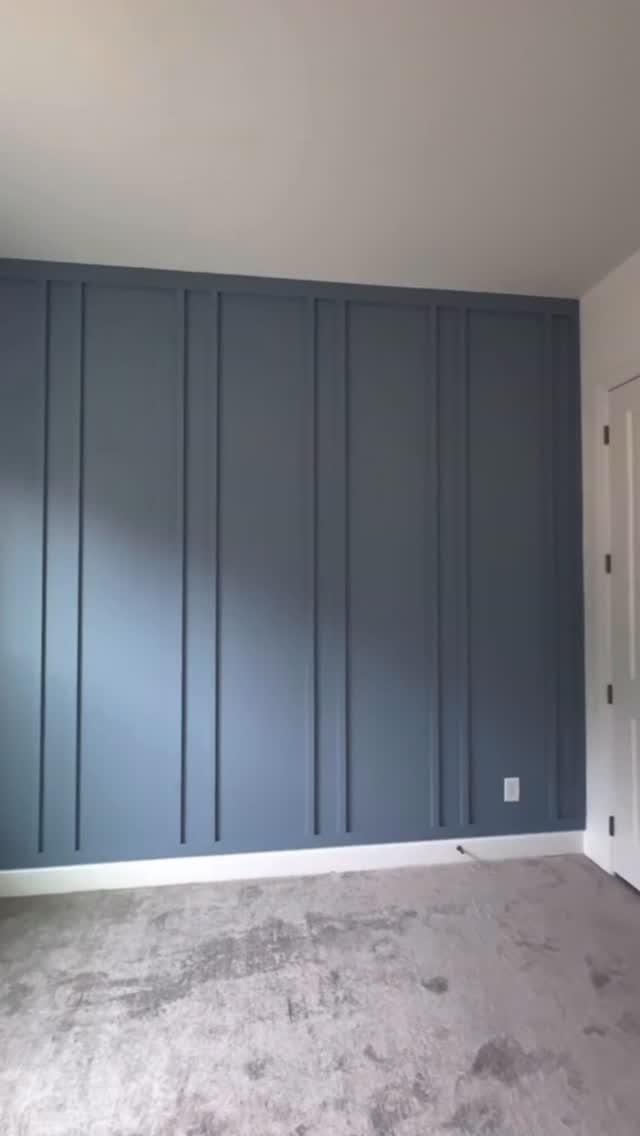
End battens go in first, one at each corner, giving you fixed anchors to pull a tape between.
Everything in between fills to whatever spacing you planned by wall, not by room, because outlets and door frames rarely cooperate with a single repeating number.
One builder kept gaps between 11.5 and 13 inches around an entire room by calculating per wall and accepting the slight variation; another reader will not notice half an inch.
Cut each batten to sit tight between baseboard and top rail, then dry-fit before the nail gun comes out.
4. Board and Batten Entryway with Hooks
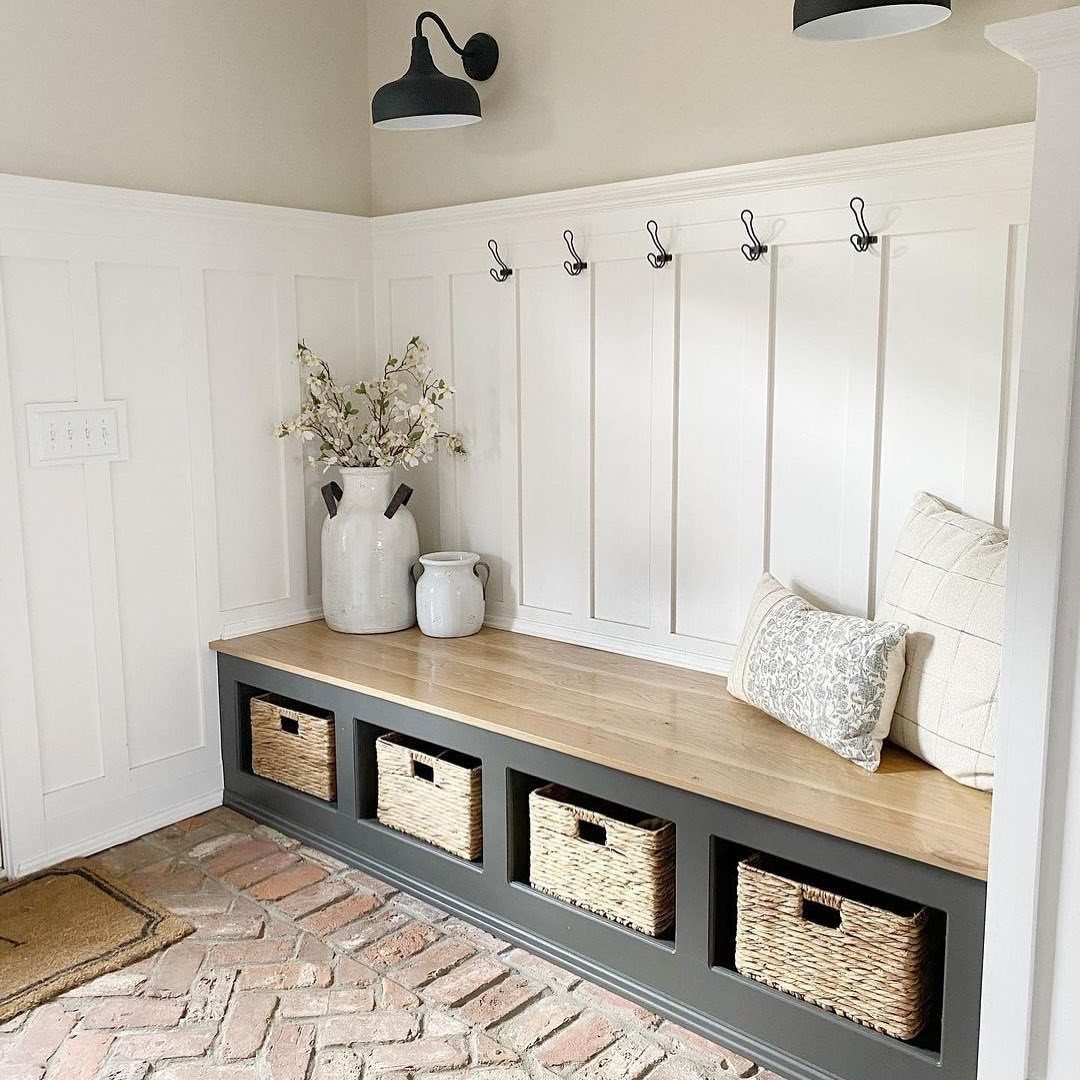
An entryway with board and batten practically begs for hooks mounted through the battens or along the top rail, turning the wall itself into storage.
A narrow console works below the hooks if floor space is tight, or skip the bench entirely and let the wall carry the storage.
Black hooks against white battens give the contrast some punch; brass softens the look for traditional rooms.
I would place hooks high enough for adult coats and one lower row for kids if the household has them, since bending to dig through a pile defeats the purpose.
5. Floor-to-ceiling Board and Batten
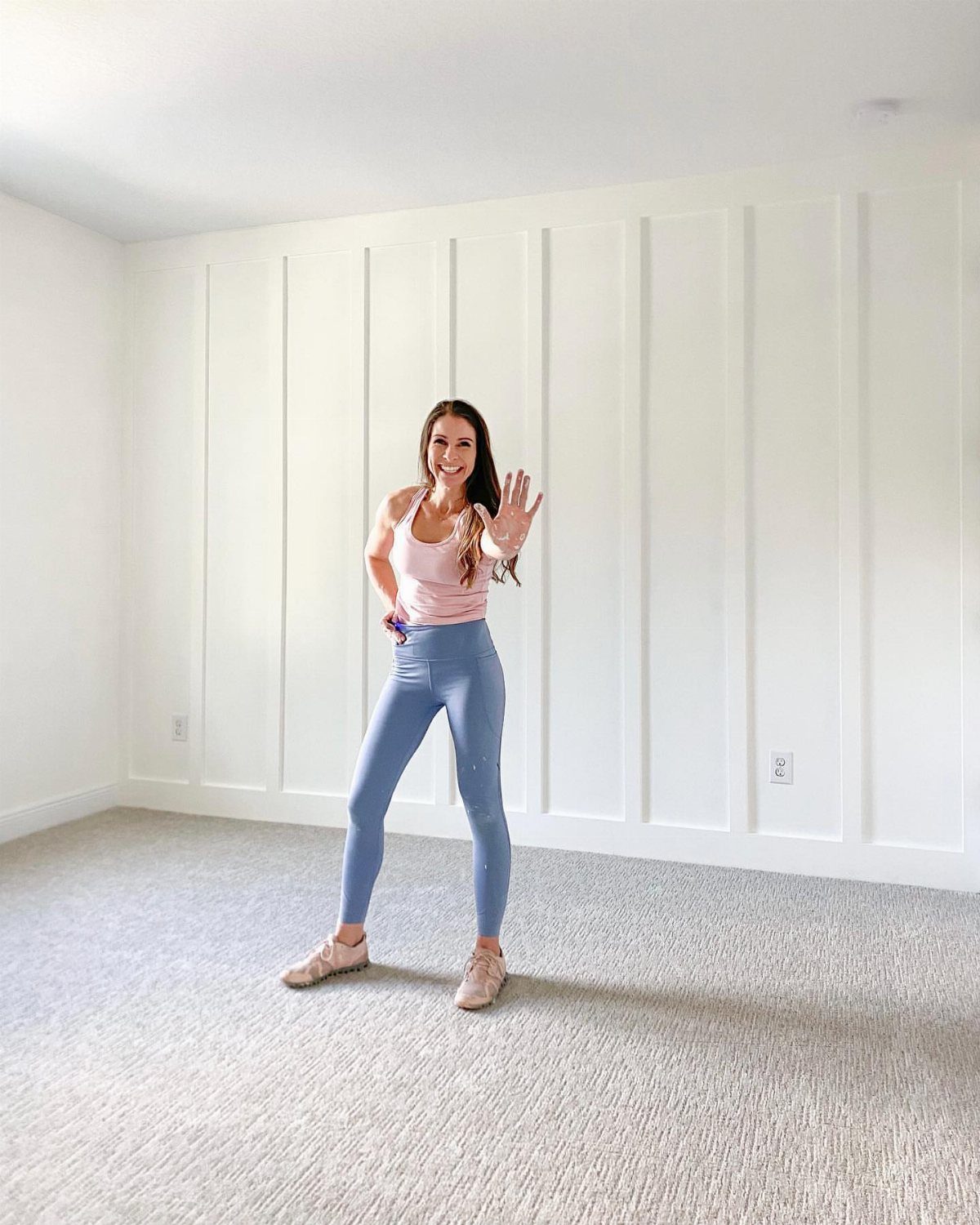
Full-height treatment reads less expected than the usual chair-rail height, which is exactly why it suits someone tired of seeing the same hallway project on every design blog.
The vertical lines stretch a low ceiling visually, though the effect flattens if the battens are too widely spaced; keeping them closer together tends to feel right when the boards run all the way up.
Paint the whole assembly one color to keep it from looking like a cage. This one trades away the easy wainscoting reference for something more architectural, so the rest of the room should stay simple.
6. Accent Wall Paired with Wallpaper
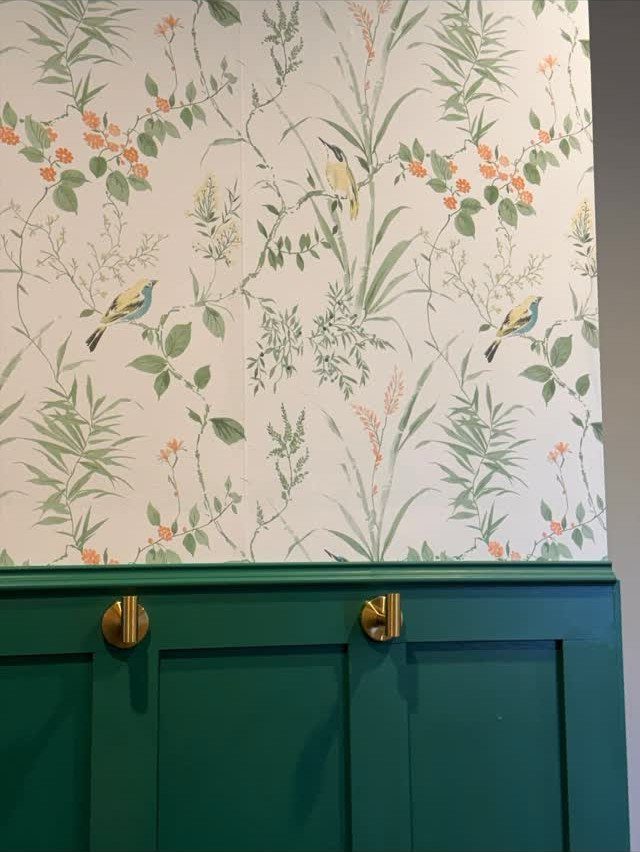
Board and batten below and wallpaper above is the move when you want pattern without covering every surface. Dark painted battens ground a busy botanical print above them, and brass hooks add function without cluttering the paper.
I would pick the wallpaper first, then paint the battens to pick up one of its quieter tones; matching the dominant color makes both elements fight.
This approach costs less than full-wall paper and holds up better in high-traffic spots where chair backs would scar unprotected drywall.
7. Chair Rails or Picture Frame Molding
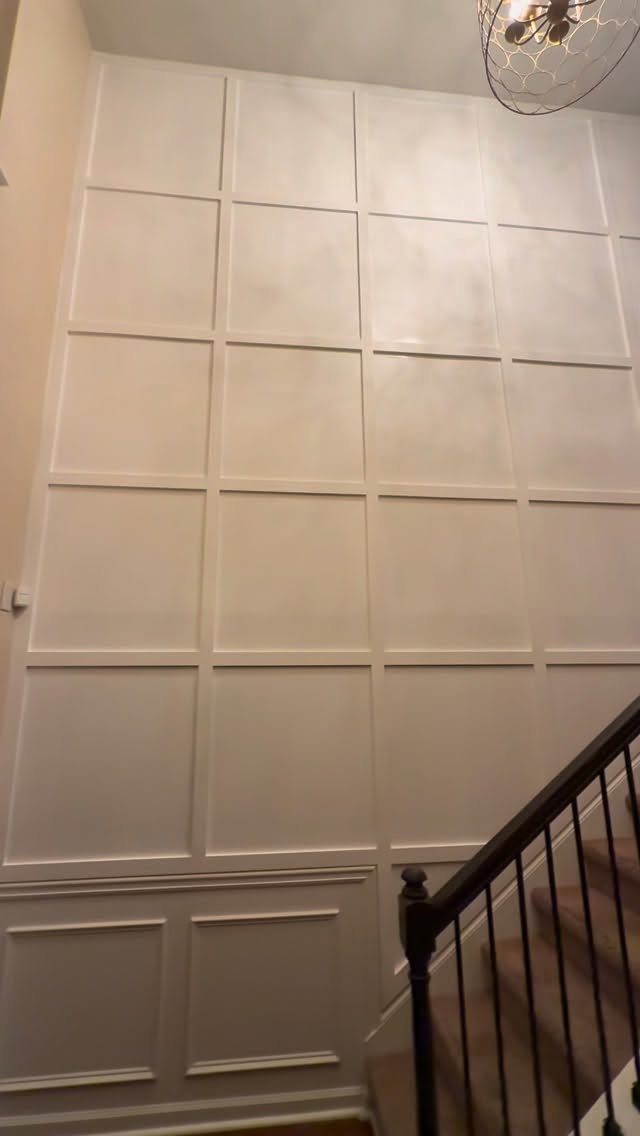
A thin strip of picture rail molding along the top edge turns standard board and batten into something more traditional.
The extra piece in pine costs about as much as a takeout lunch and takes less time to nail on than waiting for paint to dry, but it reads as finished carpentry once the whole wall is one color.
I like this for older houses where the trim already has some character; in a brand-new build it can look like you’re trying too hard.
If your ceiling is low, keep the rail narrow. A narrow piece works without crowding the wall.
Paint it the same color as the battens so it shadow-lines rather than stripes.
8. Dark Charcoal Accent Wall
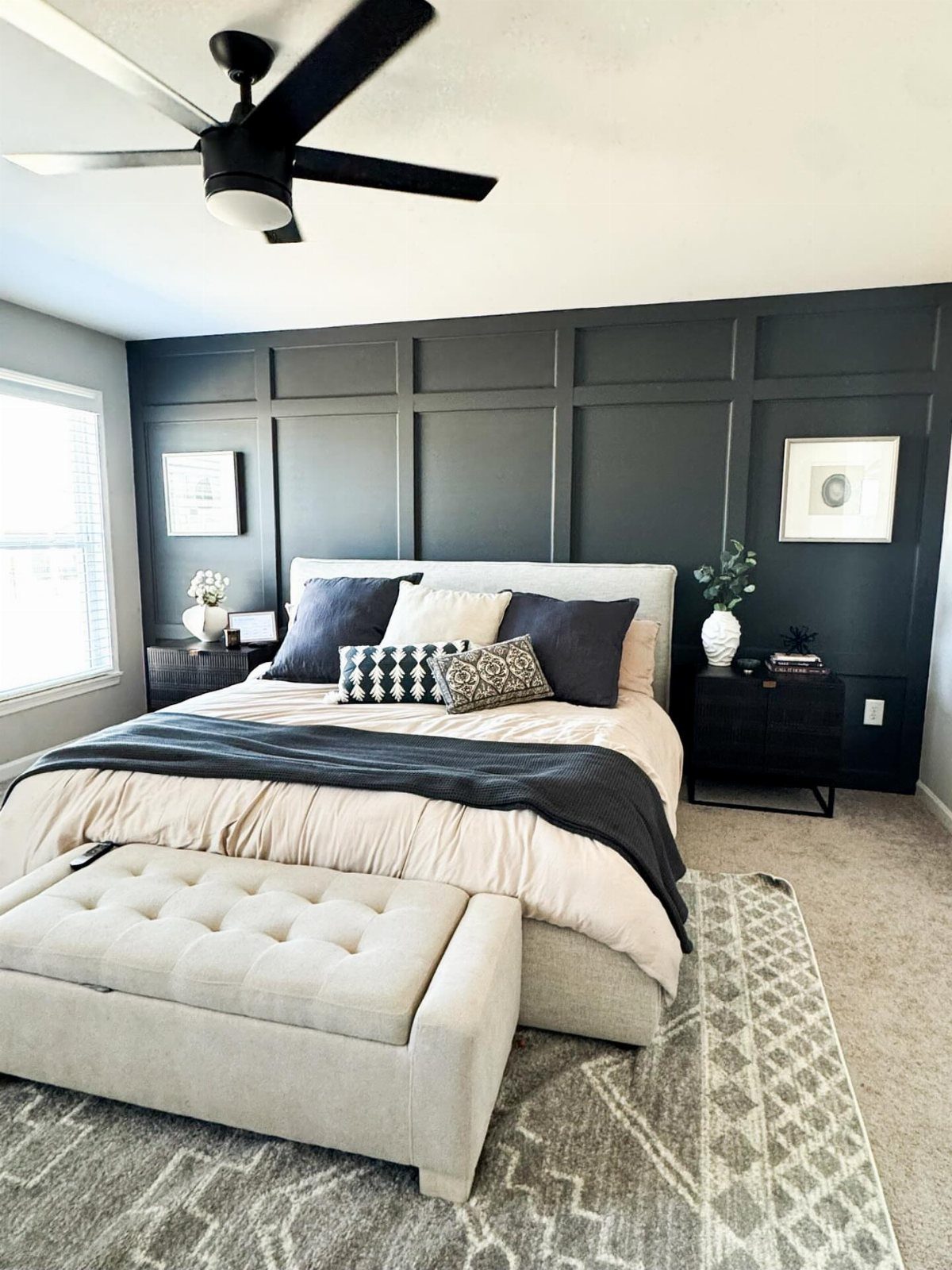
Charcoal reads softer than pure black in daylight, and in a bedroom that matters because you see it during morning light too.
The battens keep the dark color from going flat by catching shadows at regular intervals, so the wall changes as the sun moves. I would use eggshell or satin here, not matte; matte charcoal can look like a chalkboard.
This much dark paint means 2 coats minimum, maybe 3 if you’re covering a light color. Budget an extra gallon.
Everything you hang on it, white frames or brass sconces, pops harder than on any pale wall.
9. Olive Green Living Room Wall
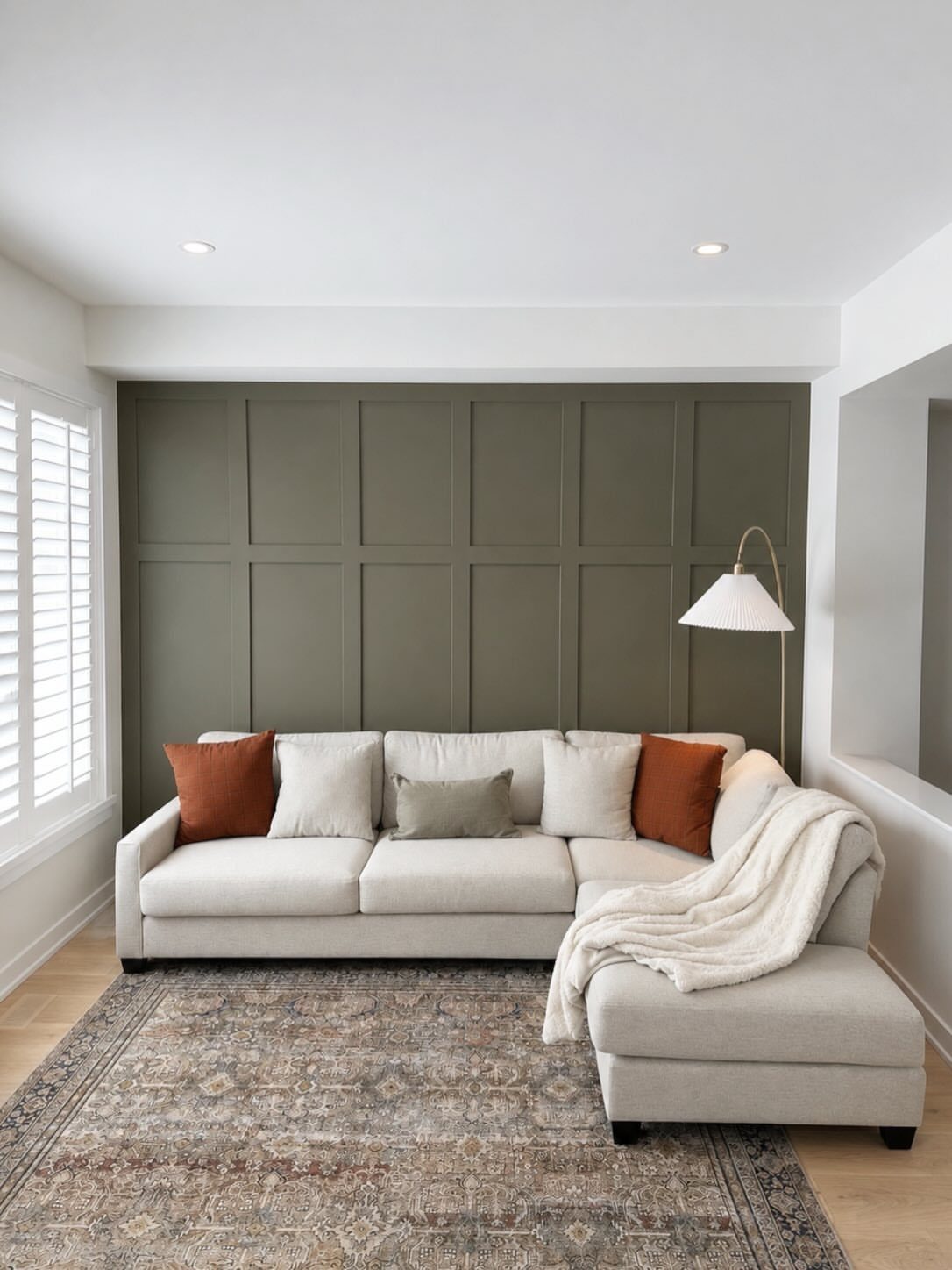
Olive green behind a sofa works because it’s muted enough to live with but warm enough to feel intentional.
The battens break it into panels so the color never overwhelms the room, which is why I’d pick this over a flat painted accent wall in the same shade.
In a living room with a sectional, the wall behind it is usually the only uninterrupted vertical space you have. Board and batten there gives you architecture where there was none.
Check your sofa depth before spacing the battens; a long couch needs the grid to read balanced around it, not cropped awkwardly.
10. Staircase Board and Batten Wainscoting
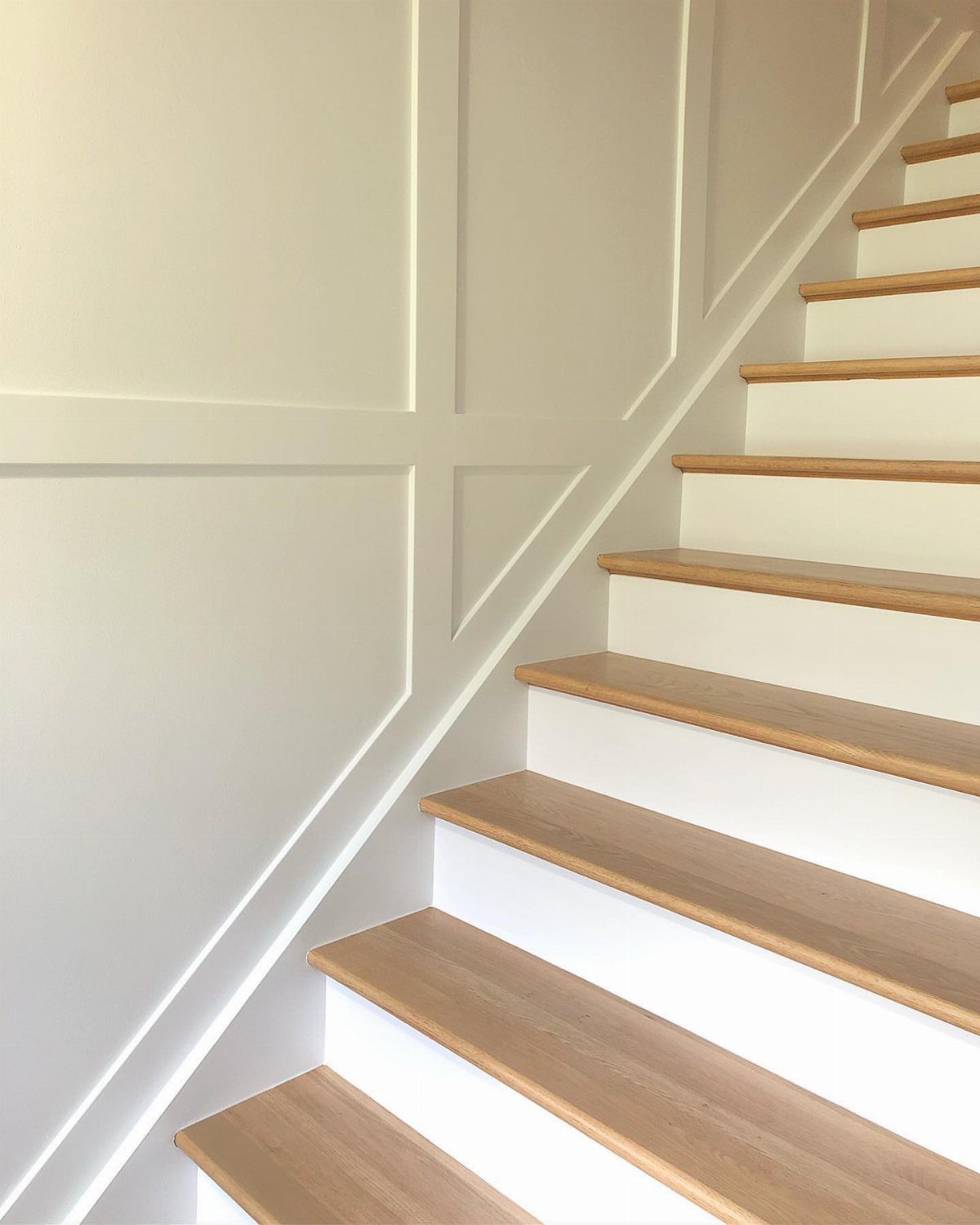
Staircase walls are awkward. They slope, they meet railings at odd heights, and they’re the first thing you see climbing up.
Board and batten wainscoting solves the slope problem by ending at a horizontal rail that follows the stair angle, and the repeating verticals pull your eye upward so the climb feels shorter.
This is one place where keeping it white pays off. The stairs already have wood treads and maybe a stained handrail; another color on the wall competes.
Pine or MDF works here, primed before install because cutting around railings means touch-ups are hard. Plan for a weekend, not a Saturday.
11. Light Blue Bedroom Accent Wall
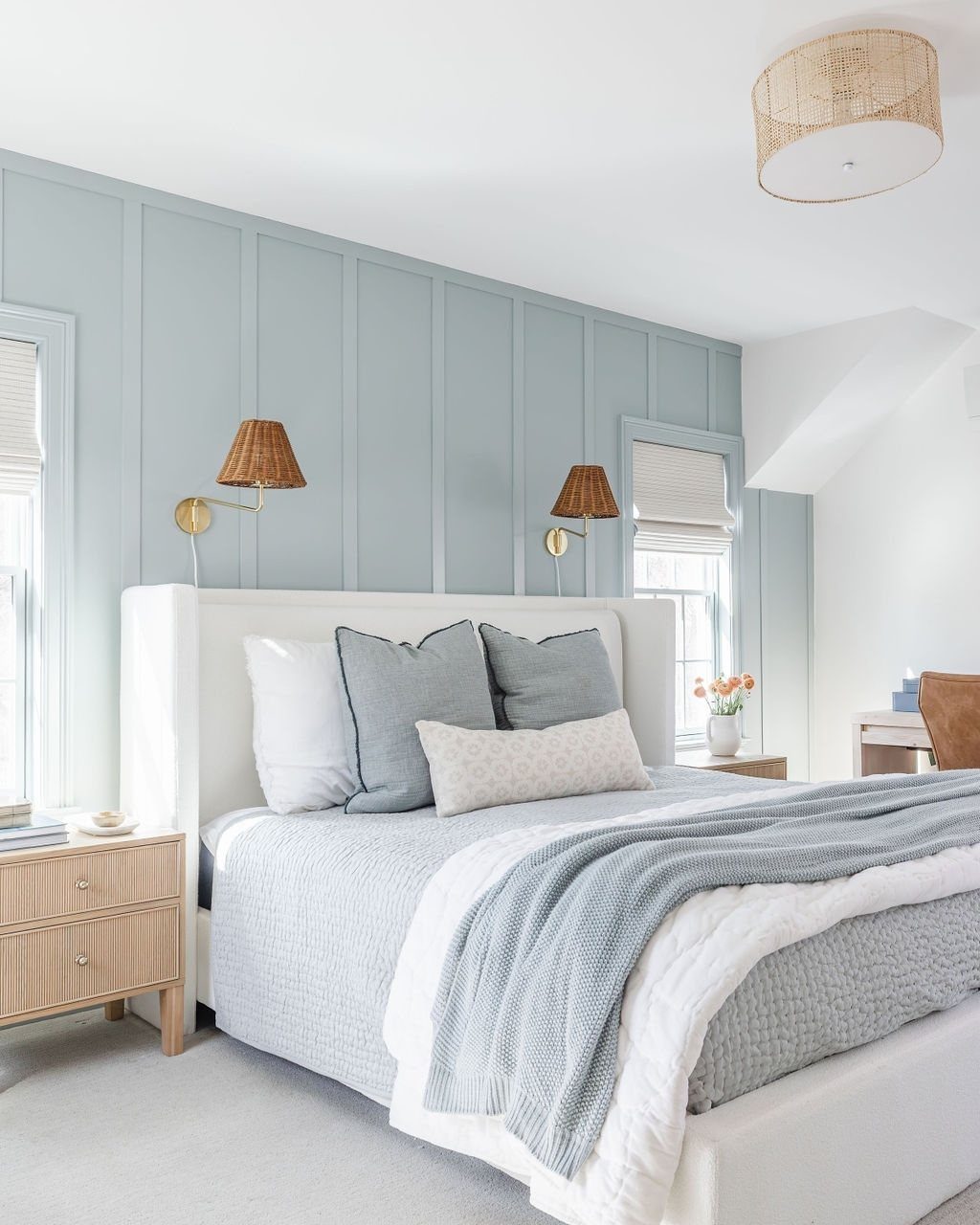
Light blue behind a bed with windows on either side is a specific situation: the wall is broken up already, and the battens give it coherence the way a headboard would.
Without them, pale blue can read as leftover paint rather than a choice.
I’d go slightly grayer than the bedding, not matchy. The battens cast thin shadows that read as texture, so the color shifts across the day.
In a room with natural light on both sides, this matters more than in a windowless guest room where flat paint might do. The vertical strips also draw the eye up to any crown molding you have.
12. Dark Navy Blue Wall
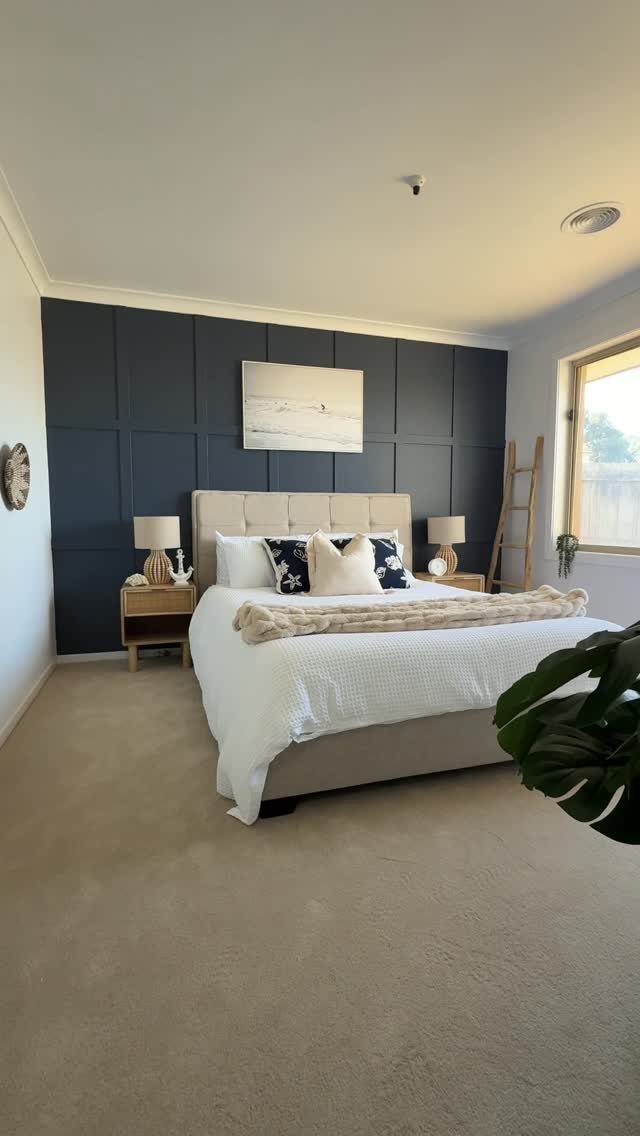
Navy works in bedrooms because you want the wall to recede at night, but it needs the battens to keep from reading as a cave.
The raised strips catch whatever light is in the room, so even after dark the wall has depth. This is where pre-primed MDF saves time; raw pine grain shows through navy in a way that reads as mistake, not texture.
Neutral bedding is non-negotiable here. Navy walls with patterned navy pillows fight each other, but cream and oatmeal let the wall be the statement.
Two coats covers if the MDF is sealed, three if you’re painting over existing color. The result reads as designed, not decorated around.
DIY Skill Level
Board and batten is beginner-friendly enough that I’d point any first-timer toward it over other wall molding projects.
The process breaks into clear stages: replace or add baseboard, attach the top horizontal board, space and nail the vertical battens, then finish with a top ledge and optional chair rail.
Each step is forgiving; if a batten ends up 1/2 inch off, the next one simply adjusts.
Pine or MDF from any home center keeps the material cost under what most people spend on a single accent chair. A miter saw and nail gun are the only power tools required, and both rent by the day.
The real skill is measuring twice before cutting, which matters more on a 114-inch wall than any fancy joinery.
Choosing Paint Colors
Paint samples read differently on board and batten than on flat drywall because the battens cast shadows that deepen the color.
I tape swatches to the vertical strips, not the boards between them, since that is where the eye actually registers the hue.
Morning and evening light hit those strips at different angles, so I live with samples for 2 full days before deciding.
The finish sample matters as much as the color. Satin on a test batten catches light the way flat never will, and that sheen difference changes how the color reads.
I buy sample quarts in the actual finish I plan to use, not the cheaper flat samples stores often push.
Trends in Design
Board and batten outlasted its farmhouse moment because the vertical lines solve problems that never go out of style: they stretch low ceilings, break up long walls, and add architecture where none existed.
The look predates any of us by centuries, which is why it reads as structure rather than decoration once the trend cycle moves on.
Modern installations skip the rustic knots and distressed paint that read as pure country; the look has widened out since.
Clean battens in charcoal or olive against simple furnishings feel current without trying; the same treatment in aged white with vintage signs would read as dated.
I’d use it in any room where I want wall detail that does not announce itself as a period reference.
Maintenance Tips
The top rail on board and batten collects dust like any horizontal ledge, so I run a microfiber cloth along it monthly when I notice the buildup.
The vertical battens themselves stay cleaner, though the edges where they meet the board can gather grime in kitchens or entryways.
Gaps open where boards shrink seasonally, especially in older houses with heat that cycles on and off. I check corners and ends each spring, filling small separations with paintable caulk rather than waiting for them to widen.
Touch-up paint lives in a labeled jar because matching sheen after a year of fading is nearly impossible from a fresh quart.
A chip the size of a quarter takes 5 minutes to fix; ignoring it means repainting the whole wall when the contrast becomes obvious.
Frequently Asked Questions
What are the cons of board and batten?
Too many battens crowd a wall and turn into visual clutter rather than architecture. The ledges along horizontal rails collect dust, and flat paint on vertical surfaces shows every fingerprint.
Spacing has to be calculated wall by wall, which means outlets and door frames will force compromises you cannot average away.
How much does it cost to do a board and batten wall?
Materials for a whole room can run under $300 if you use pine or MDF and handle the labor yourself. That figure covers the boards, battens, and paint; it does not include tools you might need to buy or rent.
One build I tracked used four 8-foot lengths of horizontal material plus nineteen vertical battens and stayed inside that number.
Are board and batten walls still in style?
Yes, and the look has lasted longer than its recent farmhouse moment. The treatment started as utilitarian siding, not trend, and it adapts to modern rooms because the vertical lines solve real proportion problems.
I see it now in entryways and bedrooms that have nothing rustic about them.
What type of wood is best for a board and batten wall?
Premium pine and poplar take paint well and are easy to find at most lumber yards.
MDF works if your walls are textured and you need a smooth panel to cover them, though I would keep it away from bathrooms or anywhere it might get wet since it swells.
Pre-primed boards skip the priming stage, which buys back a few hours on a Saturday.