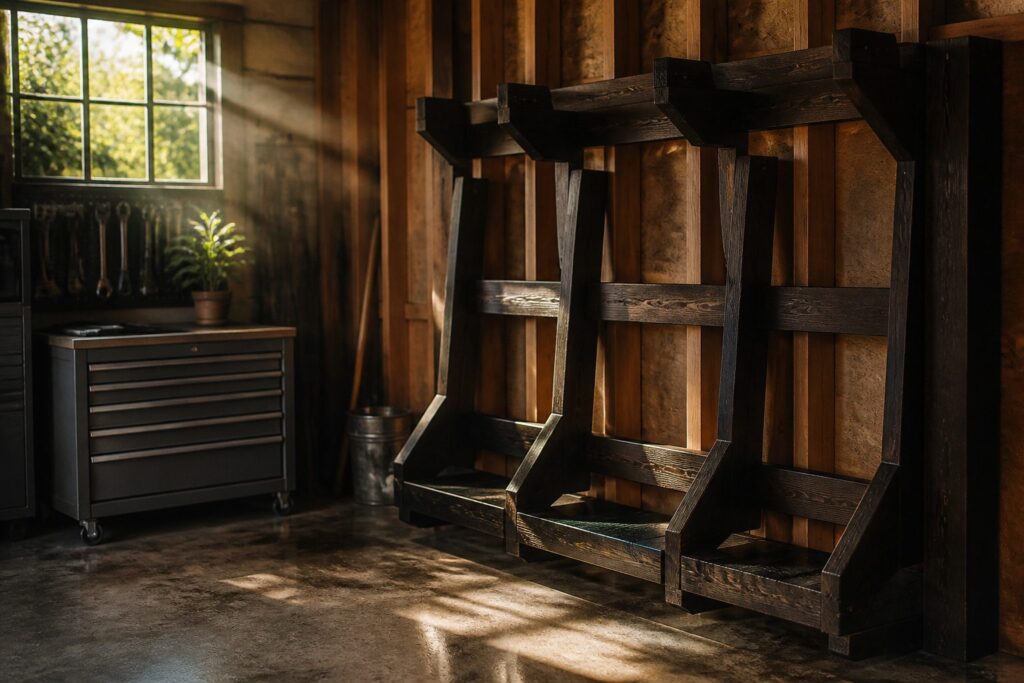
Front door storage for the Ford Bronco means bags, interior kits, or garage racks built to hold doors that weigh roughly 80 pounds as a pair.
The factory bags are the most protective option, but Ford ties them to specific build configurations and they often must be ordered with the vehicle itself.
Miss that window and you are hunting leftover stock or drilling your own wall mount from $30 in lumber.
Bronco Door Storage Bags
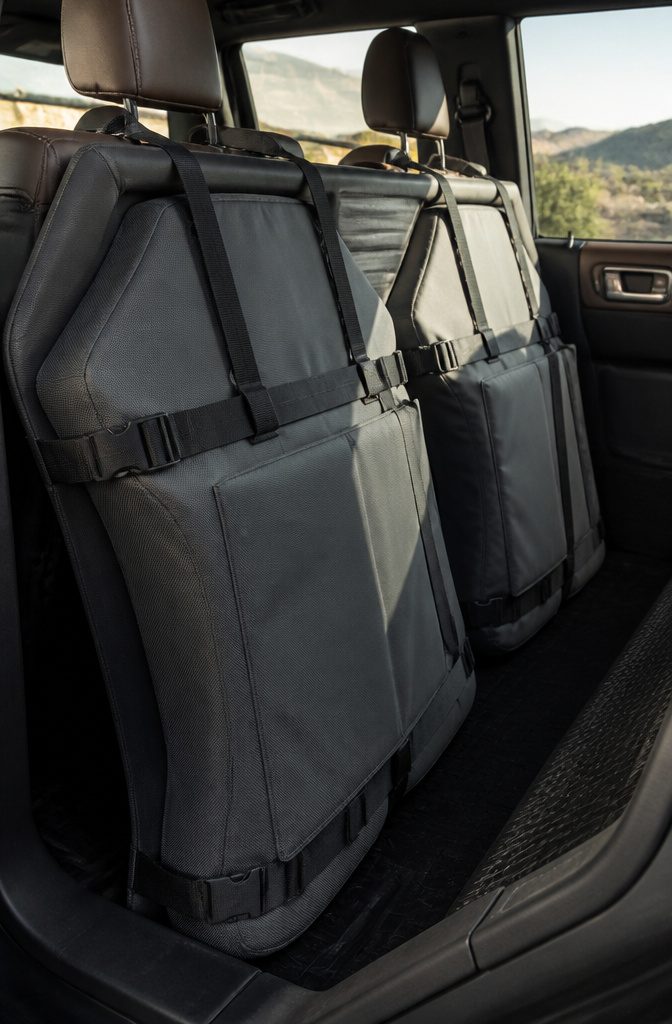
Ford’s own door bags are very heavy built, which matters when you’re hauling two front doors that weigh roughly 80 pounds together.
These are designed to slip over each door panel with padding that keeps the finish from getting nicked, whether they’re riding in the back seat area or stacked in a closet between trail weekends.
Timing matters most. Most owners report these bags had to be ordered with the vehicle itself, added during the build process rather than picked up casually afterward.
Ford has been known to slot them into builds unrequested, which suggests even the factory moves them as a bundled add-on rather than a standalone part.
By the time you’re searching for front door storage six months into ownership, the OEM set may be expensive or simply unavailable through standard channels.
Aftermarket door bags for the Bronco are not clearly established yet. A few owners have noted they’re holding out for more options, but nothing has emerged with the same tailored fit.
For now, the factory bags remain the reference point, and the decision on whether to add them comes down to whether you’re still in the ordering window or willing to hunt down leftover stock.
On-Board Storage Kits
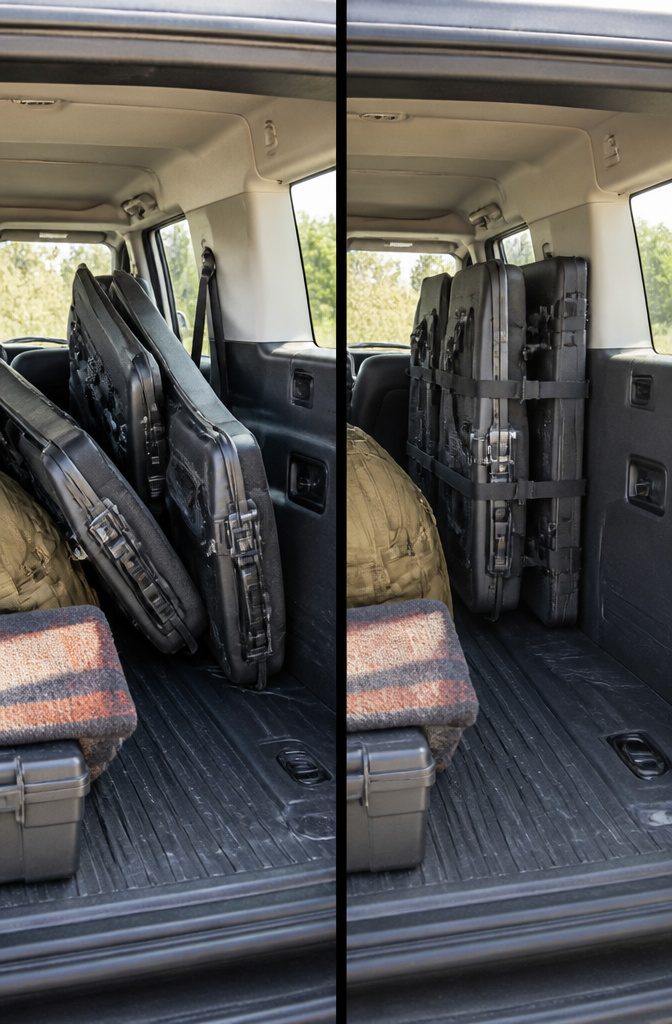
Factory kits exist for hauling front doors inside the Bronco itself, but this option only works for 4-door models. The 2-door doors run too long to fit in the cargo area, even with the rear seats folded flat.
For those with a 4-door, the factory system mounts the removed doors against the interior walls.
It keeps them off the ground and eliminates a separate trip back to your garage. Interior space stays tight regardless.
The folded seats help, yet you are still stacking full-size doors into a cabin already carrying gear for the trail. Packing around them takes planning.
I would not count on much room left for coolers or recovery equipment on the same run.
If your weekend involves both doors-off driving and a packed load, the on-board kit solves the door problem but creates a space problem you still have to solve.
Garage Storage Solutions
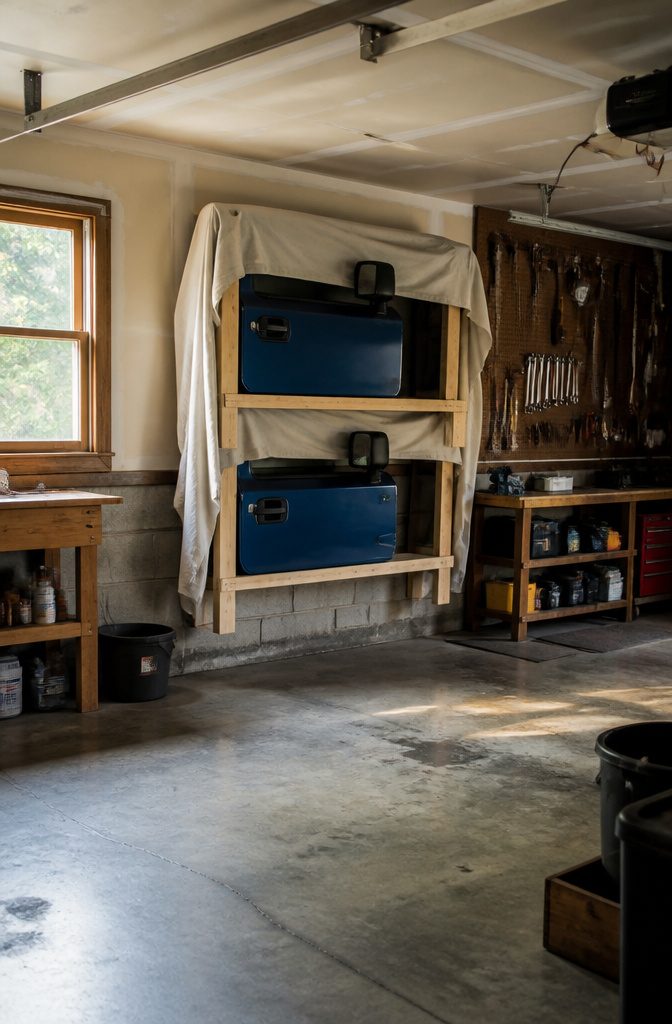
A wall-mounted rack keeps Bronco doors flat and off the floor, which matters more than it sounds. Doors left leaning against a garage wall pick up dings from passing bikes, garden tools, or the simple physics of gravity winning.
I built mine from two 2x4s and a sheet of half-inch plywood, sized to the door dimensions with a quarter-inch gap so they slide in without forcing.
The whole thing cost about $30 in lumber and an hour with a drill.
A cart rolls where a rack won’t, which is useful if your garage doubles as workshop or gym.
Casters rated for 100 lbs each handle the weight; anything less and you will chase the thing across concrete every time you bump it.
Footprint is the real cost. A cart needs floor space a wall mount does not, and floor space in a one-car garage is already spoken for.
Long-term storage means dust and temperature swings, neither of which the factory paint loves.
A fitted sheet or drop cloth over the rack buys more protection than the bare door gets in most on-board bags, and it costs nothing you do not already own.
The real mistake is stacking doors face-to-face without padding; the inner panels will mark each other in a single summer.
How Heavy-Duty Construction Holds Up
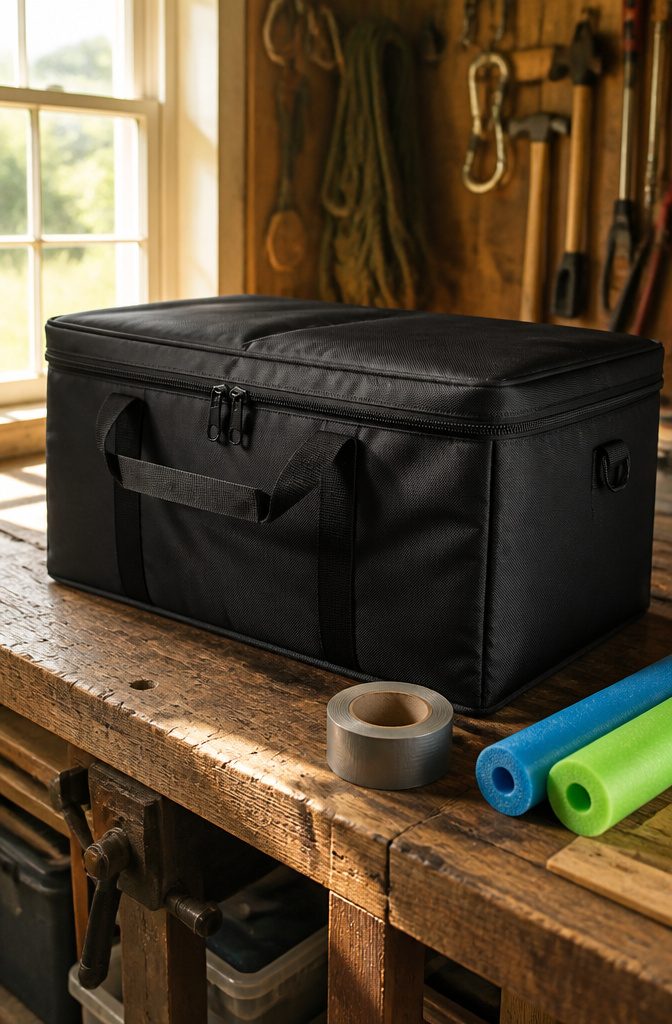
A front door storage bag built to very heavy spec does not simply hold the door; it protects the paint and glass from the kind of impact that happens when gear shifts on a trail or you hit a pothole with doors riding in back.
The construction you want runs thick nylon or canvas with padded walls, reinforced seams, and often a rigid base plate that keeps the bag from collapsing onto itself.
Cheaper soft cases sold for general cargo lack that rigidity, which means a door edge can press through fabric and mark whatever sits beside it.
The cost gap between a bag rated for Bronco doors and a generic duffel large enough to fit one is usually $80–120.
That difference buys the internal straps that suspend the door clear of the floor, the padded divider that separates two doors without contact, and the weather-resistant coating that keeps road spray from reaching the paint.
A bag without those features forces you to improvise with blankets and pool noodles, and in practice those improvisations slip during the drive.
The seams and zipper are the failure points on any bag that sees regular use. A heavy-built bag uses oversized coil zippers or marine-grade closures, and it bar-tacks the stress points where straps meet body.
That construction justifies the price only if you remove doors more than once or twice a season; for a single annual beach trip, the math is harder.
Space Limits Inside the Bronco
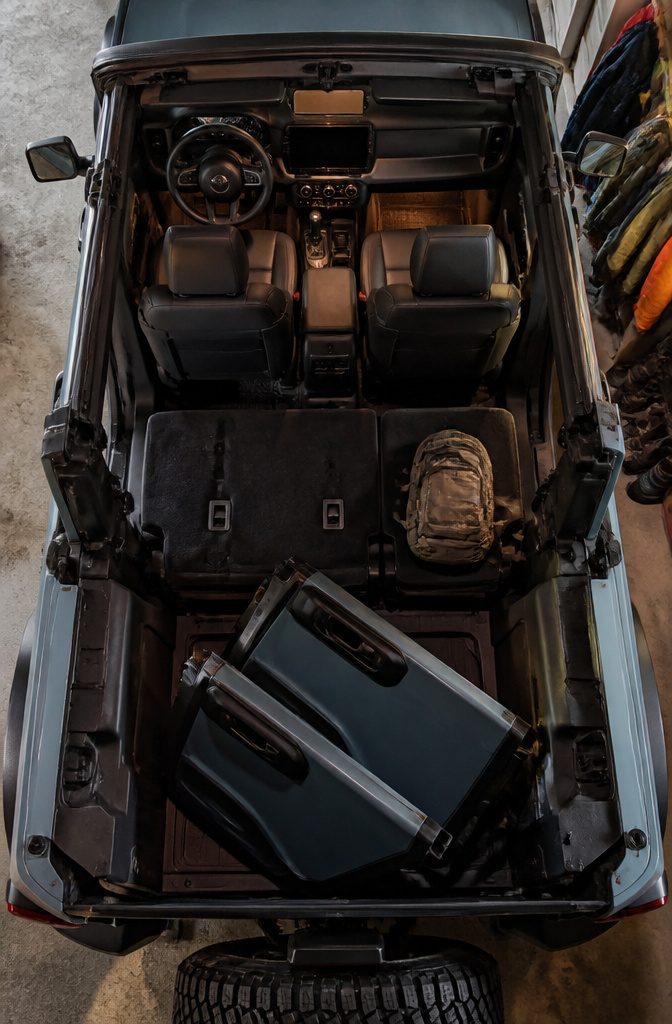
The Bronco’s cabin shrinks fast once you pull the doors off. With the seats folded down, the cargo floor still leaves barely enough room for a backpack, which means two full-size front doors eat that space entirely.
That reality shapes every decision about whether you bother storing them on board at all.
For two-door owners, the math gets worse. The longer front doors on the shorter wheelbase simply do not fit in the back, so on-board storage is not even an option from the factory.
Four-door builds have a shot, but you pay the same price: cargo room you probably planned to use for gear, now occupied by painted metal and glass.
This is where the weekend trip starts to dictate the hardware.
A quick run to the trailhead with just a cooler and a bag? You might squeeze doors behind the front seats and live with tight quarters.
Anything longer, or any passenger riding along, and the doors need to live at home. Garage storage stops feeling like an upgrade and starts feeling like the only practical path.
Ordering Storage with Your Build
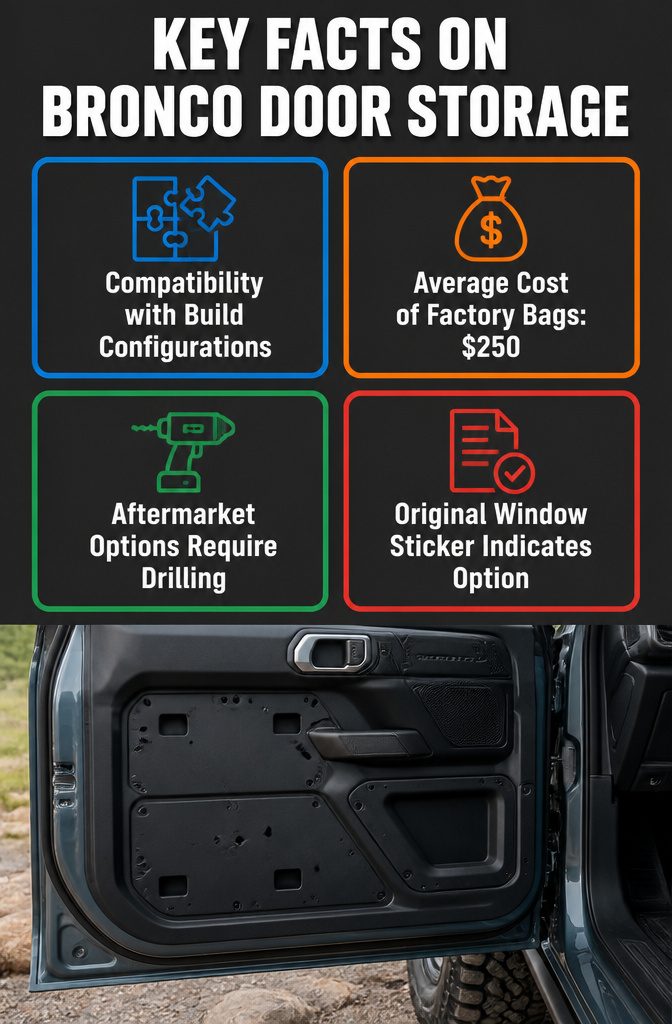
Front door storage for the Bronco is one of those options that looks like an afterthought but is not.
Ford ties the accessory to specific build configurations, which means the storage you want may not bolt onto the Bronco you bought.
The door bags, the in-vehicle brackets, and the garage-style wall systems each match different trim packages and model years in ways that are not obvious from the marketing photos.
I learned this the hard way when I was cross-shopping used Broncos last spring.
A two-door Outer Banks with the mid package looked like it had everything, but the front door storage bags were missing and the mounting points were not there. The seller had not noticed.
The factory bags run about $250 when you can order them, but that assumes your build sheet included the prep package. Without it, you are into aftermarket solutions or drilling.
The same problem hits buyers who skip the accessory at purchase to save money.
Ford’s online configurator lets you add door storage for roughly the price of a good cordless drill, but the window closes when the order goes to production.
After that, you are buying from the parts counter if the hardware is even compatible, and compatibility spreadsheets are not something most owners keep handy.
For a used buyer, the VIN tells the story, but only if you know to ask. The door storage option shows up on the original window sticker, not on the standard build sheet most dealers pull.
I now check for it before I test drive, because retrofitting the factory system runs closer to $600 in parts and labor, and that is only when the underlying structure supports it. Some early builds simply do not.
Frequently Asked Questions
Are there other companies making Bronco door storage bags besides Ford OEM?
No clear aftermarket options have emerged yet with the same tailored fit. A few owners are holding out for more choices, but for now the factory bags remain the only established reference point.
If you missed the ordering window, you will need to hunt down leftover stock or wait for new products to hit the market.
Is the on-board storage kit included with all four doors?
The on-board kit only works on 4-door Broncos, and it must be ordered with the vehicle rather than added later.
The 2-door doors are too long to fit in the cargo area even with seats folded, so factory in-vehicle storage is not an option for those models.
How do I store my Bronco doors safely?
Use heavy-duty storage bags with padded walls if you are hauling them, or build a wall-mounted rack or rolling cart for garage storage.
A fitted sheet or drop cloth protects against dust, and never stack doors face-to-face without padding or the inner panels will mark each other.
What is the best type of storage for an entryway?
For Bronco doors, wall-mounted racks keep them flat and off the floor, while rolling carts work better if your garage doubles as a workshop or gym.
What is entryway storage called?
Bronco owners typically refer to door bags, in-vehicle mounting kits, or garage racks and carts.
What to do with a large entryway?
For Bronco doors specifically, a wall-mounted rack built from 2x4s and plywood costs about $30 and keeps doors flat and protected.
What are some good options for entryway storage in small spaces?
For Bronco doors in tight garages, a wall-mounted rack saves floor space, while a rolling cart needs more room but moves where you need it.