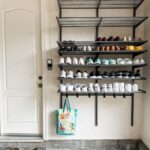
The ideas below range from a quick label you can make tonight to built-in storage you will want to budget for, and the right one depends on whether you are renting or own, and how much time you can set aside.
A place to sit while you sort is the detail that separates the solutions you will actually use from the dead storage you will ignore.
1. Clear Storage Boxes
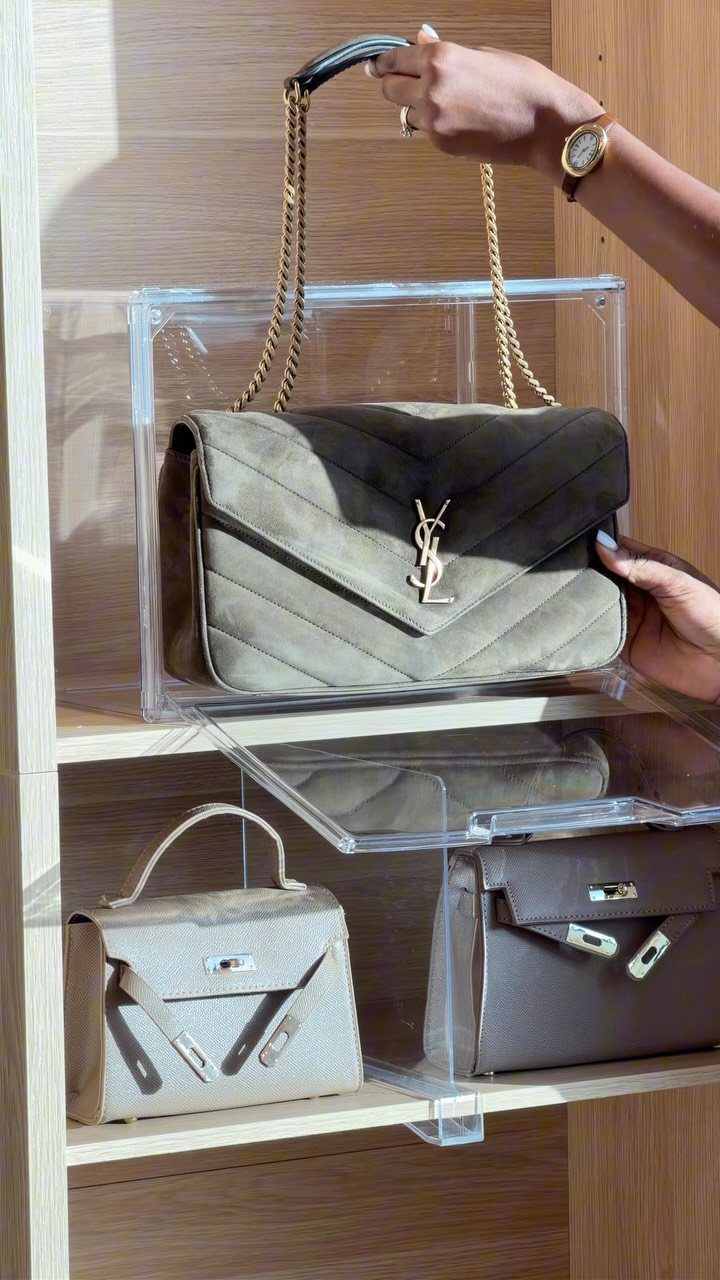
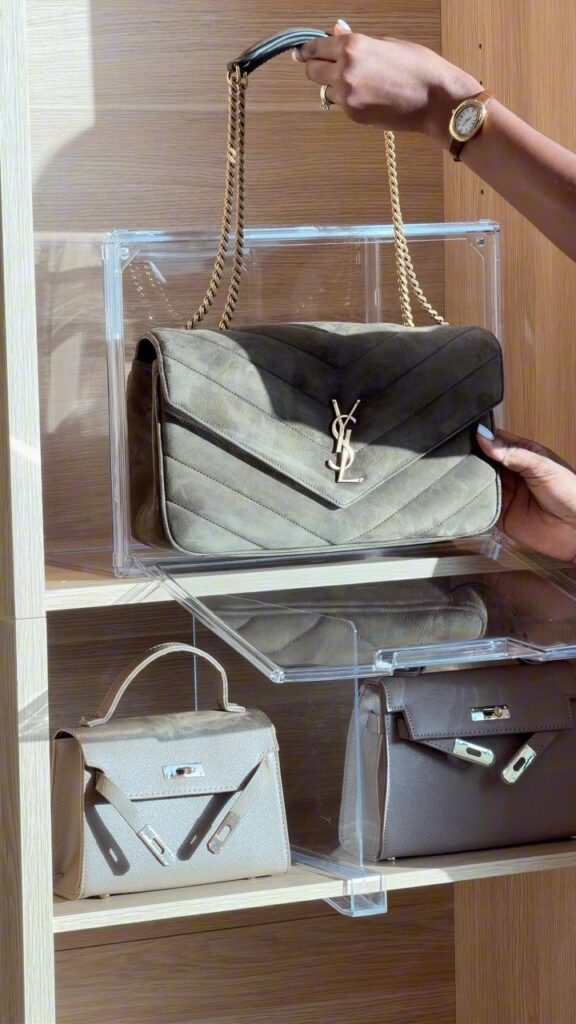
Clear boxes turn the dead zone above a rod or below a shelf into usable storage for bags, shoes, or scarves you do not grab daily.
What I like is the honesty of it: you see exactly what you own, so nothing gets buried and forgotten.
A label on the front edge saves you from lifting. I use a strip of masking tape and a Sharpie, nothing fancy, because my handwriting is readable and the tape peels clean when I swap seasons.
Dollar-store shoe boxes work fine for flats and sandals. For heels or tall boots, look for the deeper bins sold at Target or Walmart that stack without crushing what is inside.
2. Matching Hangers
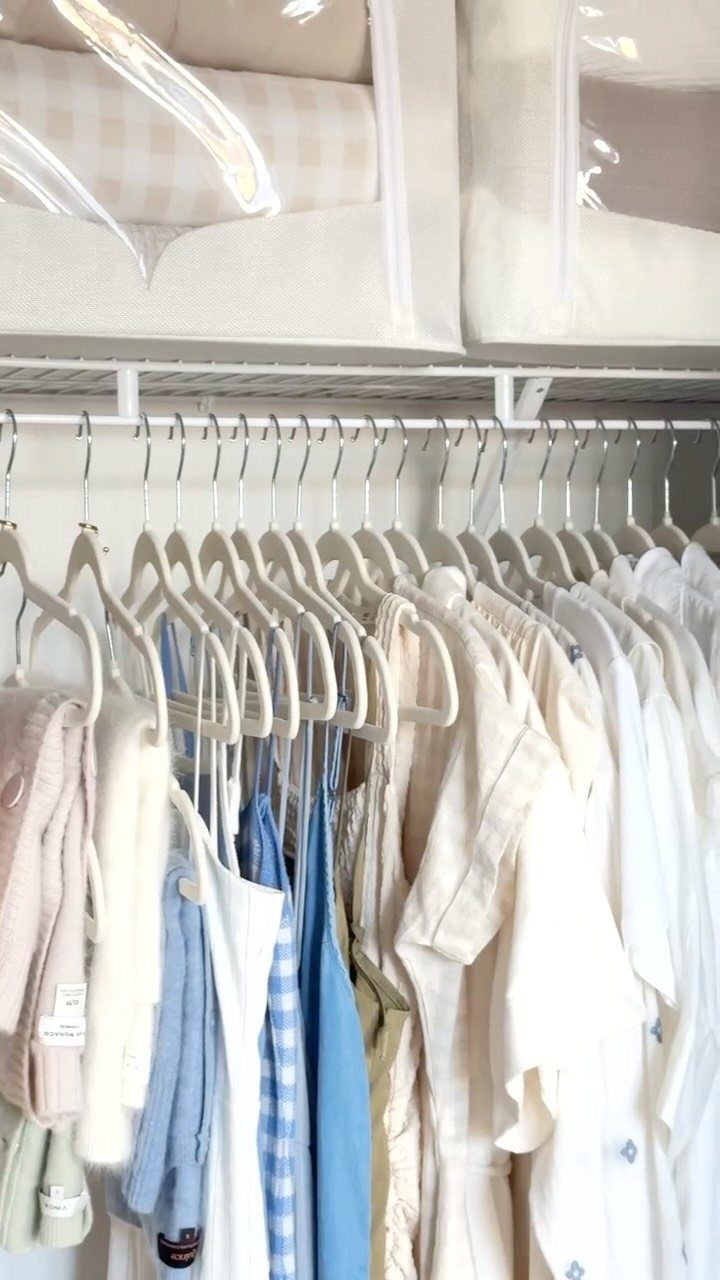
Mismatched hangers make a closet look chaotic even when everything is folded and sorted. Switching to one style, one color, pulls the whole thing together and buys you a little extra room.
Velvet hangers are slim and keep silk or thin straps from sliding.
I have also seen people use the clear plastic hangers stores hand out free with purchase; they are sturdy enough for cotton and denim, though they take up more width.
Wire hangers distort shoulders over time. For sweaters I still prefer a shelf or a drawer; even padded hangers leave a mark at the shoulder line if the knit is heavy.
3. Closet System
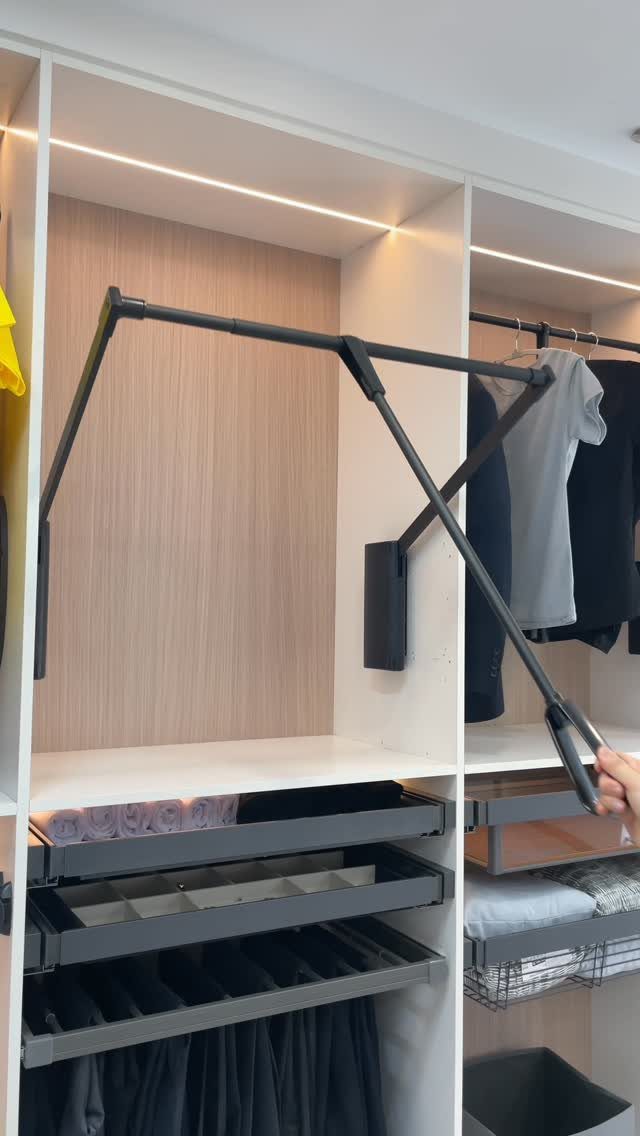
A closet system is just a kit of shelves, rods, and drawers you install yourself to replace the single rod and shelf most builders leave behind.
Easy Track is one I have looked at for a reach-in closet; it goes up in an afternoon and the price stays under what a custom job costs.
IKEA’s closet lines let you design online before you commit. Measure your space twice, account for baseboards, and check that the wall you are anchoring into is actually studs, not just drywall.
The real benefit is adjustability. Your wardrobe changes; a system with movable brackets lets you raise a rod for long dresses or add a second level for folded jeans without starting over.
4. Double Rod
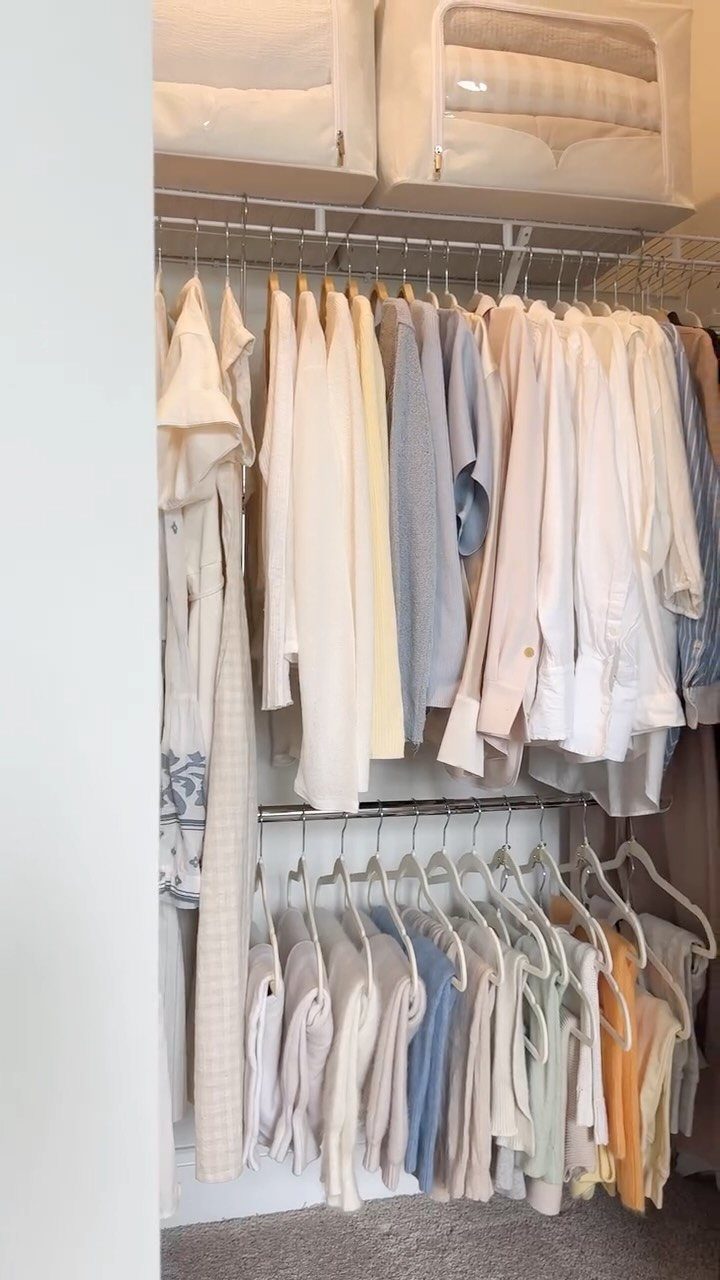
A double rod hangs a second bar below your existing one, instantly doubling the linear feet for shirts, skirts, or folded pants. Home stores sell over-the-rod versions that hook right on, no tools or permanent install required.
I would use the lower bar for items that hang short: blouses, jackets, kids’ clothes. Long dresses still need the full height up top, so this works best when your wardrobe mixes lengths.
You will lose some vertical clearance. If your closet rod is already set low, measure before you buy; you need enough drop that pants on the lower bar do not drag the floor.
5. Clothing Organized by Color
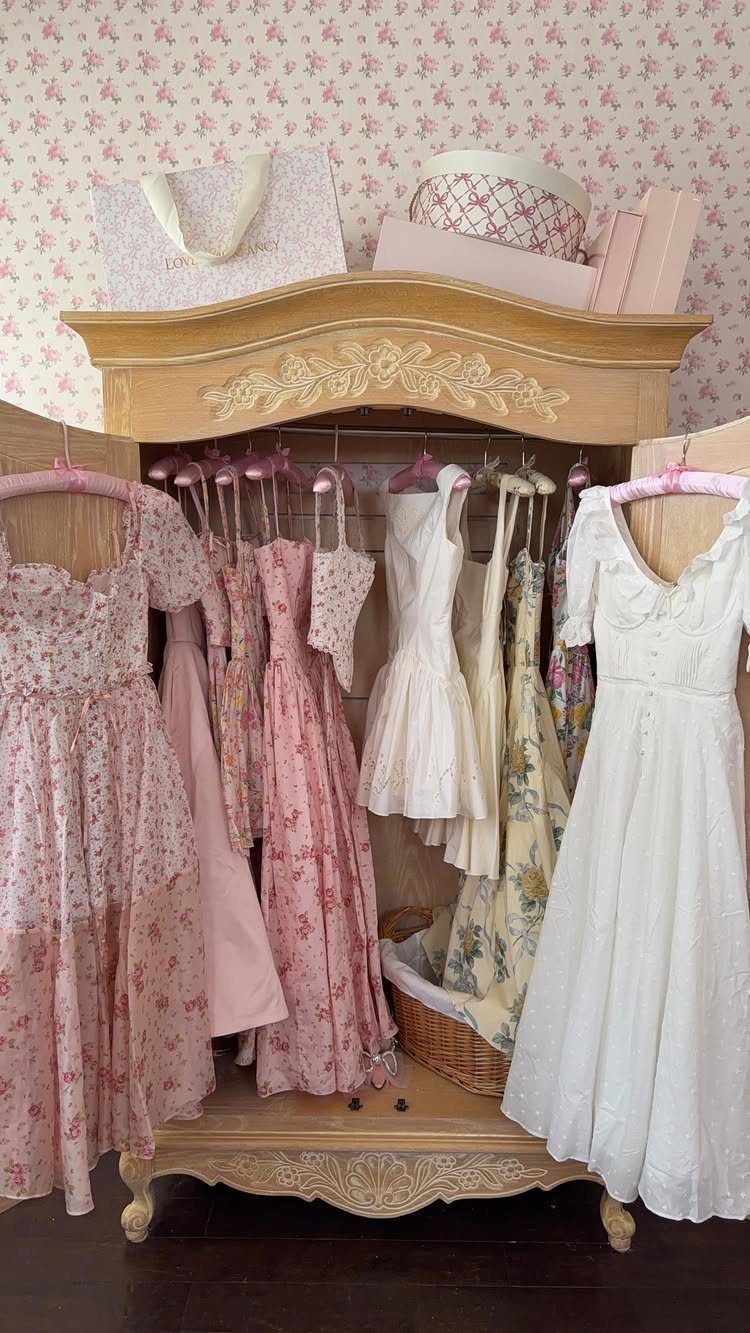
Sorting by color sounds like vanity, but it speeds up dressing more than you would expect. You reach for "the blue thing" or "something warm-toned"; grouping hues lets your eye land fast without rifling.
Within a color, I go light to dark. It makes gaps obvious, so you notice when the navy section has shrunk to 2 pieces and it is time to launder or replace.
Patterned dresses are the awkward cousin.
I cluster florals and prints at one end rather than forcing them into a color they only sort-of match; the visual rest helps, and I am less likely to overlook a piece because it got lost between red and orange.
6. Glass Front Dress Cabinets
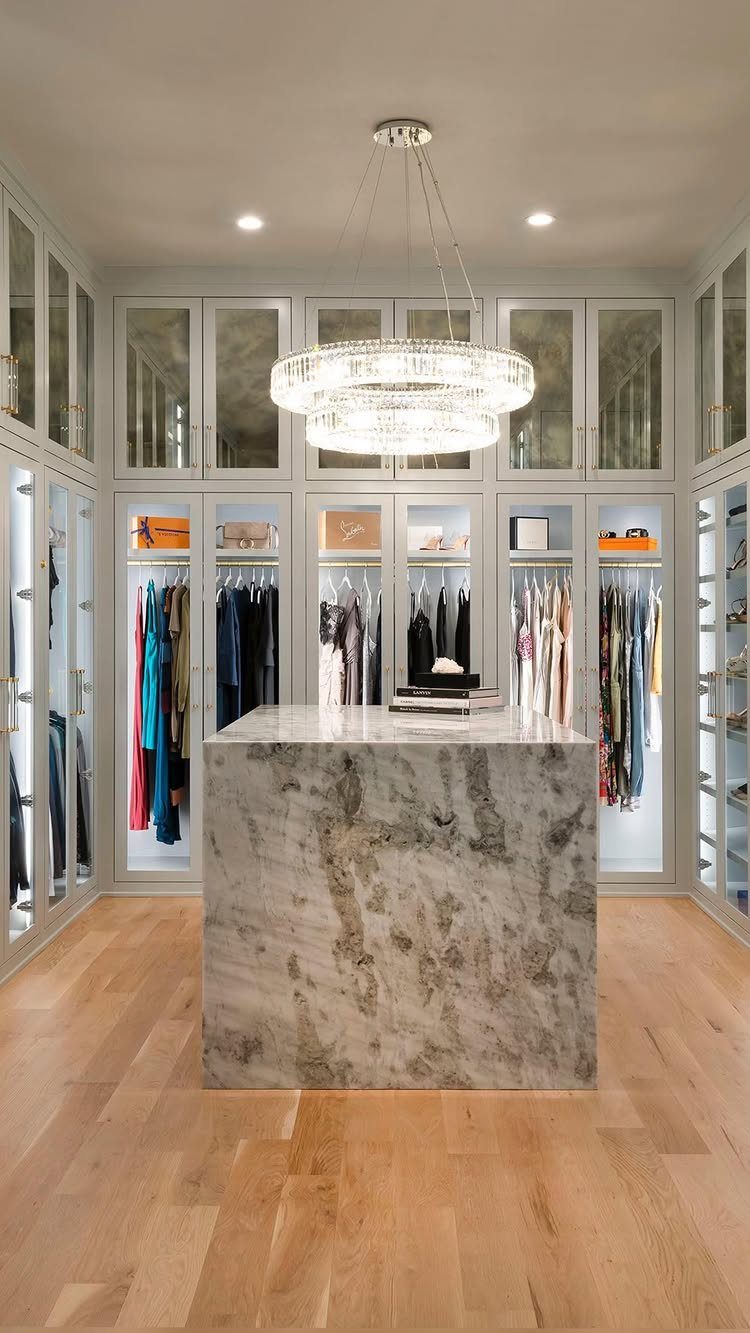
Glass-front cabinets protect dresses from dust while keeping every piece visible, no rummaging required. Interior lighting turns the closet into something closer to a boutique display than a storage room.
This is the most expensive idea on the list. Built-in cabinetry with integrated LEDs and hardware like drop-down rails means hiring a closet company or a cabinetmaker, not a Saturday project.
If you are renting or budgeting carefully, skip this.
The function, visibility and protection, is achievable with clear boxes on open shelving for a fraction of the cost. Glass fronts pay off when you have the square footage and the permanence to build in.
Regular Closet Maintenance
The hardest part of maintenance is the honesty. I pull everything out twice a year, set it on the bed, and sort into 3 piles: keep, donate, trash.
The 90-day rule helps me cut: if I have not worn it and will not wear it in the next season, it goes. Seasonal pieces get one pass.
Meaghan Kessman’s "everything out" method is the only way I actually finish.
Half-measures leave me shoving things back where they were. The backwards hanger trick works for items I am unsure about; anything still reversed at season’s end leaves without debate.
Shoe boxes are the first thing I remove.
They multiply, they hide, and they make me forget what I own. A step ladder lives in my closet now so I use the high shelves I already have.
Choosing the Right Hangers
Corey Pence’s rule is the one I follow: hang what wrinkles, fold what does not. Dresses, blouses, and slacks stay on hangers; denim, sweaters, and tees go to shelves or drawers.
Wire hangers from the dry cleaner work in a pinch: they are free, they match, and they hold cotton and denim fine. For silk or thin straps, I wrap pipe cleaners around the bar so nothing slides.
Clip-on skirt hangers handle jeans and skirts without the fold mark a bar leaves at the knee. I pull them off at the dry cleaner and recycle them there.
Utilizing Negative Space
The top shelf and the floor are the spaces builders waste. Over-the-rod versions hook on if you are renting.
Higher shelves hold clear boxes for bags and scarves I use monthly, not daily. A step stool in the closet means I actually reach them instead of treating that zone as dead storage.
The back of the door takes an organizer for shoes or accessories; it is the last vertical inch most people ignore.
Lauren Ashley calls small-closet organizing "a game of Tetris," which is accurate. I measure before I buy anything: a bar that hangs too low leaves pants dragging, and a shelf too deep blocks the rod below it.
Luckily, there are ways to manage closet chaos — even when a closet is small, and even when it’s burdened with storing clothes for more than one person.
Frequently Asked Questions
What is the best way to organize dresses in my closet?
Sort them by color, light to dark, with patterned dresses grouped at one end so your eye has somewhere to rest.
Fading from light to dark within each color shows me at a glance which sections are thinning, so I know when laundry day is overdue or a piece never made it back from the dry cleaner.
What is the 3-3-3 rule for decluttering?
I use a 90-day rule instead: if a dress has not left the hanger and the season ahead will not change that, it goes in the donation bag.
When I am on the fence about a piece, I hang it backwards; if the hook still faces out when the weather turns, the decision is already made.
What is the best clothes organizer for a small closet?
A double rod that hooks onto your existing bar instantly doubles hanging space for short items like blouses and skirts.
An over-the-door rack for shoes or accessories claims that last strip of vertical real estate most closets waste entirely. Clear boxes on the top shelf resurrect dead space for bags or scarves I need maybe once a month.
How to organize your closet by outfit?
Group items that are frequently worn together in designated zones, placing them for easy access based on how you actually get dressed.
This means work outfits near each other, weekend pieces in another section, and full sets where you can grab them without thinking.
For dresses, I sort by color, but if my mornings are chaos I will zone the closet by complete looks so I can dress without thinking.