These 8 storage closet organization ideas run from grouping your clothing by category to a full built-in open closet system anchored to wall studs, and the one that fits you depends on how much time you have and whether your landlord allows holes in the wall.
A capsule wardrobe section corrals those dozen pieces at eye level while off-season bins ride the upper shelves, and beige fabric bins with rope handles soften the wire shelving most renters inherit.
1. Clothing Grouped by Category
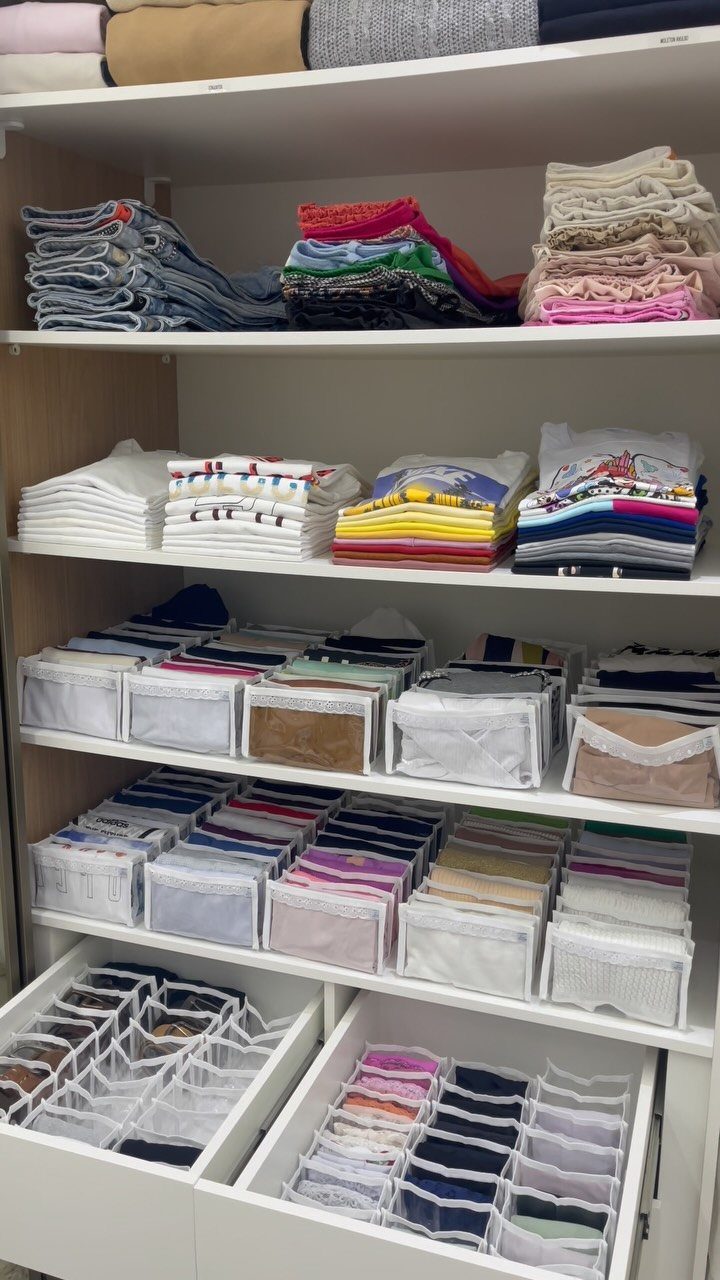
Grouping clothing by category turns a closet from a daily puzzle into something you can read at a glance. Shirts with shirts, pants with pants, each stack holding still on its shelf.
This suits the reader who redoes one closet a year and wants the system to last past the first laundry day.
Shelf dividers keep categories from bleeding together; drawer organizers do the same below. I like vertical folding for drawers because you see every item at once without disturbing the rest.
The premium zone, between shoulder and waist height, is worth reserving for what you wear most. Special occasion pieces can live higher up or at one end, freeing prime real estate for daily rotation.
2. Store Off-Season Clothing in Bins
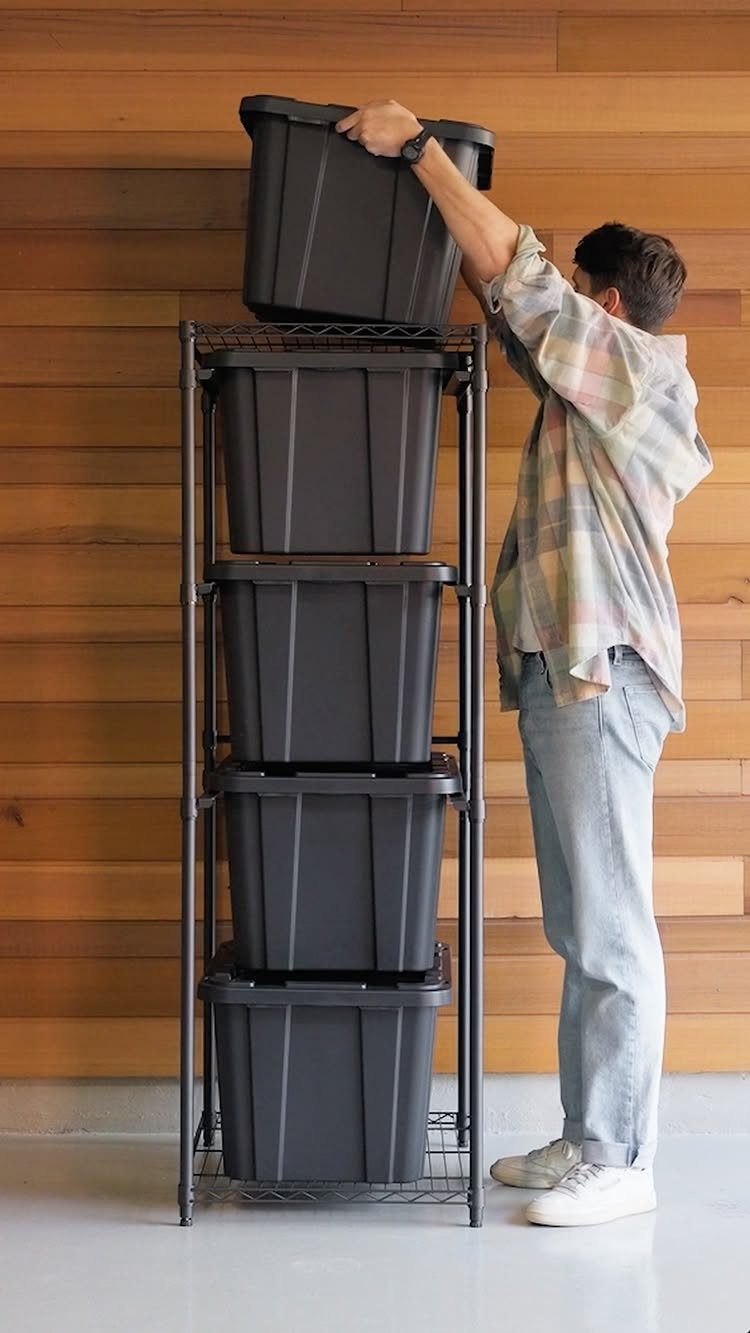
Off-season clothing in bins is the oldest storage move for a reason: it works. A black bin on a tall wire shelf, pushed to the back until October, buys you half your closet back in May.
The reader here is someone with limited floor space and a weekend to fix it.
Higher shelves or the top of a metal unit keep summer shorts visible enough to find but out of the daily shuffle. Stackable bins add capacity without adding furniture.
I would label each bin on more than one side. What reads clearly from below in January becomes a guessing game by July, and hauling bins down to check wastes the time you saved.
3. Capsule Wardrobe Section
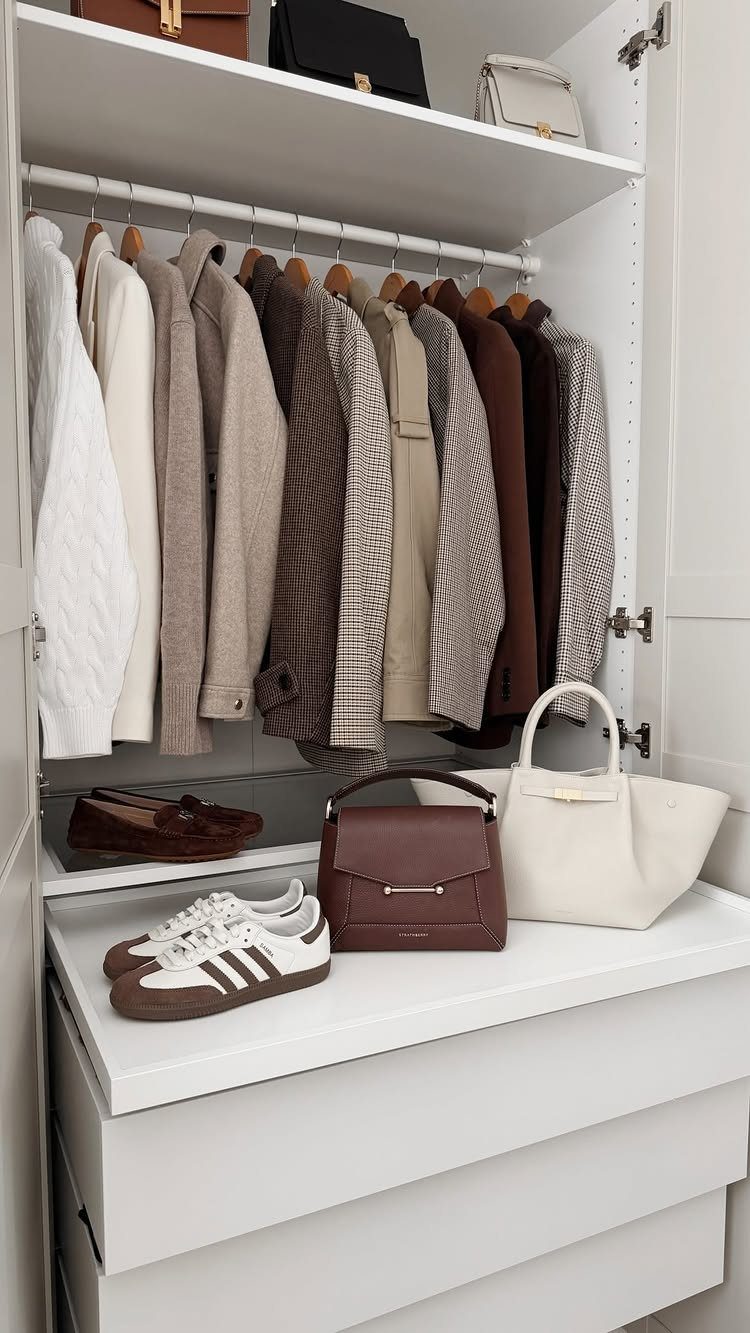
A capsule wardrobe section is a closet within a closet: the dozen or so pieces you actually reach for, corralled where you can see them all at once.
A capsule wardrobe lives on pieces that all work together: a neutral jacket, one bag that matches everything, shoes that go with both jeans and trousers.
This idea suits someone mid-project who wants the result without the overhaul.
Hang pieces at eye level, keep accessories below, and let nothing compete for attention. The rest of your wardrobe stays elsewhere, still accessible but not in the way.
What you give up is flexibility. A capsule only works if you actually stop adding to it, and that means deciding what "enough" looks like for your season, your job, your laundry schedule.
I would start with a small set of outfits and test it before cutting anything loose.
4. Cube Organizers
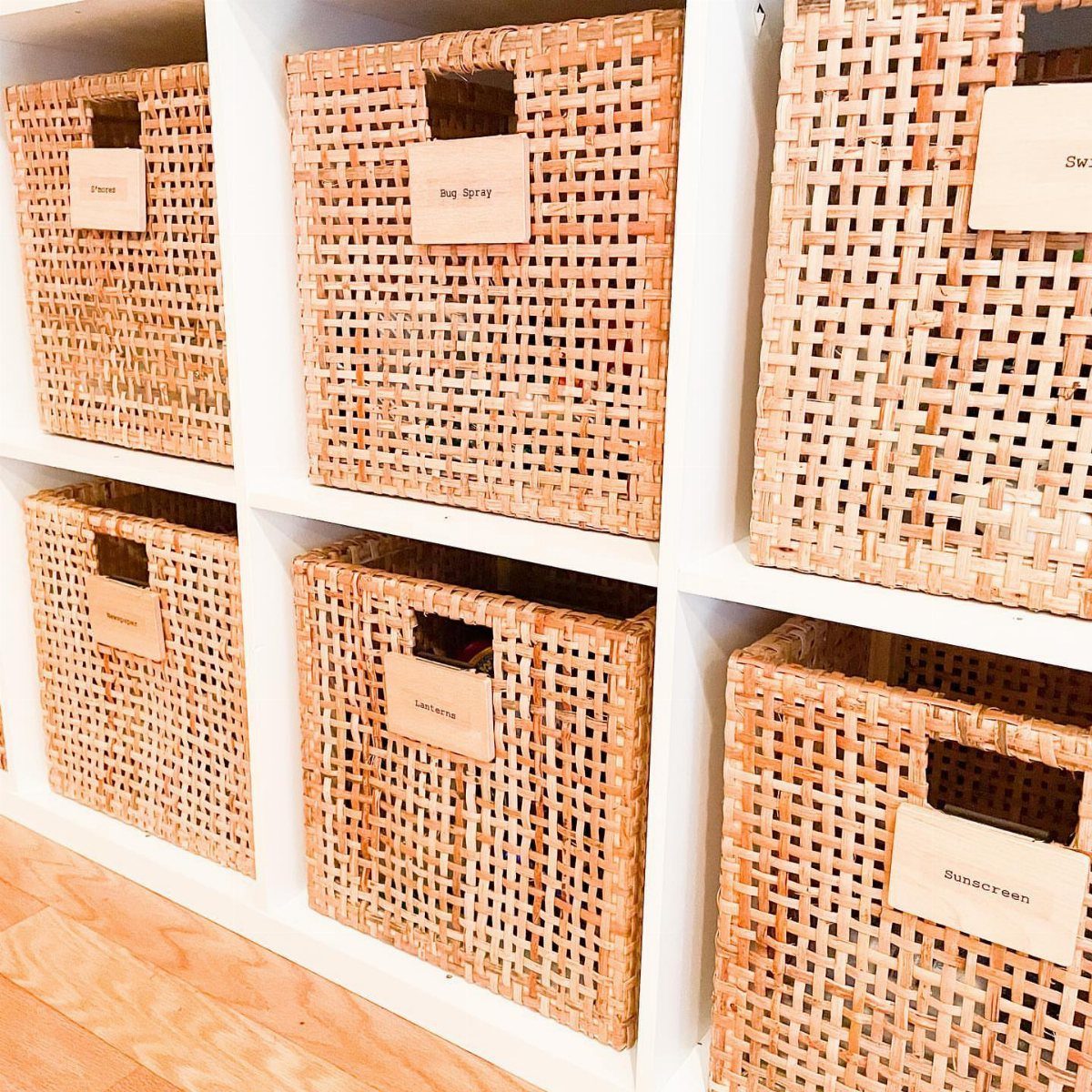
Cube organizers with labeled baskets turn a closet or mudroom into a system anyone can maintain. One cube holds one category, with a tag that says what lives there.
Bug spray and sunscreen in one cube, lanterns in another; the same principle works for socks, workout gear, or anything that drifts into piles. I like that the labels face forward, so putting something back takes no thought.
For a closet, I would measure the cube unit against the space first.
These units come in standard widths, and any gap wastes the wall it leaves behind. Baskets with rope handles pull out easily but still sit flush.
5. Shoes in Categories
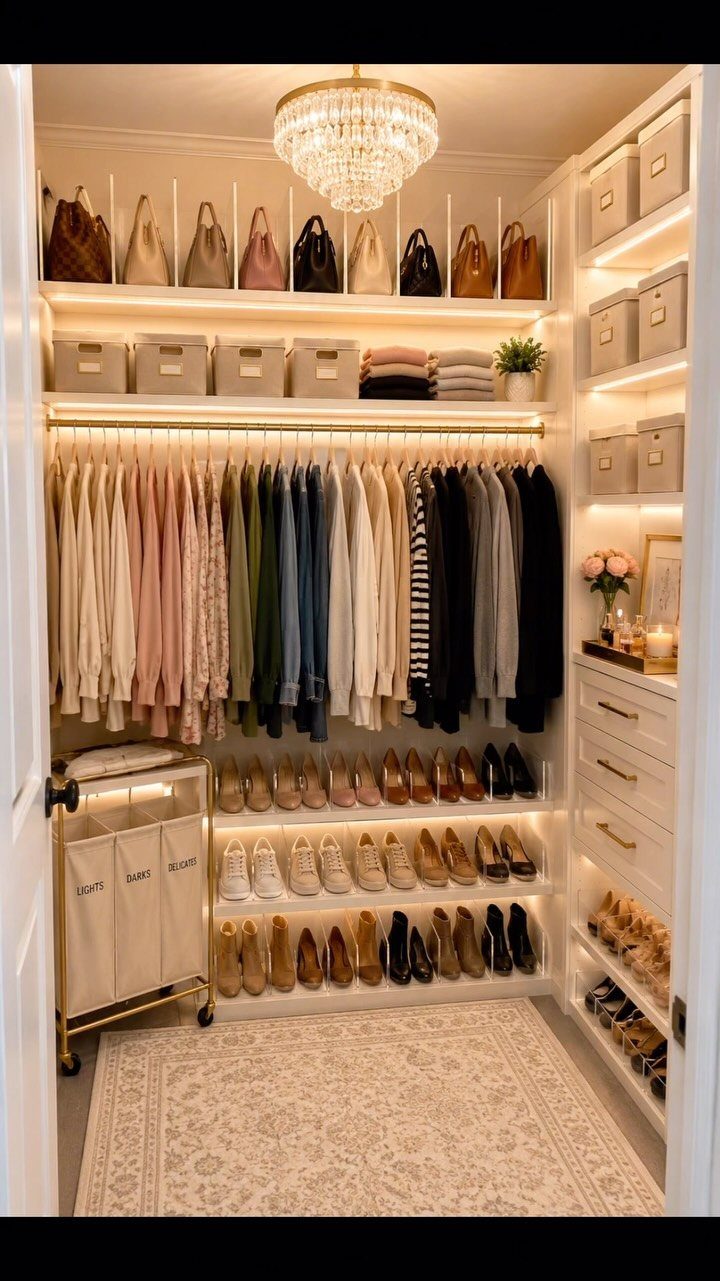
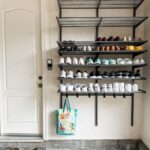
Shoes sorted by category, not by color or by which pair you wore last, saves the 10 minutes of hunting that starts too many mornings.
Sort by use: everyday, work, athletic, formal. Each pile gets its own home.
This is the fastest win on the list. No purchase required, no installation, just the sort and the decision about where each category lives.
Shoes on lit lower shelves work if your closet has the depth; a hanging organizer or floor rack does the same job in a tighter space.
I would put the everyday pair at the easiest reach and the formal shoes highest or deepest, since you already know where the wedding is and can plan to retrieve them.
Athletic shoes need air more than dress shoes do; leave them where they can dry.
6. Fabric Bins with Rope Handles
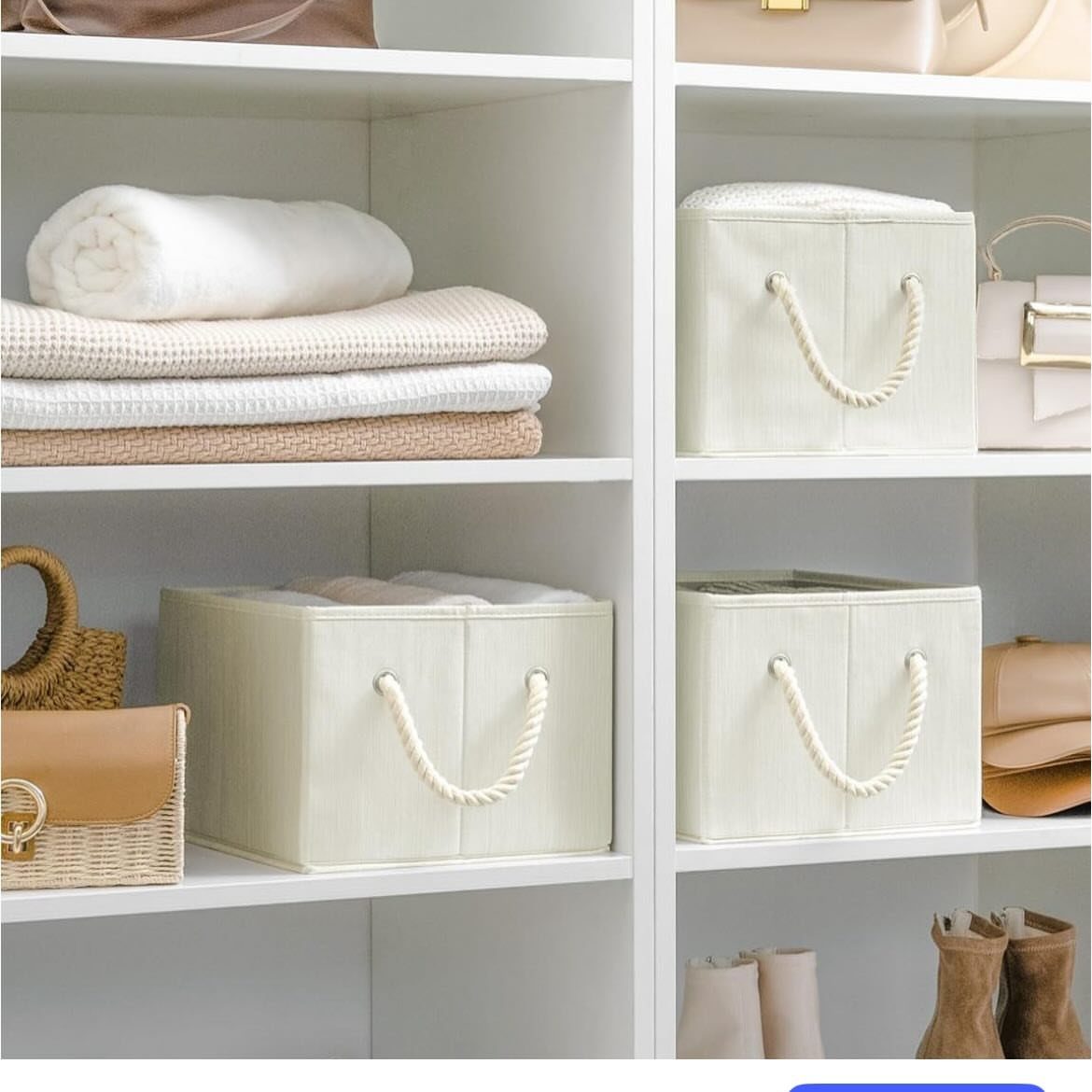
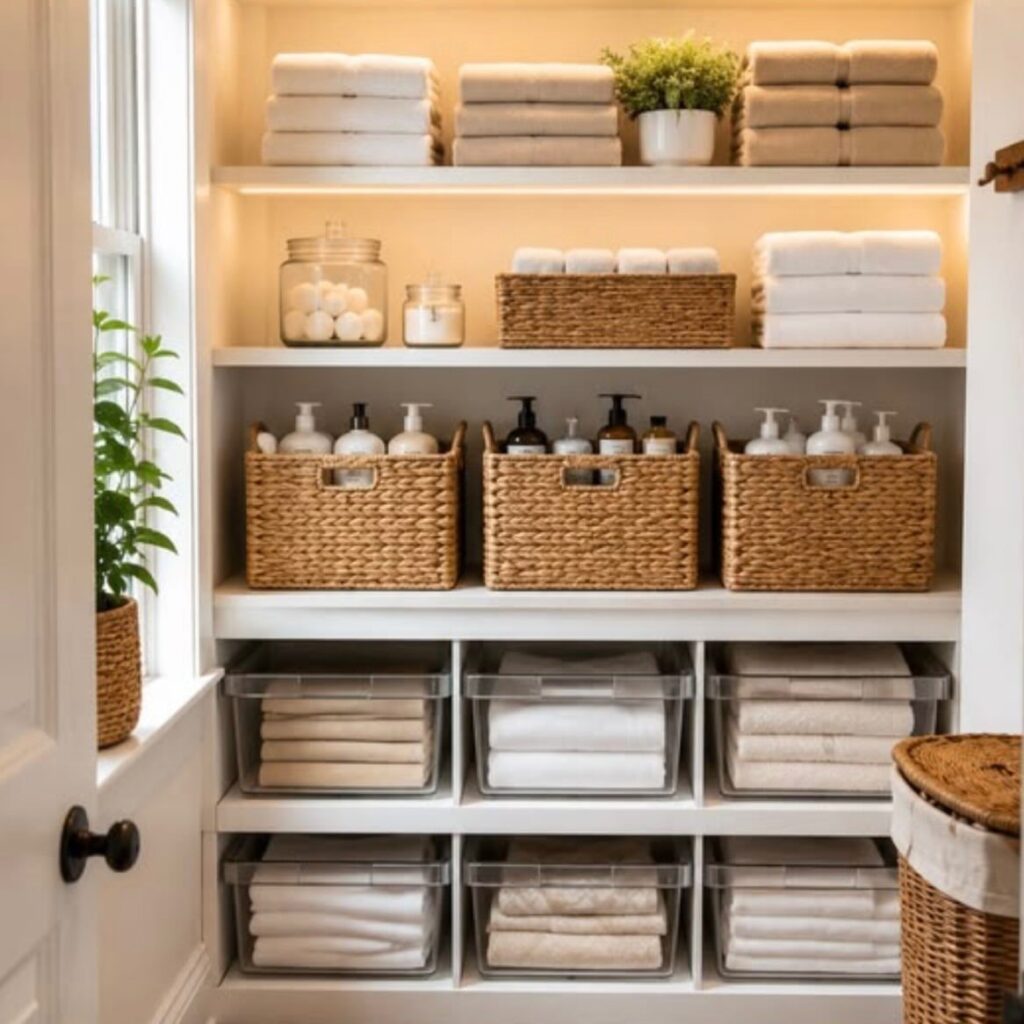
Beige fabric bins with rope handles soften a closet that otherwise runs to wire and plastic.
These bins sit on shelving, holding whatever does not need to be seen daily: extra blankets, out-of-rotation bags, the hat you keep meaning to wear.
Before buying, check that the rope handles are stitched through, not glued; the pull of regular use separates cheap attachments in a season.
The bin size should match the shelf depth, or you lose the front row to shadow and the back row to forgetting.
I like these for linens and accessories more than for clothing you fold and refold, since the fabric sides slump slightly under weight.
For heavy items, a bin with a firmer base keeps the stack vertical and the shelf looking planned.
7. Upper Shelf Storage Bins
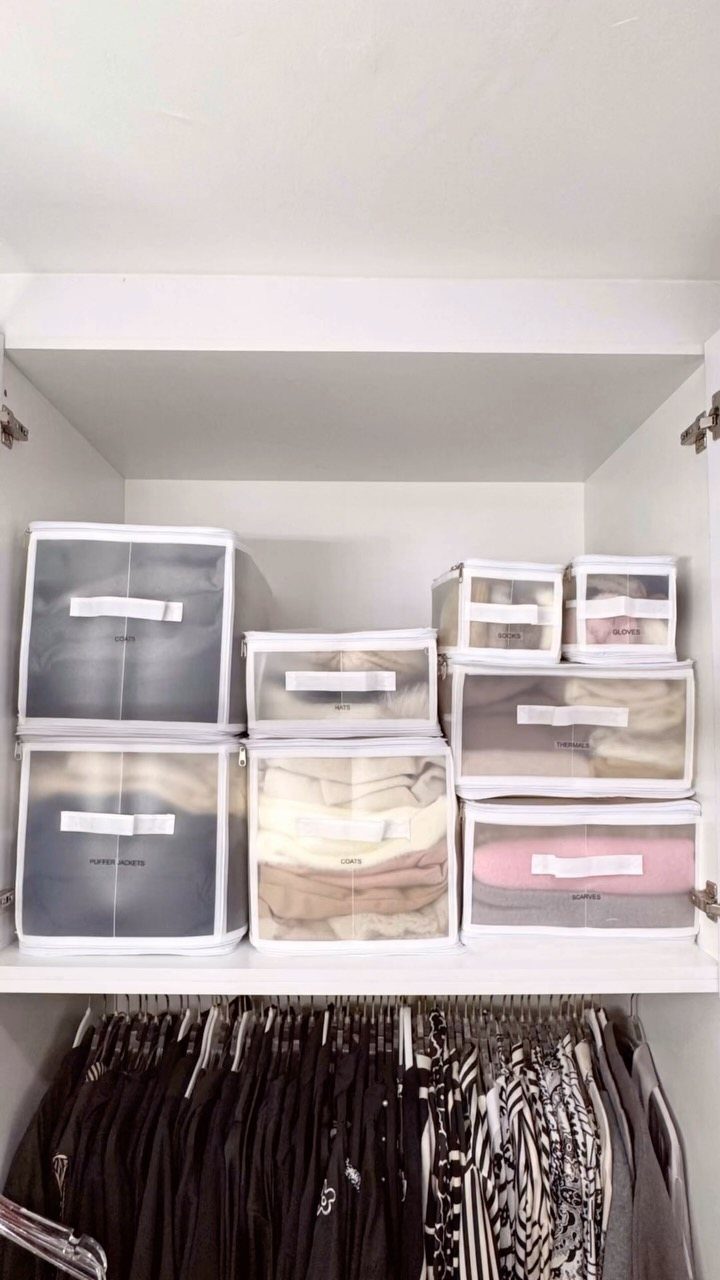
Semi-clear zippered bins let you read the contents without opening them, and a label on the face turns guessing into knowing.
This fits the reader who has already sorted by category but still owns more than daily life allows. Seasonal gear, extra layers, and backup basics all migrate upward, leaving the eye-level zone for rotation.
Stackable bins add height in fixed increments, so measure your shelf depth against the bin footprint before buying. A bin that overhangs the rod below catches sleeves every time you hang something up.
I would keep one bin lighter than the rest, assigned to the item you grab most often; reaching and lifting a full bin of coats gets old by February.
8. Built-In Open Closet System
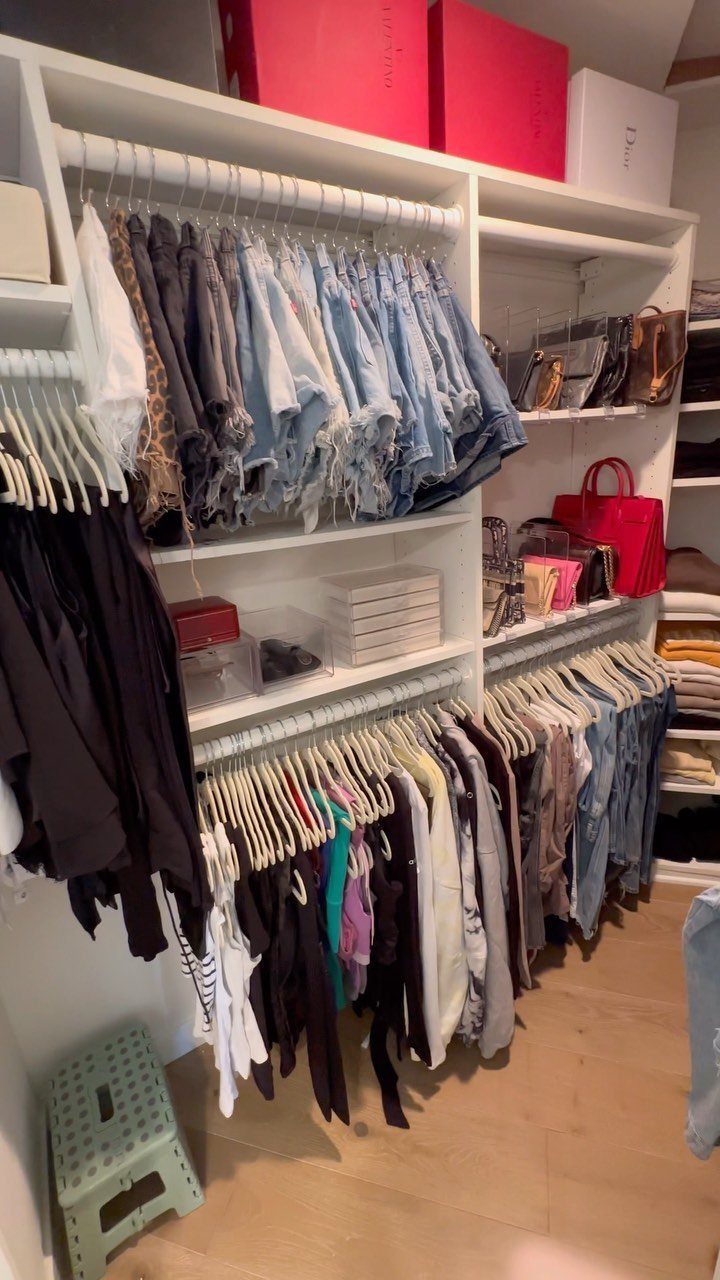
A built-in open closet system replaces fixed rods with a grid of hanging bars, flat shelves, and cubbies sized to what you actually own. Nothing hides behind doors, so the system only works if you commit to keeping it tidy.
A built-in open closet system in white, run wall to wall, keeps the look clean; velvet hangers, displayed bags, and shoeboxes in red give it one color accent. That restraint is what makes it look planned rather than crowded.
Before ordering, inventory your wardrobe in numbers: how many long items need full-height hanging, how many folded stacks, how many pairs stand on their own.
A system designed around averages leaves you with a shelf too shallow for shoeboxes or a rod too short for coats.
Installation usually means anchoring to wall studs; a rail system that simply leans will skate across the floor under weight.
Benefits of Closet Organization
An organized closet saves time in the morning because every item has a visible home.
You stop buying duplicates of the black sweater you already own but could not find. The calm carries into the rest of the day; starting in a space that works makes other tasks feel more manageable.
The benefit I notice most is using what I already have.
A shirt buried under piles stays unworn until it no longer fits, which feels like waste. When everything faces forward, you wear more of your wardrobe more often.
Importance of Decluttering
Decluttering before organizing is the step most people skip, and it costs them later.
Removing what you no longer wear creates immediate space without buying a single bin or shelf. The process also shows you what categories actually remain, which shapes where you put things.
I would pull everything out, not sort in place. A closet floor piled with hangers and shoes looks worse before it looks better, but only then can you see the empty volume you are working with.
Decide on keep, donate, and unsure piles; the unsure items go in a bin with a date, and if the date passes unopened, they follow the donate path.
Maximizing Storage Space
Most closets leave vertical space unused above the rod and below the ceiling.
That gap can hold a second rod, extra shelves, or stackable bins for seasonal items. Small closets especially depend on this height; without it, every surface crowds.
Adding a second hanging rod doubles capacity for shirts, folded pants, and shorter jackets.
Longer items still need full-height sections, so plan one area for dresses and coats. Adjustable systems let you move the height as your wardrobe changes.
I put the things I only need once a month on the upper shelves, since dragging a step stool out every morning gets old fast.
The reach and lift cost time; reserve that effort for the boots you wear 3 times a winter, not the gym bag you need tomorrow.
Frequently Asked Questions
How much does a closet organization system cost?
Cube organizers, fabric bins, and stackable storage bins can pull together a full closet refresh without the cost of a built-in system.
A built-in open system costs more and requires measuring your actual wardrobe first so you do not pay for capacity you will not use.
What is the best closet organizing system?
The best system depends on what you own and how you use it. Measure your actual wardrobe first: count long items, folded stacks, and shoe pairs before choosing any system.