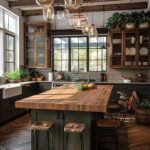
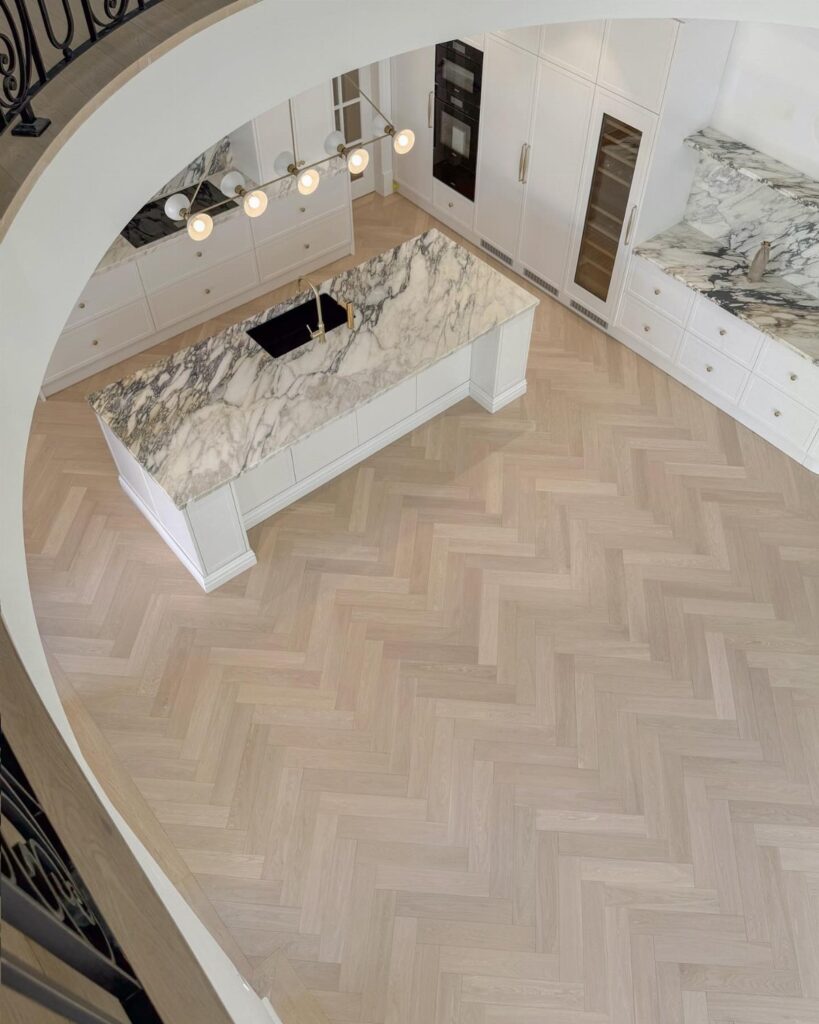
These 11 kitchen flooring trends start with a weekend project and a gallon of porch-and-floor enamel and run all the way to poured slab with radiant heat underneath, so the real question is how much time and money you are willing to put in against how long you need the floor to hold up.
The painted checkerboard hardwood lands at the easy end; polished concrete with low-gloss sealer sits at the other.
What ties them together is that every option here accounts for dropped cast iron, slush from boots, or a wine glass that slips.
1. Herringbone and Chevron Flooring
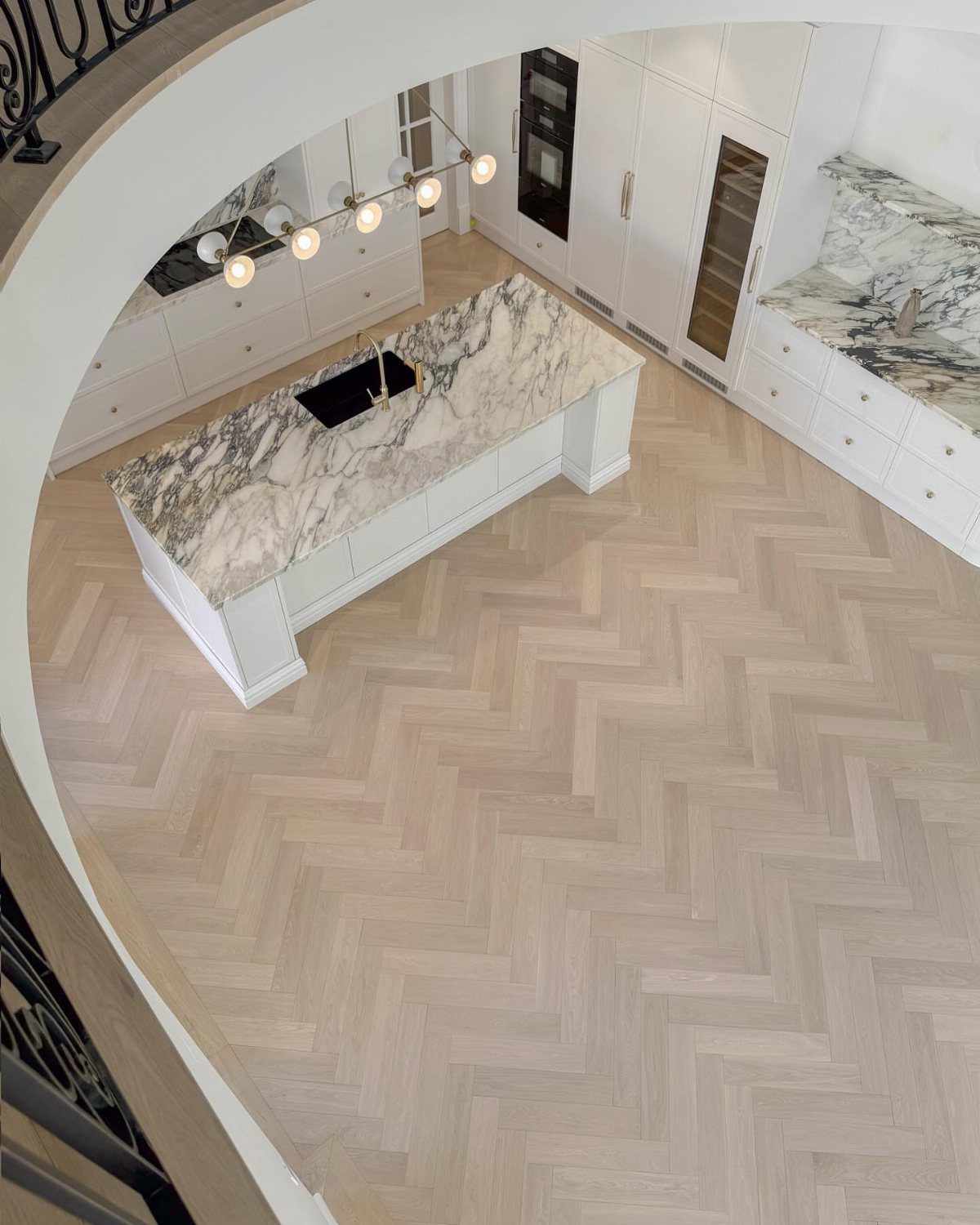
Herringbone and chevron layouts turn a basic wood floor into something that reads as intentional without reading as loud.
The light oak or greige vinyl plank versions I’ve been seeing keep the material itself quiet so the geometry can do the work.
The pattern eats extra material and the cuts have to be exact, so I would keep it to a smaller kitchen where straight planks would just look flat.
I’d pick this for a galley or L-shaped space where you want movement underfoot but not another color competing with the cabinets.
2. Wide Plank Wood Flooring
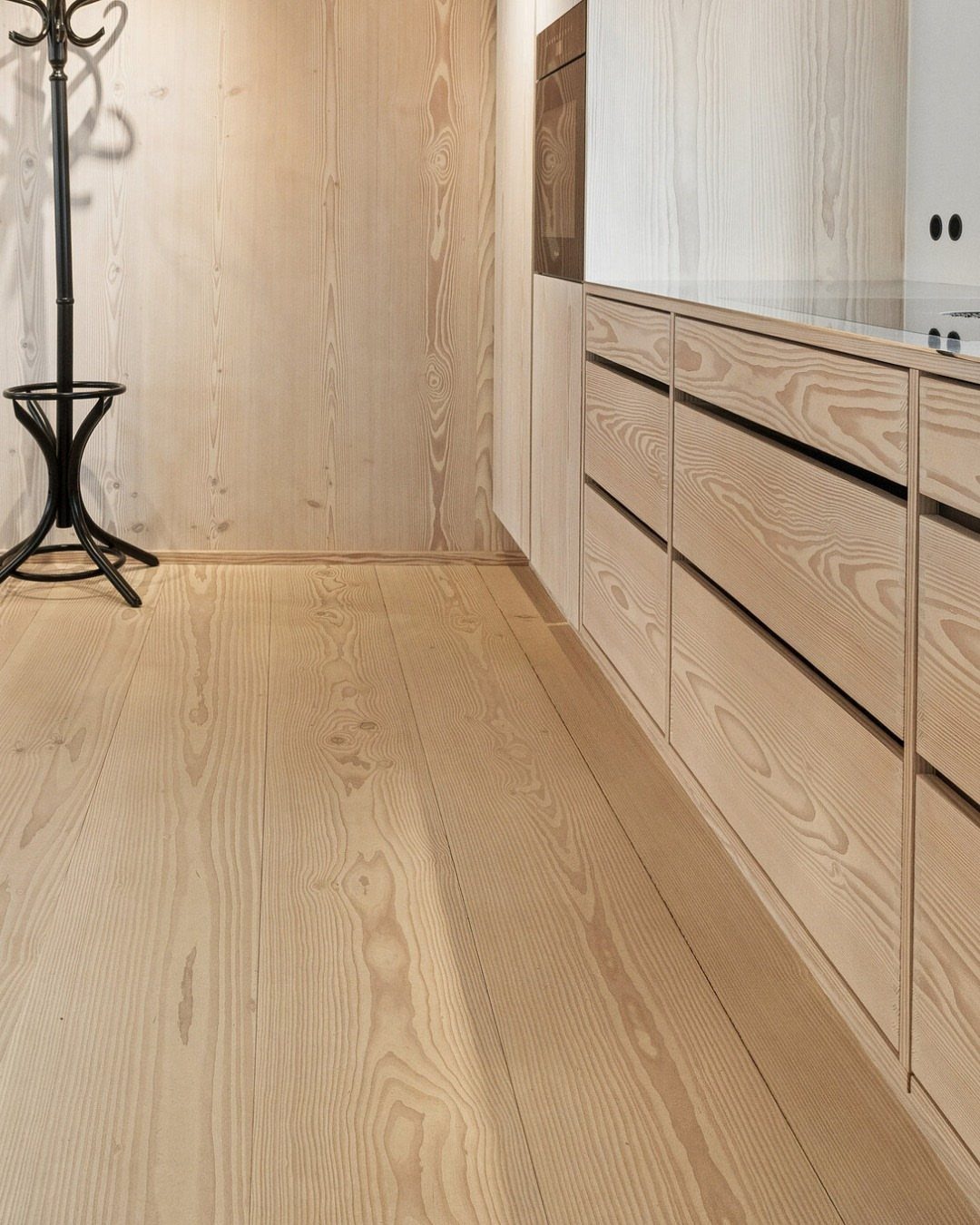
With fewer seams breaking the surface, your eye moves farther and the walls feel further apart.
The light warm oak tones pair naturally with white or cream cabinetry; deeper walnut or smoked wood works when you want contrast against lighter cabinets or a more grounded mood overall.
Satin finishes are what I’d look for now, since high gloss competes with everything else in a kitchen and matte can read as unfinished in that much square footage.
Or, embrace the natural beauty of light oak hardwood or dark stone. "Kitchen flooring can be neutral or it can be your focal point," advises Caren Rideau, founder of The Kitchen Design Group.
3. Wood-Look Porcelain
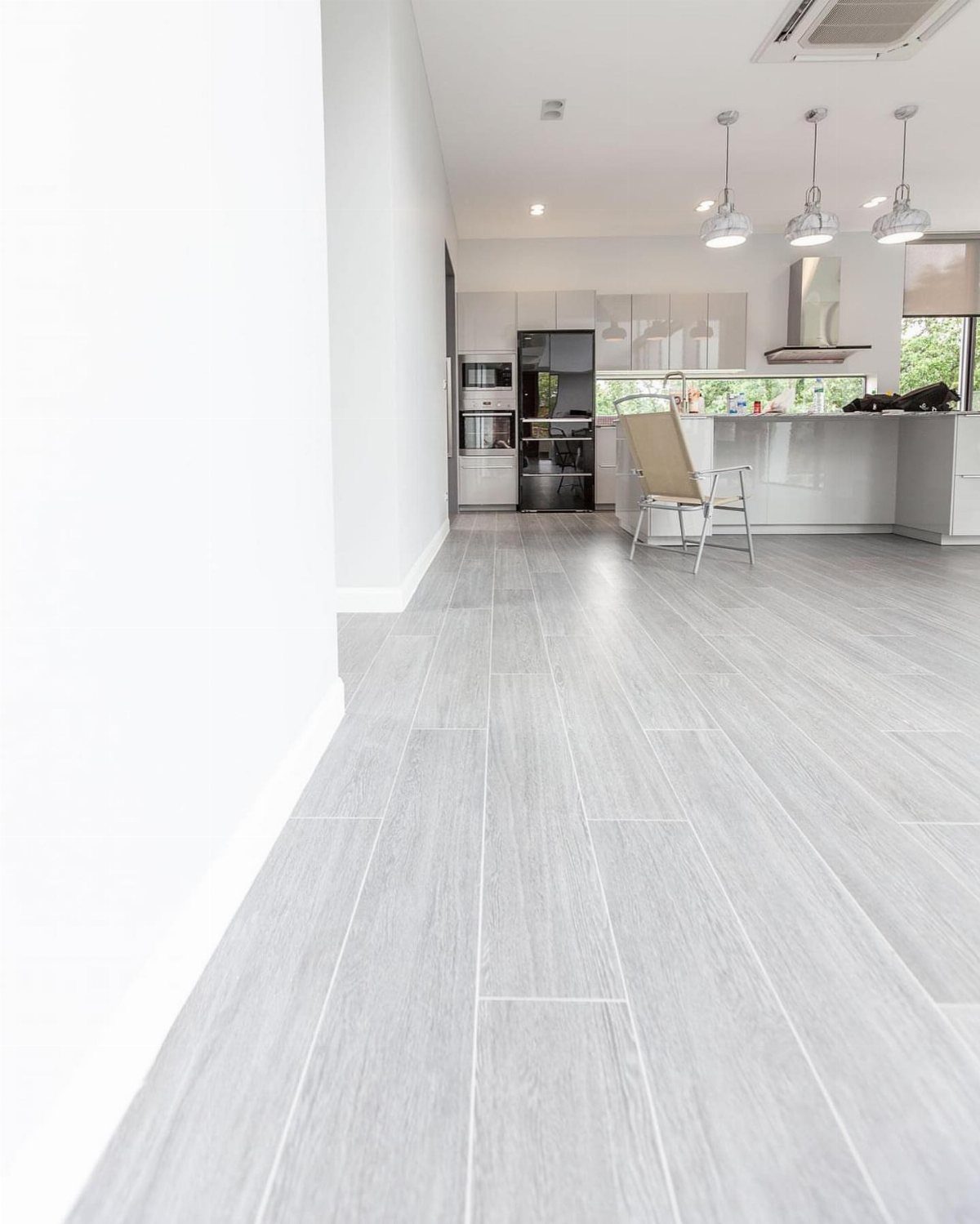
Porcelain tile that carries realistic wood grain solves the problem of wanting wood in a kitchen that actually functions as a kitchen.
You don’t think about scratch or water resistance until you need it; a dropped pot or slush from boots is just a wipe on porcelain, not a panic like it would be on oak.
The grey tones in the lighter planks work well with white cabinetry and keep the floor from feeling like a separate statement piece.
Grout color matters here: too light and you’re cleaning constantly, too dark and you lose the plank illusion entirely.
4. Patterned Tiles
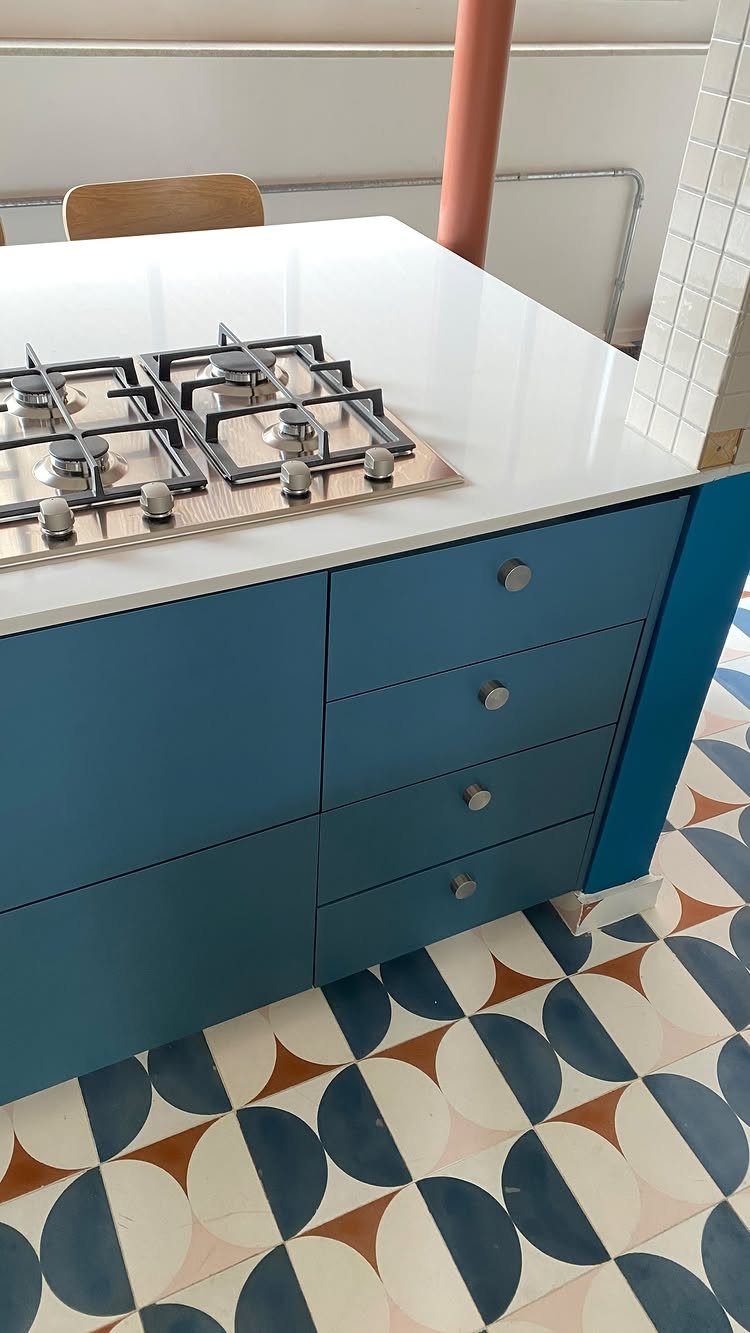
Patterned cement tiles commit to a mood in a way that most kitchen flooring won’t.
The bold geometric versions in navy, terracotta, and cream need cabinetry that can either match the energy or step back entirely; forest green cabinets against black-and-white pattern is one pairing that holds up.
These tiles are about personality, which means they suit renters or owners who know their taste and aren’t hedging. Sealing is non-negotiable with cement, and the grout lines will need attention.
I’d only do this in a kitchen where the floor is the main event and everything else is willing to play supporting roles.
5. Terrazzo Tiles
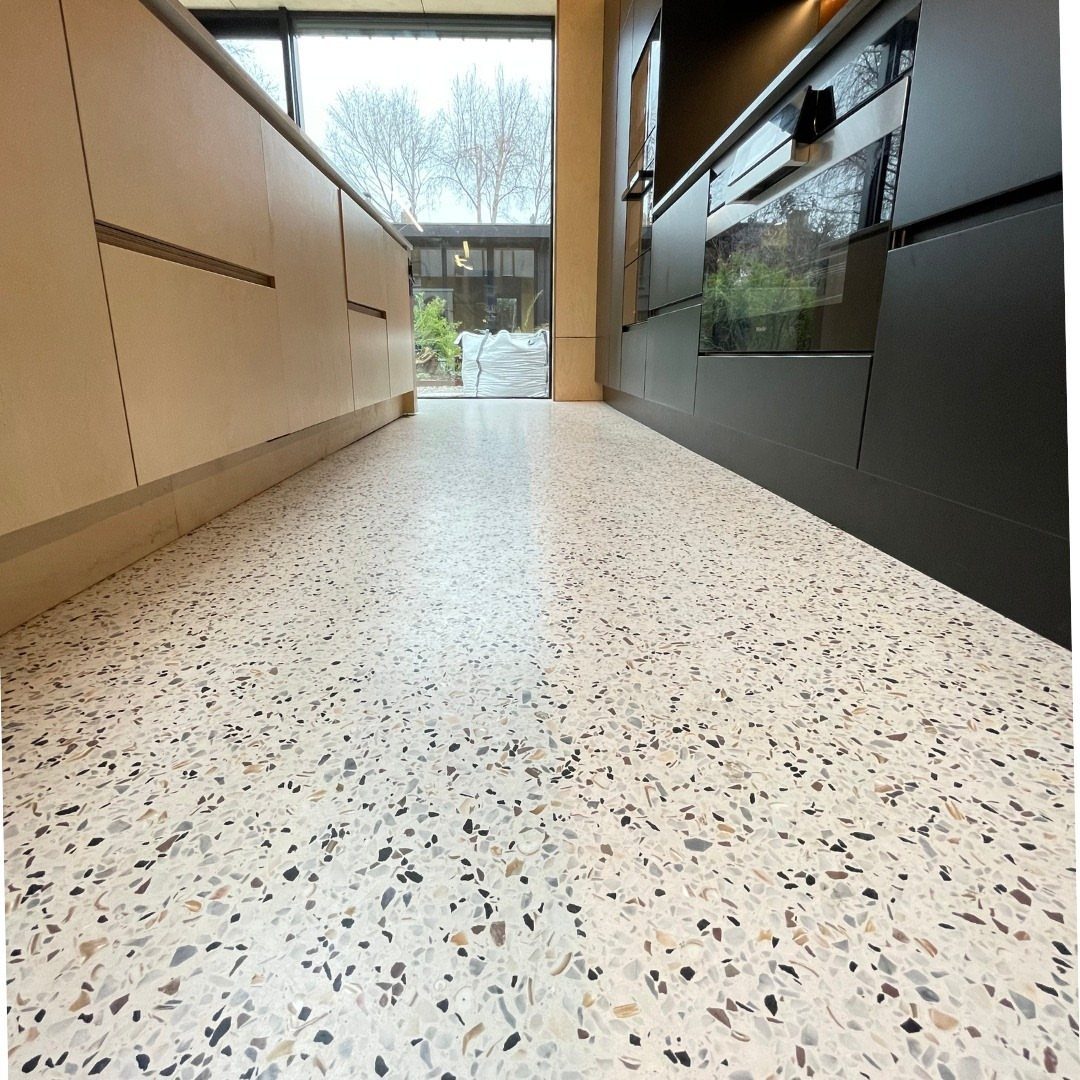
Terrazzo tiles bring in the speckled texture of marble, granite, and quartz chips set into cement, which reads as playful without being childish.
The color combinations are nearly endless, so the same material can feel retro or contemporary depending on the chip colors and base tone.
In a kitchen with mixed cabinetry, like light wood on one run and dark on another, terrazzo bridges the two without forcing a match.
The surface is durable and the maintenance stays simple, though I’d check the slip rating for a kitchen where spills happen fast and often.
6. Large-Format Tile
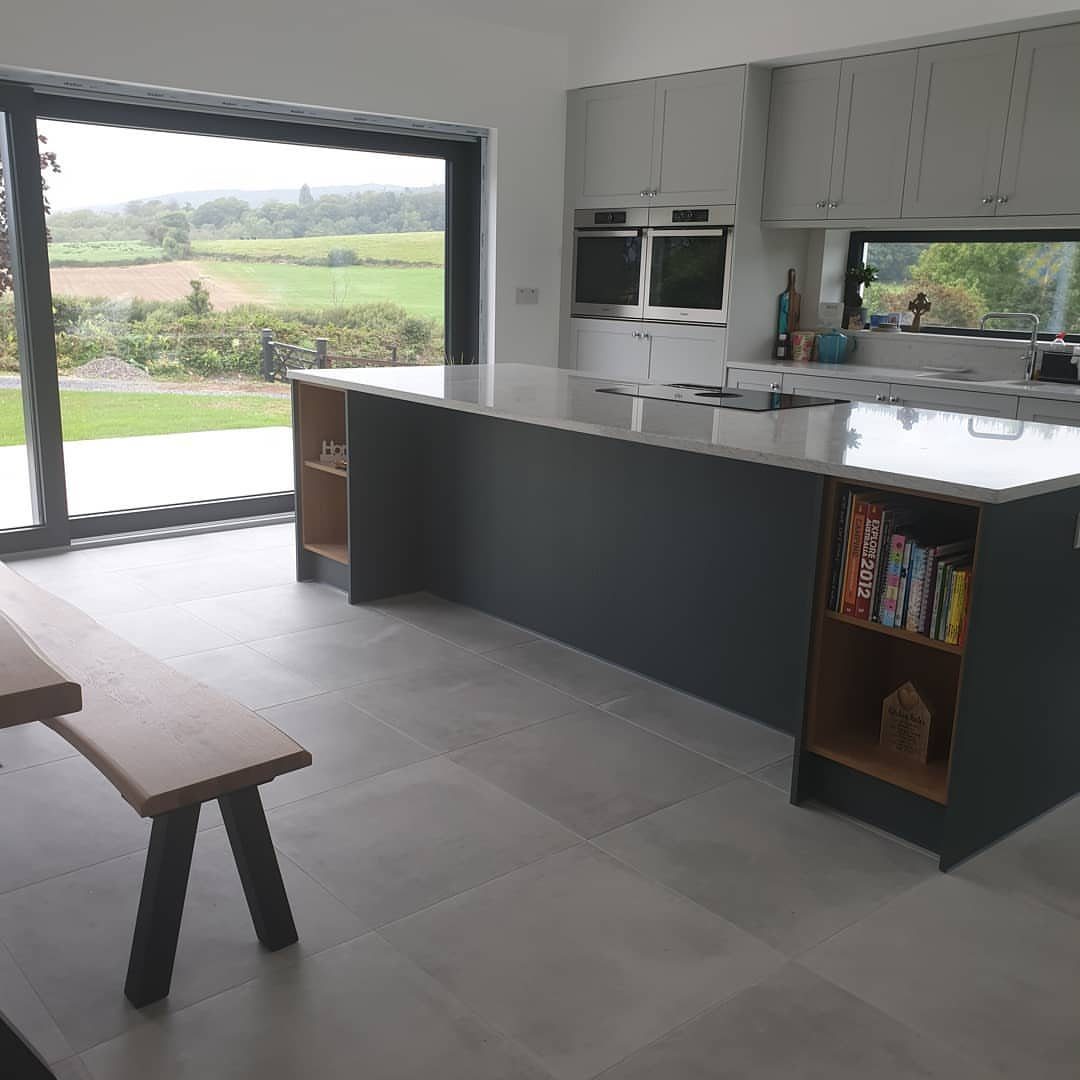
Large-format porcelain in 24×24 or 48×48 sizes cuts the grout lines down to almost nothing, which gives a kitchen the continuous look of poured stone or concrete without the sealing and cracking issues.
Stone-look porcelain in travertine or limestone patterns brings in natural variation; concrete-look in warm grey or greige grounds the space without fighting other finishes.
This costs more at the start and the installer has to be precise, so the grout you save on later gets paid now.
I’d put this in a kitchen with glass doors or open sightlines where the floor needs to carry visual weight across a large area.
7. DIY Painted Hardwood Floors
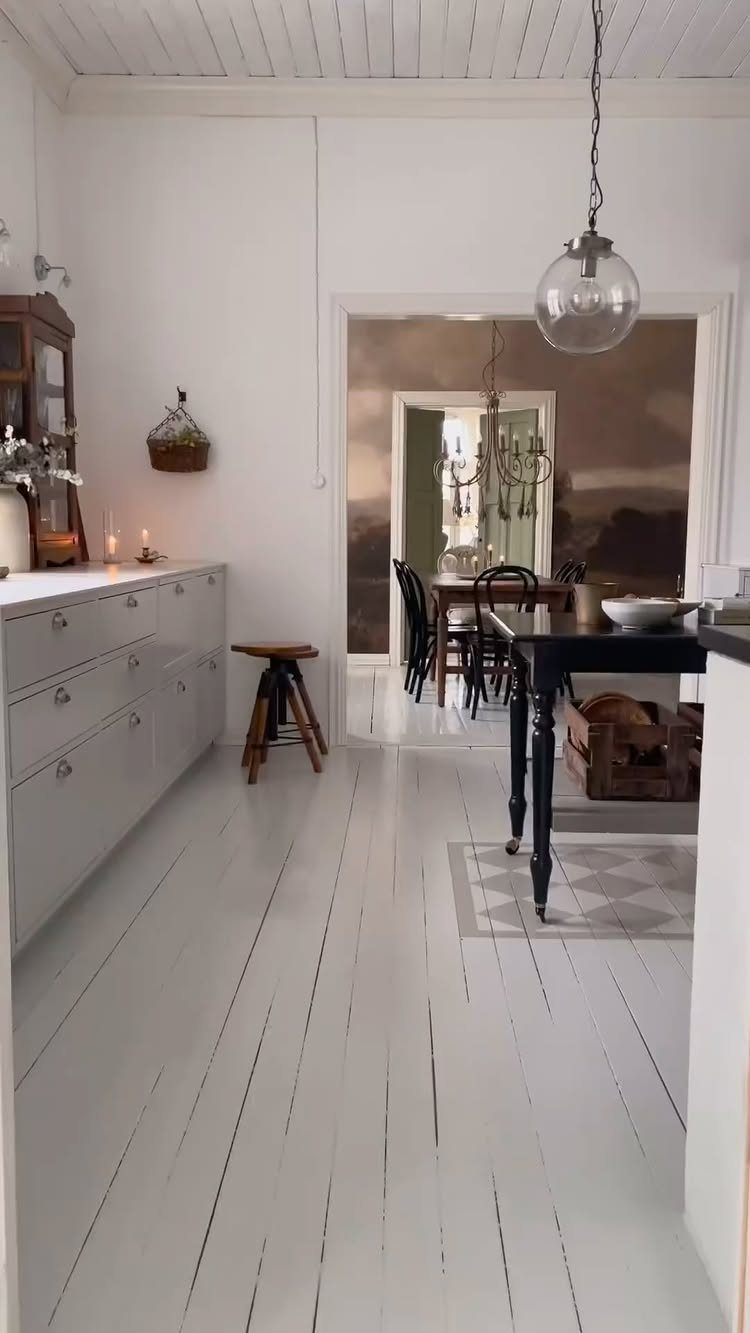
A weekend and a gallon of floor paint can turn salvageable hardwood into something that reads custom.
I like the checkerboard route for a kitchen because spills hide better than on solid white, and the grid breaks up a narrow galley.
Tape off squares, roll two coats of porch-and-floor enamel in alternating colors, then seal with water-based polyurethane so you can walk on it by Monday night.
The hand-painted look carries a slight unevenness that reads charming, not sloppy, if your edges are clean. I would not attempt this on floors with deep cupping or rot; paint highlights flaws it cannot fill.
8. Sleek Concrete
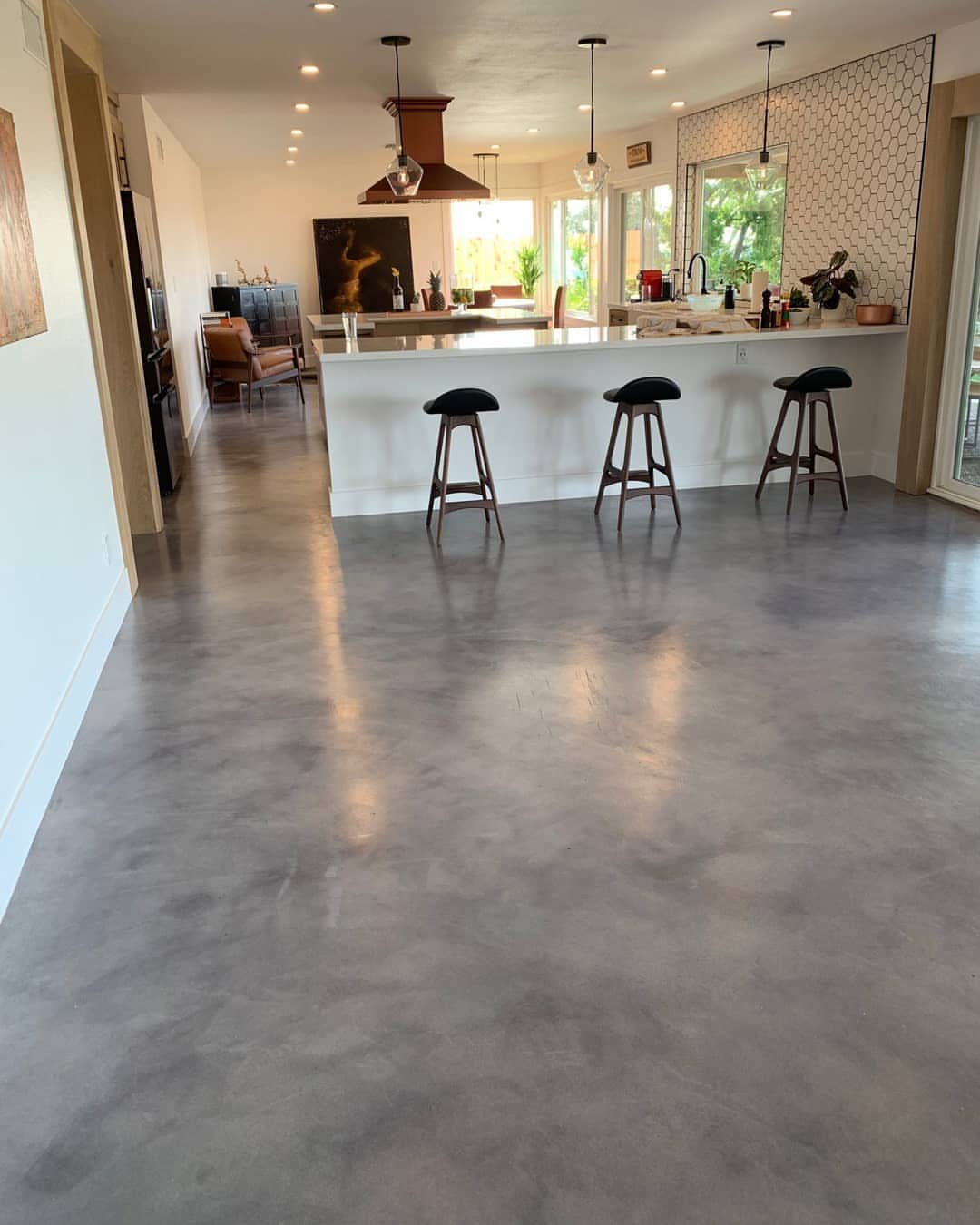
Polished concrete suits the reader who wants to drop a coffee mug without crying. The surface takes heat, water, and heavy traffic without complaint, and a single pass with a microfiber mop handles most cleanup.
Existing slab can be ground smooth and sealed for a fraction of new flooring; if you are pouring fresh, specify a low-gloss sealer rather than high-gloss, which shows every heel mark by noon.
The industrial feel works best with warm wood accents or patterned tile on the backsplash to keep the room from reading cold. Radiant heat underneath fixes the chill, though that pushes the timeline and budget well past a weekend.
9. Cork Flooring
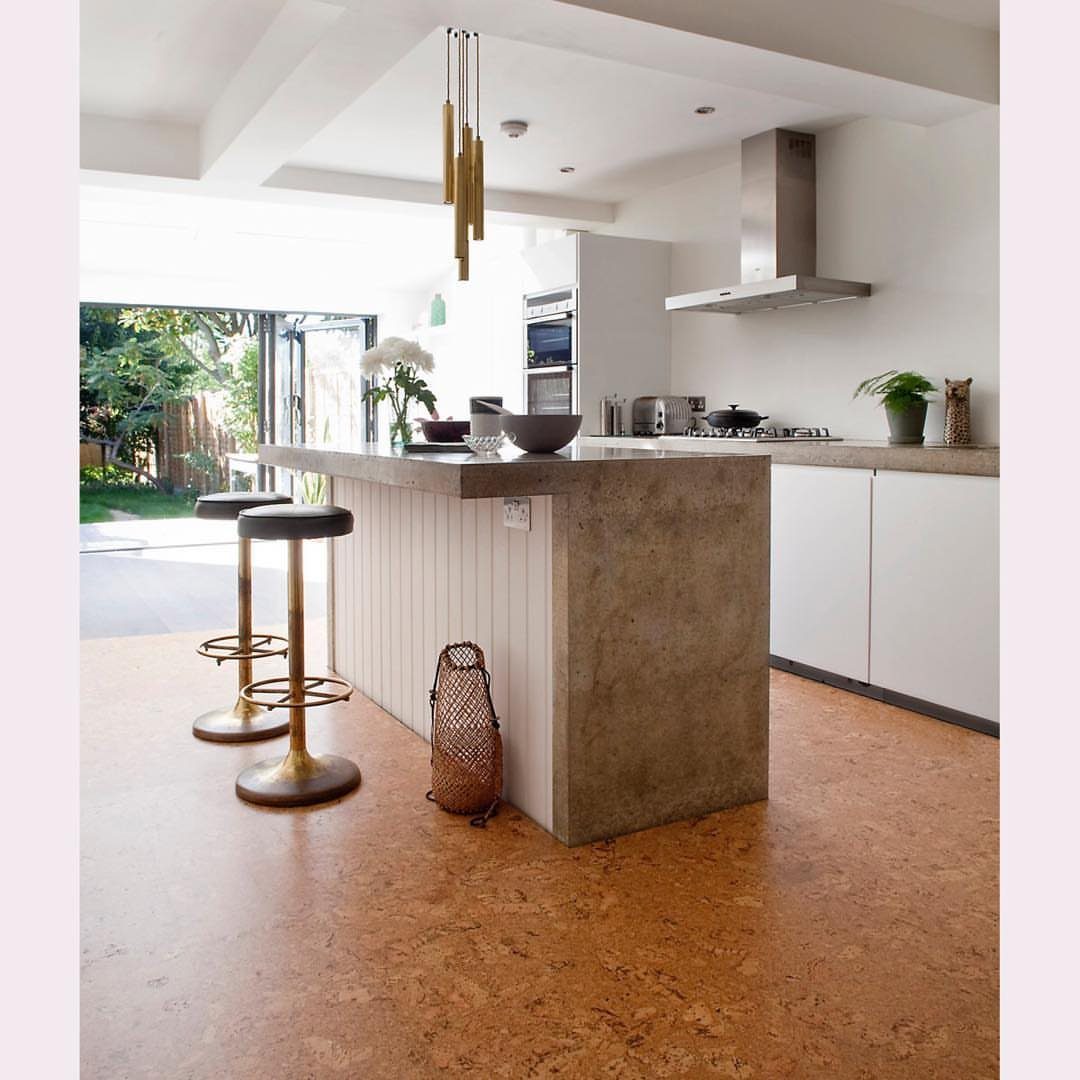
Cork delivers the rare combination of softness underfoot and forgiveness when a wine glass slips. The material is harvested from bark that regrows, and the warm, slightly mottled surface pairs with both midcentury and contemporary kitchens.
I would order samples and test them under your actual cabinets; some cork reads terrazzo, some reads oatmeal, and the lighter speckled kind leans toward the former.
Seal it properly at installation and reseal every few years, since standing water is the enemy.
For a cook who spends hours on their feet or drops things habitually, cork trades the cold click of tile for something that feels almost like socks.
10. Marble Tile Flooring
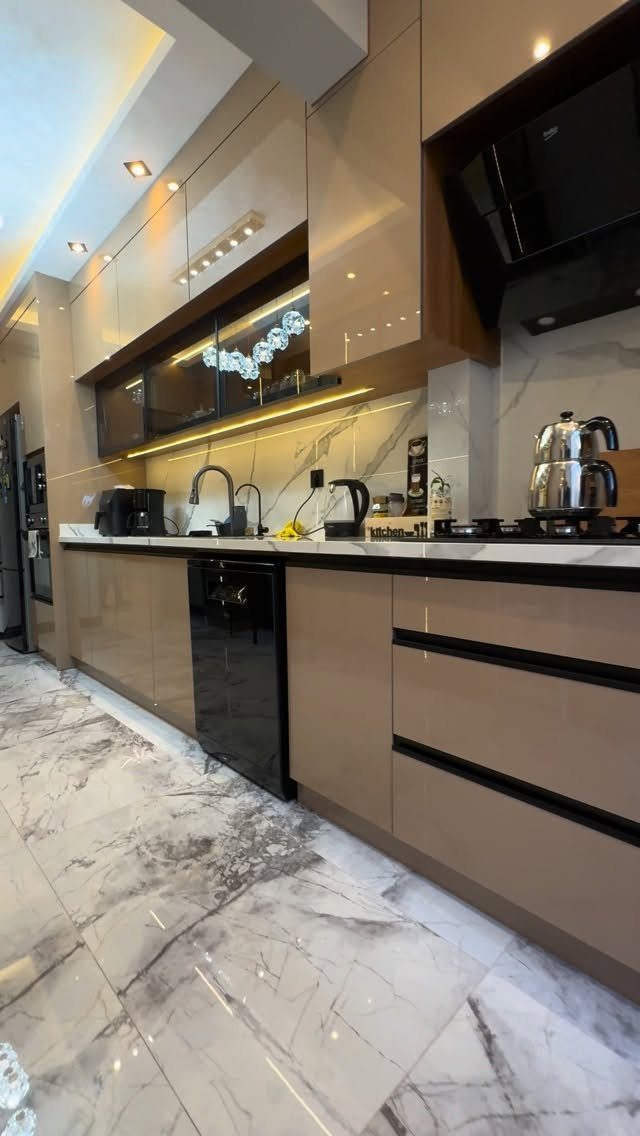
Marble-look porcelain tile gives the veining and light reflection of stone without the resealing and stain anxiety. Large-format marble tile with soft grey veins on white keeps a small kitchen feeling open and reads as deliberate rather than busy.
I would lay them with tight grout lines in a tone that matches the base color; contrasting grout turns the veins into a grid that fights the pattern.
Porcelain rates harder than ceramic on the PEI scale, so it handles dropped cast iron. Real marble demands a fabricator and a maintenance lecture; this option demands a wet saw and patience.
11. Terracotta Floor Tiles
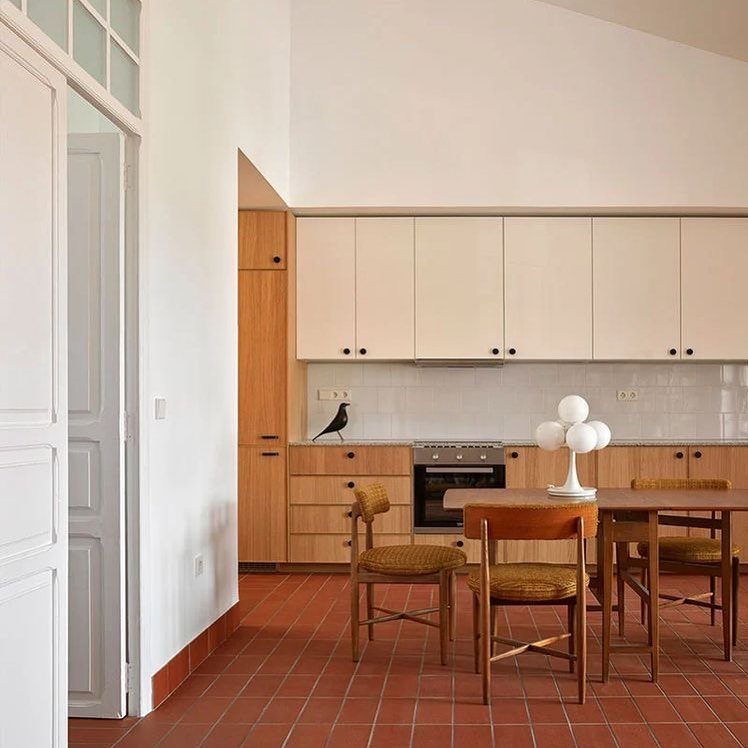
Terracotta carries thousands of years of kitchen use and still looks right in a room with light wood and white cabinets. Warm red-orange quarry-grade terracotta tolerates heat, spills, and the impact of a falling stockpot better than most ceramics.
I would seal it before grouting and again after, since the material is porous; skip this and a tomato sauce splash becomes a permanent memory.
A straightforward grid layout works with this tile, though the thickness means transitions to adjoining rooms need planning. For a reader mixing rustic warmth with modern lines, terracotta bridges without blending in.
Choosing the Right Flooring
Luxury vinyl or porcelain hold up better than wood or stone in a kitchen that sees constant foot traffic.
Sustainability in Flooring
Reclaimed wood carries a history that new lumber cannot replicate, and using it reduces demand for new logging while keeping timber out of landfills. Handmade mosaic tiles from limestone and recycled glass offer unique designs while staying environmentally friendly.
Durability and Maintenance
Porcelain and ceramic tiles withstand high traffic and clean easily. For LVP in a kitchen, look for a 20-mil wear layer; thinner wear layers show scratches within a few years.
Visual Impact of Flooring
Geometric tiles, checkerboard patterns, colorful terrazzo, or hand-painted hardwood flooring all let you test something bolder. Or embrace light oak hardwood or dark stone.
Hardwood, vinyl, laminate, stone, and tile all offer ways to set the tone from the ground up.
Frequently Asked Questions
What kitchen trends will be outdated in 2026?
Dark wood, gray wash, and high gloss finishes are the ones I’d replace now. Satin is replacing high gloss on wood, tile, and vinyl because gloss catches every fingerprint and fights the light from windows and pendants.
The whites and grays that filled every kitchen for ten years are giving way to warmer, dirt-friendlier neutrals and colors that read closer to sand or clay.
What is the best flooring for a kitchen in 2026?
Luxury vinyl, large format porcelain tile, and warm-toned wide plank wood are the strongest choices right now. Luxury vinyl has become more convincing visually and handles water and traffic without the maintenance of real wood.
What flooring trends are replacing outdated styles?
Warm neutrals, earthy tones, and textured surfaces are replacing cold grays and sterile high-gloss finishes.
Herringbone and chevron lay down enough pattern to keep a kitchen from going flat, and satin is winning over gloss no matter what the material is.
Wide planks in the 7-inch range or more reduce seams and let the grain read cleaner.