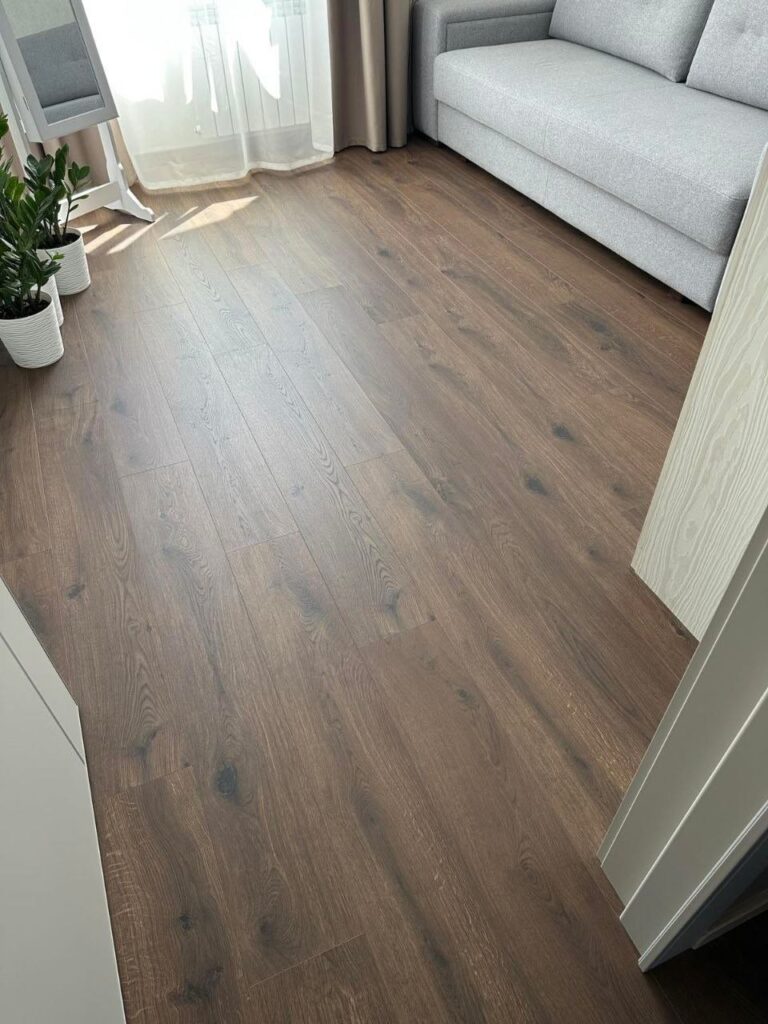
The colors that show up most in vinyl plank run from deep browns through greige and gray to coastal whitewashed planks and light natural wood tones, and the one that works depends on whether your walls read warm or cool and how much sun actually hits the floor by mid-afternoon.
A too-red brown can pull a north-facing room toward the basement feel no matter what you hang on the walls, while gray forgives the crumbs that show up between vacuumings and needs a woven rug or a mustard throw to keep from going sterile.
1. Brown
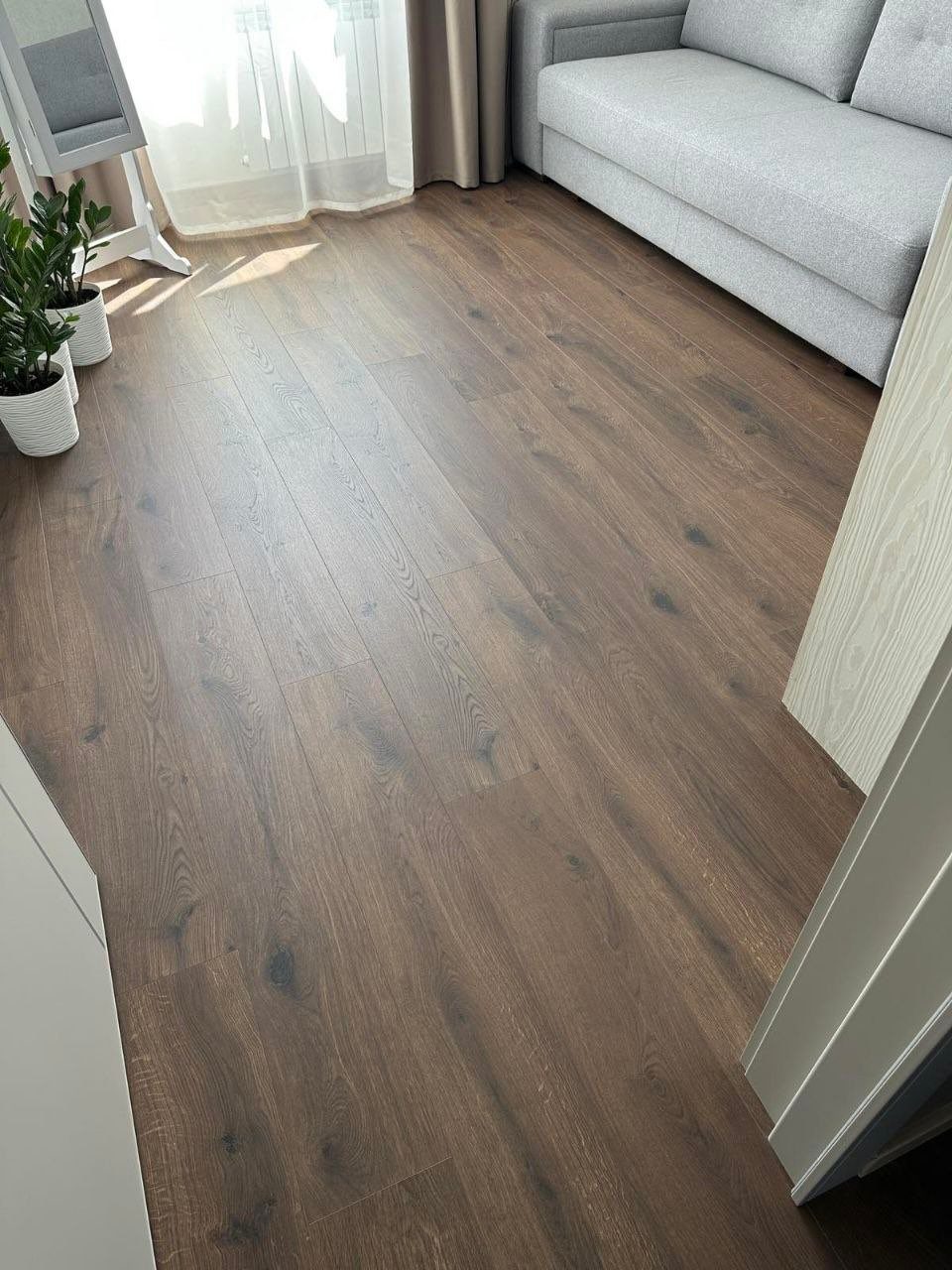
Brown vinyl plank flooring still reads as the safest bet for renters who need their deposit back and first-home owners who want the warmth without the hardwood price tag.
The shade matters more than most people expect: a honey oak tone leans golden and picks up yellow in your walls, while an earthy brown with gray undertones stays quieter against beige or cream.
I would check my paint swatches against the flooring sample at the store’s actual lighting, not the parking lot, before I committed.
The coziness is real, but a too-red brown can make a north-facing room feel like a basement no matter how many plants you add.

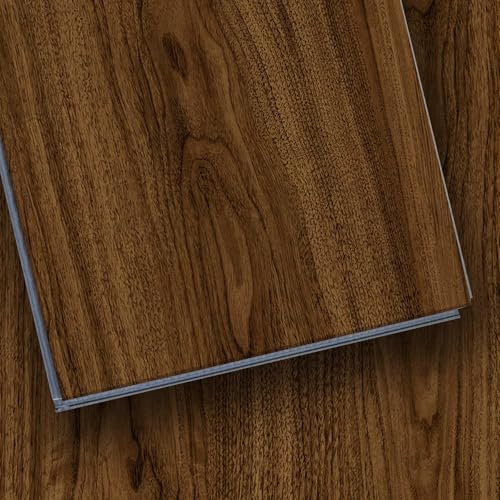
Realistic Wood Look: Get the authentic look of real wood with grain texture. These floor planks blend seamlessly into any decor style, adding a touch of timeless elegance to your home.

Size and Coverage: You will receive 40 PCS 12x12 inch peel and stick floor tile in honey oak wood grain, each tile measures approximately 12 x 12 inch /30x30 cm, 0.05 inch /1.3 mm thick, and covers approximately 38.8 square feet in total. Enough quantity and area to meet your needs
2. Greige
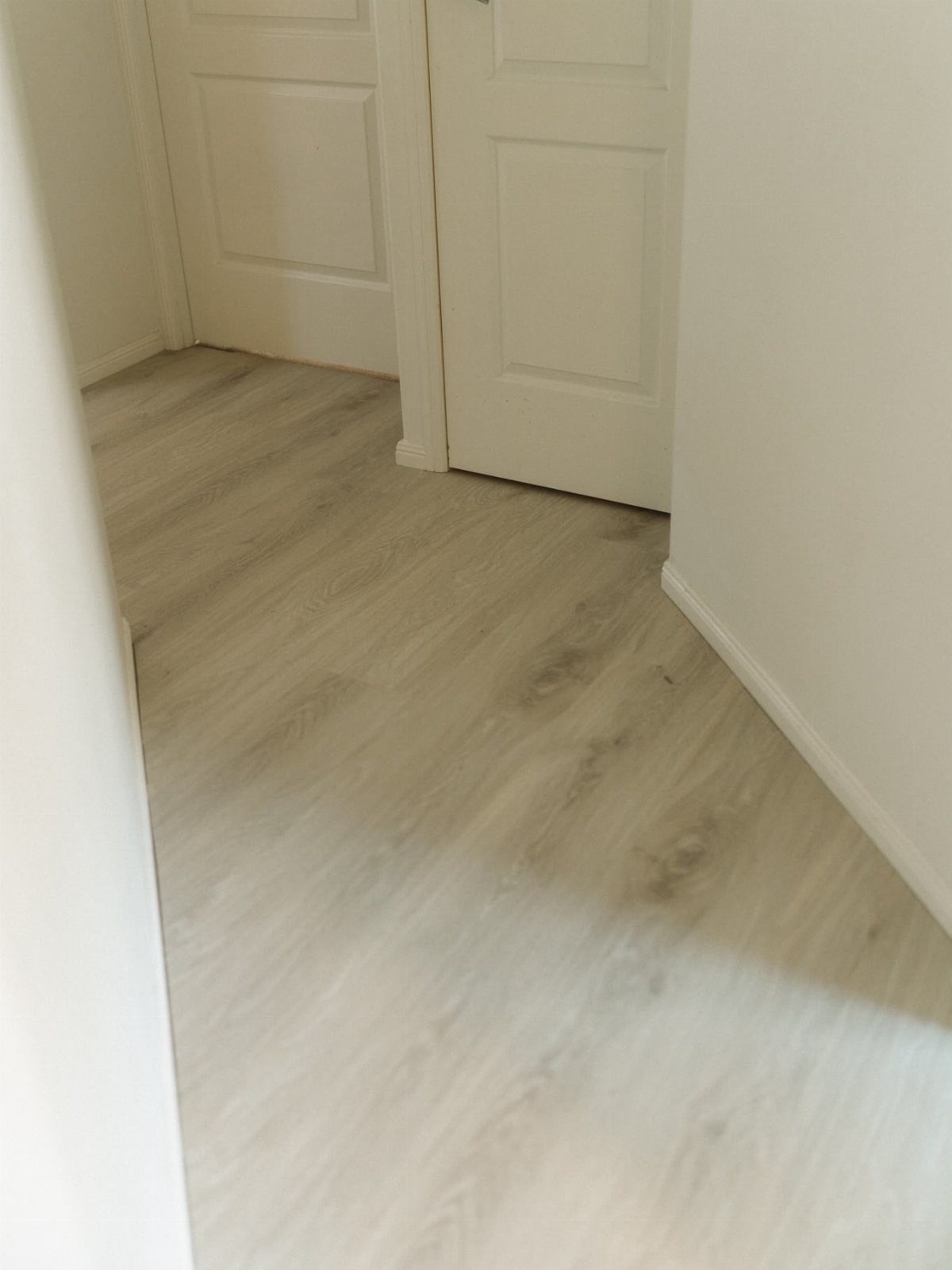
Greige works when you cannot decide whether your house is warm or cool. The mix of gray and beige catches both, so it pairs with the brushed nickel hardware you already have and the brass pendant you might want later.
I have seen it read too pink in some lights, too green in others; the fix is grabbing three samples and living with them for a day.
For a modern farmhouse or transitional space, this is the tone that lets you keep your existing furniture without a full reset.
A warm greige with visible grain hides the scuff from dog nails better than a flat beige ever could.

🏠DETAILS: 15.8x78.8 Inch, total 8.65 sq.ft (40cmX2m) Made of durable thin vinyl, thickness: 0.015 In (0.4MM). Peel and stick wood planks vinyl flooring roll, brown shiplap planks color. Waterproof. Removable.

REALISTIC WOOD LOOK: Featuring luxury wood-grain texture, micro-bevel edges, and HD film prints, these luxury vinyl planks perfectly replicate real hardwood floors with a fraction of cost of wood flooring.
【Ultra-Durable & Pet-Friendly】With a 0.3mm wear layer tested over 15,000 abrasion cycles, this luxury vinyl plank flooring resists scratches, dents, and spills. Ideal for busy homes with pets and kids, it stays beautiful for years even in high-traffic areas.
3. Gray
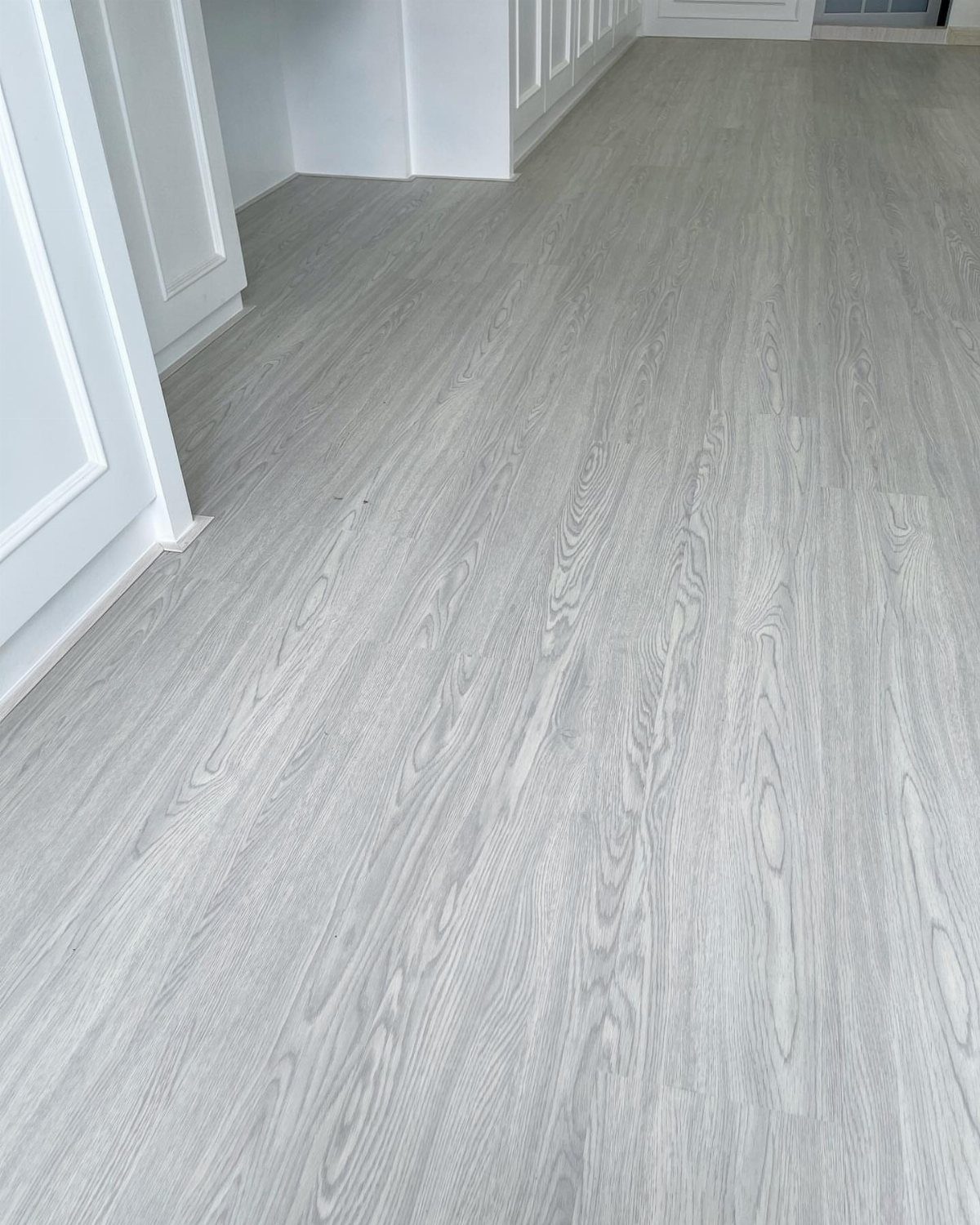
Gray flooring is the one I would pick for a busy household that does not want to sweep daily. The color masks dust and the crumbs that somehow multiply between vacuumings, and it anchors a room without demanding attention.
A light gray with soft coastal undertones stays calm against white or pale walls; go darker only if your space gets real sun, or the floor will swallow the room.
I would add warmth back in with wood furniture, woven textures, or a mustard throw, because gray alone can run cold fast.
Breakwater Oak or Gray Ash are the names to look for if you want that weathered, beach-house feel without the splinters.
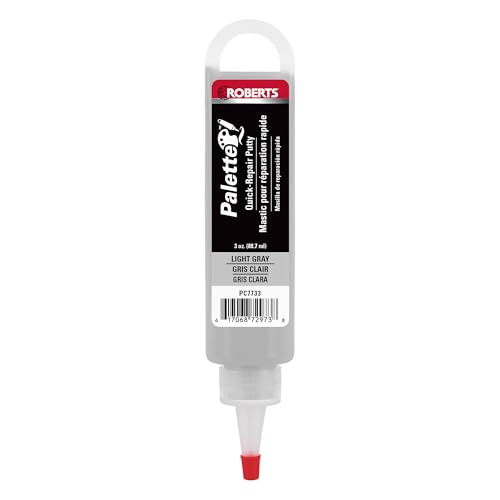
Ideal to fill gaps, nicks and scratches on wood, laminate and vinyl flooring

Ideal to fill gaps, nicks and scratches on wood, laminate and vinyl flooring
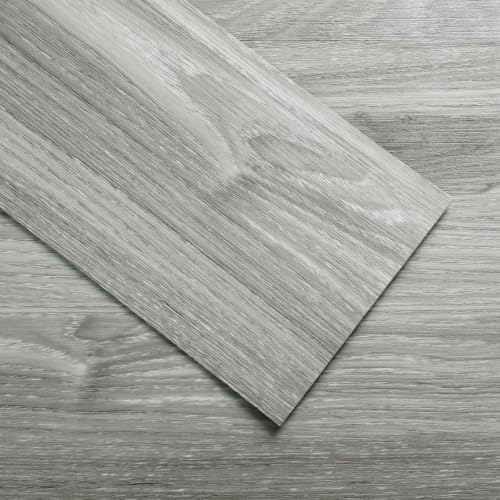
REALISTIC WOOD GRAIN: Vinyl plank flooring features a natural wood flooring look with clear grain texture, helping create a clean wood floor style for everyday home spaces
4. Coastal Whitewashed Planks
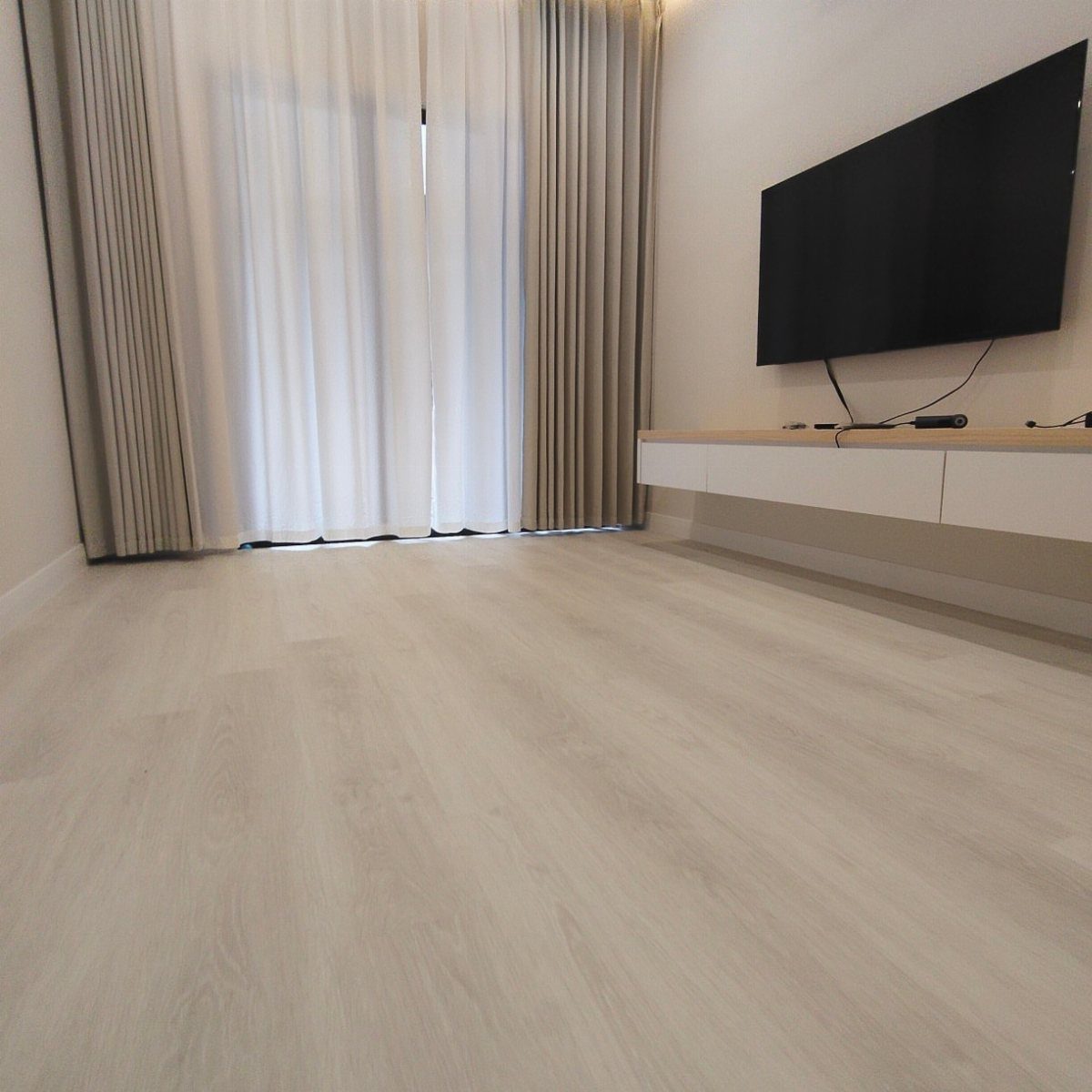
Coastal whitewashed planks are the choice when a room feels small and you need it to breathe. The bleached tone reflects light around, so even a space with one window reads brighter than it has a right to.
I would use this in a rental where I cannot knock down walls, or in a first home’s living room that opens straight from a dark hallway.
The beachy look is specific, though; pair it with too much rustic furniture and you end up in a theme restaurant.
White walls and plain linens keep the attention on the floor, which is where the brightness actually comes from in this look.

Peel and stick to apply: No water, no paste, no mess

🏠DETAILS: Size 17.5 X78.8 Inch , total 9.57 sq.ft(44.5cmX2m), Self adhesive (no extra glue needed). Made of durable vinyl, Light blue ocean wallpaper peel and stick, Matte, Waterproof, Removable.

Peel & Stick Wallpaper: Quick to install, removable and repositionable, with strong adhesive (no glue needed). Made of durable, waterproof vinyl, easy to clean. It matches most home designs, and it's renter-friendly & a great choice for a home decor idea
5. Light Natural Wood Planks
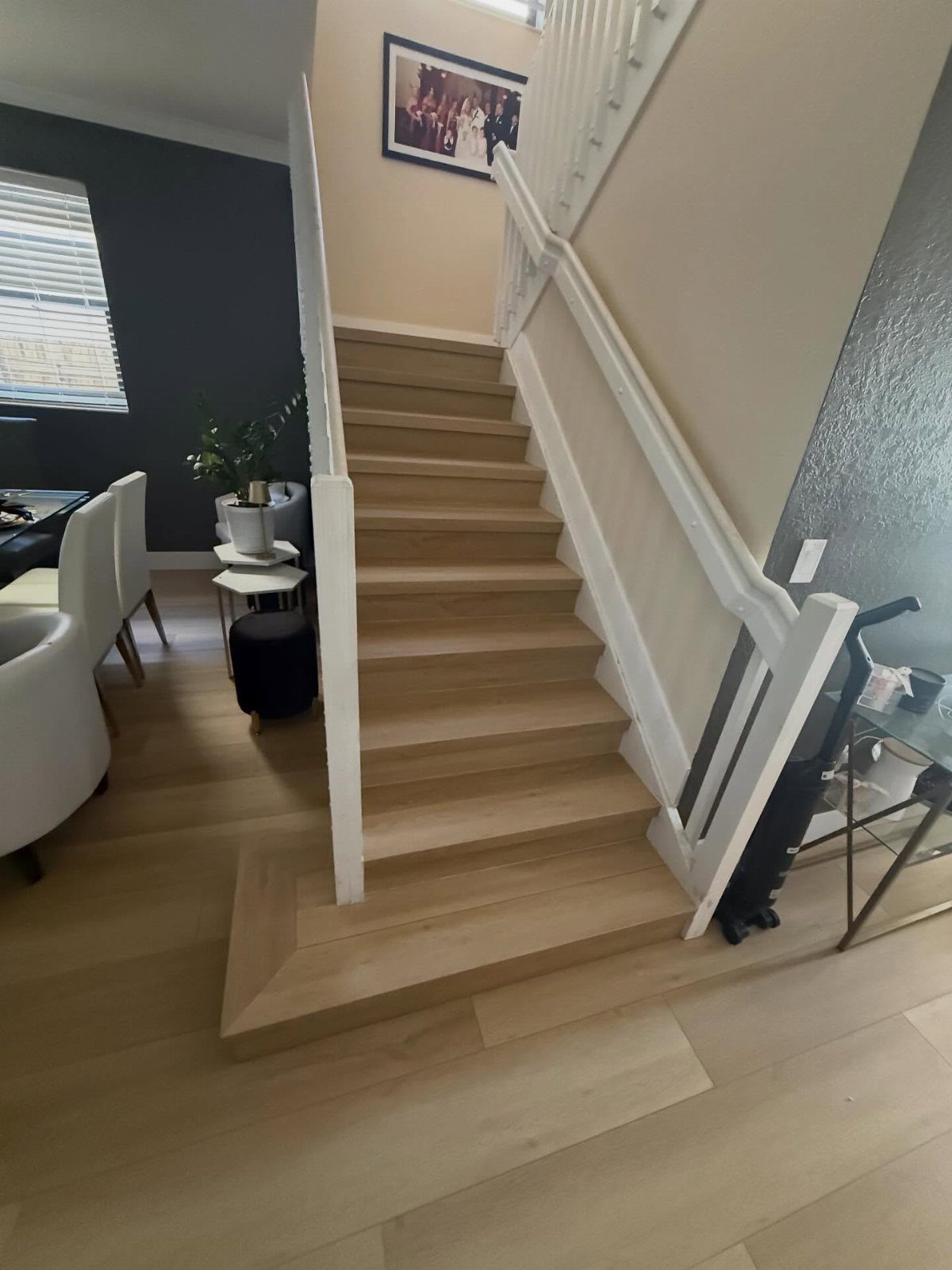
Light natural wood planks are the entry point if you want the flooring to look like actual wood and not a design statement.
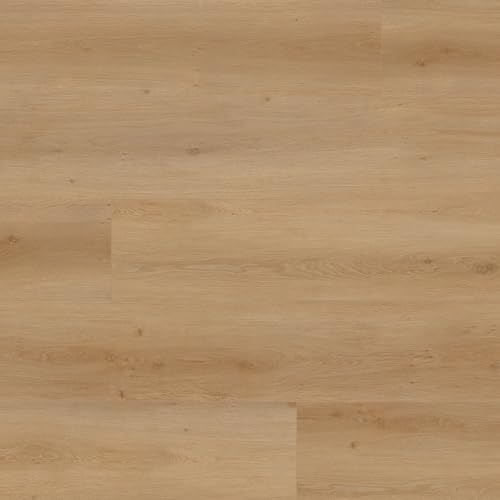
The tone runs from pale honey to something closer to raw oak, and the variation in grain keeps it from reading as plastic.
I would carry it up a staircase if the budget allows, because matching stairs to floors is the detail that makes a DIY job look intentional.
Wide planks with some texture to the surface are what manufacturers are making now, and the muted earth tones stay warm without looking tied to one year.
This is the workhorse choice that survives a weekend install and still looks like you planned it for years.

Authentic Wood Look: American Oak’s honey hue carries a classic bright warmth through your space; Features beautiful wood-look grain and realistic knots across rich variations of blonde

【Ultra-Durable & Pet-Friendly】With a 0.3mm wear layer tested over 15,000 abrasion cycles, this luxury vinyl plank flooring resists scratches, dents, and spills. Ideal for busy homes with pets and kids, it stays beautiful for years even in high-traffic areas.

Tivoli Tiles: If you want to spruce up your floors quickly and easily for less, look no further than our Tivoli Vinyl Tile collection. The rich wood-look vinyl with a fine lustrous finish makes these tiles indistinguishable from real wood.
Trends in Vinyl Flooring
Luxury vinyl plank and tile options have gotten better at faking real wood grain; the stone looks have improved too, though I would still pick wood-look for a rental or first home.
Nature-inspired colors and richly textured finishes are showing up everywhere right now, adding depth without turning the floor into a busy pattern.
I would look for a wear layer thickness of 12 mil or higher if I wanted the floor to survive a dog or a kid’s scooter phase, since the trend toward realism does not mean much if the surface scuffs in month two.
The lifespan of vinyl plank flooring averages up to 20 years but may last longer with proper maintenance and care.
100% Waterproof & Ultra-Durable Construction: Premium rigid-core vinyl planks with a 22 mil wear layer resist scratches, stains, and spills for kitchens, living rooms, bathrooms, and high-traffic areas

Flexible & Break-Resistant Construction: Our vinyl planks are highly durable, unlike brittle ordinary floor tiles. They can be freely bent and trimmed, and will not crack or break during installation.

【Size】: Each wood vinyl flooring tile is 12"×12", 1.5 mm thick. Set of 4 pcs covering 4 sq. ft
Installation Tips
Click-lock and peel-and-stick formats are the reason vinyl flooring stays a weekend project rather than a contractor call.
Existing floors can often stay put underneath; many vinyl planks go straight over old tile or linoleum with minimal prep, which saves the cost and mess of ripping up.
The subfloor still needs to be reasonably flat, so I would walk it with a level and fill any dips that could let the plank rock or the seam open.
Rigid core options like Nucore or Duralux add stability but read the same as standard LVP once laid; the difference is in how they feel underfoot and whether they telegraph imperfections below.
Waterproof vinyl is the line to look at for kitchens, baths, or anywhere a spilled glass of water sits longer than you notice.

100% Waterproof Rigid Core Vinyl: Engineered ISOCORE construction ensures full water resistance for kitchens, bathrooms, basements, and laundry areas, with no acclimation required before installation

[Realistic Wood Grain with DIY Options]: With a super realistic wood grain appearance and various color options, these tiles meet personalized decorative needs. They are versatile enough for use in homes or commercial spaces, suitable for shop decoration, rental renovations, and RV flooring projects.

【Water-resistant and Easy to Clean】Crafted from superior quality materials, these peel and stick floor tile are water-resistant, making them ideal for bedrooms and kitchens. They resist stains and spills, keeping your vinyl flooring easy to clean and looking fresh
Durability and Maintenance
Rigid core products handle the traffic a rental or starter home actually sees: heavy footfall, dragged chairs, the occasional dropped pan. The wear layer resists scratches and stains, and the core itself shrugs off dents better than older vinyl.
Waterproof options matter less in a bedroom than in a kitchen or bath, but I would still run them anywhere I might track in snow or spill coffee without immediate cleanup.
Maintenance is mop-and-done; no refinishing, no waxing, no worrying about humidity swelling the boards. Hardwood costs more upfront and demands more fussing over time; vinyl gives up some of that lifespan for a floor you can live on without worry.

LUXURY VINYL FLOOR TILES: For use indoors and in temperature-controlled environments only, MSI brings adhesive flooring up a notch with Glue-Down floor planks – stylish at the surface with the authentic look of real wood plank flooring

Stylish - Authentic wood looking and grain texture, adding timeless feature for your home
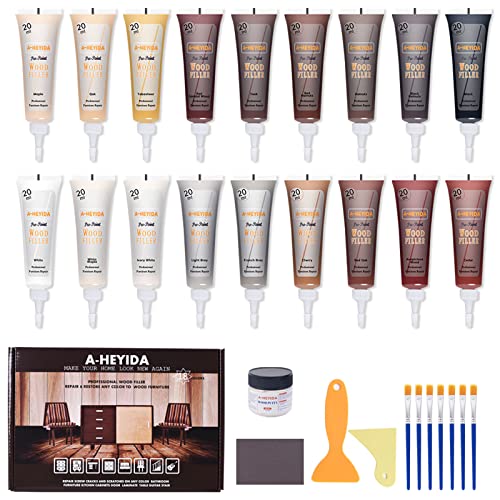
Wood Vinyl Floor Repair Kit: 31 piece laminate floor repair kit includes 18 unique colors of resin wood repair fillers, 1 sandpaper, 1 wood putty, 7 brushes, 2 plastic scrapers and 1 disposable glove. According to the instructions provided, you can repair floors and furniture by yourself, no need to hire a professional, saving you time and money. This is an easy solution to repair scratches and stains on wooden furniture and floors in your home
Color Matching Advice
Start with what you already own. If your furniture runs coastal with wicker and pale fabrics, a bleached light wood vinyl continues that story without forcing every piece to match.
If you collect jewel tones, velvet, and darker antiques, an earthy brown grounds them without competing.
Neutral vinyl in cream, light gray, or medium brown buys time if your style is still shifting; I would pick this if I redecorated seasonally or bought secondhand without a master plan.
Cool blue-gray has faded slightly, while warm gray and greige hold on with softer variation in the plank. I would grab three samples, lay them where the light actually hits, and live with them for a day before deciding.
Peel & Stick Wallpaper: Quick to install, removable and repositionable, with strong adhesive (no glue needed). Made of durable, waterproof vinyl, easy to clean. It matches most home designs, and it's renter-friendly & a great choice for a home decor idea

Details: 15.8"x78.7", covering 8.6 sq.ft. The wood slats wallpaper has a rustic look and shiplap effect, and the wood grain design gives everything a fresh, modern look. Multiple white/gray wood rolls can be seamlessly spliced and combined without difference.

MATERIALS AND FEATURES: Vinyl wall panels with realistic wooden textures bring natural beauty, especially suitable for bedrooms, living rooms, etc. Due to its use of PU material, it also has advantages such as waterproofing.
Frequently Asked Questions
What is the most popular color of vinyl plank flooring?
Light gray and brown tones sell the fastest right now because they read as neutral in almost any room.
Light brown flooring in particular has become the favored choice across most buyers because it complements almost any decor style without fighting the existing furniture.
Gray remains strong too, especially the warmer, softer grays that read more organic than the cooler blue-toned grays that are starting to fade.
What is the downside of vinyl flooring?
Some vinyl flooring can be less durable than hardwood in high-impact areas. In heavy-traffic spots or under sharp impacts, vinyl may not hold up as well as solid wood over the long term.
What is the best wood look vinyl flooring?
Luxury vinyl plank, or LVP, gives the most convincing wood look because the planks are thicker and the printing has gotten sharp enough to fake grain texture.
The textured surfaces and wide planks now available do a convincing job of mimicking actual hardwood, and the muted earth tones manufacturers are making now keep the look current without tying it to one particular year.
Textured wood-look LVP works well in living rooms; the surface catches light like real grain, and the vinyl underneath handles the wear of daily traffic.