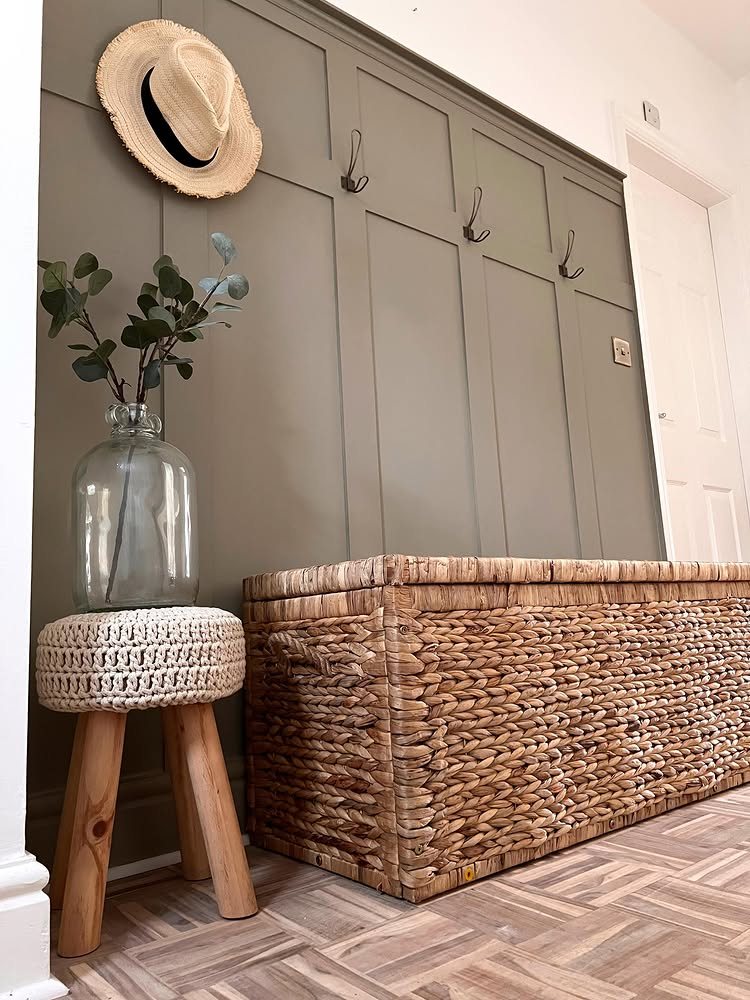
Rustic wall ideas run from salvaging pallets to recessing live-edge slabs into drywall, with most landing somewhere between a quick Saturday project and a full weekend.
What picks one over another is whether you own the place or sign a lease, since stone veneer and nail-gun planks carry very different consequences at move-out.
The crate wall I would start with cost me nothing but screws and a flea market morning, and it still came apart when the apartment needed its walls back.
1. Horizontal Reclaimed Wood Planks
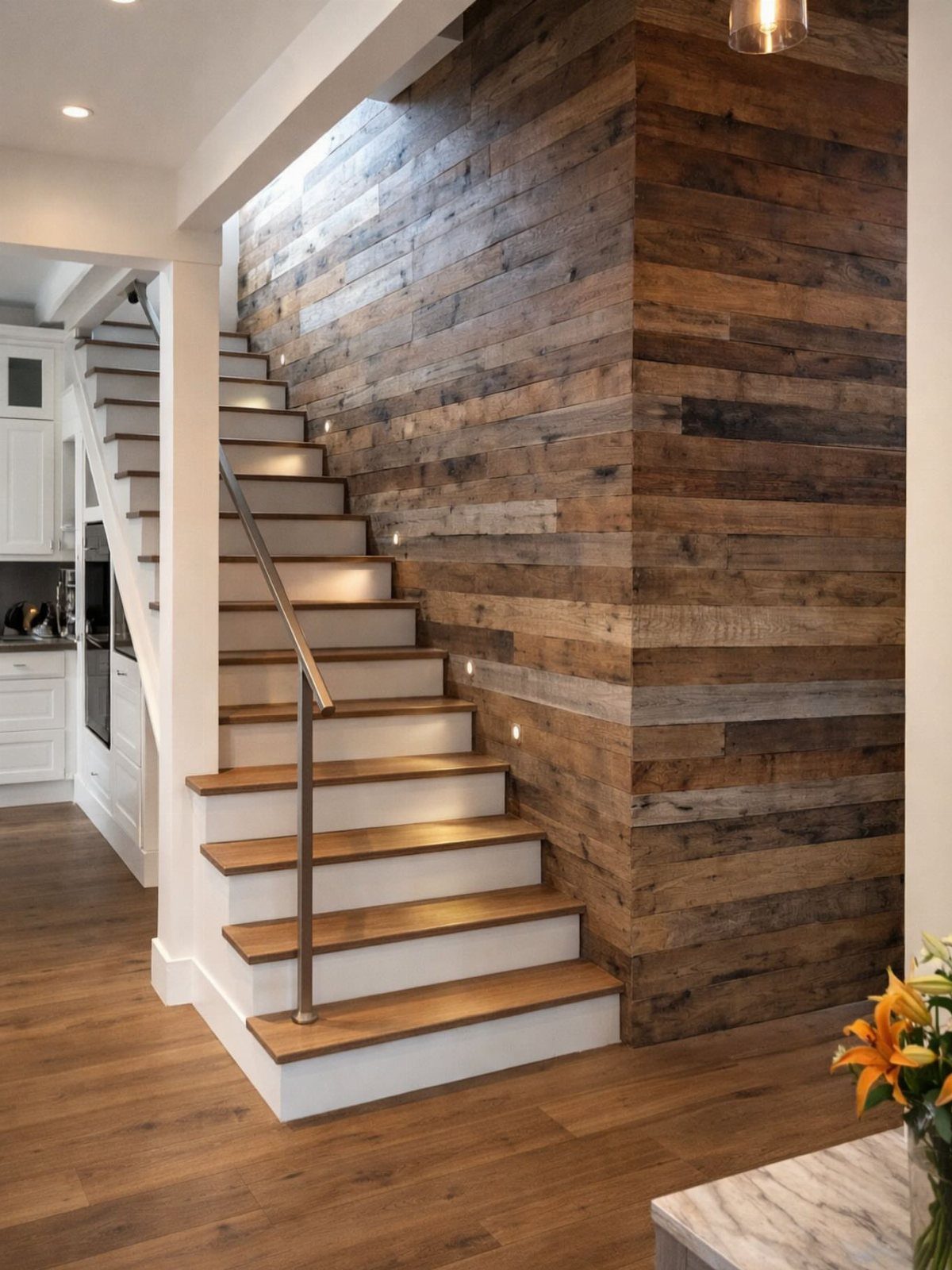
Horizontal planks let you ease into rustic walls without committing to a full room.
Boards salvaged from different places carry this mix of browns and greys; some readers hunt demolition sales, others ask at a local mill about offcuts too varied for a flooring job.
The lights set into this wall need planning before the boards go up, but the boards themselves install with a nail gun and patience for uneven edges.
What sells the look is the tight fit; gaps read as mistake, not character.
I’d steer a first-timer toward a single accent wall, not a staircase run. Less cutting around trim, and you learn the feel of reclaimed wood before the stakes get high.
2. Pallet Wall
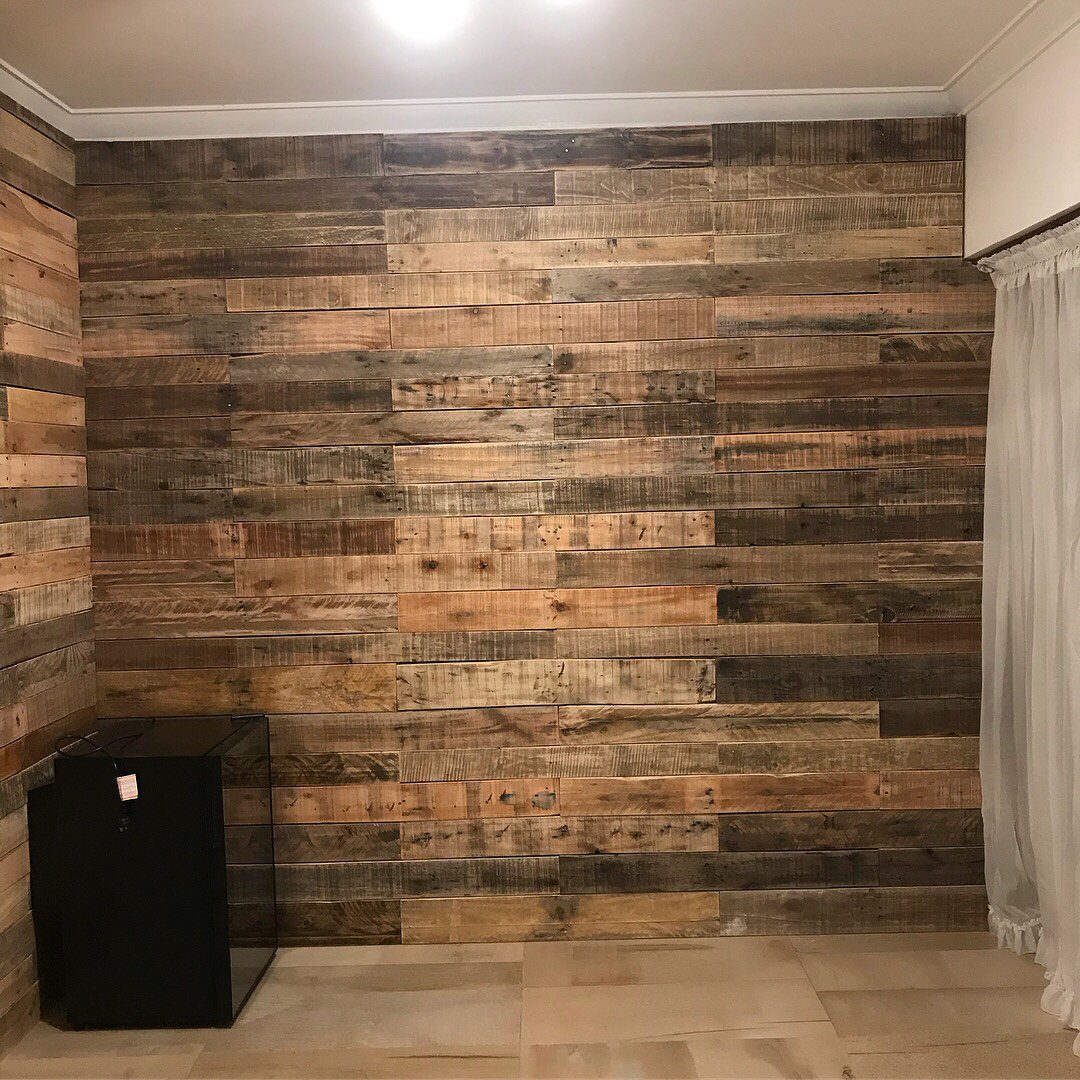
A pallet wall costs almost nothing except time and a willingness to pull nails.
Stacking the boards horizontally keeps the job simpler than vertical, since level matters less than straight. You will need a pry bar, a hammer, and a few hours of sorting for the best faces forward.
Some pallets are treated with chemicals; look for the "HT" stamp meaning heat-treated, not methyl bromide.
This suits renters least, though a removable version on plywood backing is possible if you have the storage.
3. Wooden Shelves with Plants
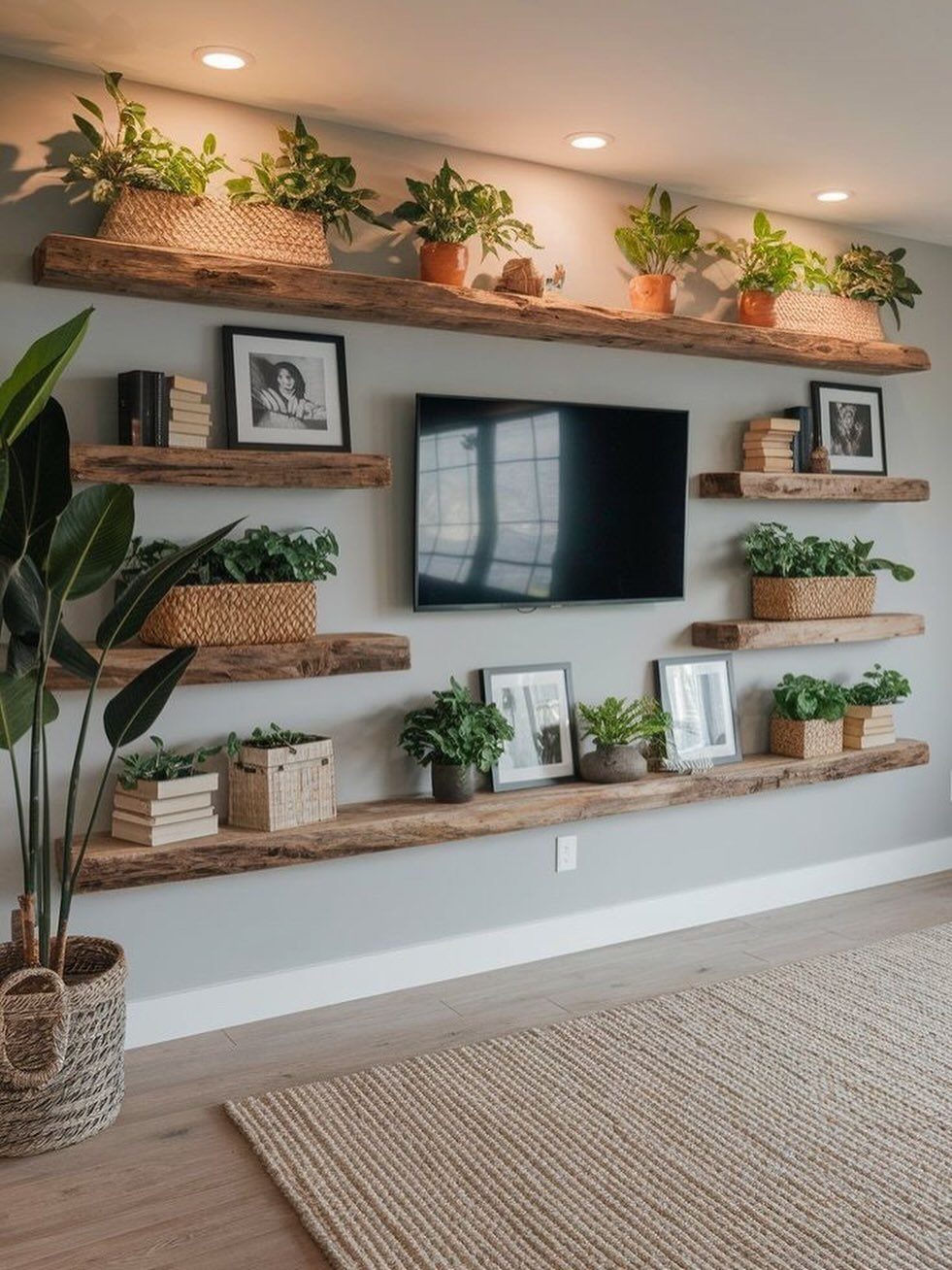
Floating shelves around a television solve two problems: the black rectangle that dominates most walls, and the clutter that accumulates below it. Live-edge wood reads warmer than standard lumber, and green plants soften the whole arrangement.
What makes this work for a weekend is buying the shelves ready-made; crafting live-edge floating brackets yourself is a separate project. The spacing matters more than the wood species.
I leave room between shelves for medium pots, less for trailing plants that fill the gap with leaves.
Woven baskets hide routers and cables; books and frames fill the rest without needing a scheme.
4. Chevron Pattern Dark Wood Planks
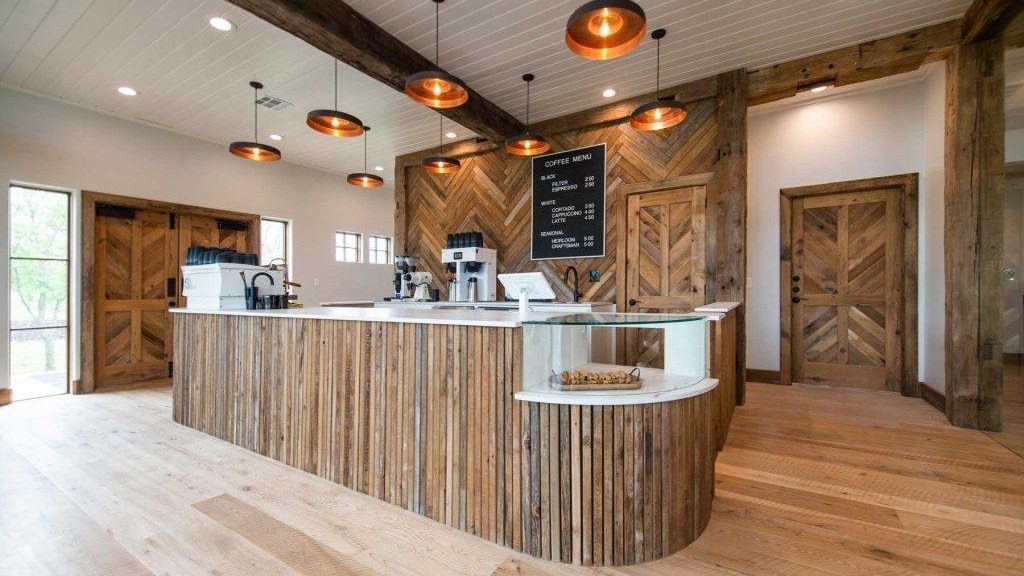
Chevron asks for more cutting than straight planks, but the wall reads designed rather than gathered once the angles line up. Dark wood keeps the pattern from feeling too busy; charcoal undertones let the angles do the work without shouting.
A miter saw is non-negotiable here, and waste runs higher since every joint loses an inch or two to the angle. I would not attempt this with hand tools; the gaps show.
Paint the wall behind the planks a shade darker than your lightest wood, so the backing recedes.
Best for one focal wall where you want the room’s energy to land.
5. Live Edge Wood Slabs
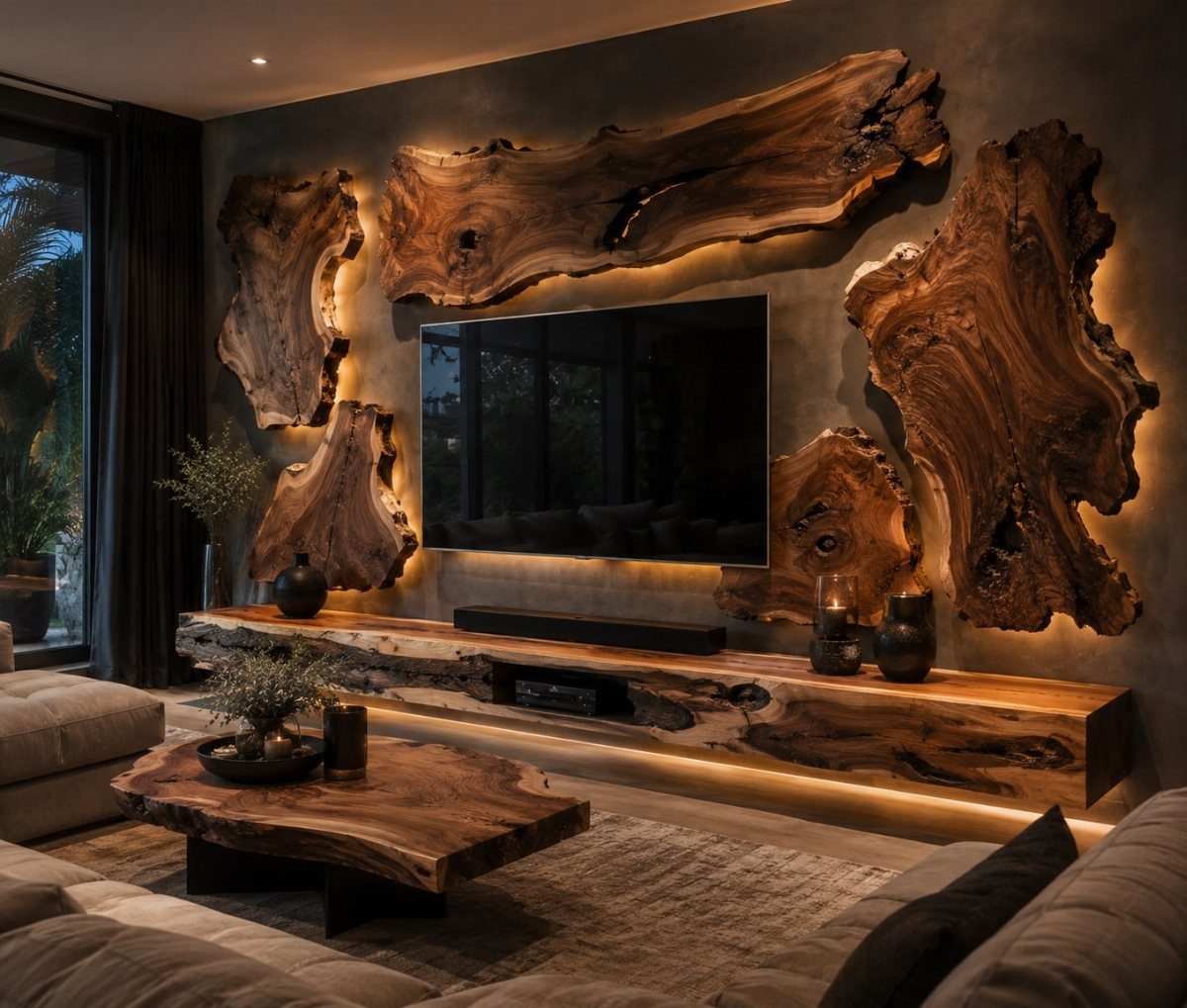
Live edge slabs bring the tree with them: bark lines, grain swerves, and widths that refuse to match.
Backlit installation needs recessing into the wall or building the wall out to accommodate the panels, which moves this from accent to commitment.
For a lighter version, a single slab as a headboard or two flanking a mirror gives the organic shape without the electrical work.
A console table below the TV in a matched set of slabs from the same log keeps the tone consistent if that matters to you.
Budget for more than you measure, since the live edge throws off standard square-foot math.
6. Vertical Wood Slats
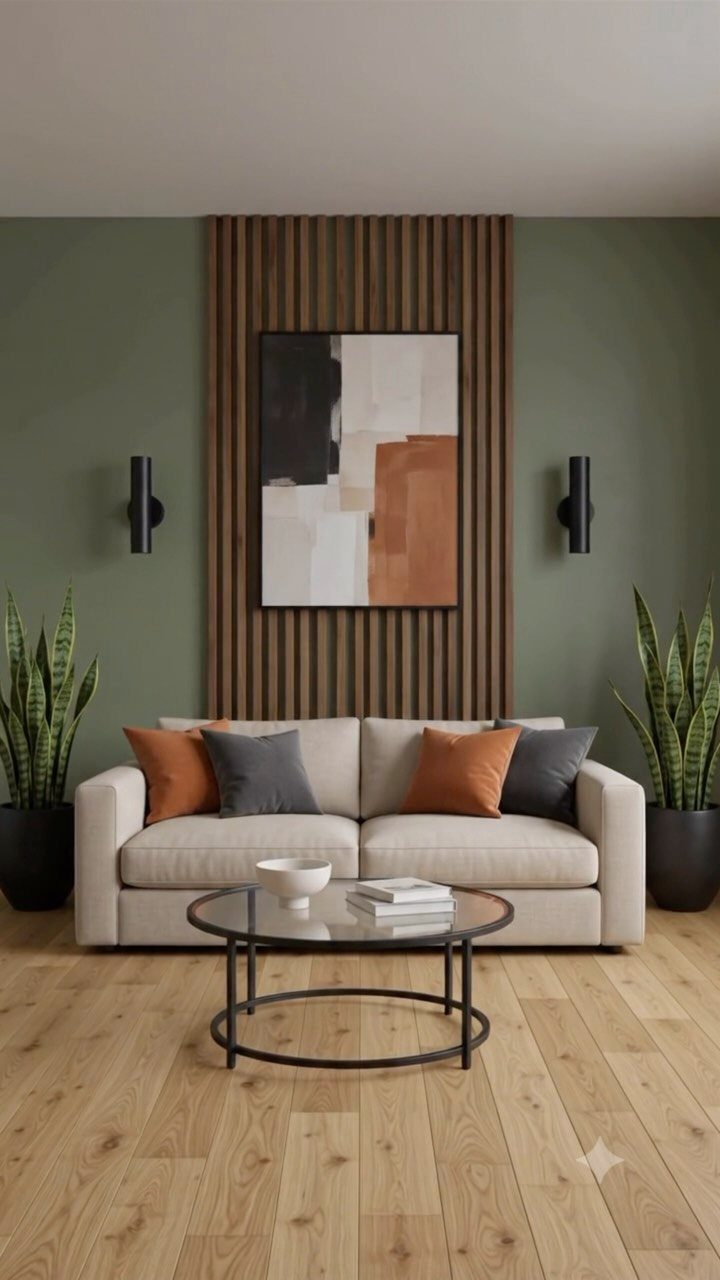
Vertical slats draw the eye up and make low ceilings feel less pressing. An olive wall behind wood slats is a smart pairing; the slats read as texture, not clutter, because the color stays quiet.
Spacing determines the look. Tight slats (half-inch gaps or less) read as screen or partition; wider gaps let the wall breathe and give you room to hang art between the lines.
A level and a story pole speed the install more than a tape measure used fresh each time.
This is the rare rustic idea that suits modern furniture without fighting it.
7. Decorative Wooden Crates
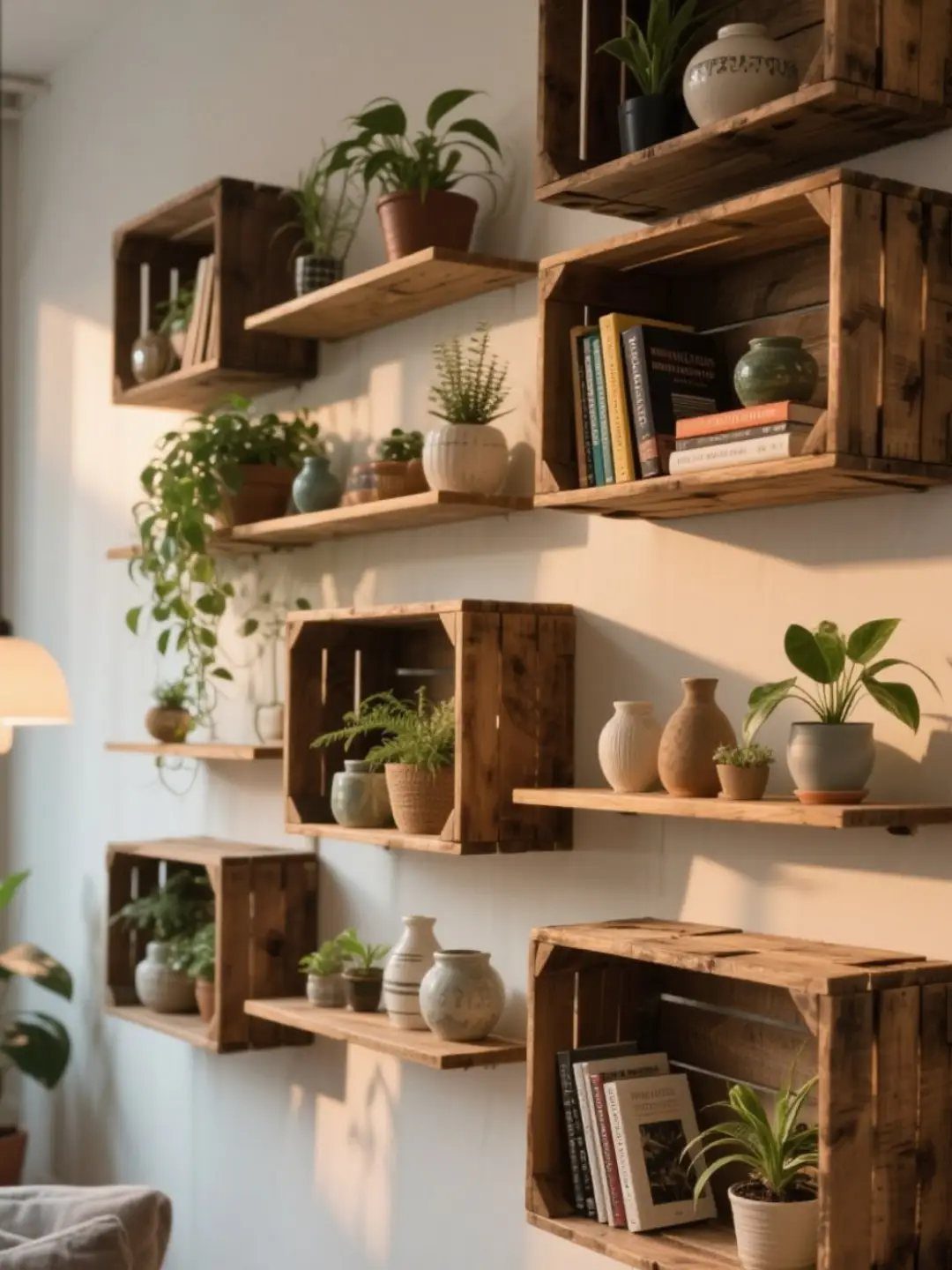
Wooden crates work because they are already built to hold weight and stack together. I found mismatched ones at a flea market, sanded the roughest splinters, and mounted them with screws into studs.
The gaps between crates let wall color show through, which keeps the look lighter than solid shelving.
Stagger heights rather than lining them up flush; it reads more like collected furniture than installed storage. Leave a few empty or fill them entirely with books and trailing pothos.
Either way fills an afternoon without draining the project fund.
8. Rustic Window Frames
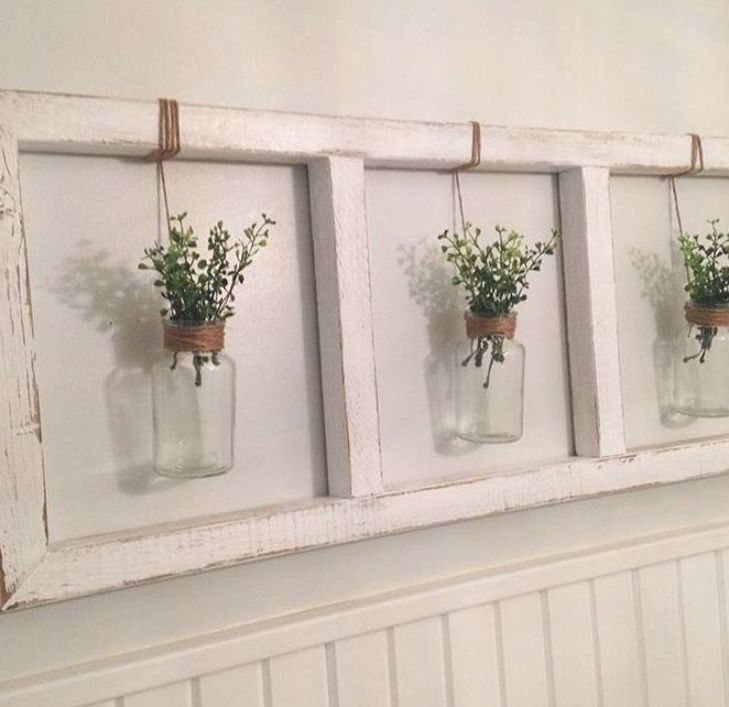
Old window frames without glass still read as windows; with glass intact, they read as mirrors or shadow boxes. Twine and jars across empty panes suit renters who cannot change wall color.
The frame itself becomes the statement, and the greenery is replaceable.
Hunt salvage yards for frames with divided light grids, not single large openings. The more muntins, the more hanging points.
Paint only if the wood is too dark for your space; the original weathering is usually the point. A frame with three sections needs only a couple of hooks to hang.
9. Potted Plants on Rustic Walls
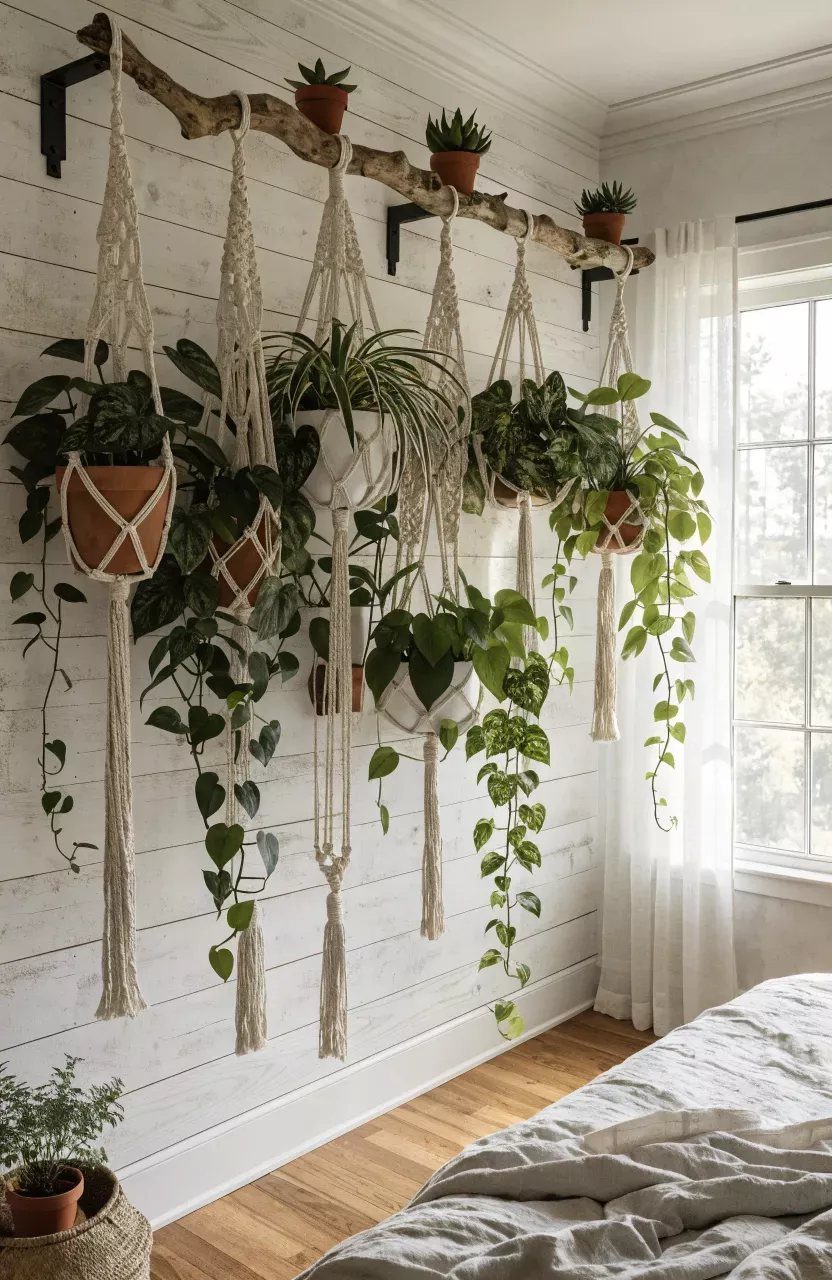
A mounted branch with macrame hangers turns wall space into vertical garden without drilling multiple holes for each pot. The branch is secured with L-brackets into studs at each end.
Store-bought macrame holders add up fast, or you can knot your own from cotton cord in an hour.
This works best where you already have light: a window-adjacent bedroom wall, not a dark hallway. The plants need rotating every few weeks or they lean.
I tried this with a birch branch that was too thin; it flexed under wet soil weight. Go with oak or maple, thick enough to hold weight without bowing.
10. Rustic Family Name Sign
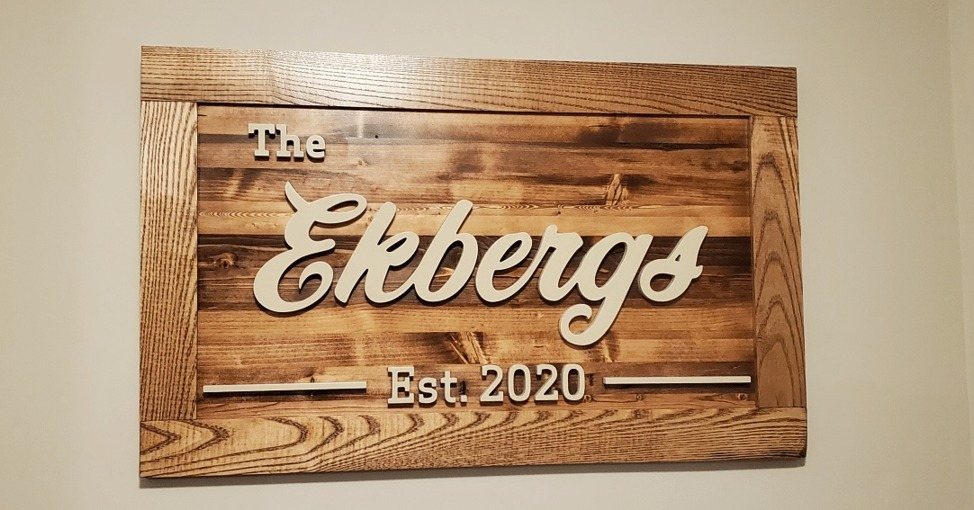
Stain the planks first, then paint the lettering with a small brush and steady hand, or order vinyl from a local sign shop if your script is shaky.
"Est." plus a year grounds the piece in actual history, even if the wood came from a pallet last month.
A mid-size version costs little in materials if you build the frame yourself. That size fills the blank wall above a sofa without competing with it.
Dark stain with cream lettering suits warm rooms; reverse it for walls that already have a lot of brown.
11. Textured Stone Wall
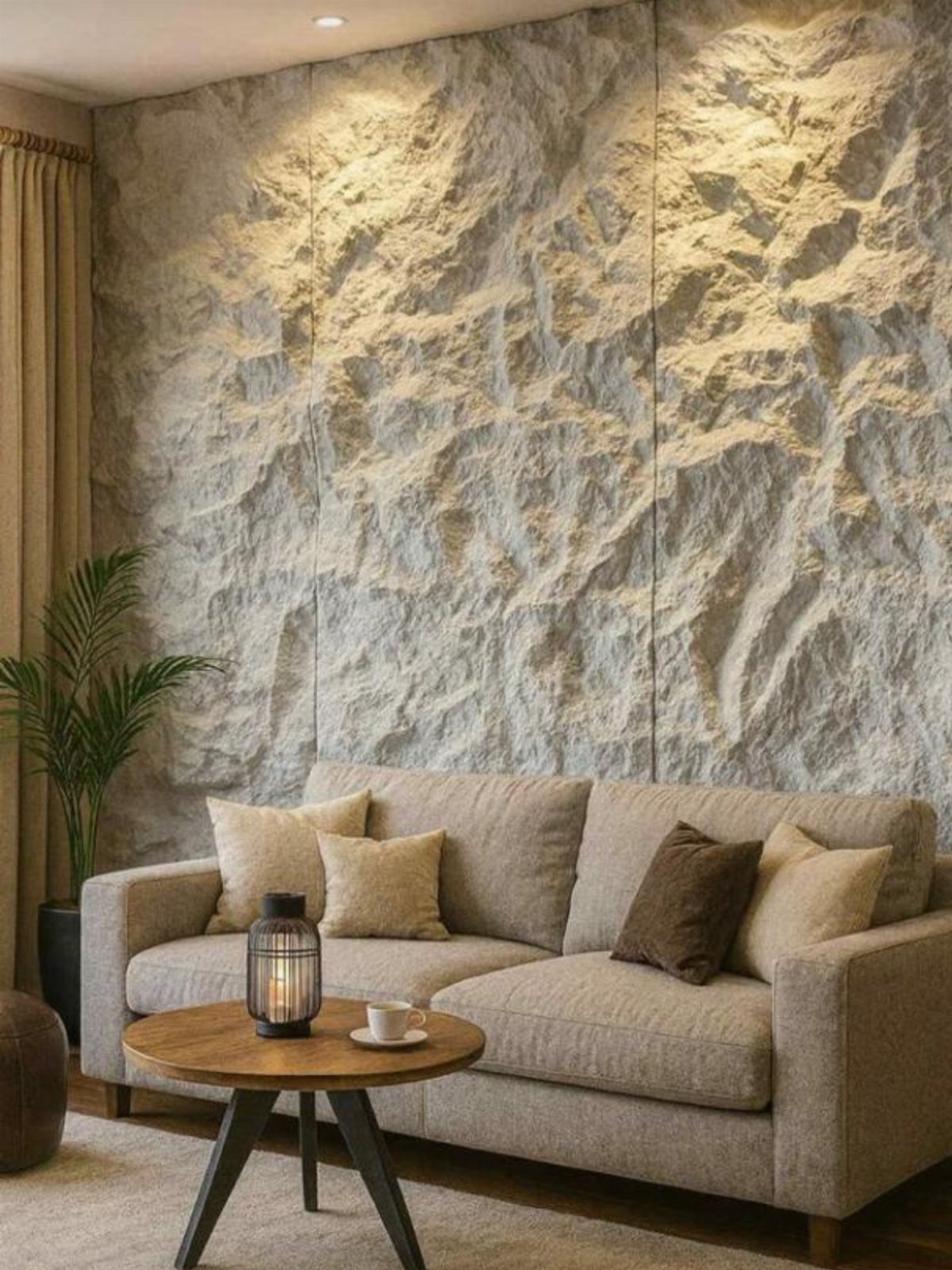
Real stone masonry pushes most weekend budgets toward veneer panels that screw or adhere directly to drywall. Without that lighting, the effect flattens to gray noise.
Weight is the real limit here. A floor-to-ceiling application needs structural confirmation; a single accent panel behind a console table does not.
I would skip this in rentals entirely and choose wood plank alternatives that come down in minutes. Stone suits homeowners who plan to stay and want the thermal mass for temperature stability.
12. Rustic Painted Wood Wall
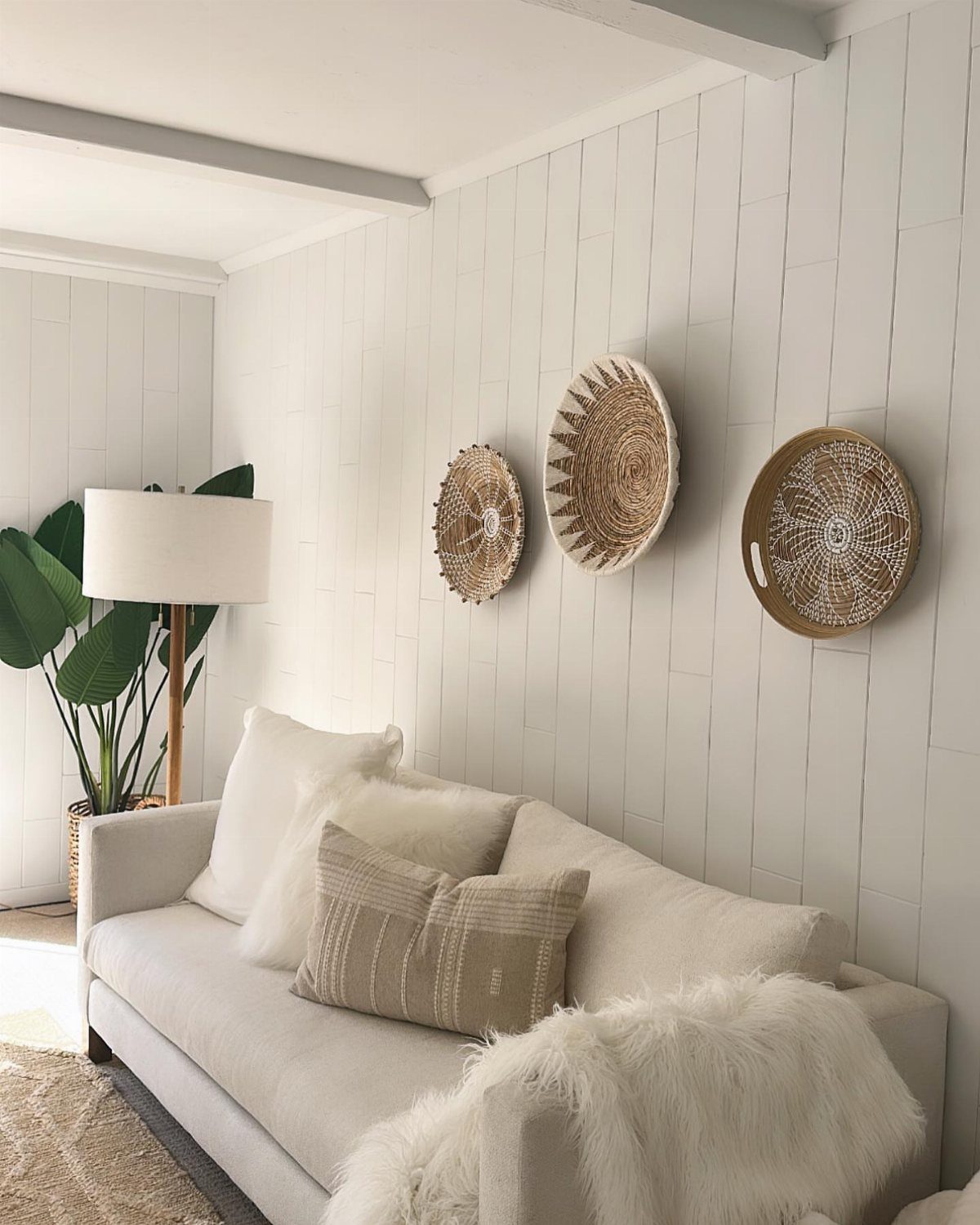
Painted shiplap in white reads as texture, not color, which lets woven baskets or dark furniture become the focal point.
Distressing after painting, with a light sanding at edges and knots, keeps it from looking like a new bathroom. Horizontal installation is faster but more expected; vertical draws the eye up in rooms with standard ceilings.
Either direction runs cheap in pine, less if you mill your own from fence boards.
13. Outdoor Rustic Wall Planters
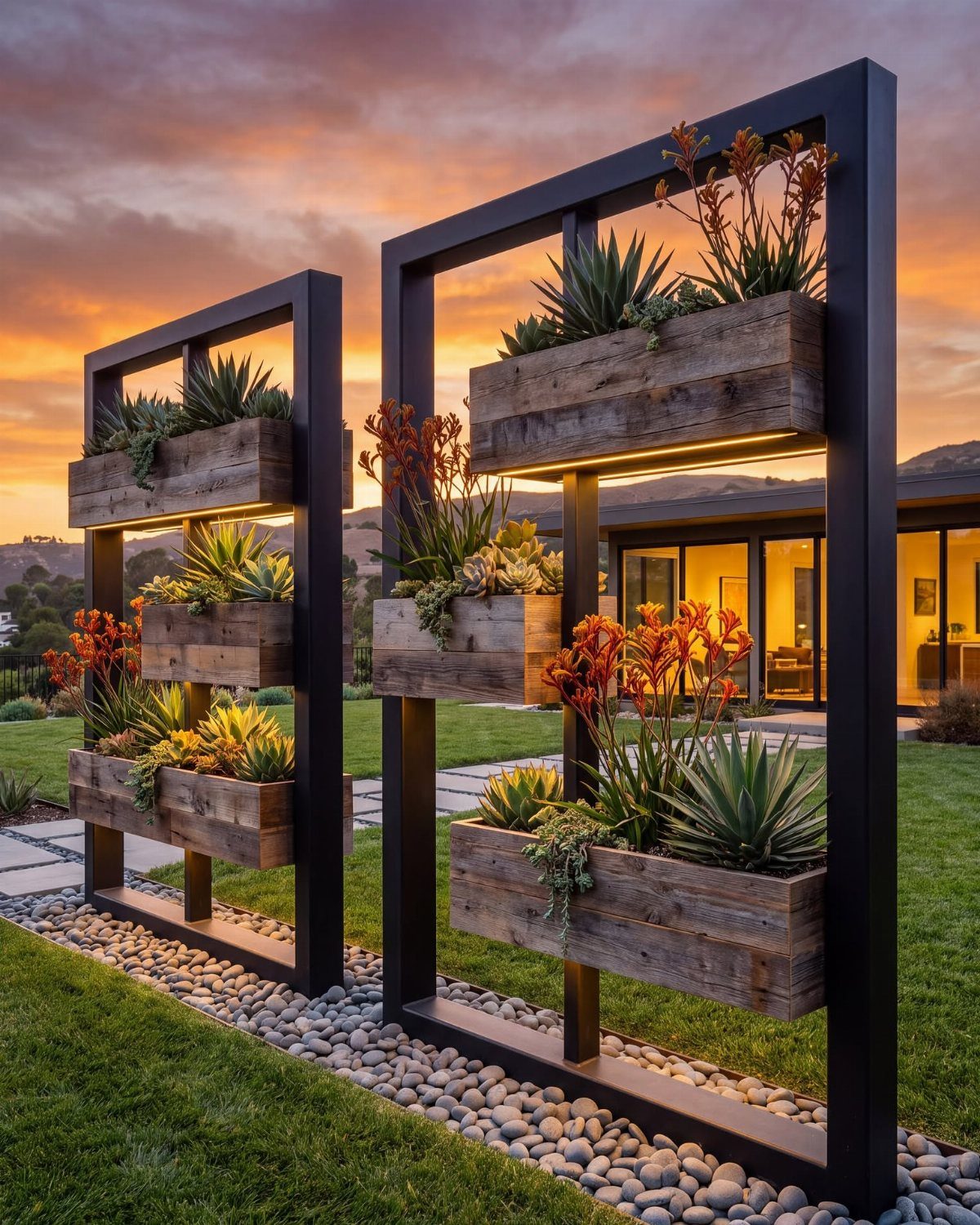
A freestanding frame lets you move your vertical garden where the light is, which matters more than most people realize until their wall-mounted planters fry in July sun or sit in shade so deep the succulents stretch into noodles.
Black metal frames hold weathered wood boxes like outdoor furniture, and the lights underneath turn them into something you notice after dark too.
I would build the frame from 2x2s and exterior-grade plywood boxes, or buy a metal trellis and attach boxes with exterior screws. Cedar or redwood lasts without paint; pine needs a coat of solid deck stain.
Low-voltage LED spots on stakes push into the ground at the base and do the lighting without running up your electric bill.
Drainage holes in every box. That is the whole job that determines whether this lasts 2 years or 10.
14. Rustic Wall Art
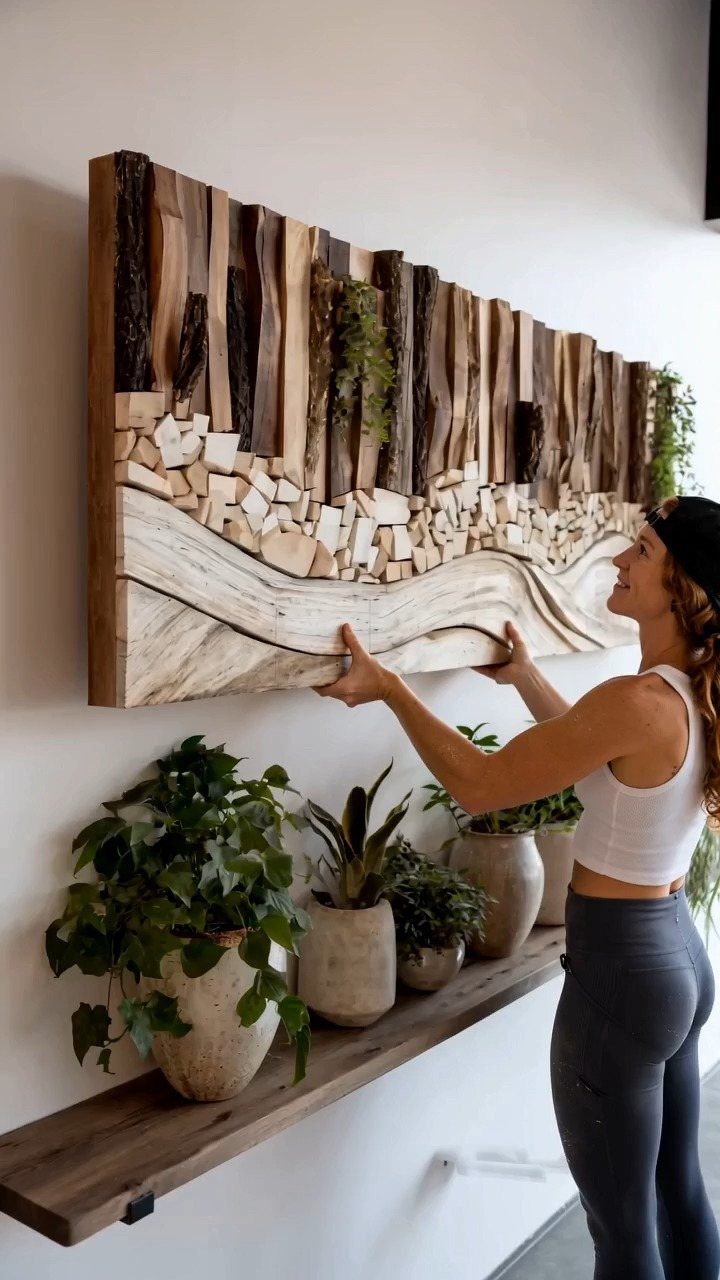
Layered wood builds the surface, some wavy and pale, some straight and dark, which reads as landscape without being a picture of anything.
That is the particular strength of assembled wood art: it carries the texture of the material itself rather than pretending to be something else.
Reclaimed boards work, or new pine ripped to varied widths and beaten up with a hammer, a wire brush, and diluted stain layered until the color goes uneven.
A blank panel backs the whole thing; I would start with plywood, build the surface in strips, and keep it light enough that standard picture wire holds.
It suits a white wall best, where the shadows read. A busy wallpaper or competing gallery wall kills it.
DIY Rustic Wall Projects
A rough cut lumber headboard wall turns a Saturday into something you sleep against for years. The boards need not match; in fact, the variation is what keeps it from looking like paneling from a hardware store aisle.
For renters, vertical pallet gardens keep the wall untouched. Lean the pallet against siding or fence rail instead of mounting it, and the whole thing moves when the lease ends.
Terracotta pots dry out fast in summer sun; dark plastic holds moisture longer if you forget to water for a day.
Either project stays cheap if you source wood free. The time is in the sanding, not the buying.
Materials for Rustic Walls
Reclaimed wood, barnwood, and pallets share one trait: they have already done hard work, and the marks show. Flooring offcuts from a local mill carry the same stories as demolition salvage, often at half the hunt.
Barnwood varies more than most people expect. Some boards spent decades under a leaking roof and crumble at the nail; others dried hard as stone.
Tap with a hammer before loading into your truck. Gray surface color is not rot, but soft spots are.
The "MB" stamp means methyl bromide, and that wood belongs nowhere near a bedroom or kitchen wall.
Color Schemes for Rustic Walls
Natural brown and weathered grey read as the same family because both come from sun and rain doing their work.
Pairing them with white painted walls is not contrast for its own sake; the white lets the eye rest between textures.
In rooms with little natural light, too much grey goes flat. A single wall of warm brown against white keeps the space from feeling like a basement.
Earth colors need not mean beige. Olive behind vertical slats reads as green in daylight and near-black after dark, which is texture behaving like color.
Incorporating Plants
Trailing pothos turns a wooden wall into something alive without the commitment of mounted soil. The vines fill gaps between slats or crates within a season, and cutting them back is easier than repotting.
Macrame hangers on a birch branch failed for me; the wood bowed under wet weight. Cotton cord from a craft store costs little for enough to knot a few holders in an evening.
Outdoor planters need more than drainage; they need placement where light actually reaches. A wall that looks pretty at 10 a.m. may sit in deep shade by 2 p.m., and succulents stretch into pale noodles searching for sun.
Moveable frames solve this before it becomes a problem.
Frequently Asked Questions
What is the new trend for walls?
Reclaimed wood and natural materials are the direction things are heading, with horizontal planks, live-edge slabs, and vertical slats showing up in more rooms than just cabins now.
Salvaged boards in mixed browns and greys beat uniform paneling for visual weight, and demolition sales or a friendly mill offcut pile keep the cost under control.
Even renters can get in on it with removable pallet walls on plywood backing or twine-and-jar arrangements inside old window frames.
What is a good rustic color paint for walls?
Olive reads smart behind wood slats because it stays quiet and lets the texture do the work.
Charcoal undertones behind dark wood chevron patterns help the angles land without shouting, and cream lettering on dark stain keeps family name signs from competing with a brown-heavy room.
What is modern rustic design style?
It is the pairing of rustic materials with cleaner lines than the style used to demand. Vertical wood slats pair with modern furniture instead of competing; against a solid wall they register as texture, not noise.
Live-edge wood slabs around a television or floating shelves with trailing plants bring the organic shape without the full log-cabin commitment. One rustic piece gets the floor if everything else quiets down.
What wall decor is in for 2026?
Natural materials and built-up wood pieces are still moving, with wavy pale strips layered against straight dark ones suggesting land and sky without depicting anything.
Reclaimed boards or new pine distressed with a hammer and wire brush, then stained patchy, let the surface be itself rather than imitating something grander.
Backlighting on live-edge slabs and low-voltage LEDs on outdoor planters are pushing the look into evening hours too.