

I’ve carpet cleaned every mattress type under the sun: my own sagging innerspring from college, a sponge-like memory foam that turned into a total drama queen, and my sister’s hybrid that demanded kid-glove treatment. You can use a carpet cleaner on a mattress, but only if you match the machine to the material like you’re pairing wine with dinner, because getting it wrong means you’re cultivating mold rather than cleaning.
Innersprings handle water-based cleaning well thanks to their open coils. Memory foam, however, absorbs moisture like a thirsty sponge and retains it for days, so spot-cleaning only with barely-damp cloths is necessary. Hybrids split the difference. The coils help, but those dense foam layers are sneaky moisture traps that need extended drying time with fans running at full capacity.
Always strip the bed and vacuum every seam with your upholstery attachment. Test a hidden patch first because nobody wants a surprise crater where they sleep. The essential approach involves minimal water, gentle suction, and patience before putting sheets back on. Use these machine settings and techniques to avoid ruining your mattress.
Can You Carpet Clean a Mattress? It Depends on the Type
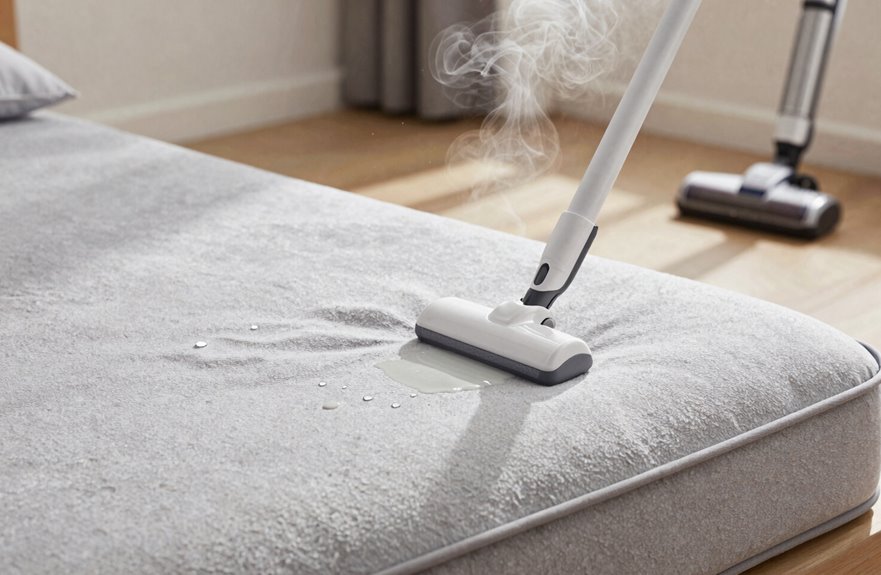
So, how exactly do you figure out if your mattress can handle a carpet cleaner? It really comes down to your mattress type, and I’ve made the soggy mistake before. Traditional innersprings are your best option here. Lower density means better airflow, faster drying, and way less worry. But memory foam? That dense sponge-like structure holds water like a grudge, and slow drying equals serious mold risk nobody wants sleeping next to them.
Don’t panic though. I’ve saved plush tops with a carpet cleaner by being smart about it: minimal water, serious ventilation, fans blasting like it’s a music video. Always run a test patch first. That hidden corner reveal tells you everything about how your specific foam reacts before you commit the whole bed.
Which Carpet Cleaners Work Best for Each Mattress Type
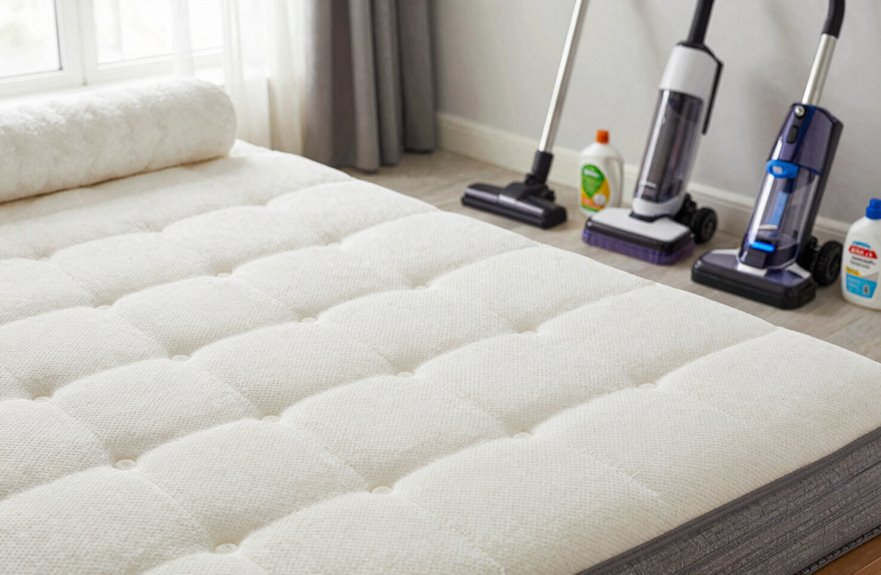
I learned the hard way that my memory foam mattress turned into a soggy sponge when I hit it with a regular carpet cleaner, so now I’m careful about matching the machine to the material. For my old innerspring, that compact Little Green Machine worked well. It has no harsh brushes, just gentle suction that didn’t leave me sleeping on the couch for three days while it dried. Hybrids are the wild card I’ve been considering lately, part coils and part foam, so I’m still determining if they need that careful steam approach or if controlled water-based cleaning will suffice.
Memory Foam Considerations
Because memory foam is basically a sponge with trust issues, your average carpet cleaner can turn your beloved mattress into a soggy, misshapen regret, like a lumpy pancake instead of a cloud-like dreamscape.
I’ve switched to damp-cleaning only, treating spots with gentle cleaners and minimal moisture. No steam, no soaking, no “quick fix” machines promising miracles. Spot-clean the cover, never the foam core itself; that’s sacred territory. Afterward, air-dry thoroughly with fans blazing and windows cracked to prevent mold growth. Harsh brushes will damage the foam permanently.
Memory foam requires patience rather than aggressive cleaning methods. Proper care prevents the permanent damage that results from improper washing techniques.
Innerspring Compatibility Factors
Where exactly do carpet cleaners and innerspring mattresses shake hands without creating a disaster zone? Your classic innerspring is actually the friendliest bed buddy for water-based cleaning, since those open coils let air move through freely.
However, moisture control is everything. Dense foam layers hiding in some innersprings create a total trap. They extend your drying time and increase mold risk.
When cleaning an innerspring mattress, use an upholstery attachment and keep pressure gentle, similar to cleaning delicate antique fabrics. Afterward, crank fans, open windows, and monitor every damp spot carefully. A musty mattress results from inadequate drying and moisture management.
Hybrid Mattress Options
If you’ve ever stood in front of a hybrid mattress with a carpet cleaner in hand, wondering whether you’re about to ruin a $1,500 sleep investment, you know the anxiety well. I learned fast that these mattresses, springs cuddled with foam components, absorb moisture far more readily than ideal.
Here’s my tested approach:
- Stick to low moisture method only; foam soaks up liquid like a sponge
- Skip harsh chemicals; I’ve melted foam before with poor results
- Target spring housing with extra drying time, as mold can develop there
- Wash removable covers separately
Drying requires significant time, but patience protects your mattress investment. I use fans and open windows to accelerate the process. Your hybrid mattress needs this level of care to maintain its performance and longevity.
How to Avoid Over-Wetting Your Mattress
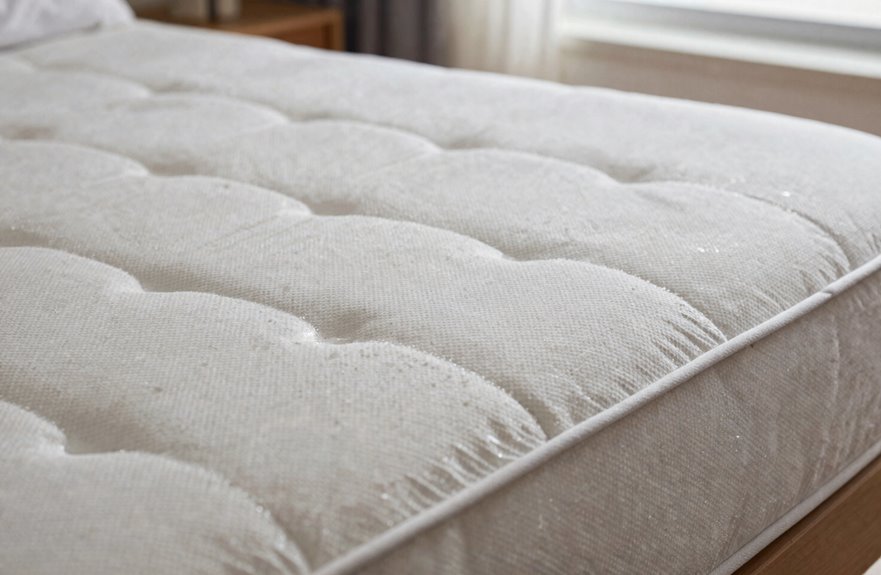
Why does over-wetting a mattress feel like such a rookie mistake until you’ve done it yourself? I learned the hard way that soggy foam becomes a mold factory.
What I do now: I grab my carpet cleaner with minimal water, think dew rather than downpour. I tackle small sections, maybe two-foot patches, never the whole surface at once. I attach the upholstery tool, those bristled attachments that glide in long, even strokes. Watching the grime lift without drowning the fabric takes patience and attention to detail.
Memory foam requires extra care. Spot cleaning only, because that material absorbs water like a sponge and retains moisture for extended periods.
Afterward, I crank air ventilation with fans blasting, windows wide, and sunlight streaming if possible. I add a dehumidifier for good measure. The drying time cannot be skipped. I flip nothing until each side has fully dried.
How to Prep Your Mattress Before Cleaning
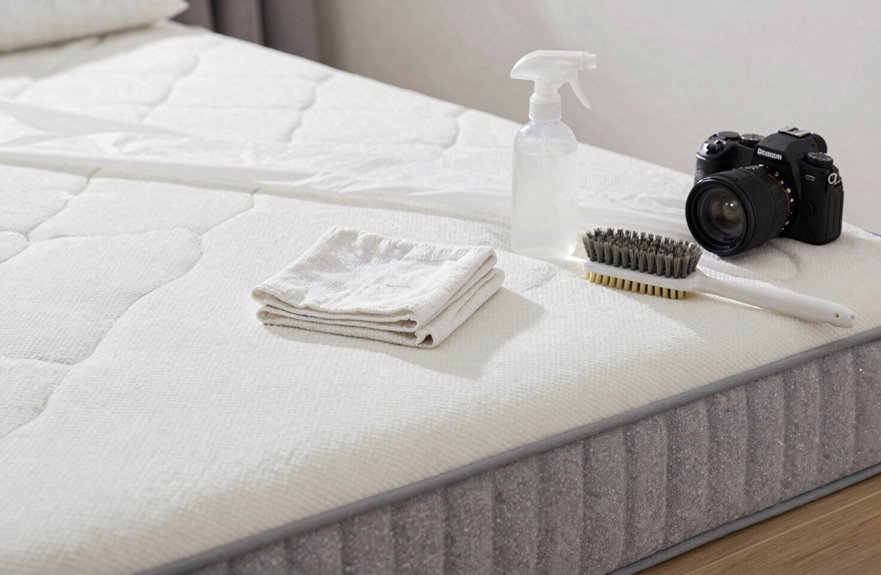
I’m stripping the bed and grabbing every topper and pillow. Baking soda dusted over yesterday’s coffee stains just creates a beige paste. Then I’m revving up the vacuum with that skinny upholstery attachment, hunting down the dust colonies hiding in seams, tufts, and shadowy mattress corners where my phone charger usually falls. When you spot a mystery blotch from the cat, the kid, or last Tuesday’s wine, dab it with your test-patch solution gently as a fingerprint. Rubbing makes that stain permanent furniture.
Strip All Bedding
The absolute first thing? I remove bedding, every single layer: sheets, blankets, pillows, toppers, the works. We’re building our cozy sanctuary here, and that starts with a completely bare mattress. I toss it all in the wash separately, because yesterday’s sweat shouldn’t mix with today’s cleaning.
What matters most for us nesters:
- Lift that mattress off the frame so I can reach every surface and stop the wood from bleeding stains.
- Check your mattress type first. Memory foam and innerspring need totally different cleaning approaches and drying times.
- Spot those stains early, because stain treatment works better before the deep stuff begins.
- Hunt down moisture like a detective. Moisture control prevents mold growth later.
Now we’re prepped and ready to proceed.
Vacuum Thoroughly
Where do all those mysterious crumbs come from? I’ve found popcorn kernels from movie nights I don’t even remember. That’s why I vacuum my mattress first, always.
I grab my trusty upholstery attachment, that flat, wide nozzle that looks like a tiny paddle, and go to work on every seam, every corner, every sneaky tuft where dust mites hide. Those critters love the edges, so I make multiple passes, slow and deliberate, like I’m painting a masterpiece with suction.
I flip the whole mattress and hit the bottom too, because debris doesn’t discriminate. This step matters significantly. By stripping away loose grime now, I’m cutting down on moisture later. Your future self will appreciate it when spot cleaning becomes easier.
Treat Visible Stains
Once the vacuum’s put away, I stare down at the battlefield: my mattress spotted with evidence of late-night snacking and that time I fell asleep with a pen in my hand (don’t ask). Stain treatment becomes essential, because organic marks need immediate attention. I pre-treat each mark with a mild solution, letting it sit just long enough to work effectively. For stubborn organic stains, such as sweat and blood, I reach for hydrogen peroxide or make a baking soda paste. Blotting is critical. I dab gently, never rub, protecting those precious fibers. Then I blot again with a damp cloth, lifting residue without drowning my mattress. Small sections and steady progress yield results.
- Blot, don’t rub to preserve fabric integrity.
- Work in patches to avoid over-saturating the mattress.
- Embrace the paste with baking soda as an effective budget option.
- Track progress as each lifted stain demonstrates the method’s effectiveness.
Step-by-Step: Using a Carpet Cleaner on Your Mattress
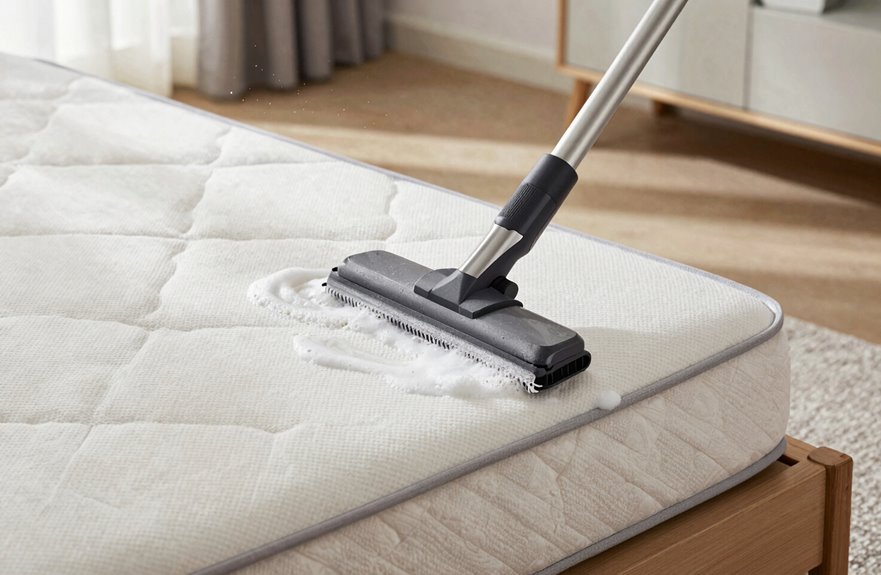
How do I keep my mattress from turning into a swamp while still getting it actually clean? My carpet cleaner can work magic, but only if I respect the process.
First, I strip everything: sheets, protectors, the lot. I vacuum thoroughly with my upholstery attachment to grab dust and crumbs hiding in crevices. Then comes stain pre-treatment. I dab, never rub, visible spots with a mild solution, blotting patiently.
Next, I equip the upholstery attachment to my carpet cleaner and work in small sections, keeping water minimal to avoid over-wetting. Moisture will damage the mattress, so I clean one side, pause for partial drying, then flip.
Finally, I sprinkle baking soda generously, letting it sit 15 or more minutes to eliminate odors and remove lingering dampness.
How Long Your Mattress Takes to Dry
Memory foam holds moisture like a sponge, demanding extra patience and gentle handling.
- Cracking windows creates cross-ventilation that transforms your bedroom into a drying chamber
- Strategic air flow from fans beats passive waiting every single time
- Sunlight works magic, but don’t bake your bed. UV damage isn’t worth the rush
Checking both sides frequently and flipping every few hours prevents mold and mildew growth. Deodorizing freshness means nothing if you’re sleeping on dampness. Your mattress will dry faster and remain hygienic with consistent attention to moisture levels.
What to Do If Your Mattress Smells After Cleaning
Why does that funky, wet-dog-meets-locker-room scent still linger on your mattress after cleaning? The smell of defeat is real.
Start with baking soda. Sprinkle it across the whole surface, let it work for hours, then vacuum. It removes odors and absorbs excess moisture left behind from cleaning.
Airing out the mattress also works. Position it near open windows or outside where sunlight and air circulation can penetrate every layer.
For stubborn odors, mix baking soda with cornflour for more powerful moisture absorption.
When nothing works, professional odor treatment is your next step. They have specialized equipment and tools beyond what’s available at home. This service removes deeply embedded odors and moisture that standard methods cannot reach.
How Often Should You Carpet Clean Your Mattress?
So you’re standing there with your carpet cleaner in one hand, eyeing your mattress, and wondering if you’ve turned into some kind of cleaning fanatic or if this is actually normal.
Based on trial and error, here’s what works for mattress cleaning frequency:
- Every 3–6 months for a solid deep clean, keeping dust and allergens in check
- Monthly mattress cleaning if you’ve got pets, allergies, or live somewhere dusty
- Immediate stain removal when accidents happen; don’t wait
- Proper moisture management, because nobody wants a damp bed
Rotating your mattress every six months alongside your carpet cleaner routine keeps your sleep surface in optimal condition. You’re not crazy. You’re simply maintaining your bed properly like anyone who values clean bedding.
When to Skip the Carpet Cleaner and Call a Pro
I’ve learned the hard way that some battles aren’t worth fighting solo. When you’re staring down a mattress stain that’s soaked through three layers, or your memory foam has turned into a sponge that stays wet for days, or you’re dealing with dust mites in the fabric, that’s when you need professional help. I throw in the towel, acknowledge my limitations, and pick up the phone. Here are the three moments when I’ve called in the pros.
Deep Stains Persist
Sometimes, no matter how many times I drag that carpet cleaner across the same sad, shadowy blotch, it just sits there mocking me, like that one houseplant I keep overwatering out of spite. Deep stains aren’t just surface-level drama; they’ve got roots, real moisture penetration happening where I can’t see.
I’ve learned stain removal has limits. That burgundy wine catastrophe from game night? Or Fluffy’s “surprise” on my memory foam? Over-wetting risks ruining everything. I’ve been there, soggy and dealing with the aftermath. Professional cleaning saves us from ourselves.
Here’s what I’ve figured out:
- Deep stains often mean dye migration, not just dirt
- Memory foam hates excess moisture
- Mold prevention beats mold remediation, always
- Sometimes “significantly improved” is the realistic outcome
Call the pros before making the problem worse.
Excess Moisture Risk
Because I once turned a simple spill into a science experiment gone wrong, stuffing a mattress with excess moisture invites mold growth. Over-wetting transforms your sleep surface into a swampy nightmare.
Memory foam is especially problematic. It absorbs water like a sponge and resists typical drying methods. The extended drying time spans days, not hours, and every minute creates conditions for mold to develop.
If your mattress feels mushy, smells funky, or shows heavy staining on older foam, professional cleaning is necessary. The moisture risk is too significant for DIY attempts. Call a professional to preserve the mattress structure and prevent mold contamination.
Allergies or Asthma
That swampy mattress disaster I created? I’m not letting you repeat it, especially if allergies or asthma already make you feel like an outsider in your own body. I learned dust mites laugh at half-measures, and carpet cleaners don’t sterilize.
Memory foam and latex are moisture sponges. Slow drying invites mold, and suddenly you’re wheezing at 3 AM, feeling like your bed betrayed you. I’ve been there, gasping, wondering why I didn’t call a professional.
What I’ve figured out:
- Dust mites require a comprehensive plan, not just surface cleaning, to actually reduce your symptoms.
- Harsh brushes damage mattress surfaces, worsening allergies and making you feel like your safe space attacked you.
- Professionals control moisture and ensure thorough drying, keeping mold away from your lungs.
- Severe asthma means skipping DIY entirely. Use encasements, ventilation, and experts who understand the condition.
How to Maintain Your Mattress After Carpet Cleaning
Why keep your mattress just clean when you can maintain it properly and extend its lifespan for years? Mattress maintenance is essential, and these practices will help you preserve your investment.
After carpet cleaning your mattress, drying and ventilation are critical. Open windows, use fans, and place your mattress in sunlight when possible. Rotate every six months consistently. Use a mattress protector and wash sheets weekly or biweekly to prevent the buildup of skin cells and debris.
Here’s your maintenance schedule for staying fresh:
| Task | Frequency | Why I Bother |
|---|---|---|
| Deep mattress cleaning | Every 6 months | Sustains that just-cleaned bliss |
| Spot stain removal | As needed | Nips disasters in the bud |
| Odor management | Monthly | Keeps things inviting, not musty |
| Ventilation boost | Post-clean | Prevents the dreaded mold |
Weekly Habits That Extend Time Between Deep Cleans
How often do I actually want to wrestle my mattress through a full deep clean? Never. I’ve learned some tricks that keep my bed fresh without the hassle.
- I vacuum my mattress monthly using just the hose attachment, which takes five minutes and reduces dust mites.
- I rotate every three months to prevent body-shaped indentations.
- My mattress protector is essential. It prevents accidents from soaking into the mattress, reducing the frequency of deep cleaning.
- I spot clean immediately with mild soap and barely damp application, since extended drying time means sleeping elsewhere.
I deep clean every six months, or more frequently with my dog around. Quick odor removal maintains a fresh sleeping environment. Regular maintenance keeps the mattress in usable condition.