I’ve cleaned more polypropylene rugs than I care to count. Vacuum twice weekly with soft brushes, blot spills from the outside in with a clean white cloth, and never scrub. For stains, use cool water and mild dish soap, always testing a hidden corner first. Oil spots need dry cleaning liquid, worked edge to center. Big rugs get the hose treatment outside, then prop them on sawhorses, flip halfway, and dry in shade.
Your rug’s weave, whether flat or shaggy, changes everything, and I’ve learned that through experience. Stick around to see exactly how I saved my favorite shag from a red wine disaster.
Vacuum Your Polypropylene Rug Weekly to Stop Dirt Buildup
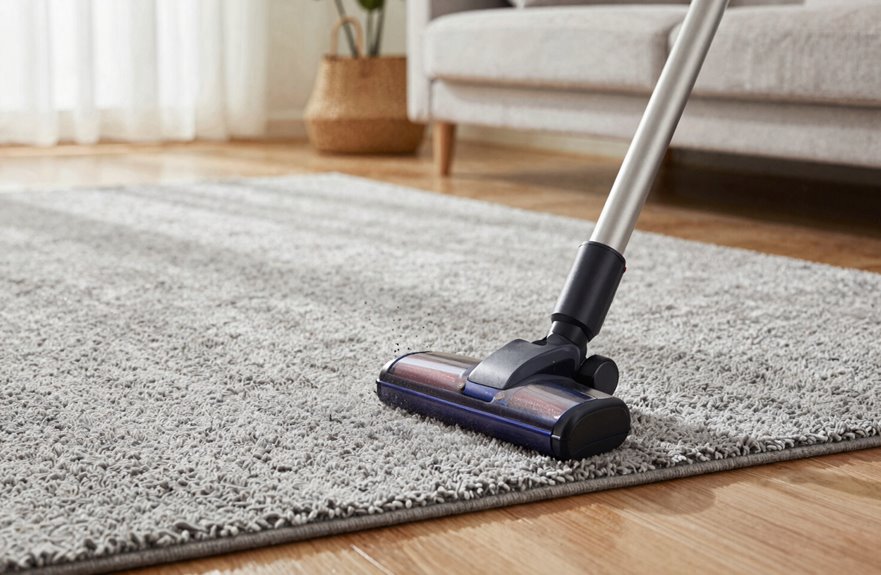
Why do I always notice the grime right before guests arrive? It’s like my polypropylene rug conspires against me, hiding dirt until the doorbell rings.
My polypropylene rug conspires against me, hiding dirt until the doorbell rings.
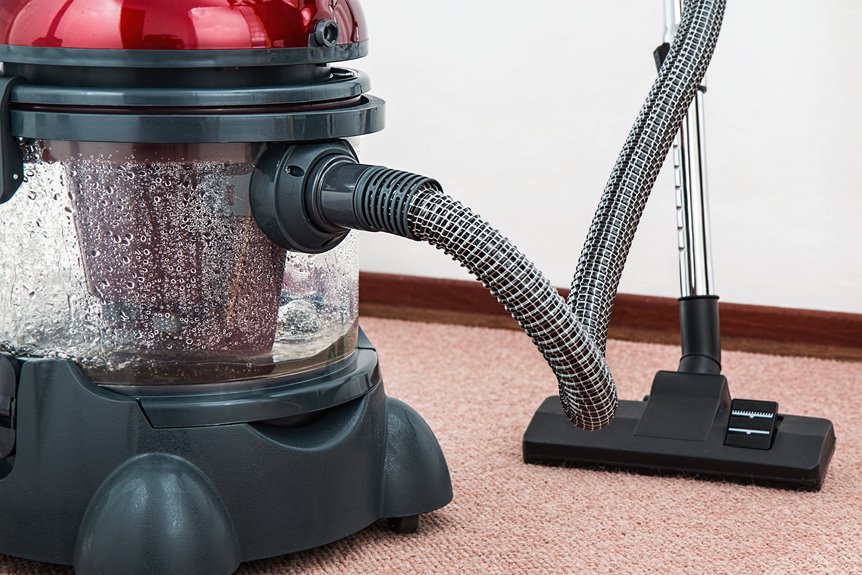
I’ve learned weekly vacuuming saves my sanity and my rug. Dirt buildup isn’t just ugly, it’s abrasive, grinding into fibers like sandpaper on your favorite jeans. My cleaning routine involves vacuuming twice weekly with two dogs and a muddy-yard obsession.
For proper rug maintenance, I use rotating soft brushes, adjusting height for high-pile considerations. Too much suction snags those fluffy sections. Vacuum direction matters significantly: I go with the pile first, then cross-vacuum at 90 degrees, like I’m mowing a tiny, stylish lawn. Pile-oriented vacuuming lifts debris you didn’t know existed.
Fringe protection means switching to hand attachments for those delicate edges. Your rug’s fringe isn’t a vacuum’s chew toy.
Blot Spills Immediately to Prevent Stains From Setting
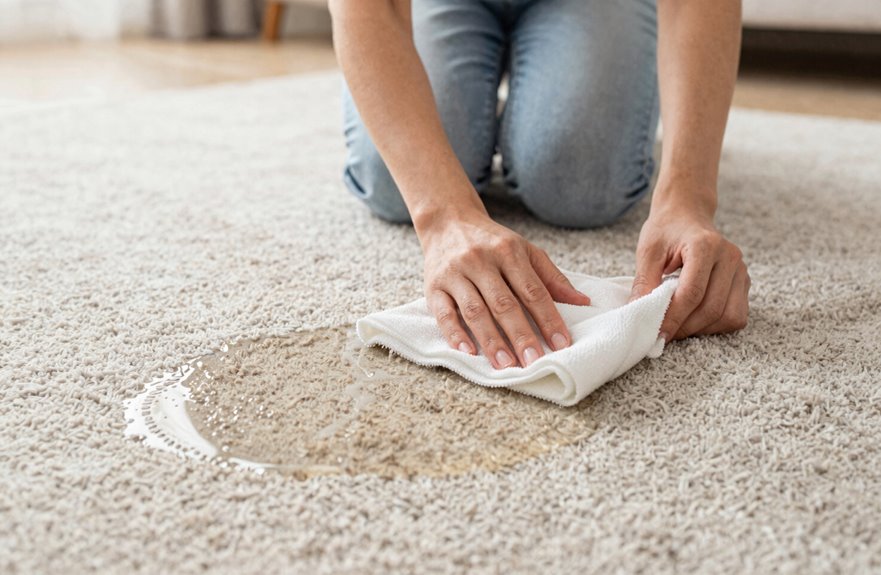
I can’t tell you how many times I’ve watched a splash of red wine hit my polypropylene rug and felt that heart-stopping panic. Speed matters most here. Waiting even five minutes turns a quick fix into a weekend project, so I keep clean white cloths stashed in three rooms now. When I blot, which means press and lift without rubbing (think dabbing lipstick, not scrubbing a skillet), I always work from the outside edge toward the center. This containment method prevents the stain from spreading further into the fibers. My first attempt looked more like modern art than cleaning until I got the hang of it.
Speed Matters Most
Time is the carpet’s enemy, and that glass of red wine knows it. Blot spills immediately without rubbing, or you’ll embed that disaster deep into polypropylene fibers. Grab a clean white cloth and blot from outside inward, pushing that stain toward the center. For stain removal, mix mild dish soap with cool water. Never use hot water, as heat will set that spot permanently. Rinse with plain water to remove all soap residue. Oil-based stains require a dry-cleaning solvent applied with gentle dabs only. Speed prevents permanent damage, preserves carpet appearance, and protects your flooring investment. Fast action and cool heads result in clean carpets.
Blotting Technique Essentials
The second that wine hits your polypropylene carpet, I’m already on my knees with a clean white cloth in hand, because hesitation turns a tiny drip into a permanent stain.
Blotting spills immediately prevents permanent damage to carpet fibers.
Here’s my battle-tested rhythm for carpet care:
| Step | What I Actually Do |
|---|---|
| Grab | Clean cloth or layered paper towels—no rubbing, ever! |
| Blot from outside to center | Press inward, contain that liquid like a pro |
| Treat | Dab with dish soap solution, let it sit a sec |
| Rinse | Dampen with water on fresh cloth, lift the soap out |
| Finish | Dry thoroughly, then air dry completely—fan on, feet up! |
I’ve ruined enough rugs to know that patience during the initial response prevents the need for professional restoration later.
Lift Oil-Based Stains With Dry Cleaning Liquid
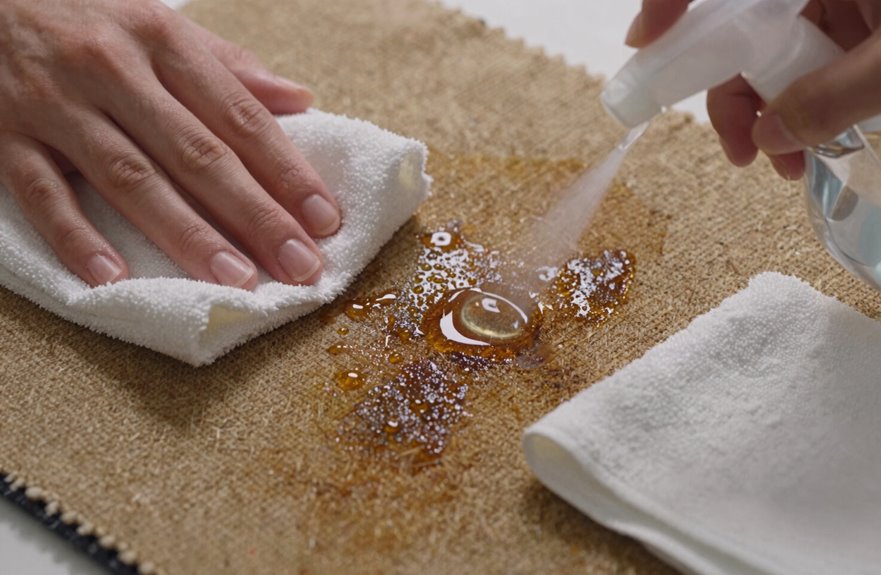
Because polypropylene fibers basically repel water like a toddler refusing broccoli, oil-based stains are the real villains here. They grab on and won’t let go.
Here’s how to tackle these stubborn marks:
- Blot gently with a clean white cloth, lifting as much oil as possible before any stain removal begins. Do not rub.
- Apply dry cleaning liquid sparingly, working from the edges toward the center of the oil-based stains.
- Keep blotting, then rinse with cool water, watching those fibers release their grip.
- Finally, blot to remove moisture completely, letting the rug air dry so residue won’t attract future dirt.
Avoid rubbing, as it pushes oil deeper into the fibers.
Scrub Stubborn Spots With Mild Dish Soap and Water
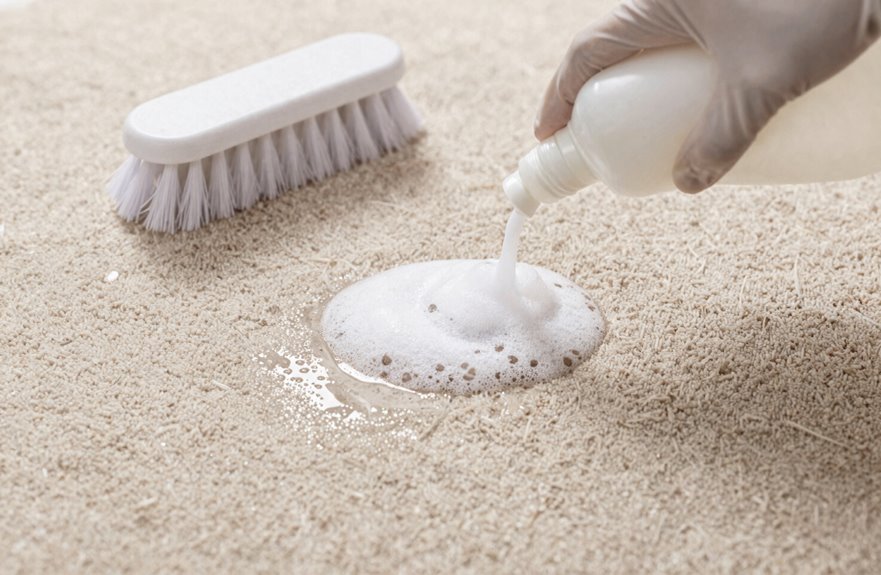
Sometimes, dry cleaning liquid just doesn’t cut it, and I’m standing there staring at a spot that laughs at my previous efforts. So out comes my trusty bottle of mild dish soap, the kind I use on my coffee-stained mugs every morning. I mix this mild detergent with cool water, nothing fancy, just enough to get some bubbles going. Then I’m blotting the stain on my polypropylene rug with a clean cloth, working from the outside in, because I’ve learned the hard way that rubbing just makes everything worse. I dab, I wait, I dab again. Rinse with plain water, more blotting, then I grab a towel and press down like I’m trying to get the last drop of juice from a lemon. Finally, I let it air dry, maybe pointing a fan at it if I’m impatient, which I always am. This cleaning method has removed stains from my rug on numerous occasions.
Wash Your Polypropylene Rug Outdoors With a Hose
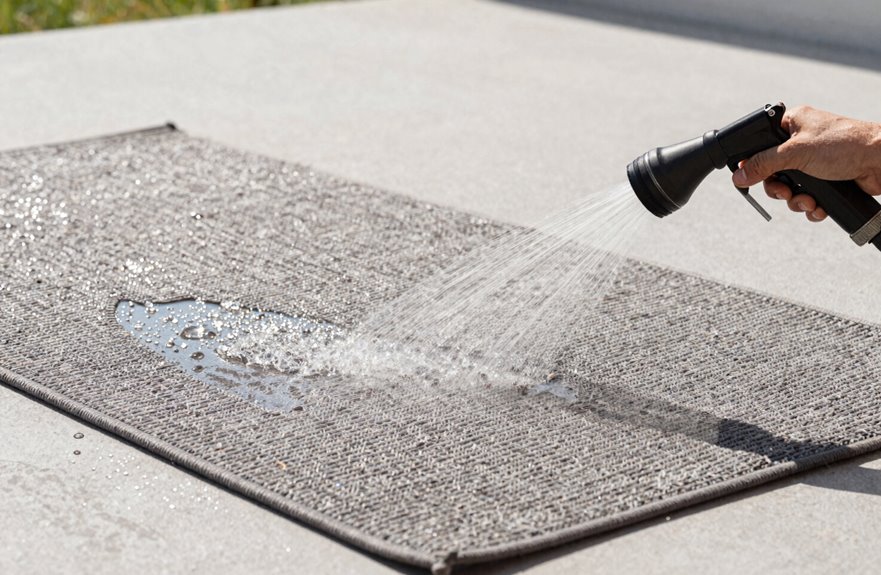
I always check the forecast before hauling my rug outside, because washing it in mild, sunny weather ensures it will actually dry instead of sitting there damp and musty. After I rinse it clean, I prop the backside up on a railing so air circulates underneath without any fancy equipment needed. Skipping proper drying invites that weird, lingering smell nobody wants in their living room.
Ideal Weather Conditions
Why not take the whole rug outside and give it a proper spa day? Check the forecast first, because outdoor washing polypropylene rugs demands perfect conditions: warm, breezy, not blazing.
Here’s what works:
- Pick a sunny-but-not-scorching day for sun exposure that energizes without damaging those fibers.
- Scout a spot with cross-ventilation, maybe near your garage or between trees, so air circulates like a gentle fan.
- Grab mild dish soap, a scrub brush, rinse thoroughly. Then squeegee hard for moisture removal before you elevate the rug on sawhorses or chairs.
- Prop yours at an angle and dry completely on both sides. Soggy bottoms will cause mildew and deterioration.
Humidity damages rugs quickly. Your patio deserves proper drying conditions.
Proper Drying Technique
Once the sun’s right and the breeze is cooperating, I grab my hose and get to work. I thoroughly saturate my polypropylene rug first. Every fiber needs that initial water before the real cleaning begins. I mix up a gentle soap solution, grab my scrub brush, and tackle those mystery stains from last weekend’s BBQ. After some serious scrubbing, I rinse until the water runs clear. Leftover soap acts as a dirt magnet. For drying, I use gentle squeezing only, no wringing. For outdoor drying, I drape it over two railings like a hammock to maximize air circulation. I avoid direct sunlight to prevent fading. I let it dry thoroughly on both sides in a shaded spot.
Air-Dry Completely to Prevent Mold and Fiber Damage
How do you know when a carpet’s truly dry? Guessing leads to musty disasters. For your polypropylene rug, air-dry on an elevated surface such as two sawhorses or draped over parallel railings so air circulates both sides. No heat, ever. I melted my first attempt with a space heater.
No heat, ever. I melted my first attempt with a space heater.
Here’s my moisture removal checklist:
- Position your rug on an elevated surface for complete drying underneath
- Deploy fans and dehumidifiers nearby for serious mold prevention
- Avoid direct sunlight; outdoor drying’s great, but shade prevents fiber damage
- Flip halfway through, because patience now saves your backing later
That slightly stiff feel indicates it’s ready. Proper air-drying prevents mold growth and protects your rug’s fibers and backing from damage.
Prevent Color Fading With Thorough Rinsing and Shade Drying
Where do those sad, washed-out colors come from? I’ve watched my own polypropylene rug lose its spark.
Solution-dyed fibers help, but they’re not invincible. I always do a colorfastness test first: hidden corner, damp cloth, check for dye transfer. This prevents surprises.
I avoid bleach completely, opting for milder cleaning instead. Harsh chemicals kill color. After washing, thorough rinsing is essential. Those rinse residues attract dirt like magnets, dulling everything.
Shade drying matters significantly. Direct sun exposure fades even the bravest patterns. I learned this with my striped runner, now permanently “vintage” on one side.
Skip aggressive dry cleaning methods too. Your rug’s vibrant appearance requires proper protection.
Choose Deep Cleaning by Rug Size, Weave, and Soil Level
Protecting those colors is only half the battle. You still need to actually get the dirt out, and that requires matching your approach to what you’re dealing with.
Polypropylene rug cleaning involves considering three key factors:
- Size check – For huge rugs with heavy soil levels, outdoor washing with a hose and scrub brush is most effective.
- Weave matters – Flatweave rugs tolerate spray-down cleaning, while shag rugs require gentle hand washing to avoid damage.
- Stain removal prep – Always perform a colorfastness test in a hidden corner before treating visible stains.
- Finish strong – Use cool water and mild detergent, then air dry flat. Skipping these steps causes distortion.
Deep cleaning done right means avoiding over-wetting, especially on loop pile construction.