Grey wood floors run from click-lock vinyl you can float over a weekend to herringbone that demands a nailer and a pro’s timeline, and the right one depends on whether you own the space or plan to leave.
Vinyl and laminate keep the look on a tight budget and handle rental rules; engineered wide plank or herringbone asks more money and more commitment.
The post below gets into what width does to a room and why solid wood that broad cups in anything but locked humidity.
1. Light Gray Wood Floors
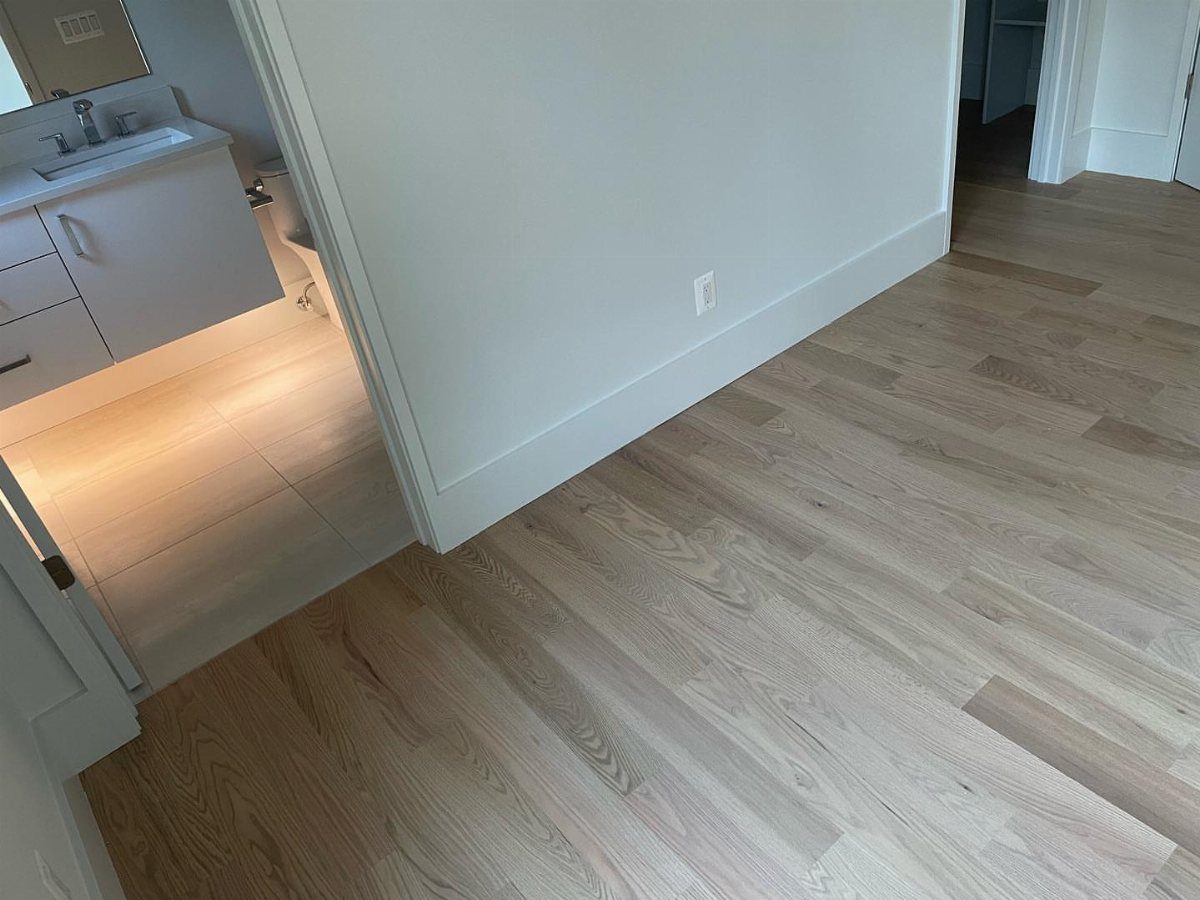
Pale gray planks pull light into a hallway that might otherwise feel boxed in.
I put this tone in the same category as white oak bleached nearly bare: it reads as floor, not as statement, and that restraint buys you freedom with wall color later.
The grain still shows, which matters more than people think. A flat gray without visible wood structure reads as laminate from across the room, and not in a good way.
Check the sample under your actual bulbs, not the store’s. North-facing rooms need this lighter end of the range most; south light can handle something with more depth without turning the space cave-like.
I would not go lighter than the walls. The floor needs to ground the room, even when it is doing double duty as your light source.
2. White Oak Grey Floors
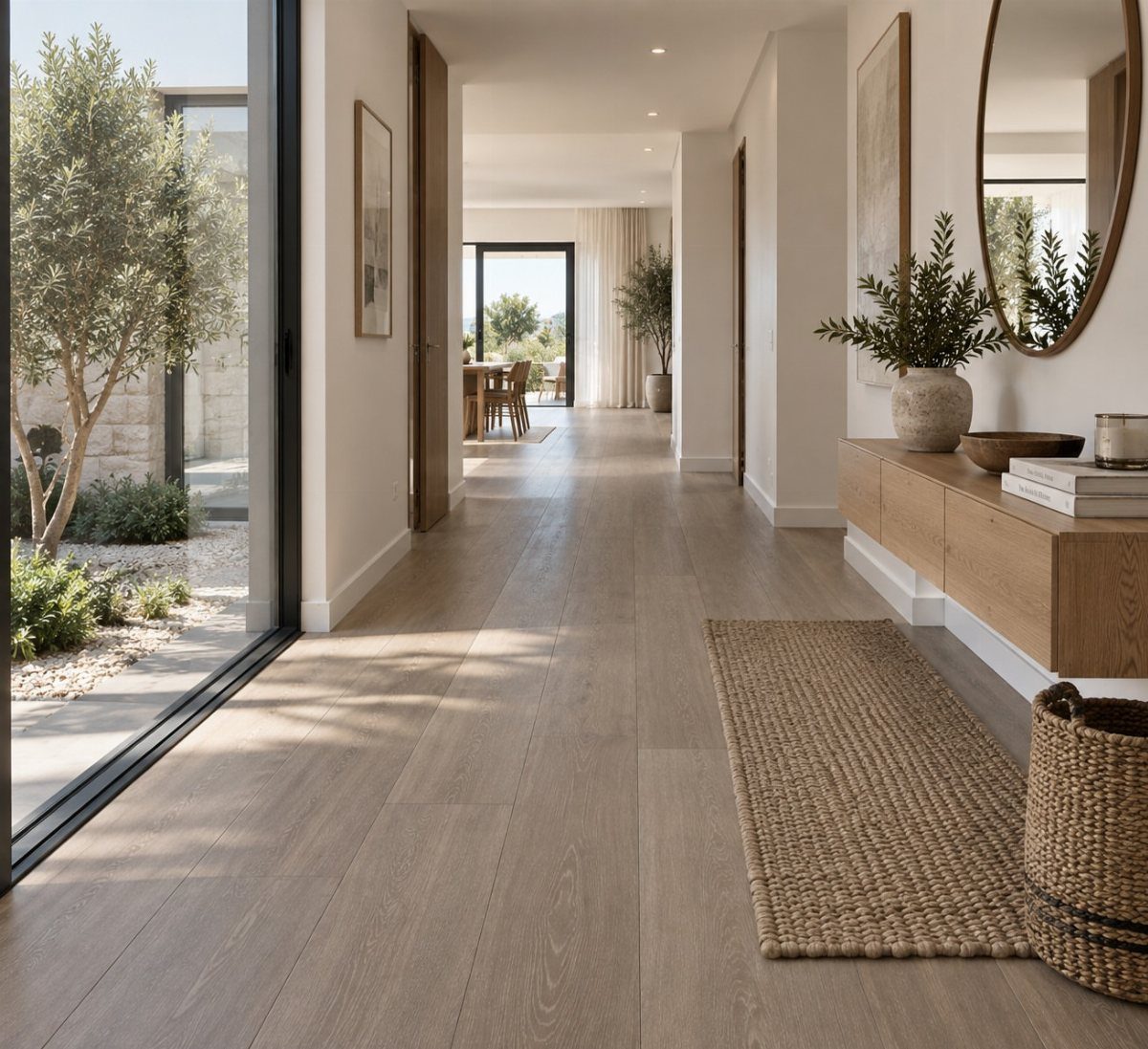
White oak carries a faint blue-gray cast even before staining, so the finish does not fight the wood. It amplifies what is already there, and the grain variation reads as intentional character rather than as noise to cover up.
I would leave this bare in an open plan. Throw rugs break the visual rhythm on a floor whose whole point is that rhythm.
A dining or living area with sight lines across it lets the planks work as the design element they are.
The tone sits between cool and warm, which sounds like compromise but reads as flexibility. It handles both walnut furniture and painted white pieces without clashing, though I would avoid orange-toned wood nearby.
That is the pairing where this floor looks confused, not versatile.
3. Modern Gray Wood Flooring
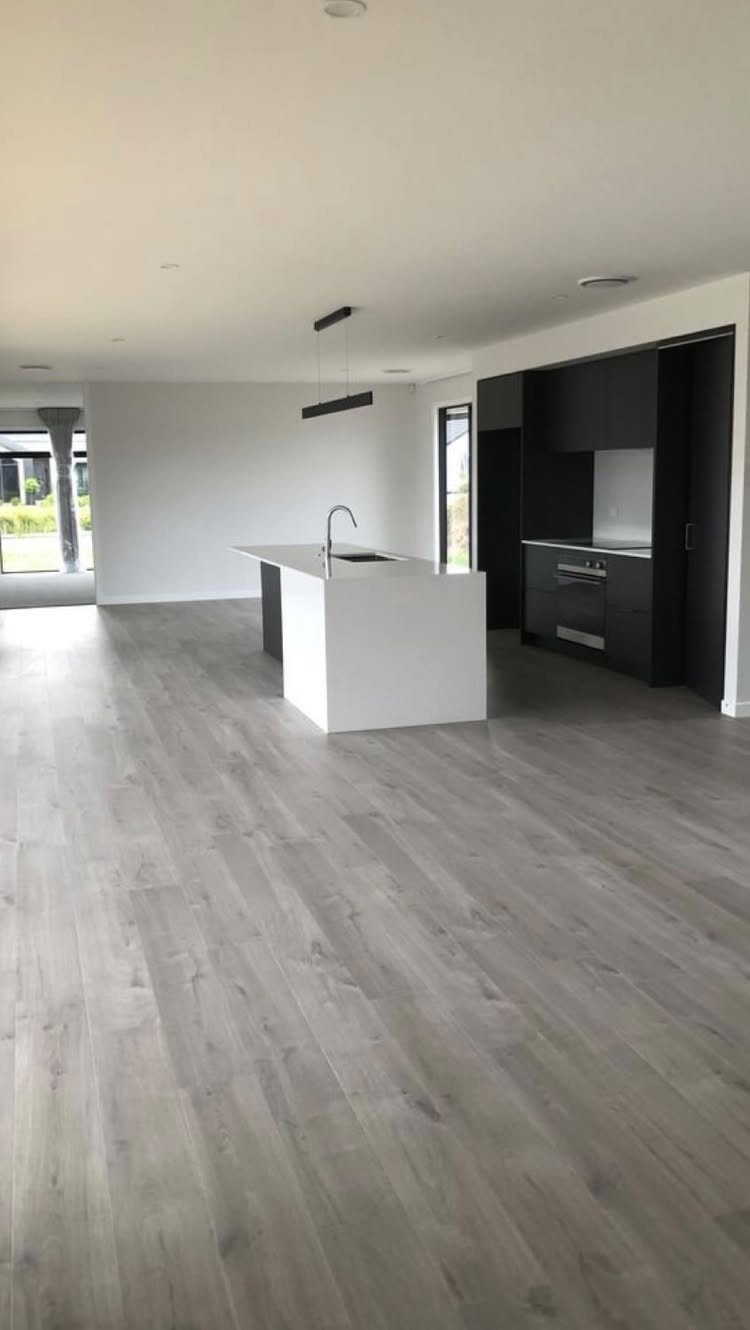
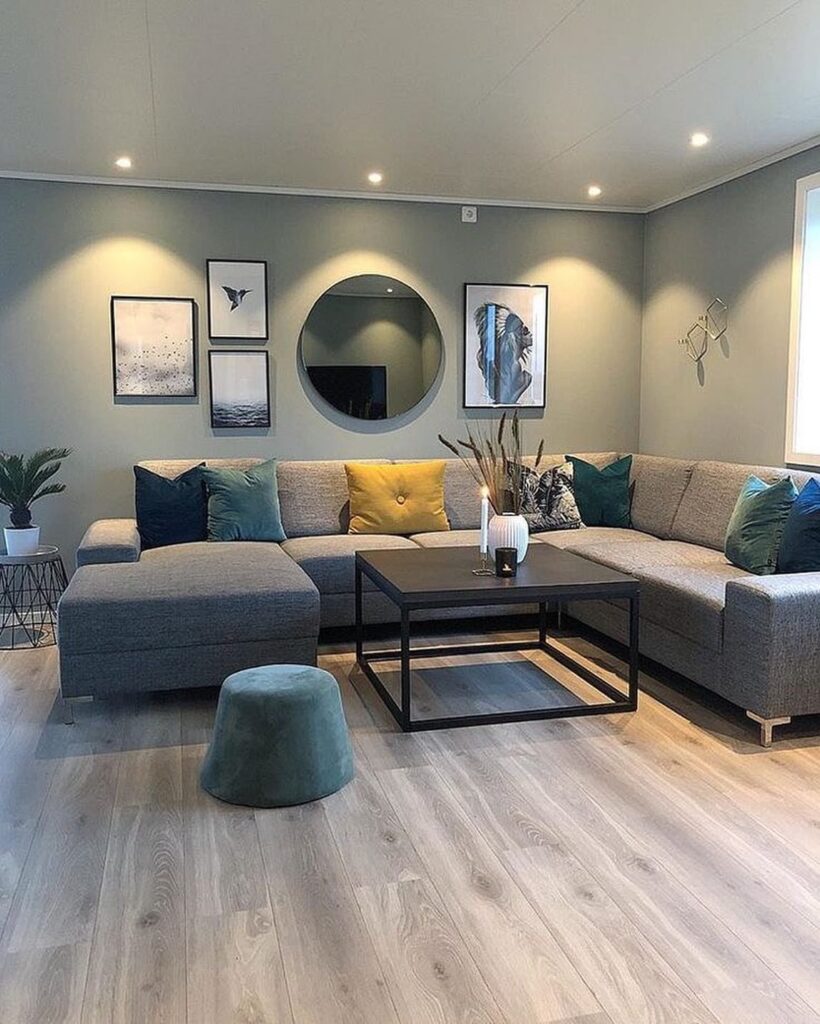
Gray wood-look flooring in an open kitchen-living space reads modern because it refuses to compete. The cabinets, the island, the art you will hang: those get the attention while the floor holds the layout together.
This is the entry point for anyone nervous about gray reading too trendy. The tone is near-neutral, close to weathered natural wood, and that safety zone has lasted longer than the charcoal waves that came and went.
Engineered or vinyl options both carry this look now, so material choice becomes about your traffic and moisture, not about capturing the style.
I would use this as the base for bold furniture or black metal fixtures. The floor’s restraint is what lets those choices land without the room feeling like a showroom.
Gray wood floors are a foundation piece for modern rustic and light-and-airy interiors. Matte and wire-brushed finishes are trending because they add texture without competing with the room’s decor, while wider planks amplify the clean, contemporary feel.
4. Cool-toned Gray Wood Floors
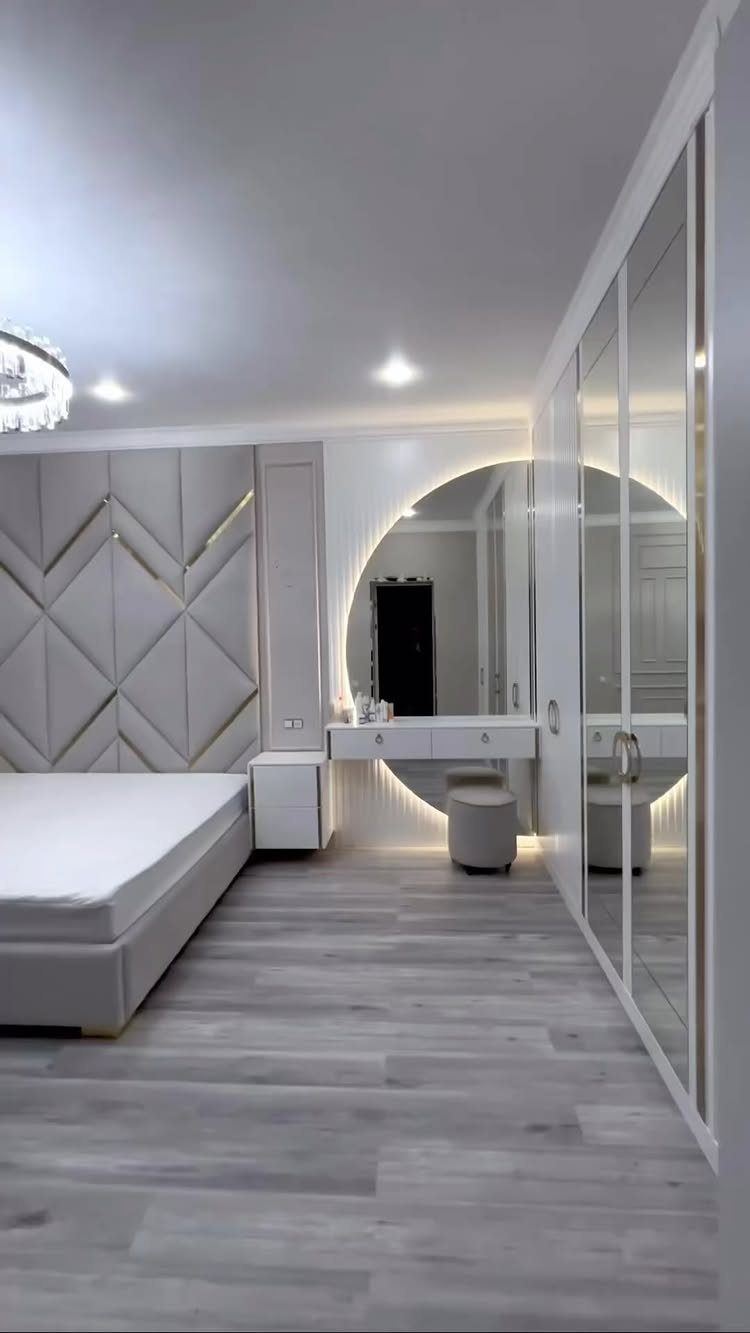
The undertone matters more than the depth.
A cool gray with blue or green beneath it pairs cleanly with white trim and holds its own against stainless steel or glass, which is why it works in bedrooms with mirrored surfaces and minimal hardware.
Warm gray, by contrast, turns muddy near true white walls. I learned that the hard way in a rental where I thought I could cheat the paint match.
Check the sample against your fixed elements: the tub, the countertop, the window vinyl if you are not replacing it. Those do not bend.
For this reader, usually mid-project with a weekend and a tight budget, the test is simple. Hold the sample up where morning light hits it.
If it picks up green, you have a cool tone. If it goes brown, you have warm.
Do not trust the store’s fluorescent tubes; they lie about gray more than about any other color.
5. Gray Vinyl Flooring
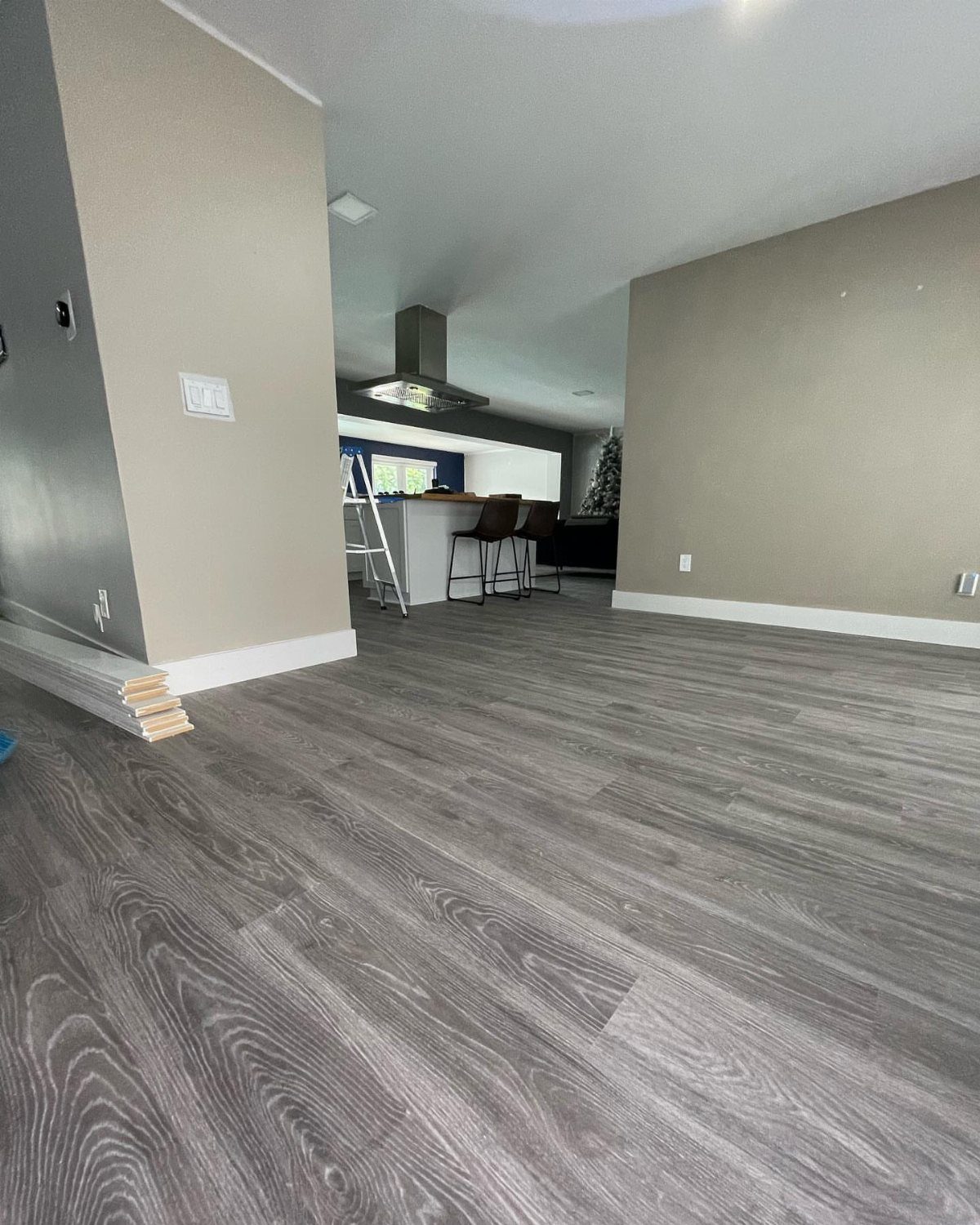
Vinyl plank at gray wood tones gets you the look without the refinishing anxiety.
I have put this in a basement that sees winter boots and summer project mess, and the surface still wipes clean where hardwood would have cupped or stained.
A mid-install space, trim boards waiting against the wall, shows the real pace of the job. That is the real timeline: a weekend for a competent DIYer, not the stretch a nail-down floor demands.
Click-lock systems let you work around furniture instead of emptying the room.
Cost runs lower than engineered wood, sometimes by half, and the wear layer on a decent product handles dog nails and chair drag better than the aluminum oxide finish on budget hardwood.
I would not put it in a forever home’s main living area if resale down the line matters to you. Buyers still check for wood.
For a rental, a basement, or a short-term plan, the trade is easy.
6. Greige Wood Finish
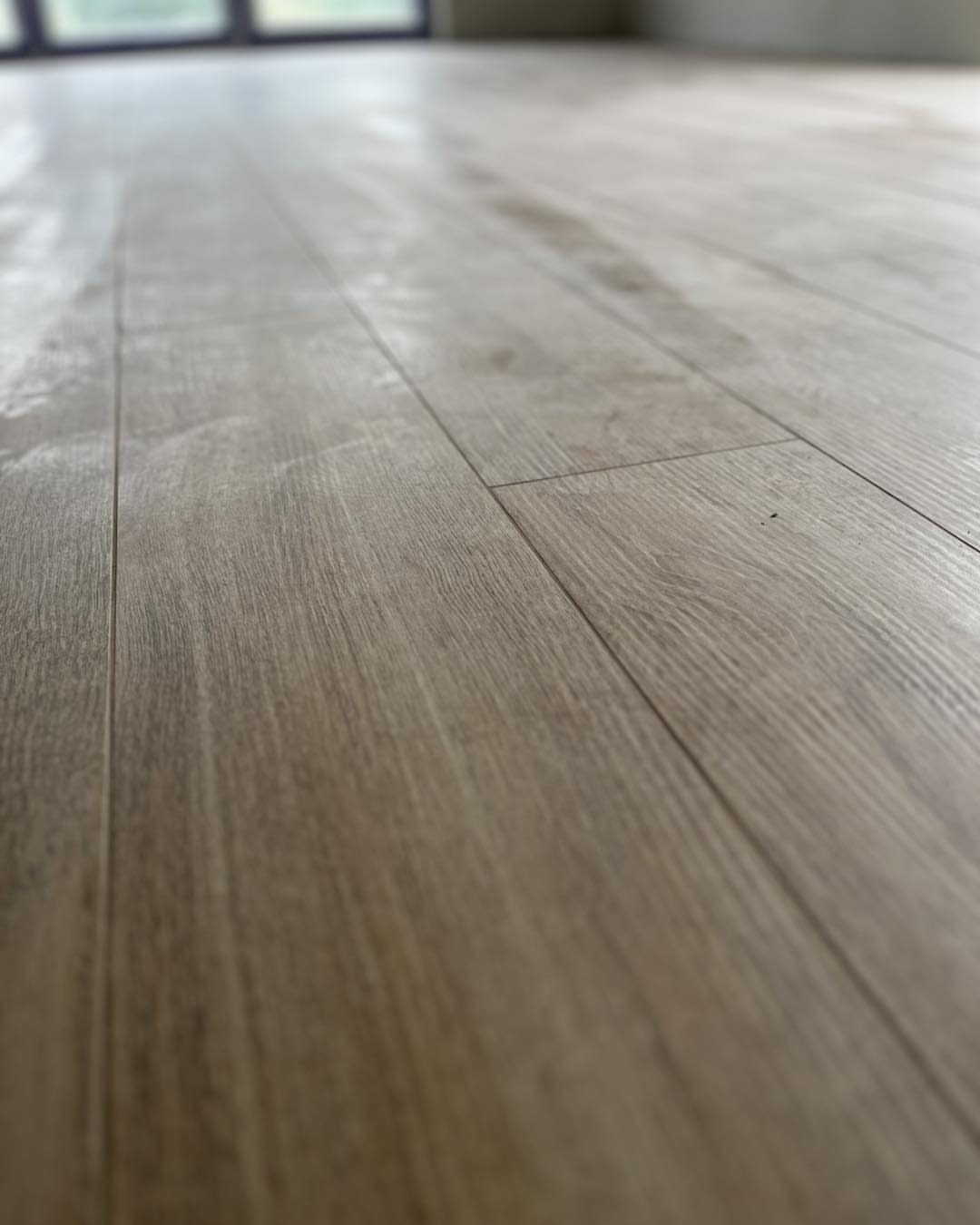
Greige is the compromise that stops looking like compromise once you live with it. The beige warmth keeps gray from going cold, and the gray keeps beige from going rental-carpet dull.
I would use this where the room already carries pattern or color that needs quieting down.
A floral sofa, a gallery wall, a kitchen with open shelving full of mismatched dishes: the floor can absorb that visual noise instead of adding to it.
The planks show minimal variation, almost flat, and that consistency is what lets the rest of the room breathe.
The risk is the opposite pairing. In a space with little texture and neutral walls, greige can read as nothing, neither warm enough to invite nor cool enough to sharpen.
Add a rug with some age to it, or wood furniture with real grain, or the room goes flat.
7. Grey Herringbone Wood Floors
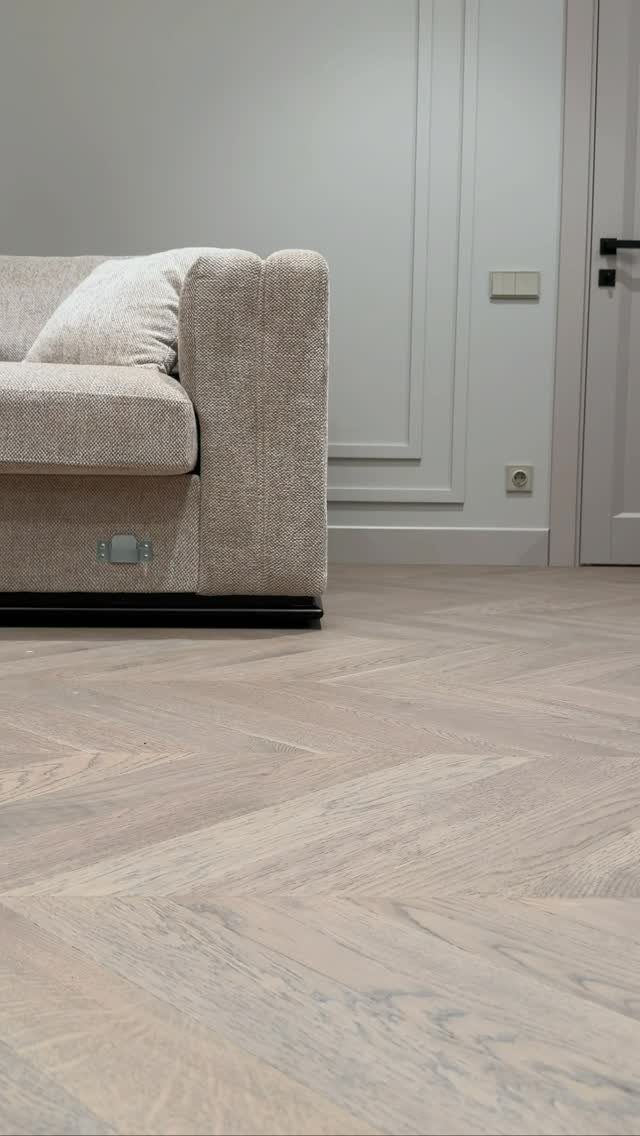
Herringbone eats up more material than straight plank, and the install takes longer than you might budget for. For a weekend warrior, that means paying a pro or renting a flooring nailer you actually know how to use.
The pattern draws the eye across the room, so it works best in spaces where you want width, not length. A narrow galley kitchen gains nothing; a square living room suddenly has direction.
I would not attempt this with vinyl or laminate unless the product is specifically scored for the angle. Real wood or engineered lets you cut clean miters without the edge crumbling.
A light grey tone keeps the busy pattern from feeling like a restaurant floor.
Check your subfloor flatness before you start; any waviness telegraphs through. Herringbone teleports every bump straight to your eye.
8. Grey Wood Laminate Flooring
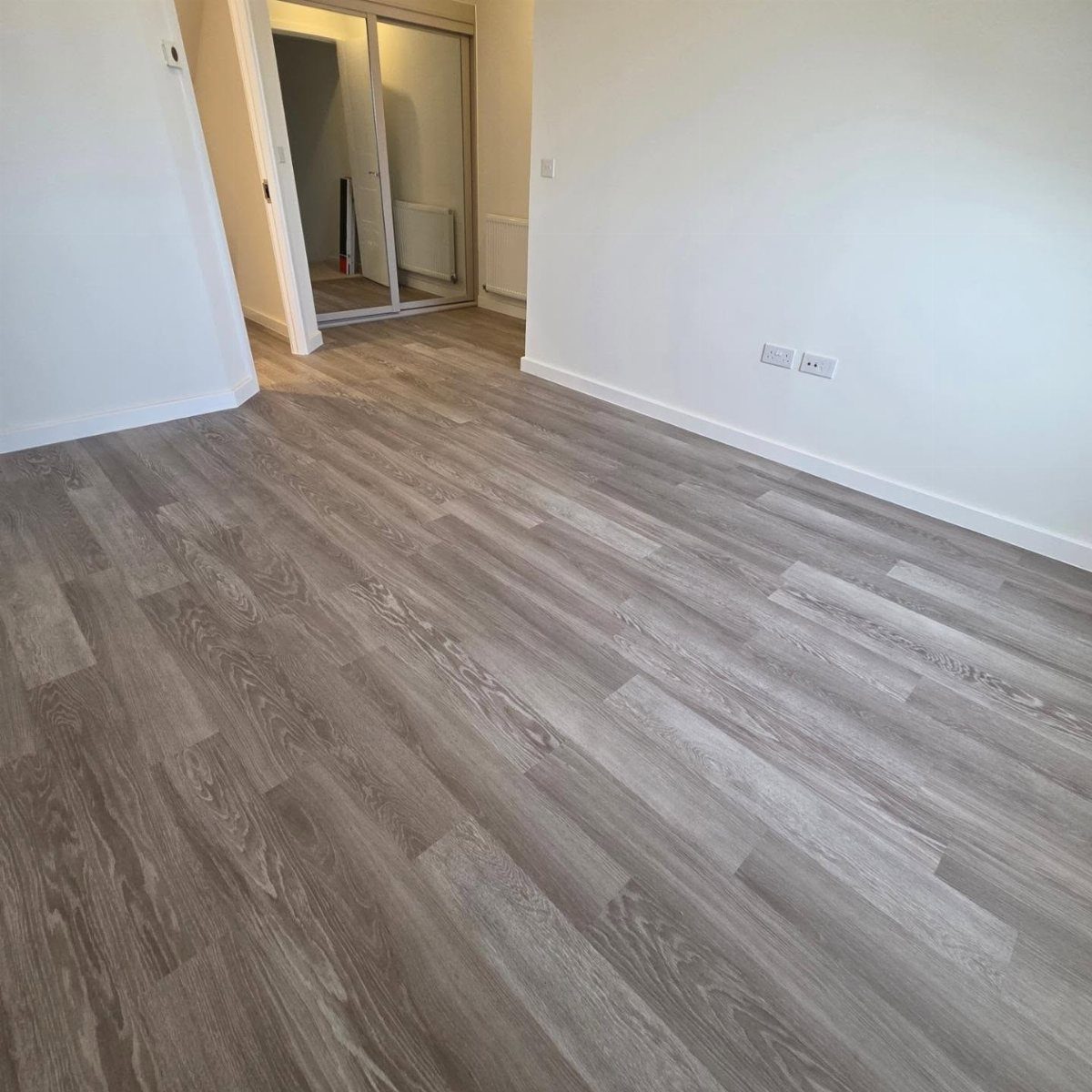
Laminate runs cheap for the material alone, and the grey wood-grain prints have gotten hard to tell from real at a glance. Planks with enough tone variation avoid that flat, photoshopped look that cheaper lines still carry.
I would lay this in a rental I planned to leave soon, or anywhere the dog still has accidents. A thick AC4-rated plank survives most of what hardwood sulks about.
Click-lock floats over concrete or existing vinyl, so you skip the nailer and the glue. Leave your expansion gap at every wall; grey shows dust in the joint if you cheat it and the boards swell.
This stuff photographs clean and modern, but it sounds hollow underfoot until you add a quality underlayment. Budget that in.
9. Wide Plank Grey Flooring
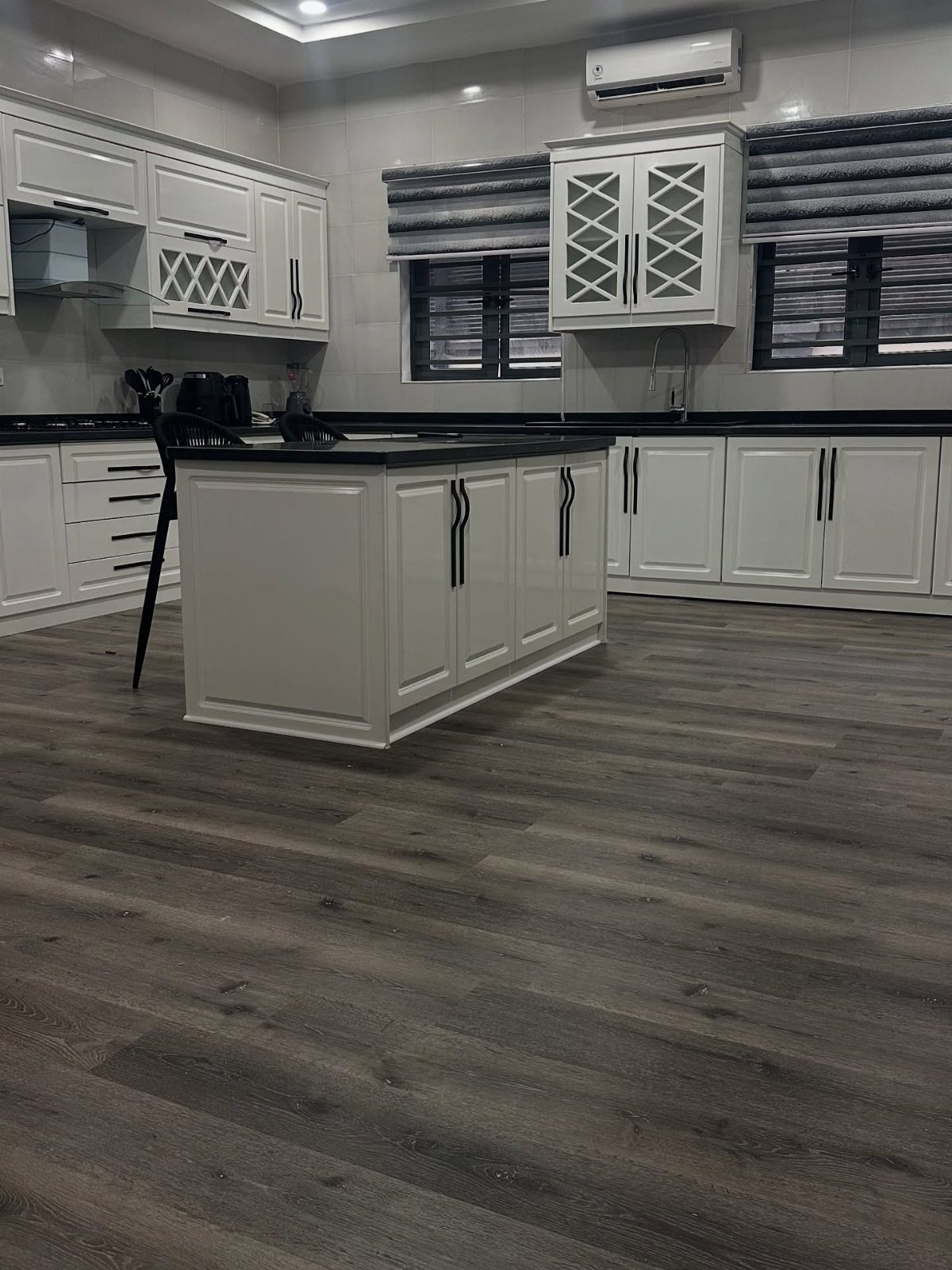
Wide plank starts at 6 inches and runs to 10 or more, and the fewer seams immediately make a small room read larger. The kitchen uses that scale to balance heavy black countertops and keep the white cabinets from floating.
I would pick engineered wide plank over solid for anything on the wider end. Solid wood that broad cups and gaps with every season unless your humidity stays locked in a narrow band, and whose house does.
The grey tone reads warm enough to work with both the cool black and the warm wood stools.
If your cabinets run cream or beige, a cooler grey plank turns muddy against them; test a sample flat on the floor, not propped vertical in the store.
Installation is nail-down or glue-down, not floating. The planks are too heavy to hold their own click-lock, and the length magnifies any unevenness in what lies beneath.
Gray Wood Flooring Styles
Gray wood flooring runs from pale silver-gray to deep charcoal, and that range is the whole point.
The finish categories matter more than the marketing names. Natural gray stays close to the wood’s own tone, a quiet background that lets furniture lead.
Weathered gray carries the roughness of aged barn siding, useful where you want the floor to do some of the decorating.
White oak, hickory, and hard maple take the stain best and survive the traffic. White oak’s tight grain holds color evenly; hickory shrugs off dents; hard maple resists scratches that would show on softer species.
Water-resistant engineered options exist for kitchens and entryways where boots drip and dogs shake off rain.
Maintenance Considerations
Gray floors earn their keep in houses that actually get lived in. Dust sits visible on dark walnut or cherry within a day; the same dust on mid-tone gray blends in until Saturday morning.
Scratches from a dragged chair or a dog’s scramble for the door hide in the tonal variation rather than screaming across a uniform surface.
That practicality has limits. Sharp grit still grinds into the finish, and standing water still warps the boards.
A microfiber mop dry-daily and damp-weekly keeps the surface film intact. Felt pads under furniture legs are cheap and save refinishing later.
Hickory’s bold grain pattern breaks up the surface so small damage disappears; hard maple’s density resists the dents that softer pine or birch accept.
The gray stain itself does not change the wood’s hardness, so species choice matters exactly as it does for any other color.
Installation Types
Installation method depends on the product construction, not on the gray tone.
Solid hardwood nails down to a plywood subfloor; engineered boards glue, nail, or float depending on the thickness of the top veneer and the stability of what lies beneath.
Glue-down suits concrete slabs, especially in basements where moisture rises. The adhesive barrier adds protection, and the cured bond deadens the hollow sound that floating floors can carry.
Nail-down needs a wood subfloor and a flooring nailer, which you can rent by the day at most hardware stores. Floating click-lock installs fastest, usually a weekend project, but the subfloor must be flat or the planks rock and separate.
Engineered gray hardwood at 1/2 inch or 3/8 inch thickness often allows floating where solid cannot. Check the manufacturer’s rating; some engineered products restrict floating to specific underlayments or room dimensions.
Current Trends
Gray wood floors have outlasted the trend cycle that brought them forward. Beige used to be the safe neutral; gray replaced it because it carried more personality without demanding attention.
That shift stuck. The tone now functions as a standard option alongside natural oak and walnut, not as a passing fashion.
The staying power comes from adaptability. Gray handles both stripped-down modern rooms and rustic spaces with exposed brick or reclaimed beams.
It pairs with black metal fixtures and with whitewashed furniture equally. The same floor in a Brooklyn rental and a Michigan farmhouse reads appropriate in both because the color steps back and lets the architecture lead.
Growth in gray’s popularity was already noted by 2018, which means the early-adopter phase ended years ago.
Current choice is not about being ahead of the curve; it is about selecting a neutral that works with the fixed elements you already have.
The floor will still look current in a decade because it was never trying to be current in the first place.
Frequently Asked Questions
Are grey wood floors in style?
Yes, gray wood floors remain stylish and versatile. A cool neutral reads modern in a city loft and still feels right in a farmhouse kitchen; that range is why grey floors have held on while warmer trends cycled through.
The weathered, almost-bleached greys still look current; the near-black charcoal versions already feel dated.
What colors compliment gray floors?
Whites, soft blues, warm taupes, and muted greens pair cleanly with gray floors. I would add mustard yellow, blush pink, or navy blue for contrast, and natural wood furniture or black metal fixtures for depth.
What color wood looks best with gray?
White oak starts with its own faint blue-grey undertone, so a grey stain works with the grain instead of masking it.
Walnut and painted white both settle in against it; orange-toned wood is the one combination I would steer clear of.
What color wood floors are trending in 2026?
Matte and wire-brushed surfaces are what I see most now, they add interest without shouting, and wider planks stretch the room out in a way narrow boards never did.
White walls or warm cream with black or brass hardware is the combination that keeps showing up in the rooms I save.
Blonde wood in an adjoining hallway, white wood in a bathroom just off the room: the shift feels planned, not like you ran out of the same flooring.