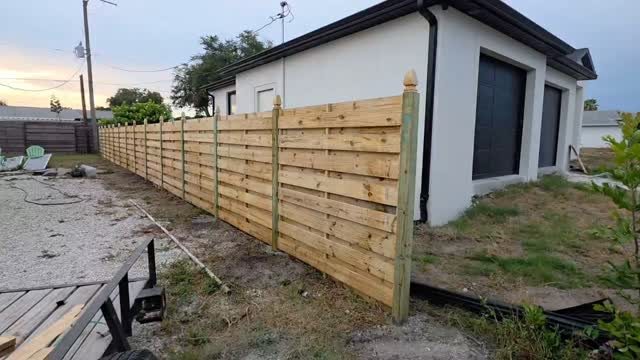
Horizontal wood fences run from a full privacy wall to a low garden border you can build in an afternoon, and the right one depends on whether you need a true screen or just a visual pause.
Cedar runs about $18,700 for 200 linear feet when contracted out, which shows the spread clearly enough.
1. Horizontal Cedar Privacy Fence
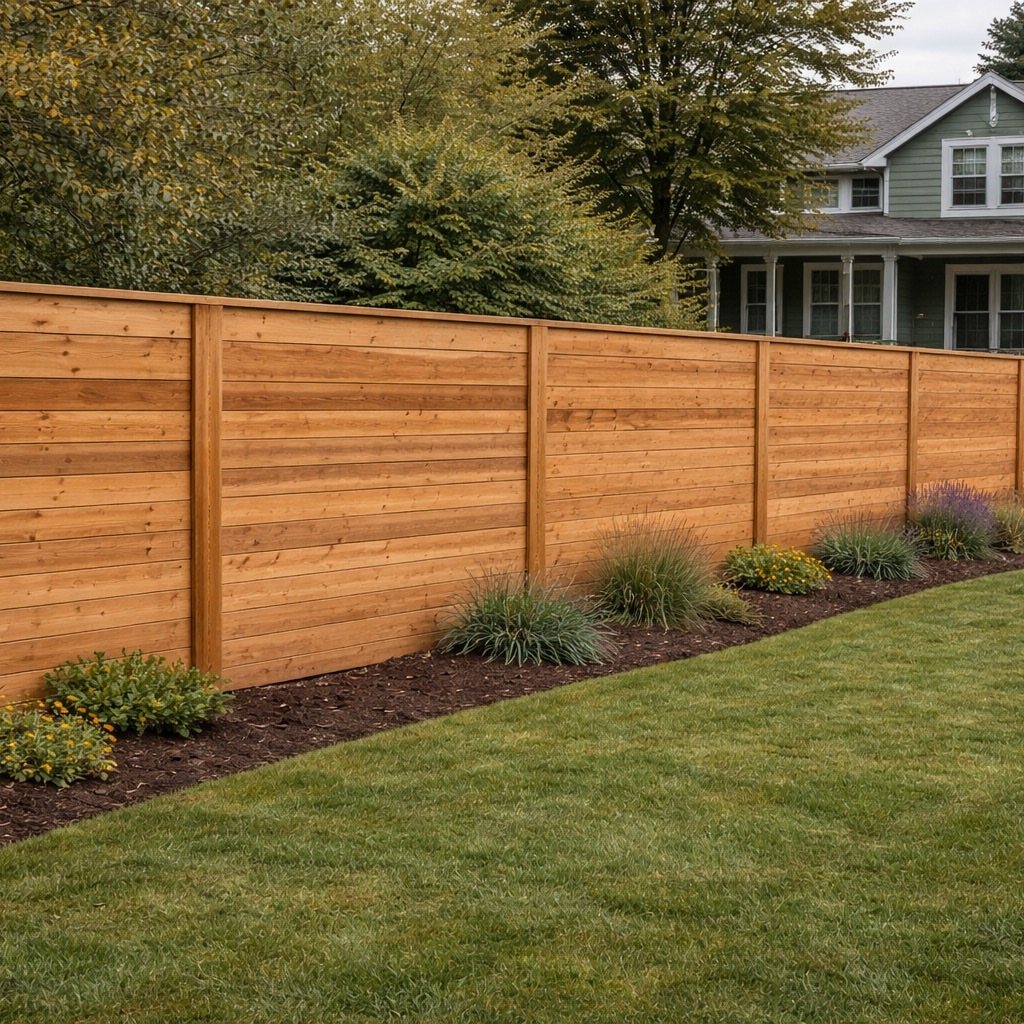
Cedar boards laid flat against each other with no gaps make a true privacy wall, and cedar’s natural oils keep rot and bugs out without chemical treatments.
A 200-linear-foot run runs about $6,700 in materials if you build it yourself, which beats the $18,700 a contractor quoted for the same job.
I’d go this route for the backyard where you actually live, not the front where you might want to see out.
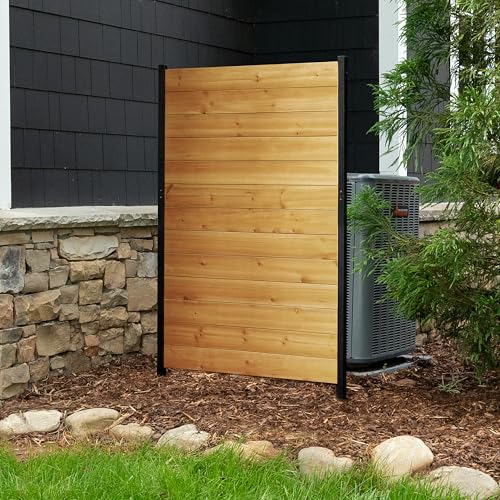
STYLISH NATURAL WOOD: This FSC certified wood screen is made with real wood meaning no two boards have the same grain color, finish, or wood knots differing it from vinyl outdoor privacy fence screen panels.

Innovative Design: The wooden fence panels posts features a U-channel design—simply attach the brackets to the posts and slide in (3/4" x 5.5") wood planks to lock. Easy DIY installation and plank replacement, even for one person, saving time, effort, and labor costs in the short and long term

DURABLE CONSTRUCTION: Built with sturdy materials designed to withstand outdoor elements, providing long-lasting boundary and security.
2. Evenly Spaced Horizontal Slats Fence
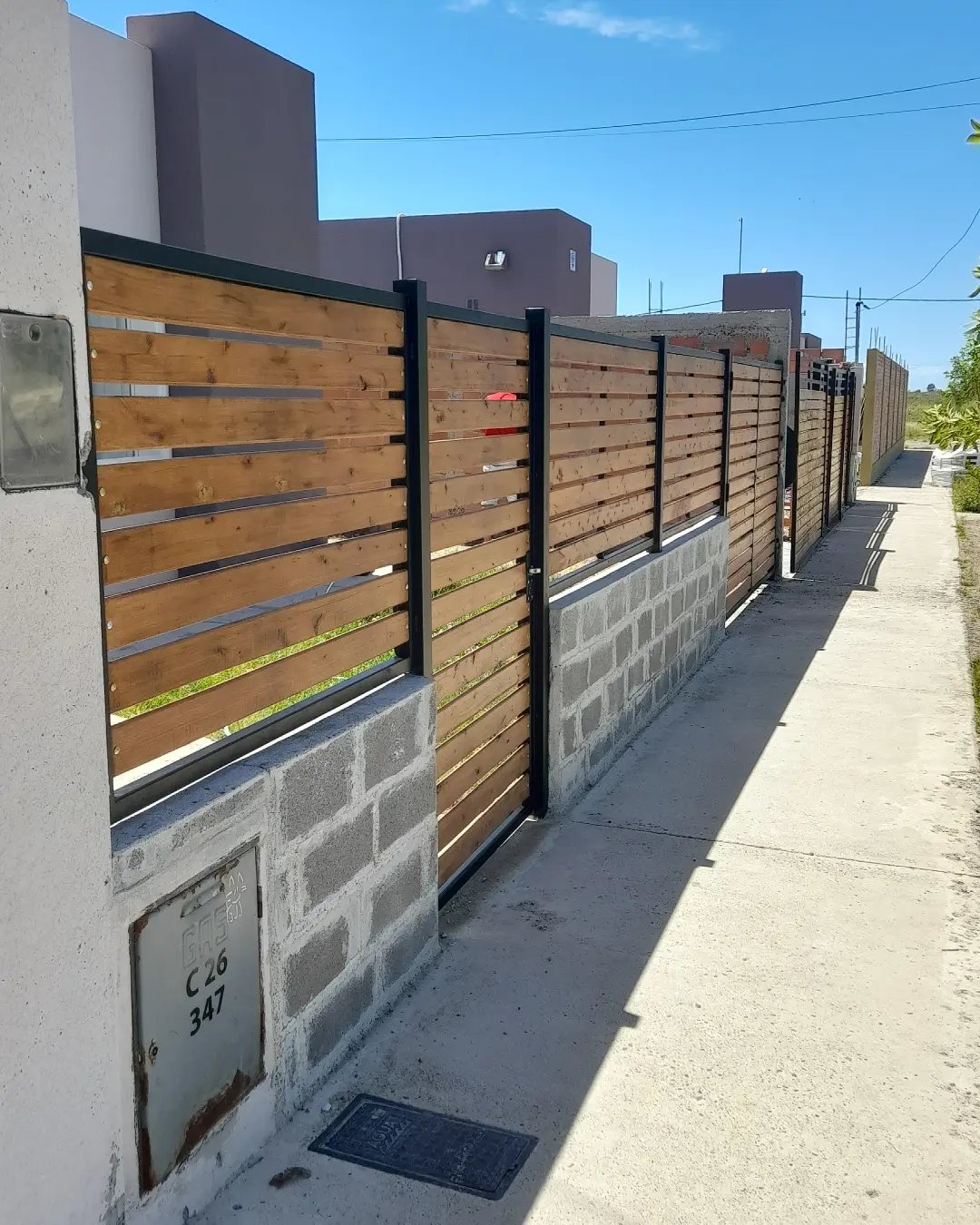
Gaps between horizontal slats let light and air pass while the fence still reads as a solid design statement. Spacing even, about 2 inches apart, lets the eye read intention rather than mistake.
Metal frames mounted on a low block wall give you modern structure without full masonry cost. This one suits mid-century houses especially, though I’d argue it works anywhere you want privacy without heaviness.

Tool-free snap-in design, no screws required. Installation can be done with bare hands, and the positioning is quick, while disassembly is also convenient.Made from high-quality, high-density nylon, it is tough, durable, and reliable, and can withstand repeated impacts. It is UV-resistant, salt- and alkali-resistant, and corrosion-resistant.
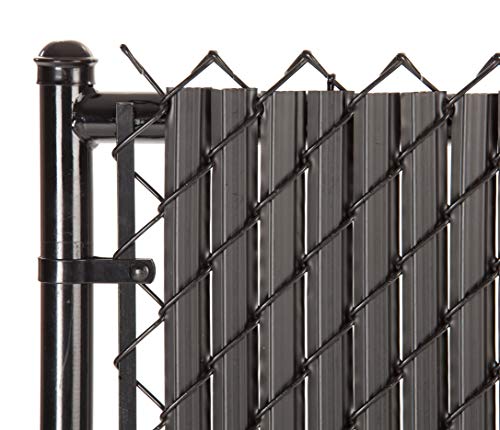
FENCE PRIVACY: Unlike fence tape, these slats are designed to easily slide vertically through your chain-link fence for optimal outdoor privacy. Determine the diamond size of your fence by measuring diagonally between the parallel wires, not corner to corner. The added privacy of the wings leaves no unsightly perforations or wave pattern. Compatible with 4', 6', and 8' height fences.

Outdoor Decoration Wall Panel Grille: Our slatted wall panels adopt wooden fluted panel design, warm color seamlessly connects panels, serving as both noise reducers and striking decorative elements, adding a professional touch to any space
3. Stepped Horizontal Wood Fence
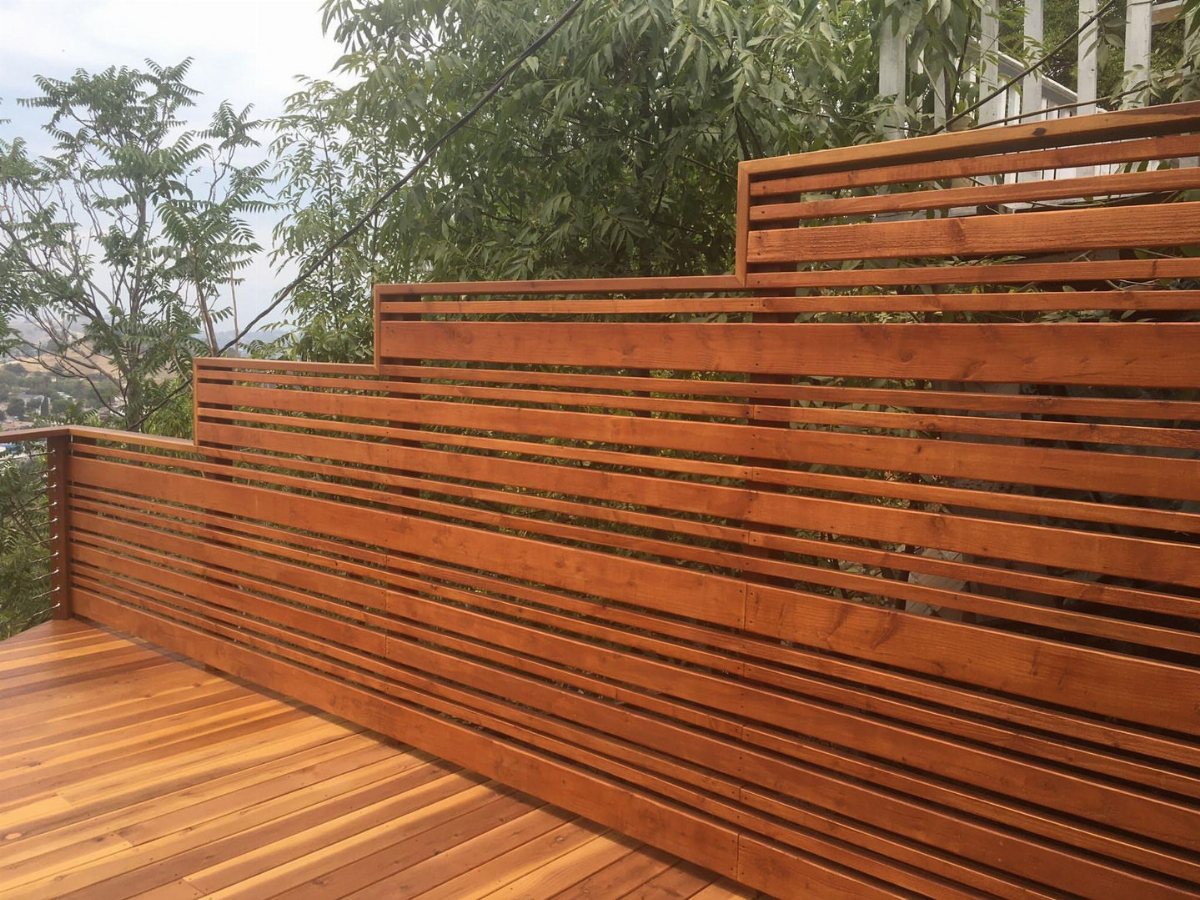
Sloped yards usually fight you with racked fences that look bent or forced, but stepping the panels changes the problem into the feature.
Each section keeps the same number of stacked panels, so the top stays level while the bottom follows the grade in clean right-angle drops. The result looks deliberate, almost terraced.
Build this when your grade change is too sharp for a single rake, or when you want the fence itself to carry some visual weight against a hillside view.

EASY ORDERING: Everything you need for your fence project is in the box except for the final post. Only ONE additional post, BL19112, is required for the end of your project. A gate is available by searching BL19111.

REALISTIC WOOD-LOOK WITHOUT THE MAINTENANCE: Beautifully embossed wood-grain boards provide the warm, natural look of real wood in Slate Grey or Walnut Brown — no staining, sealing, or painting required
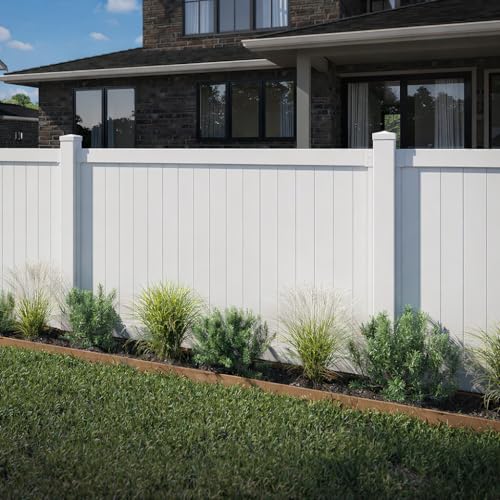
FINISHING POST REQUIRED: This vinyl fence is designed to scale, so you will need to order a finishing post to complete your yard fence or pool fence project (item BL19042). A compatible gate is available by searching BL19106.
4. Shadow Box Horizontal Fence
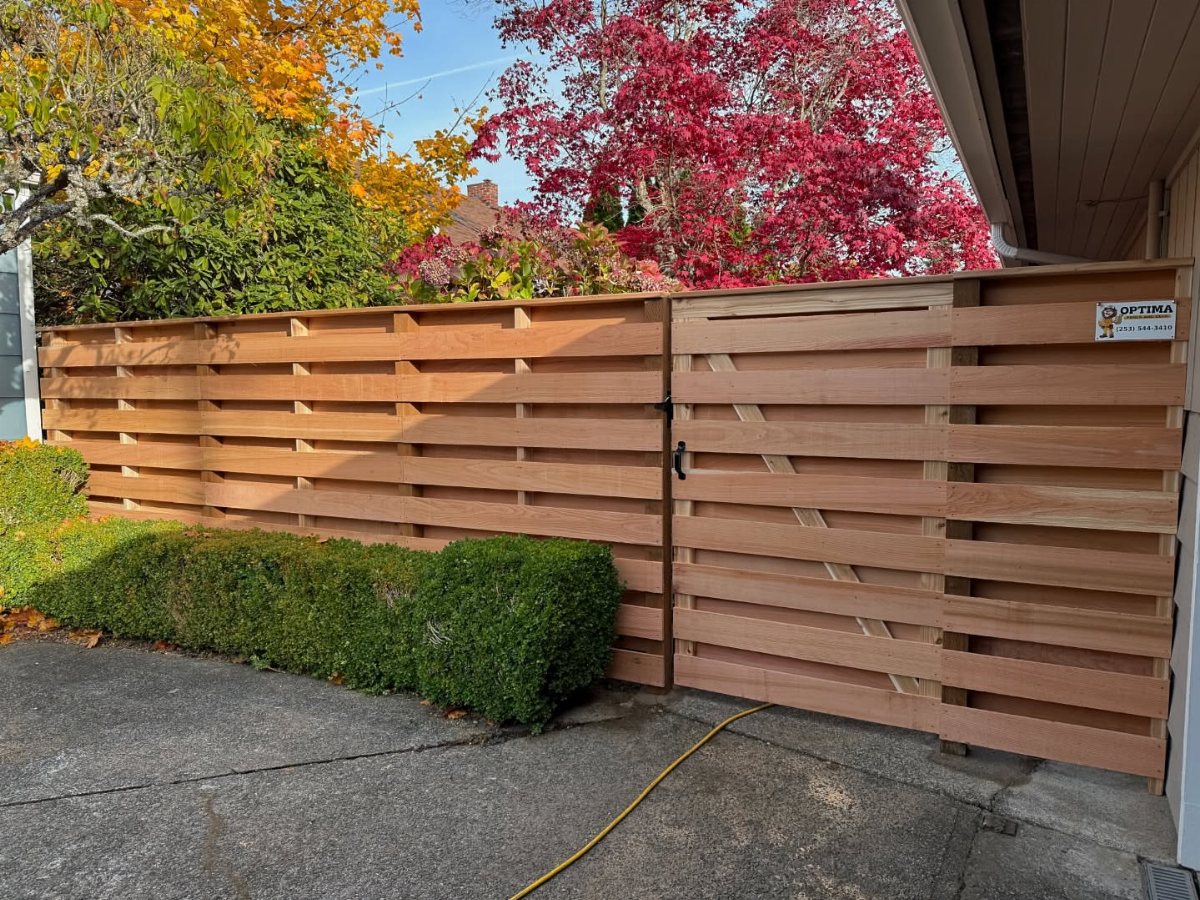
Alternating slats front and back of each post gives you the shadow box effect: head-on it reads as solid privacy, but from an angle you can see through the gaps.
Air moves through, which matters in humid summers when a solid fence traps moisture against plantings. Cedar works well here, left to grey or sealed to keep that warm tone.
I’d pick this for a side yard where you want some screening but don’t need a bunker, or anywhere the wind needs somewhere to go.
SOLID PINE WOOD SHADOWBOX FRAME - This Shadow Box Display has usuable interior dimensions of 16x20 Inches by 3/4" Deep!

Wall mounted premium solid acacia wood deep shadow box in a natural finish showcases collectible items anywhere in the home, the office, or even business settings in modern rustic style
Rustic torched solid wood wall mountable curio open display case for decorative items, figurines, collectibles, or small potted succulents
5. Horizontal Garden Wood Fence
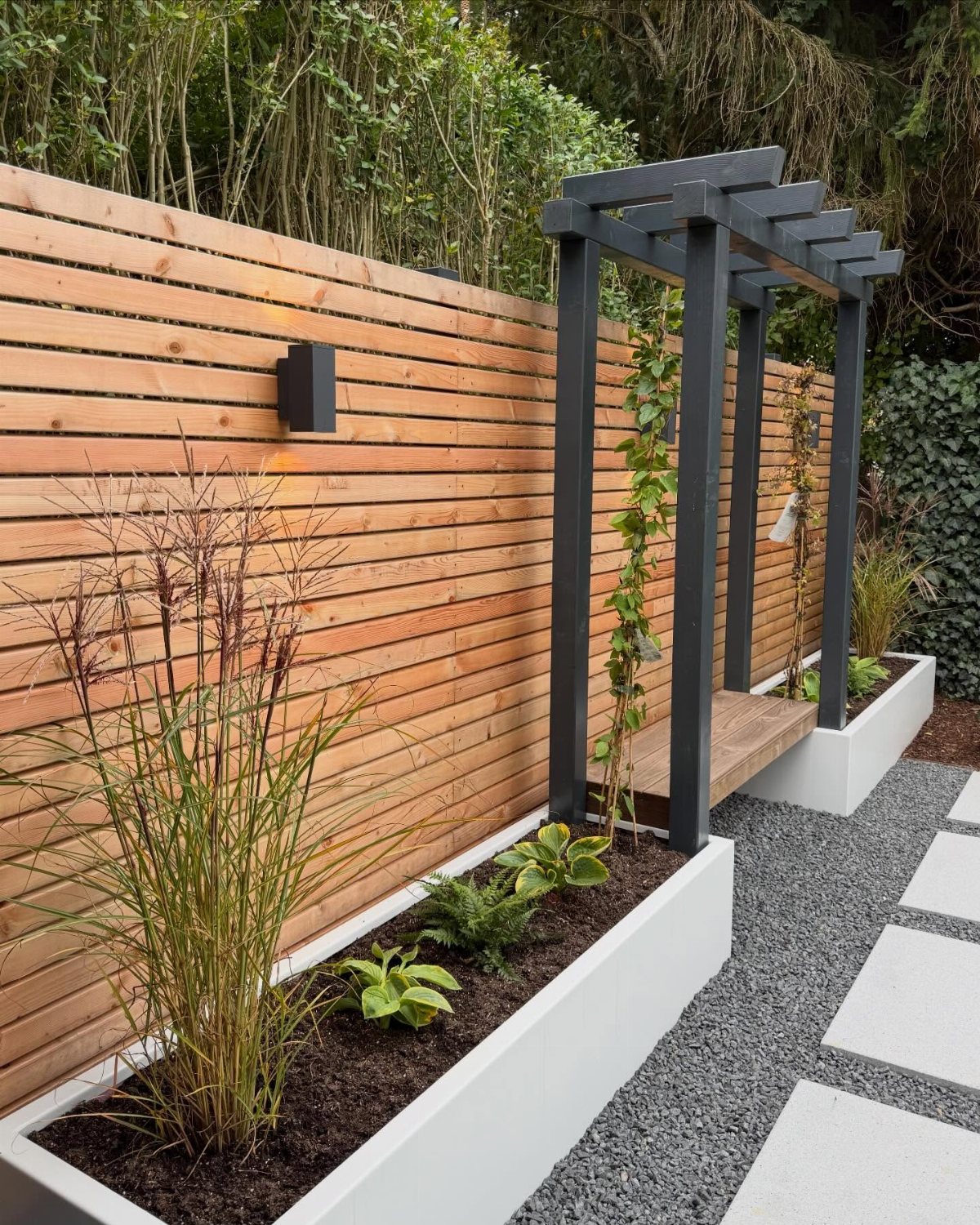
A lower horizontal fence marks garden beds without blocking the view of what you grew.
Cedar slats run the line and stop at knee height, which is enough to keep foot traffic off roots and frame raised planters as deliberate design.
The fence becomes one edge of an outdoor room rather than a barrier when you pair it with a pergola and seating.
Build this when your garden is the point, not the privacy, and let the plants finish above the wood line.

Natural Wooden Garden Border Design: This wooden garden border features a unique burnt wood finish that adds rustic charm and warmth to your outdoor space. Perfect as decorative garden fence edging for flower beds, walkways, and landscaping accents.
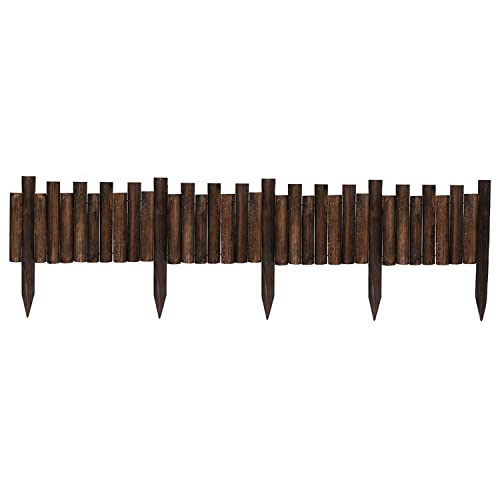
About the Edging: 8 inch height above ground, stakes Height 4 inch, 3.6 Feet total Length; Made from sturdy wood with a carbonized finish, this short fence is durable and long-lasting, standing up to outdoor elements.
Choosing the Right Wood
Redwood does the same work at a higher price point.
Pressure-treated pine costs less up front but needs time to dry before you stain or seal it; the treatment that keeps bugs out also repels your finish if you rush it.
I had a table saw handy on my build, so I ripped standard 1×8 cedar boards in half to get slats closer to 3.5 inches across. Actual width, not nominal; lumber names lie.
That thinner read made the fence look more modern without buying anything custom.
Whatever species you pick, coat every side before assembly. The back matters as much as the face, especially where end grain drinks water at the cut line.

Perfect Fit & Easy Installation: Our Privacy Screen Fence measures precisely 5' x 50', making it a perfect fit for fences 5 feet or slightly taller. It can be easily installed on chain link fences, existing cyclone wire fences, wooden retaining walls, welded wire fences, and more. For easy and secure installation, we've included grommets placed vertically every 1 foot and horizontally every 2 feet, with 4 grommets at each corner. We also provide 80 zip ties for added convenience.

FAST, HASSLE-FREE INSTALL WITH PREASSEMBLED PANELS: Skip the complicated builds—this privacy screen features 4 preassembled panels that drastically reduce setup time, allowing you to assemble and enjoy your space in as little as 30 minutes

Thicker & Stronger — Built To Resist Bending & Warping: Each aluminum privacy fence board features a substantial 19.8mm profile with 1.1mm-thick aluminum walls for greater rigidity and structural strength. The reinforced construction helps resist bending, flexing, and warping, keeping your fence panels straighter and more stable through everyday outdoor use. Keeping your fence straight, sturdy, and looking its best for years to come.
Cost Considerations
Complexity drives the real math. Solid privacy eats more board feet than spaced slats.
Stepped panels need extra posts and more cuts. Shadow boxing doubles your slat count since boards run both faces of the rail.
I’d price materials with a buffer for waste and off-cuts before deciding between DIY and hired. Lumber orders always include a few split boards, and stepped layouts generate odd cuts you cannot return.
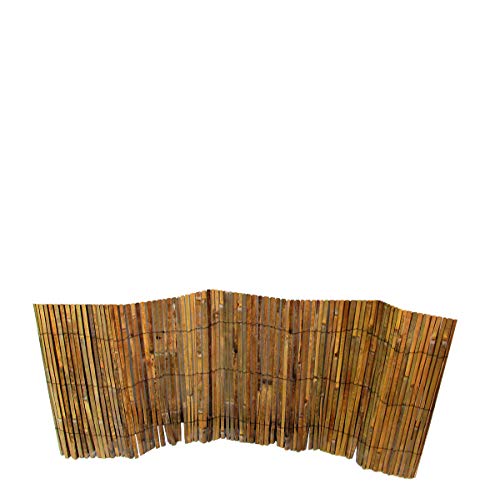
The tropical and unique look of natural bamboo makes an attractive screen or fence for your garden. Individual pieces of slat bamboo are woven together with black nylon...
Installation Tips
A string line tied an inch below your first post top, with a torpedo level threaded on it, saves you from measuring up from the ground at every post. Dirt lies; the string does not.
Pull it tight, check the bubble, and mark each post at that same 1-inch drop. Seven posts went in level for me this way across ground that looked flat until I actually looked.
Pre-drill every screw hole. Horizontal grain runs long, and cedar splits easy when the screw bites without a pilot.
I learned that on the third board of my first section.
Metal posts need wood blocking if you want something to screw slats into. Solve the attachment before you set the first post in concrete; the correction is miserable after.
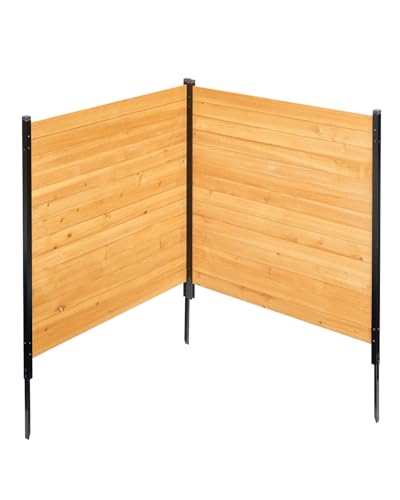
Enhance Privacy & Beautify Spaces: This stylish wooden privacy fence is perfect for concealing unsightly outdoor items such as air conditioning units, trash bins, and pool equipment. It also doubles as a garden privacy screen, keeping children and pets safely away.

Solid Wood Construction: Crafted from high-quality fir wood with a protective varnish finish, this extendable trellis fence resists sun and rain while maintaining its natural beauty season after season.

Durable, Weather-Resistant Wood: Built for outdoor living. Crafted from solid fir wood and finished with a water-resistant coating, this privacy screen stands up to sun and moisture. The smooth, low-maintenance surface wipes clean easily and can be repainted or re-stained whenever you’re ready for a new look.
Maintenance Advice
Oil-based urethane outlasts water-based latex outside, though hardware stores stock less of it now. Whatever you choose, stay with it; mixing finish types causes peeling headaches you cannot sand out.
Reapplication timing depends on the base. Oil buys me an extra year or two between coats compared to water-based products, which I have found need attention every year in weather.
Posts buried in dirt need separate attention; an old contractor taught me to keep ground-contact wood safe from rot and termites, and that knowledge outlived him.
Check the shadow box gaps especially. Air moves through, but so does driven rain, and the back slats catch moisture you never see from the yard.

Rustic solid wood wall mountable curio open display case for decorative items, figurines, collectibles, or small potted succulents

Handcrafted in solid furniture grade beech hardwood with elegant furniture finish. UV protection acrylic door . Dimensions: 19"H X 14"W X 2.25"D Interior Dimension: 18"H X 13"W, space between foam and door is 0.5".

SOLID PINE WOOD SHADOWBOX FRAME - This Shadow Box Display has usable interior dimensions of 18x18 Inches by 3/4" Deep!
Frequently Asked Questions
What type of wood is best for a horizontal fence?
Cedar is the wood I’d pick for a horizontal fence.
Cedar’s natural oils handle rot and bugs on their own, so you can skip chemical treatments if you’re planting close to the fence or just want to avoid handling treated lumber.
Cedar works whether you let it weather to soft grey or seal it to keep the warmer tone; either way it holds up.
How much does a horizontal wood fence cost?
For a 200-linear-foot solid cedar privacy fence, you’re looking at about $6,700 in materials doing the labor yourself. The same job came in at $18,700 from a contractor who quoted it, so doing the work yourself saves serious money.
Your actual cost shifts with the style; spaced slats or a lower garden fence use less board footage than a true privacy wall.
What is the cheapest way to build a horizontal fence?
The cheapest route is building it yourself with basic cedar boards and handling your own labor.
I’d skip the pallet or reclaimed route unless you enjoy the hunt; inconsistent board sizes eat up a weekend in fitting and trimming, and cedar at the lumber yard is already priced for outdoor use.
What is horizontal fencing called?
Horizontal fencing goes by plain names: horizontal fence, horizontal board fence, or horizontal slat fence depending on the spacing. Reed fencing is a narrower variant with thin horizontal boards spaced to let light through.
The style names stay simple because the construction is straightforward; boards run left to right instead of top to bottom.