The ideas below run from a single can of paint to a full day of folding and mounting old book pages, with most landing in the afternoon-to-weekend range.
Peel-and-stick planks and removable wallpaper keep deposits safe if you rent, while picture frame molding and painted brick need landlord clearance or a patch plan.
The cork panel wall behind a kitchen desk costs about the same as one decent lamp, which is the kind of number that actually helps when you are standing in a hardware aisle on Saturday morning.
1. Wood Paneling
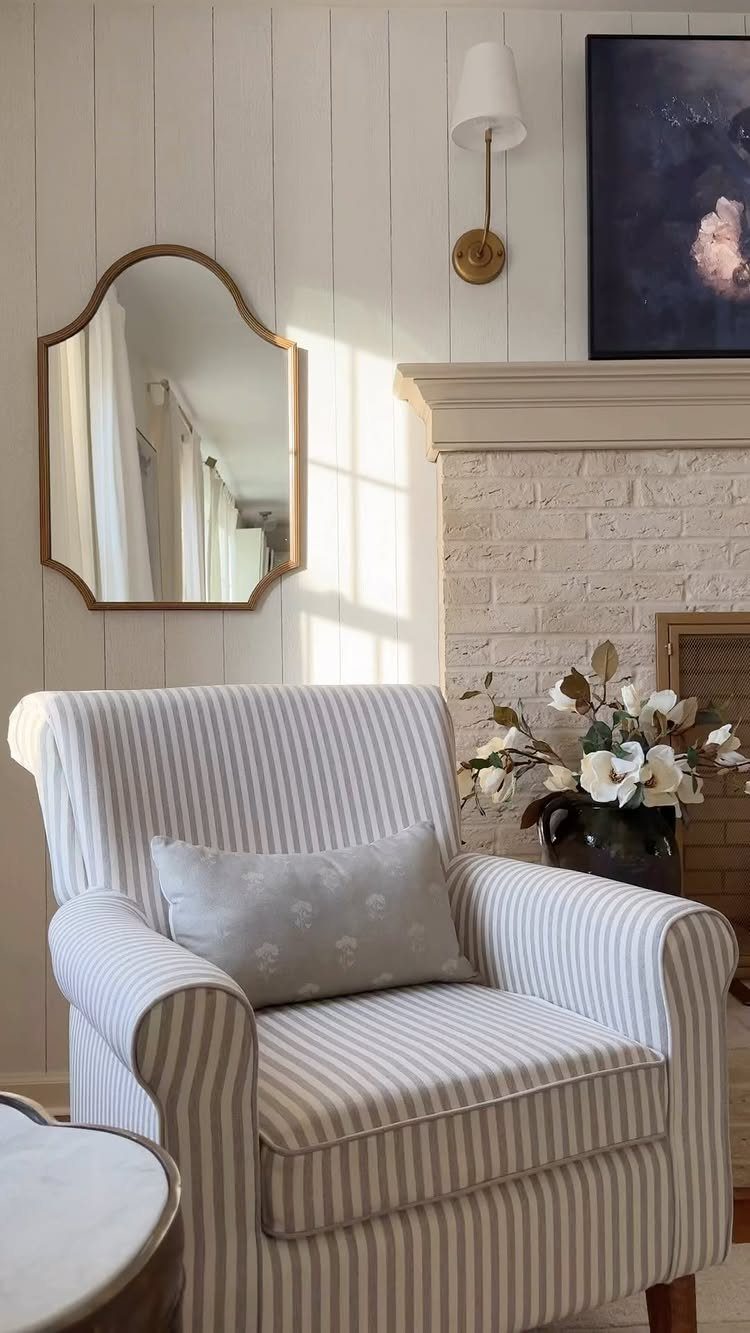
Vertical boards painted white turn a flat wall into architecture without much lumber or time.
I like shiplap for beginners because the boards overlap and forgive uneven cuts; beadboard reads more cottage, and reclaimed wood needs more patience but gives you grain no paint can fake.
A single accent wall in my living room took an afternoon to install with a nail gun and miter saw, plus paint overnight. If you rent, look for peel-and-stick planks; they come off with a hairdryer and some patience.
This one works best when you want warmth without pattern. Stain it dark for a library feel, paint it white for a Scandinavian look.
Skip it if your room already has busy floors or heavy trim; it fights for attention.
2. Wall Panels
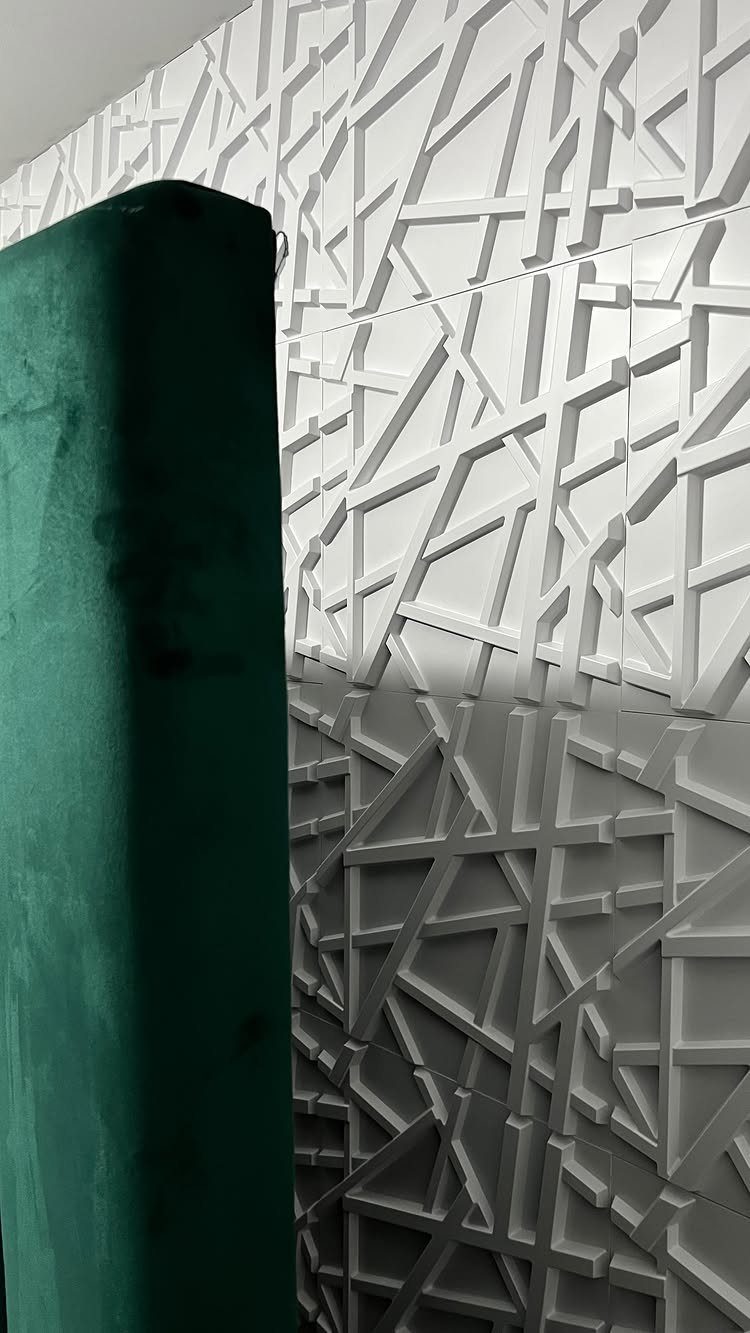
Lightweight PVC panels with a geometric pattern turn a wall into something that moves as light shifts across it. White-on-white paint keeps panels quiet enough for a bedroom but still catches morning light.
Most panels glue straight onto the wall with construction adhesive; measure your wall and buy extra for edges. Spray paint changes the whole mood: one can of matte black and this same pattern goes from spa to nightclub.
I would not put these in a room with low ceilings. The shadows they throw need some height to resolve, or the wall starts looking crowded.
Good for renters who can patch small holes later; bad for anyone who wants to hang shelves afterward.
3. Gallery Wall
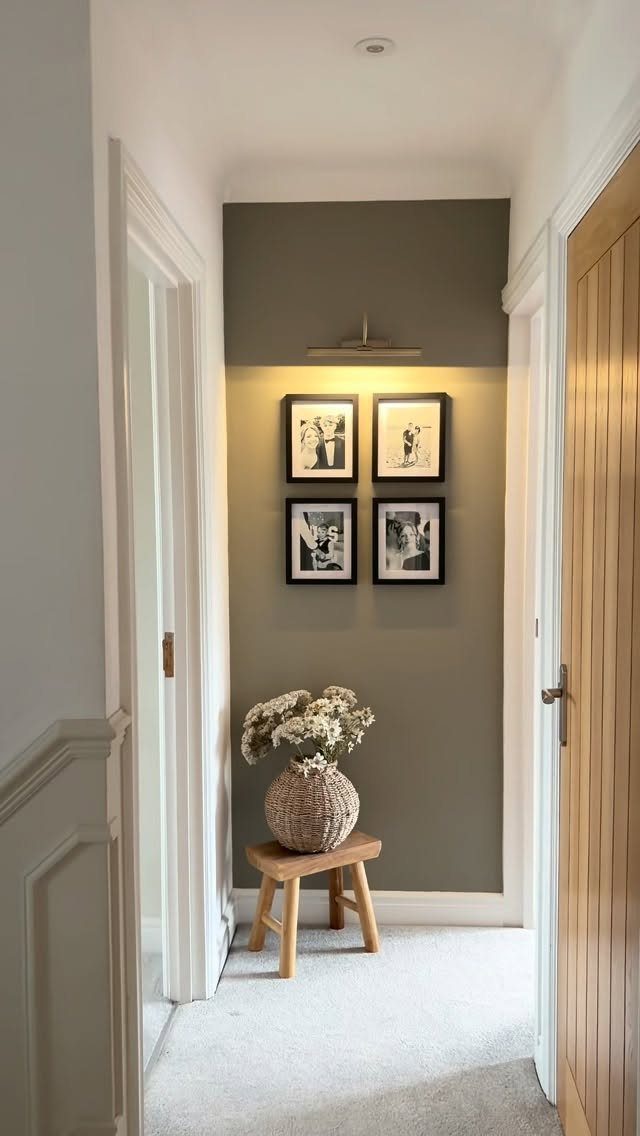
A grid of four matching frames on a single painted wall is the gallery wall for people who hate arranging too many mismatched pieces.
Olive green gives a hallway purpose; black frames and monochrome photos keep it from feeling like a dentist’s office.
I have hung grids with a laser level and with nothing but a yardstick and patience. The level wins.
Leave a couple inches between frames, no more, or the grid falls apart. Mixing sizes works if you map it on paper first; matching sizes work if you buy in bulk and stop second-guessing.
This suits renters perfectly: paint one wall, hang your life, and take it with you. It trades away the eclectic energy of a salon wall for something calmer and faster to execute.
4. Painted Brick
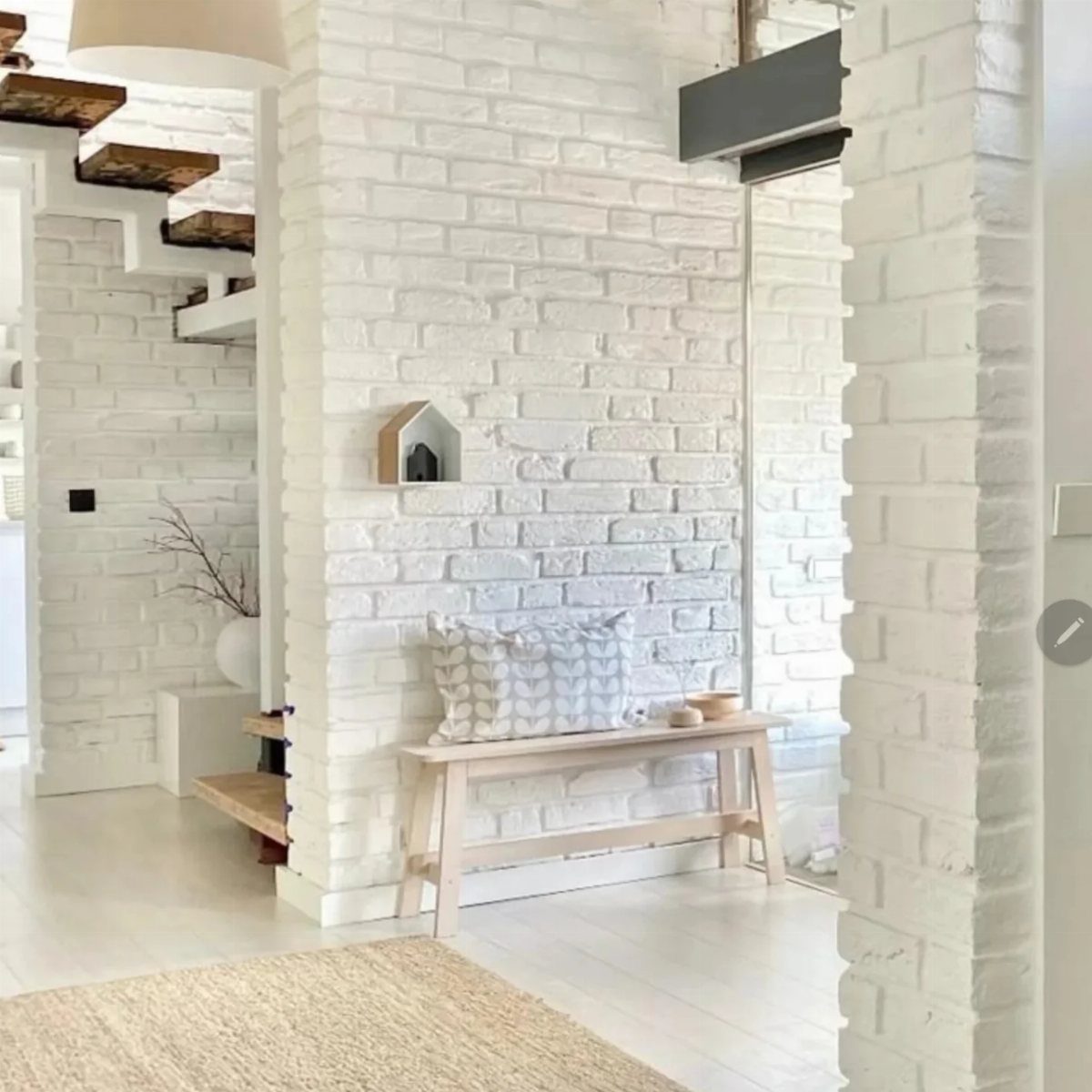
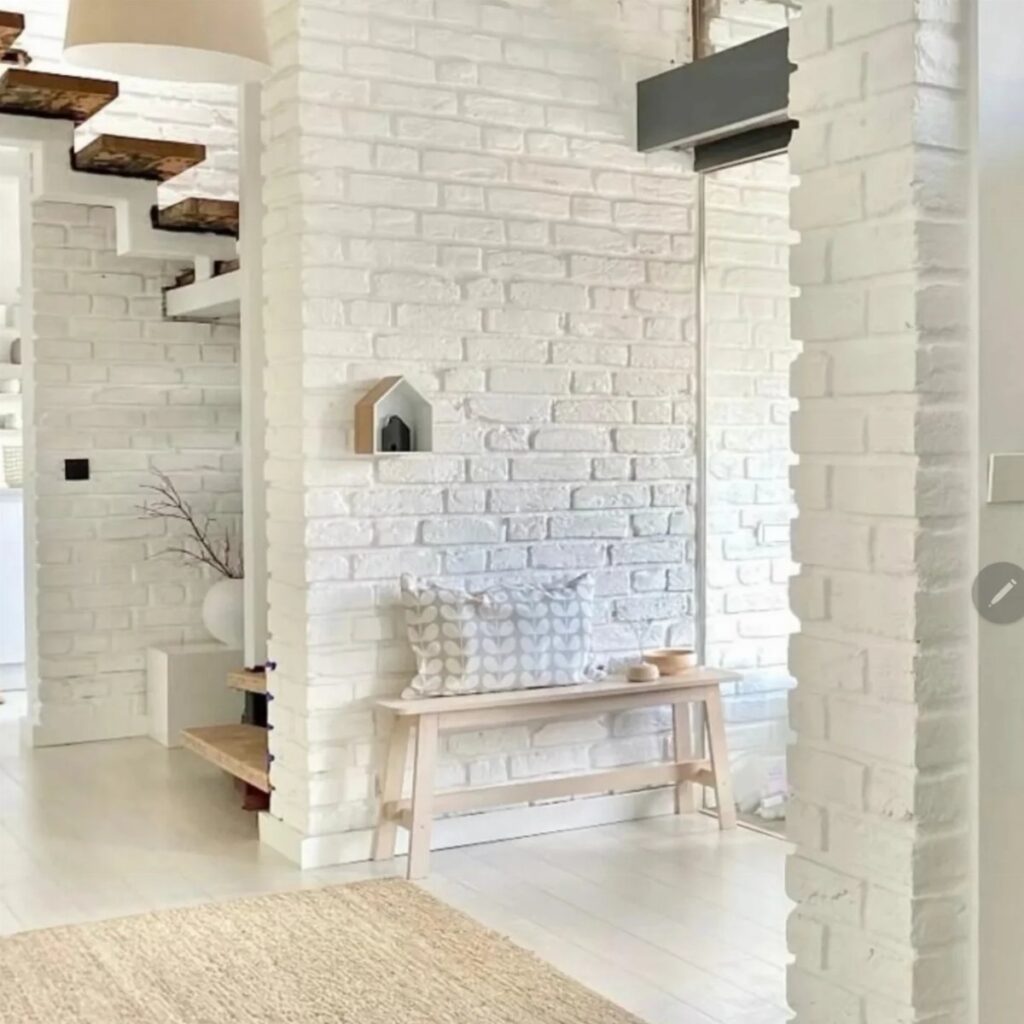
Real brick painted white keeps its texture and loses that old rec-room heaviness; faux brick painted white keeps its texture and fools nobody up close. Actual brick shows in the irregular edges around the mortar.
If you have real brick, clean it with TSP first or the paint flakes off in a year.
If you are faking it, consider German schmear instead of paint: thin mortar troweled over brick-patterned panels reads authentic from across a room and costs less than convincing faux brick.
I have seen both done well and both done badly; the difference is always in whether someone rushed the prep.
This idea needs a wall with some existing character. On flat drywall, painted brick looks like a stage set.
Best for entryways, worst for rooms where you want to hang art; the texture fights frames.
5. Hand-Painted Murals
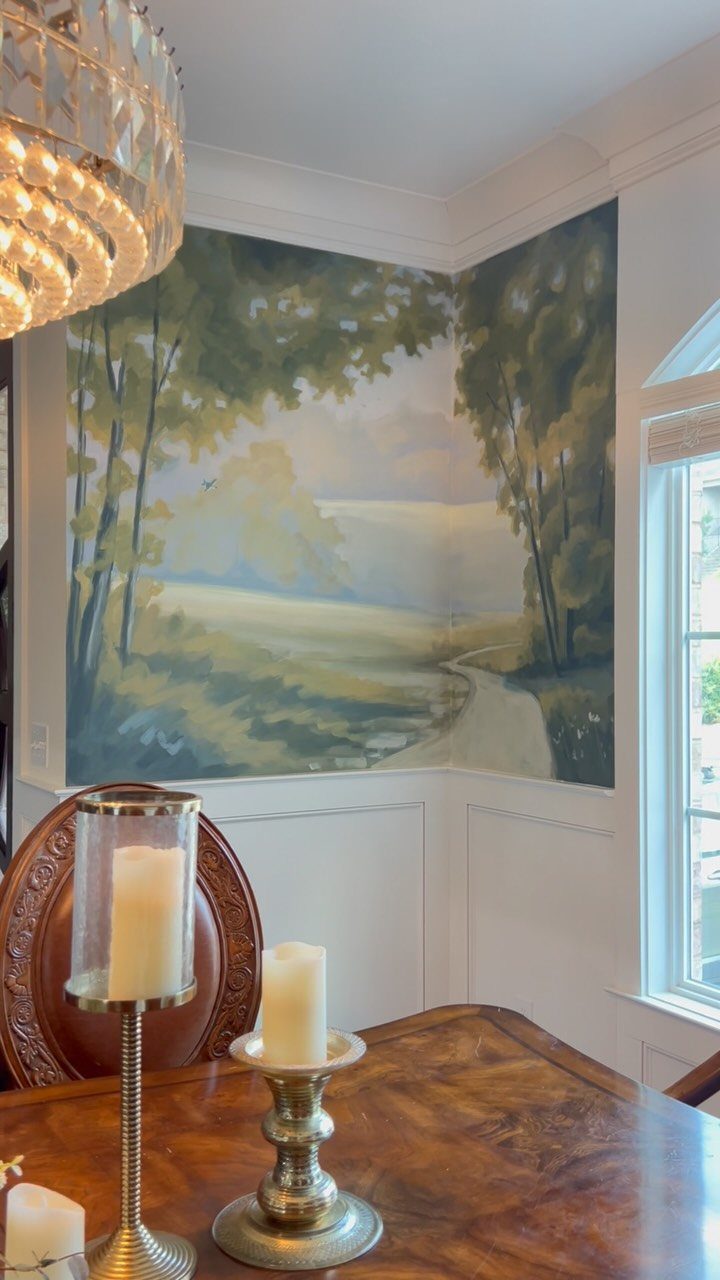
Wrapping a mural across two walls is easier than it looks: the corner hides where perspective goes slightly wrong.
I painted my first mural with sample pots of latex paint and a small brush, working from a projected sketch. Light switches and thermostats are easier to design around than to ignore.
That is the real advantage over wallpaper: you plan for your outlets, your sconces, your slanted ceiling.
This takes a full weekend at minimum, longer if you are fussy about skies. Best for someone who can draw a little or who can trace; worst for the impatient.
Paint stays until you paint over it. You will live with your mistakes longer than with a hung poster.
6. Stenciled Accent Walls
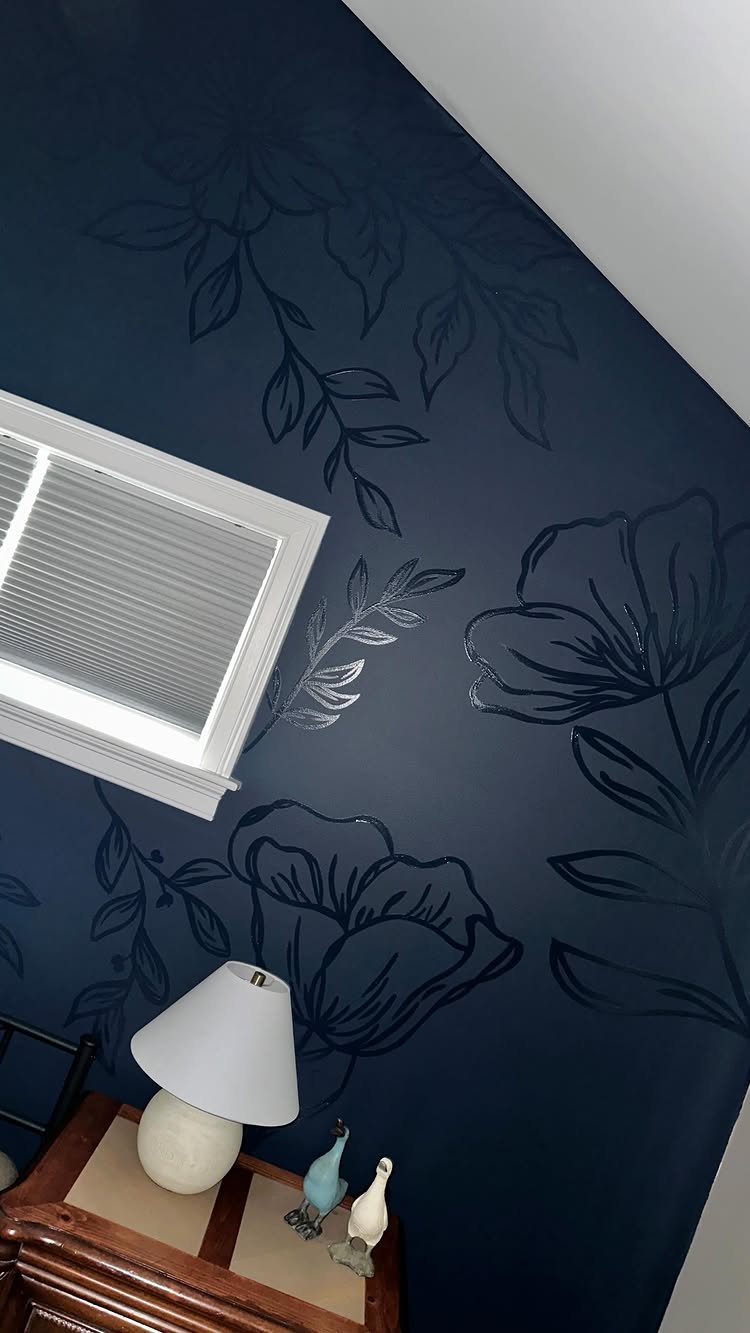
Wall stencils give you wallpaper density without the paste panic. Floral outlines read as line art against dark navy, which is smarter than trying to fill in every petal with two coats.
Buy a stencil sized for walls, not for furniture: anything smaller and you are bent over every few minutes repositioning. A foam roller loads less paint than a brush and bleeds less under the edges.
I stencil with painter’s tape at the corners and a level line penciled faintly across; check every third repeat or the pattern drifts and you do not notice until it is too late.
This suits anyone who wants pattern but fears commitment. One wall, one weekend, and if you tire of it you paint over it like any other wall.
Skip if your wall has heavy texture; the stencil gaps and the result looks moth-eaten.
7. Accent Ceiling
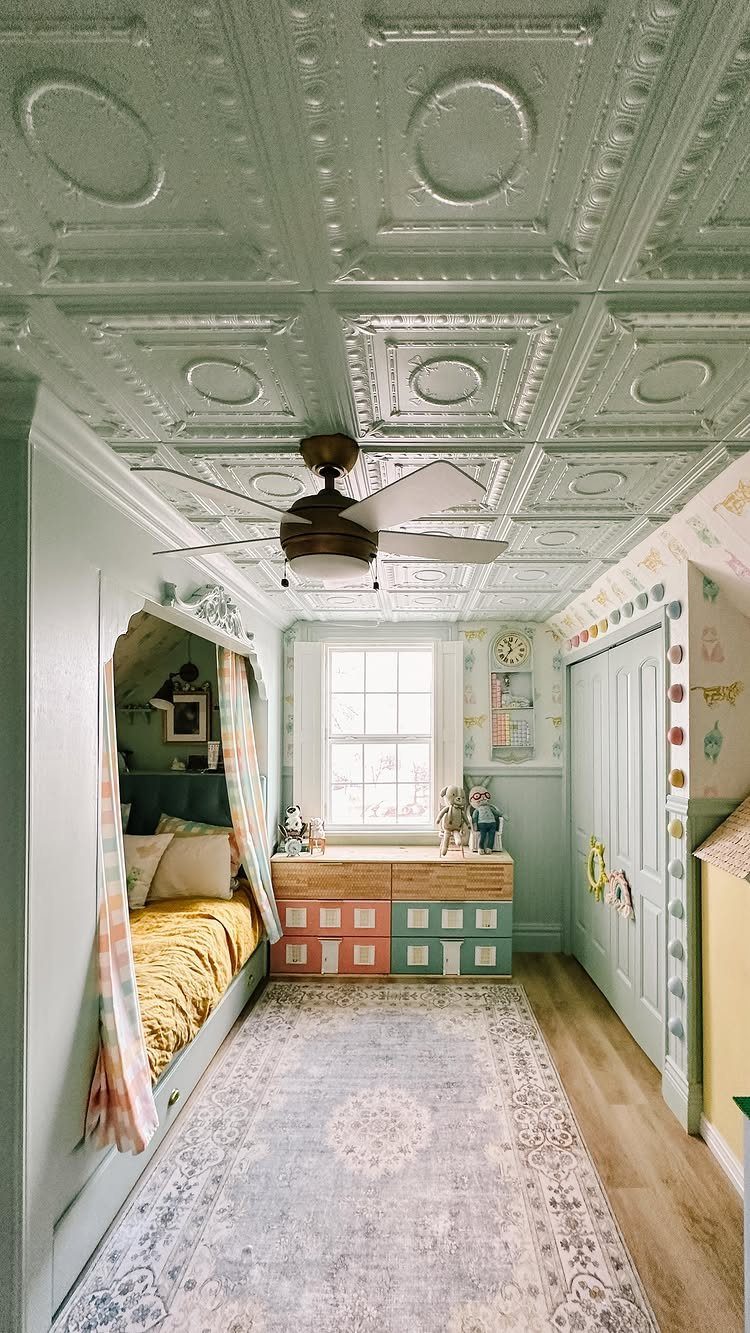
A ceiling painted pink with faux white moldings turns a whole room without touching a wall. The fifth wall gets ignored because ladders are involved, but that is exactly why the result reads as designer intent on a rental budget.
I would check what the existing fixture situation is first. A room with a flush mount and no fan is easier than one where you are painting around blades and brackets.
Wallpaper on a ceiling is possible, though a pro is recommended for that route; paint can be done yourself with just a 2-foot step stool and a small angled brush for the corners.
Bold color reads as architecture. Subtle reads as texture.
In a small room with white walls, even a soft tint changes the whole light quality. Commit to something other than white.
8. Geometric Painted Wall
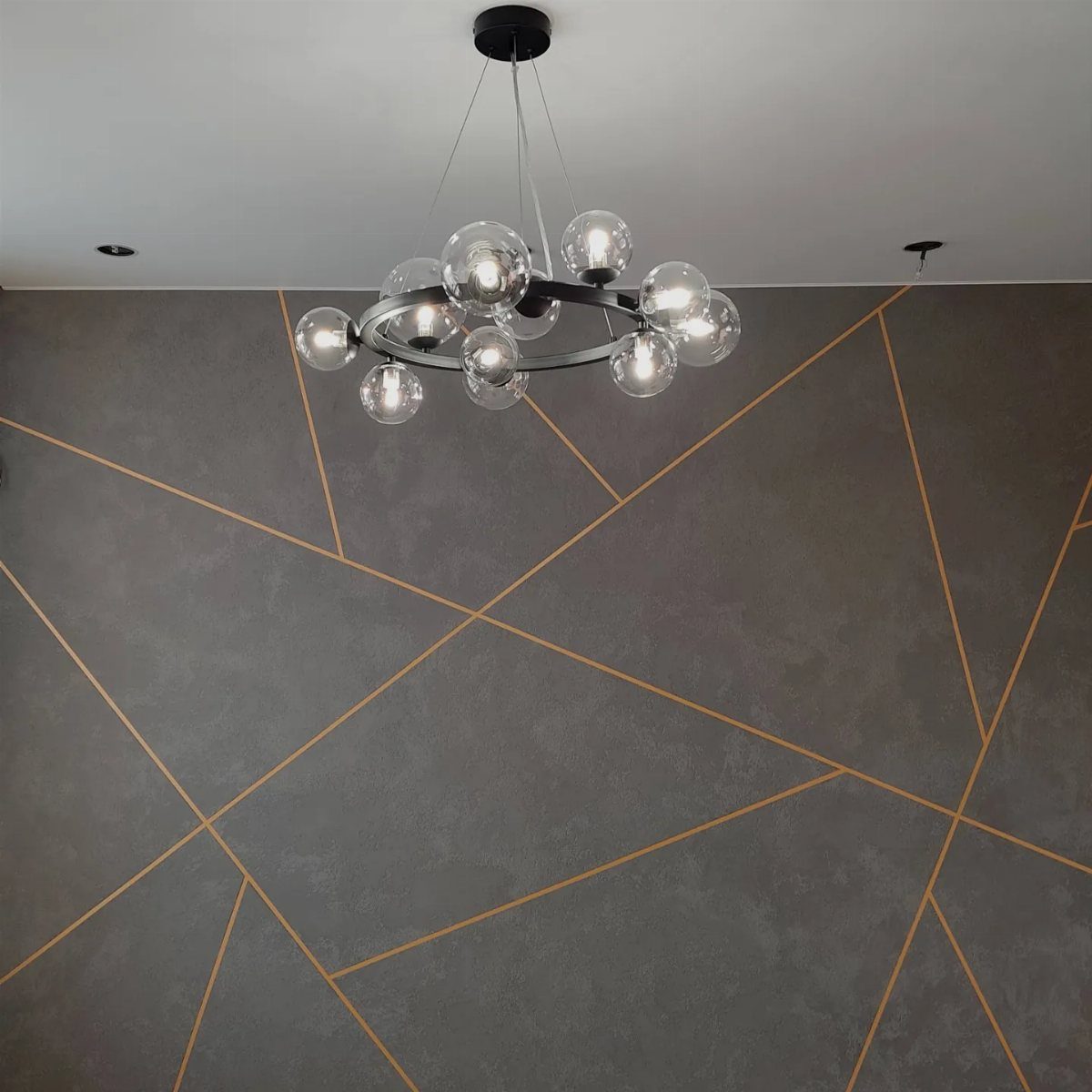
Painter’s tape and a level turn a flat wall into something that reads as paneling without the lumber cost.
Thin gold lines on dark grey read modern and slightly Deco, which suits a room that already has clean lines somewhere else.
Ashley Rose of Sugar and Cloth freehanded clusters of lines with an angled brush for a looser, brushstroke feel. That route is faster and forgives wobbles.
The taped route demands patience at the edges but gives you geometry that photographs well.
I would map the design on paper first. Ceiling height, furniture placement, and where the light falls all change which shapes work.
A shape that looks balanced in afternoon light can read as a dark blob by evening if the lamp sits wrong.
9. Freestanding Tub Accent Wall
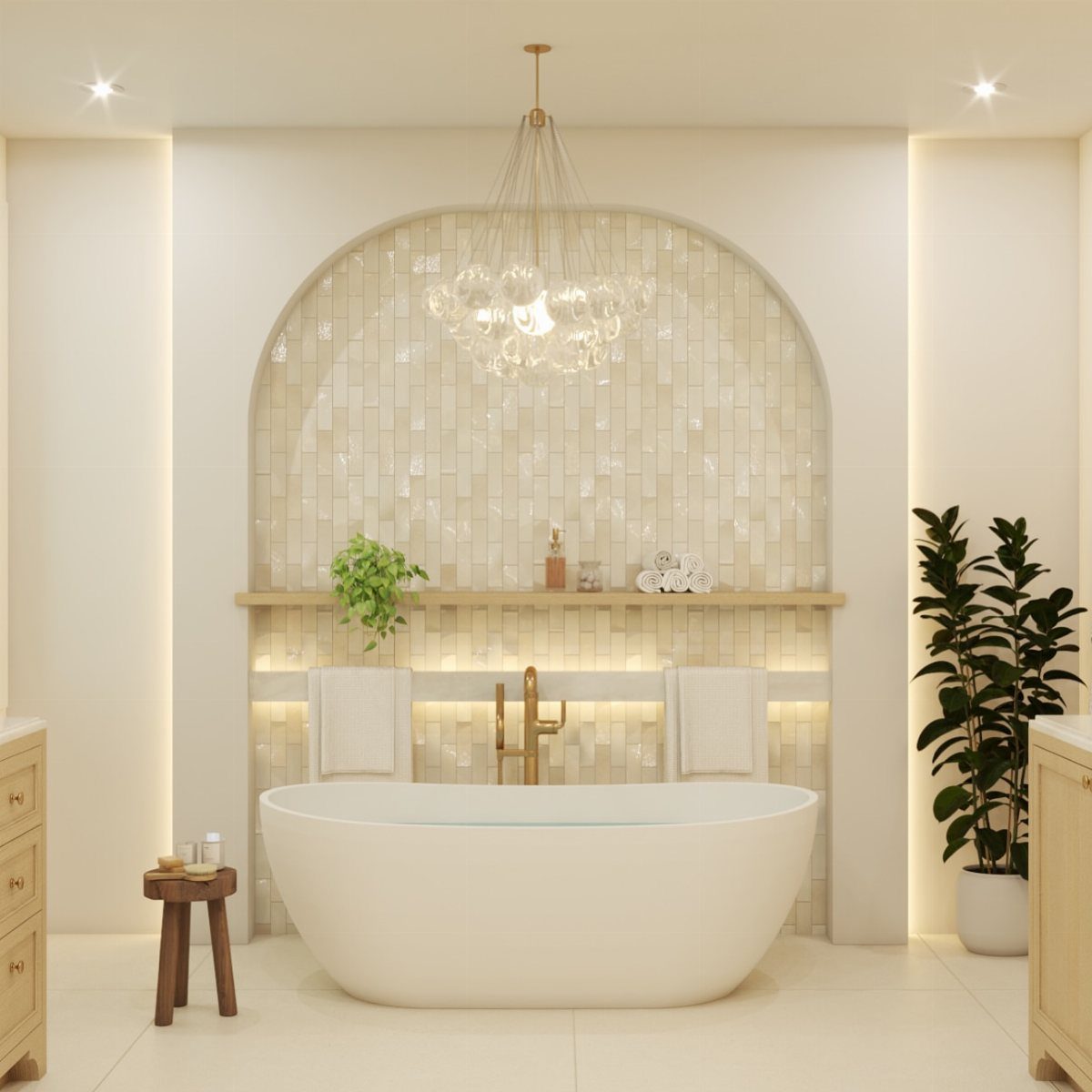
A freestanding tub against an arched tiled wall turns a bathroom into the kind of space that gets saved to boards labeled "someday." The tub is the feature; the wall is the frame.
Waterproof material matters here, which is why tile wins over paint in the splash zone.
The arch shape is built-in, but the idea works with a flat wall too. What changes the effect is scale.
The tub needs breathing room on both sides or it reads as crowded rather than staged. I would measure the floor space first; less room than you think you have changes the whole thing.
In a rental, peel-and-stick tile exists now in patterns that mimic the real thing. It will not last decades, but it will last a lease.
10. Chalkboard Wall
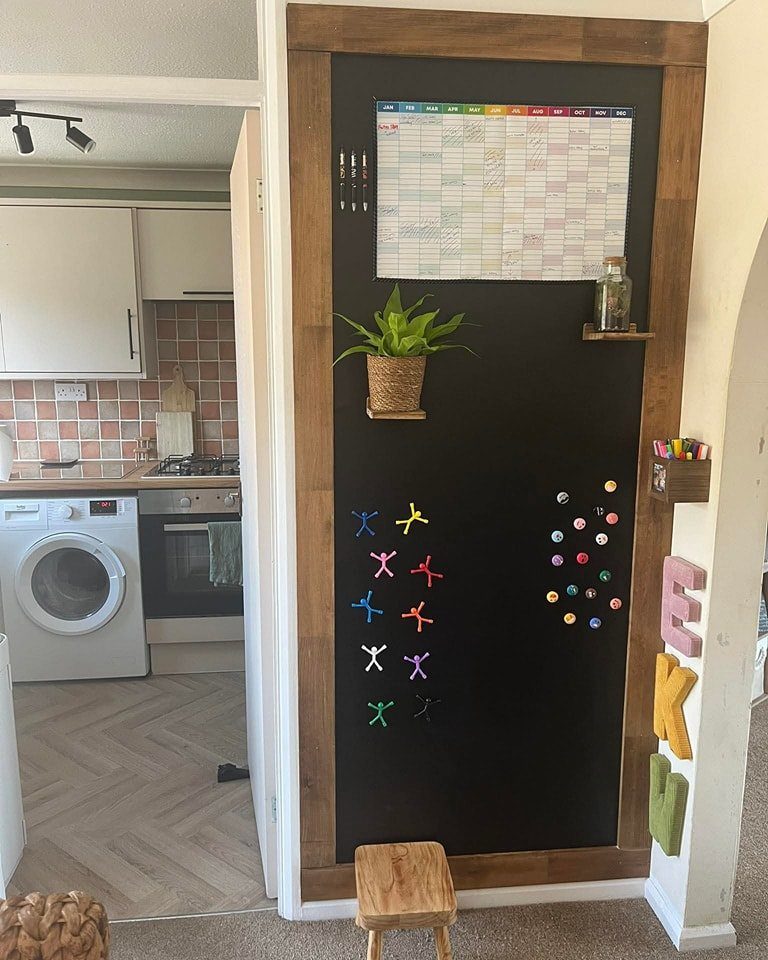
Chalkboard paint turns any wall into a surface that forgives change.
Framed in dark wood and holding a calendar, small shelves, and magnets, it sits between rooms where a family passes through, which is the right spot for something that collects notes and grocery lists.
Two coats is standard, but the surface prep matters more than the paint itself. A wall with any texture will hold chalk dust and read as dirty fast.
I would sand smooth and prime, or accept that the look is meant to be slightly grubby.
In a kid’s room it becomes a drawing station. In a kitchen it replaces the notepad you can never find.
The trade is dark color, which eats light in a room that already lacks windows.
11. Vintage Book Page Wall
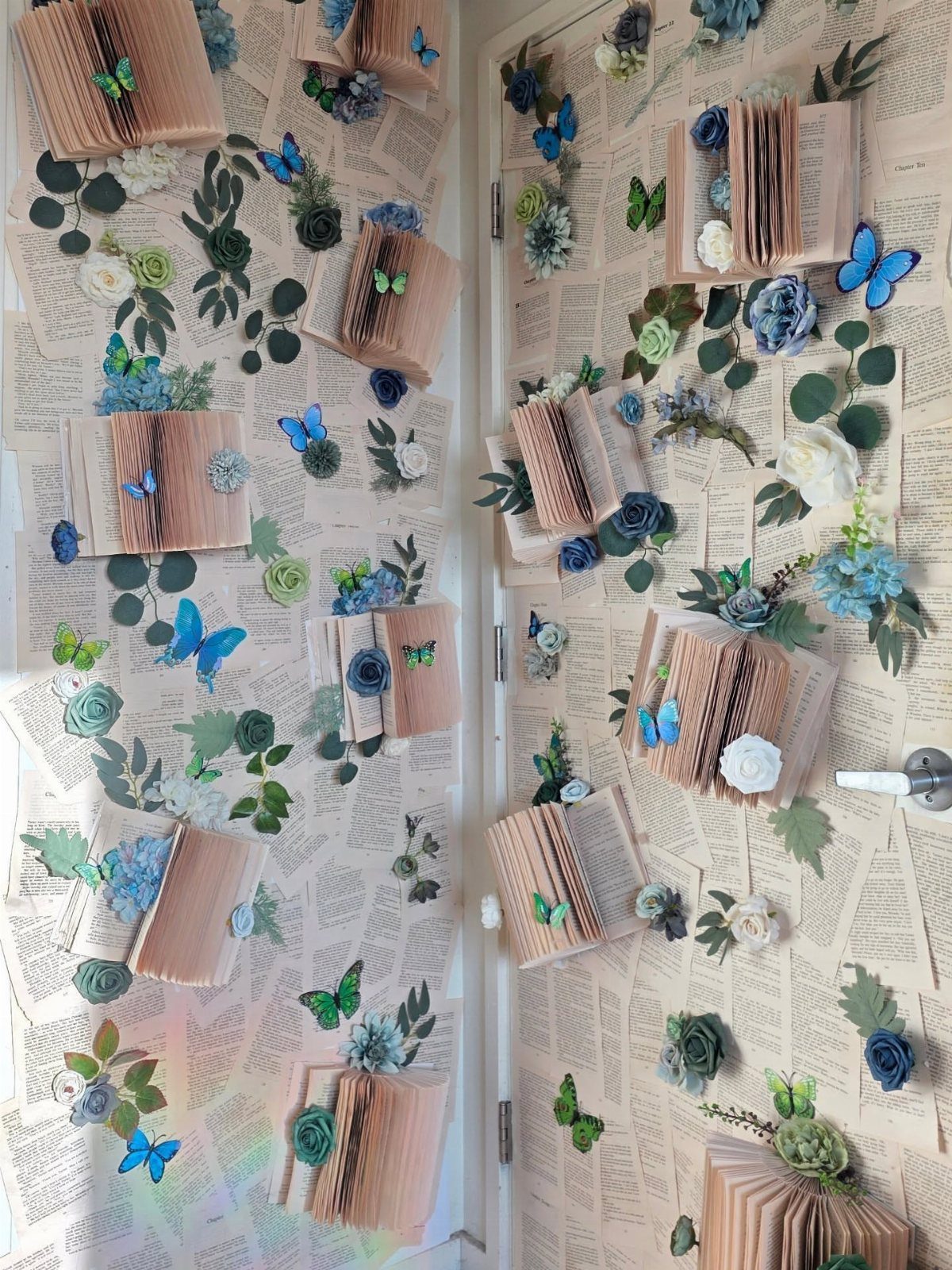
Vintage book pages glued flat cover a wall in something no wallpaper replicates: actual history, actual typefaces, actual foxing.
Layering bird-watching manuals and maritime texts with folded books and paper butterflies reads more collage than library, which keeps it from feeling like a study.
Wallpaper paste works. So does matte Mod Podge, though it goes on white and dries clear, which panics you mid-process.
The pages shown took about a day to install; I would sort and arrange on the floor first, since mid-wall decisions slow everything down.
This suits a small area. A whole room of text overwhelms; a door, an alcove, or the wall behind a headboard gives the eye a place to rest.
12. Botanical Wallpaper Accent Wall
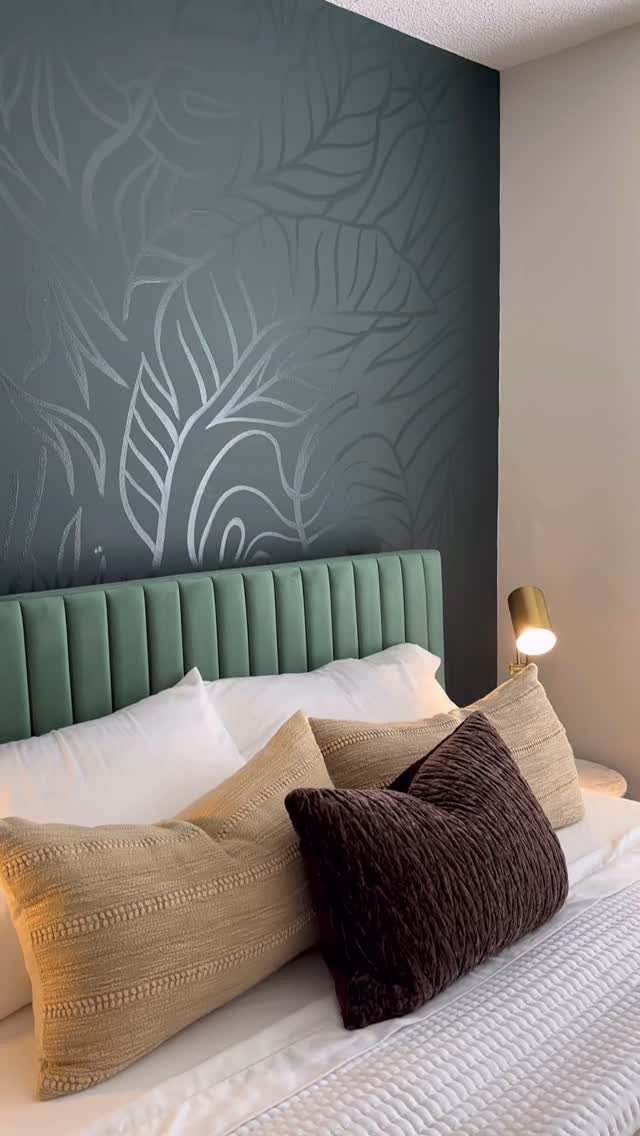
Botanical wallpaper in dark teal with large leaves behind a bed reads as moody rather than cute, which is the line this print walks.
The leaves are subtle in scale, almost texture from across the room; up close they resolve into something organic. That distance game is what makes it work in a bedroom.
Self-adhesive paper has improved to where one roll and an hour replaces the paste-table dread I grew up with. Matte texture matters more than pattern.
Gloss on a large wall catches every light source and reads as cheap, which defeats the purpose of choosing something with visual weight.
I would order a sample and live with it for a week. The color shifts with your lamp, your bedding, your morning light.
13. Solid Color Painted Wall
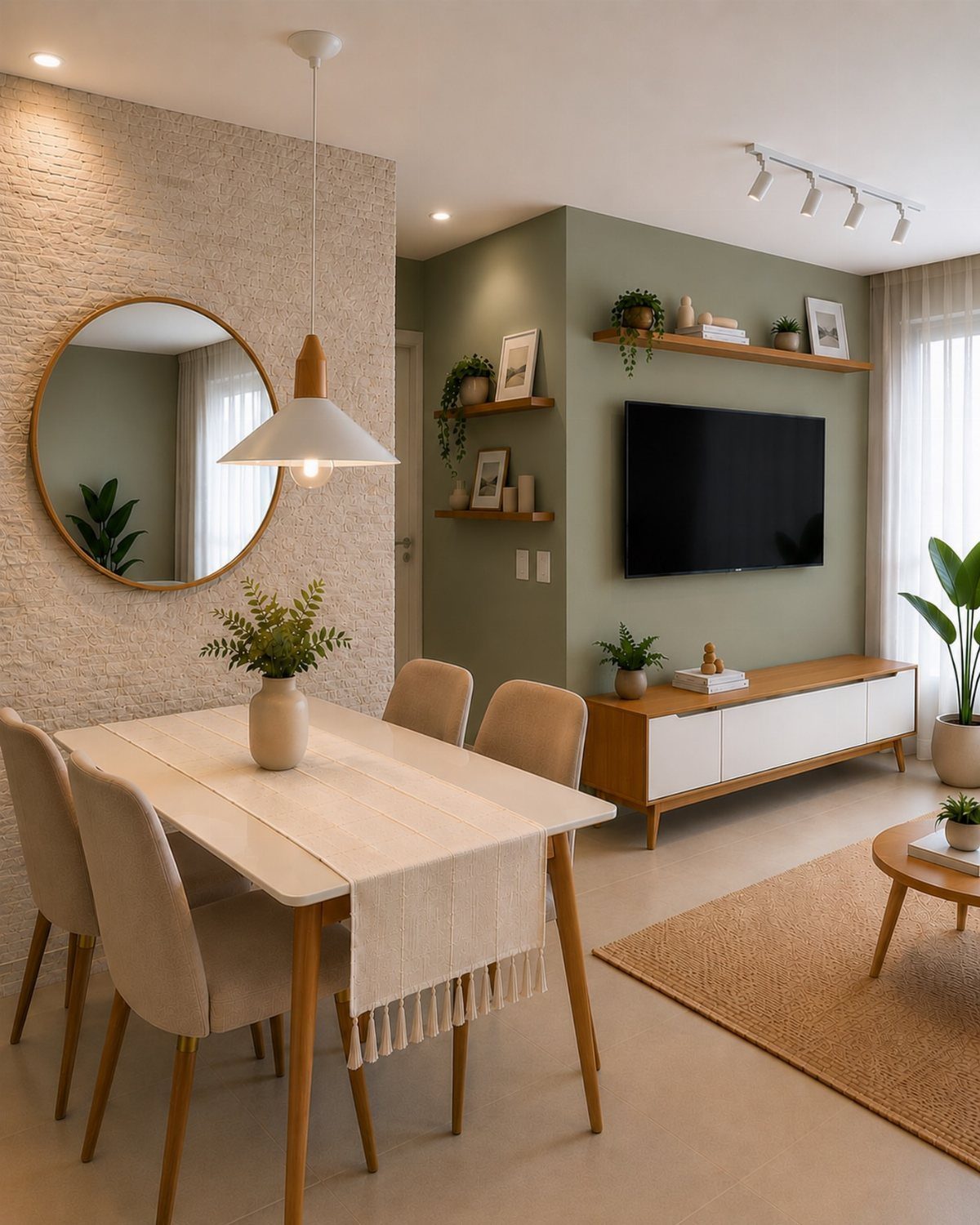
Sage green reads calm without going dark, and in an open room it does the work of separating spaces without a single partition.
One wall in a muted tone like this costs little more than a can of paint if you already own rollers and tape, and a Saturday morning with the right prep.
I would pick a color with enough gray in it to handle evening light.
The shelving and console show the real advantage here: solid color lets your actual stuff become the accent, which is cheaper than buying art to fill a busy pattern.
Best for renters who can paint one wall back at move-out, or first-home owners building around hand-me-down furniture.
14. Picture Frame Molding Wall
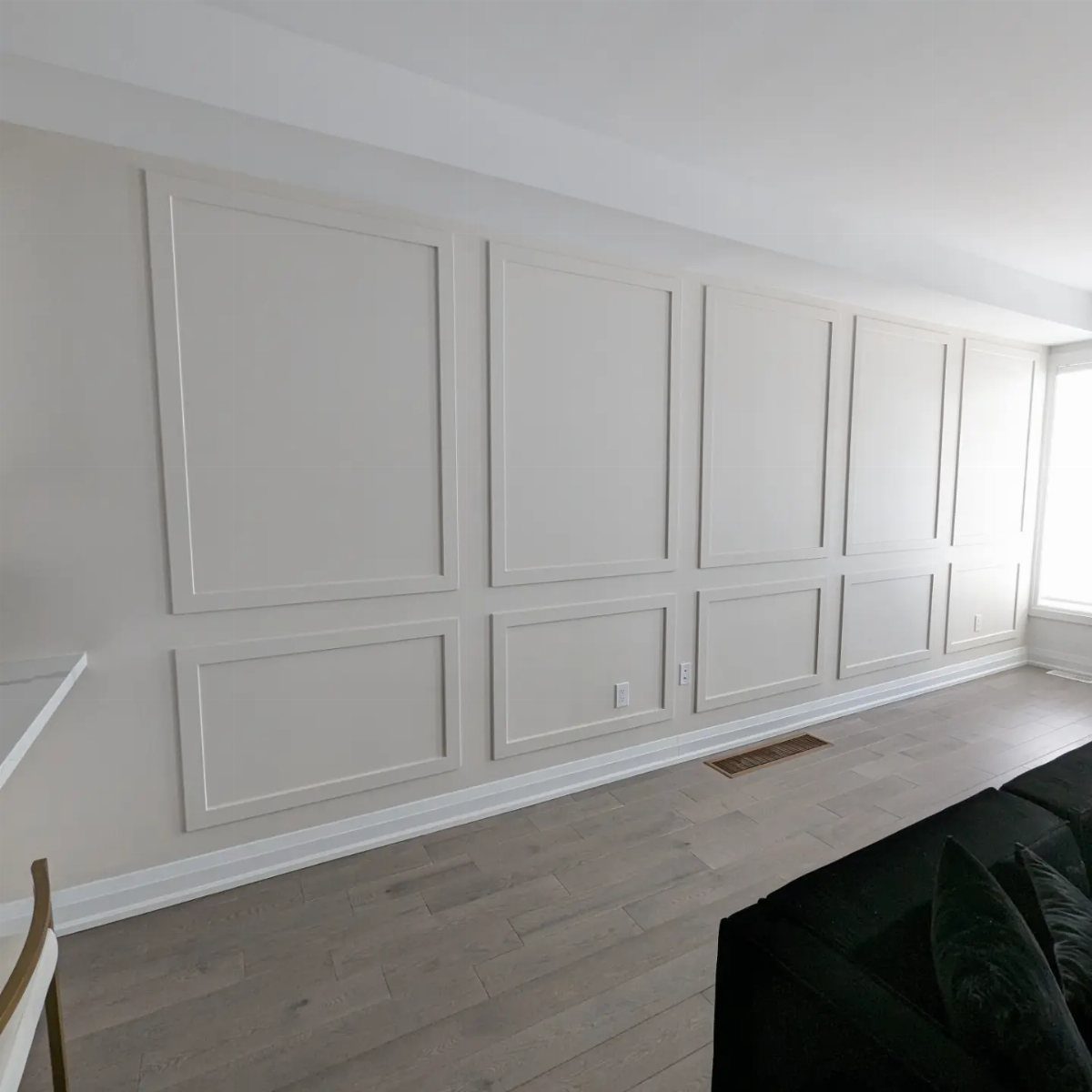
Picture frame molding is the oldest trick for making drywall look like it cost more.
The boxes are just narrow lumber cut to size, mitered at the corners, and nailed into studs or glued with construction adhesive if you are renting and patching later.
Paint everything the same color as the wall and the shadows do the ornamental work.
Two tiers running the width of the room took me an afternoon once the lumber was home, and the material cost less than a night out.
This suits rooms where you want architecture without pattern. Every miter has to meet clean or it shows.
15. Scalloped Painted Accent Wall
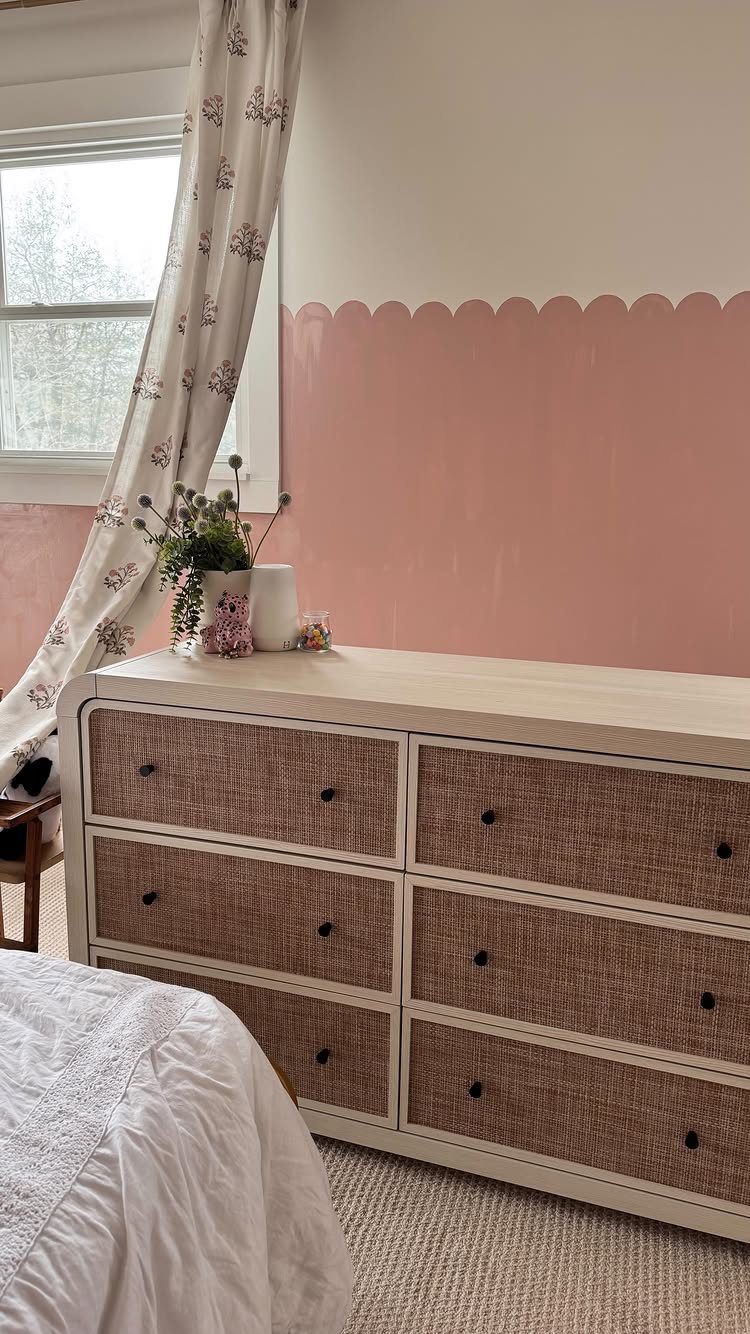
A scalloped border is easier than it looks because you draw the curve freehand with a pencil and level, then mask below the line with FrogTape and roll the lower half.
Pink below and white above reads soft in a bedroom; navy over cream would work better in a living room.
The dresser height hides any wobble in your first few scallops, which is why this works behind furniture. Two coats on the lower section and the tape comes off before the second coat dries fully.
I’d put this in a kid’s room or a rental bedroom where you want one playful wall without committing to wallpaper you cannot take with you.
16. Corkboard Accent Wall
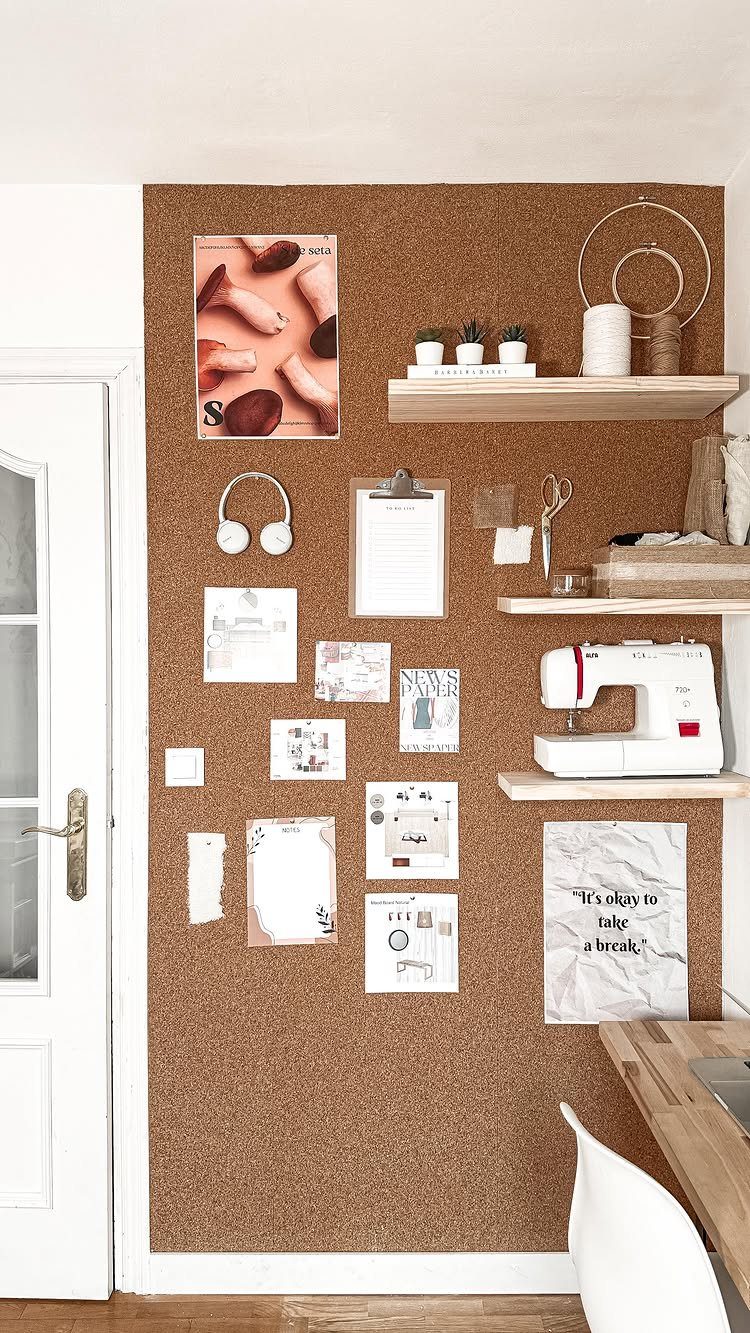
Cork panels mount with double-sided tape or small nails, and the whole wall becomes a surface you can actually use. A cork wall behind a kitchen desk holds grocery lists and kid schedules, and the sound-dampening helps in thin-walled apartments.
Cork tiles are cheap enough that material for a whole wall runs about the same as a decent lamp. The texture is the finished look, so you skip paint entirely.
This trades the polished effect of other accent walls for pure function. If your goal is a backdrop for Instagram, skip it.
If your goal is surviving daily life with your sanity, it earns its place.
17. Open Book Collage Wall

Vintage books from estate sales or thrift stores cost pocket change, and enough open pages cover serious square footage when you fold and mount them with wallpaper paste.
I would sort books by size first and lay the arrangement on the floor before committing. The pages yellow at different rates, so mixing eras gives variation that reads as texture, not mistake.
This is the most labor-intensive idea on the list. Budget a full day, and know that dusting becomes part of your life.
Best for a wall you do not sit against, and for a reader who already owns too many books to shelve.
Choosing the Right Wall
The wall opposite your door usually holds the eye first, and that is where your accent belongs. Behind a sofa or headboard works too, since furniture already trains attention there.
In a small room, texture beats darkness. Wood panels or soft wall panels add depth without swallowing square footage the way a deep color would.
A spacious living room can take a bolder choice; a dark wall pulls the space inward and gives it a center.
Bedrooms call for softness. Home offices need surfaces that absorb sound more than they shout for attention, which makes textured solutions the smarter pick there.
Built-in bookshelves, fireplaces, or existing architectural detail already do half the work of drawing the eye, so they are natural candidates.
The point is to highlight, not to wallpaper over a problem you would rather not notice.
If there’s a bold paint color you’ve been wanting to try but it just feels a bit too much for the whole room, accent wall ideas with paint are perhaps the easiest (and quickest) way to create a color-forward moment.
Color Considerations
Cooler colors recede and open a room up; warmer colors advance and cozy it in. A warm accent wall in a small space will feel smaller than a cooler, breezier hue in the same spot.
That does not mean dark is off limits. Contrast brings its own dimension.
In a large room, a dark wall becomes a focal point that gathers the space rather than shrinking it. Match the visual weight of the color to the size of the room.
Dark teal behind a bed reads moody, not cute, because the depth absorbs light rather than reflecting it back at you.
Look at what’s already in the room before choosing a shade. The existing decor should meet the wall halfway.
A wall that fights your sofa or your rug becomes a daily irritation, not a feature.
DIY Tips
Surface prep is tedious and non-negotiable. Fill cracks, sand, prime.
An uneven wall ruins any idea that follows, no matter how good the paint or how careful the tape line.
Pull the tape while the paint is still slightly tacky; that’s how you get a clean break. Late removal lets the paint set and tears the line.
Lighting determines whether your work shows.
For freehand geometric work, an angled brush and a level keep clusters of lines from drifting.
Budget-Friendly Materials
MDF slats, putty, and standard paint cover most projects without a special order. A hardware store run handles the basics.
Peel-and-stick panels and wallpaper turn up on Amazon and Etsy at prices that beat boutique sources.
For acoustic panels, Sound Pro Solutions stocks sizes and designs meant for home use rather than studio specs you do not need.
Reclaimed wood and estate-sale books cost pocket change if you have patience for the hunt.
The common thread is that minimal investment yields visual results out of proportion to the dollars. The ceiling here is your weekend, not your credit limit.
Frequently Asked Questions
What is an accent wall?
One wall gets treated differently than the rest, and that difference is what pulls your eye in when you enter the room.
Paint is the obvious choice, but the same idea works with wallpaper, a painted mural, boards you nail up, or even a brick veneer you stick on.
The idea is to draw the eye somewhere specific without overwhelming the whole space.
Are accent walls out of style in 2026?
No, accent walls are still a popular way to add character and dimension to a room. The current approach favors single-wall treatments over wrapping entire rooms, which keeps the commitment and cost lower.
A single wall is easier to change when tastes shift or when you move.
What can I decorate my living room walls with?
Paint one wall in a muted tone like sage green to separate spaces without building a partition, or hang a grid of matching frames for a calm gallery effect.
Solid color works well with hand-me-down furniture since your actual stuff becomes the accent.
How to make a feature wall on a budget?
Paint is the cheapest route: one can and a Saturday morning with proper prep. Renters have options now that didn’t exist when I started: peel-and-stick wood strips or wallpaper that comes down with a hairdryer when the lease ends.
Cork tiles, fabric, or vintage book pages from thrift stores cover wall space for about the cost of a decent lamp.
A pack of MDF slats and a quart of paint from the hardware store covered my bedroom wall for about $80.