These bedroom wall designs run from a roll of painter’s tape and sample paint to an installed slab that costs more than a month’s rent, with most ideas landing where a renter can finish between Saturday morning and Sunday evening.
The right choice depends on whether you need the wall back intact when you leave, since some of these ideas peel off and others demand a drill or thinset.
Command strips rated for frame weight, construction adhesive, or a plate hanger for heavier coils; somewhere in that sentence is your weekend.
1. Gallery Wall
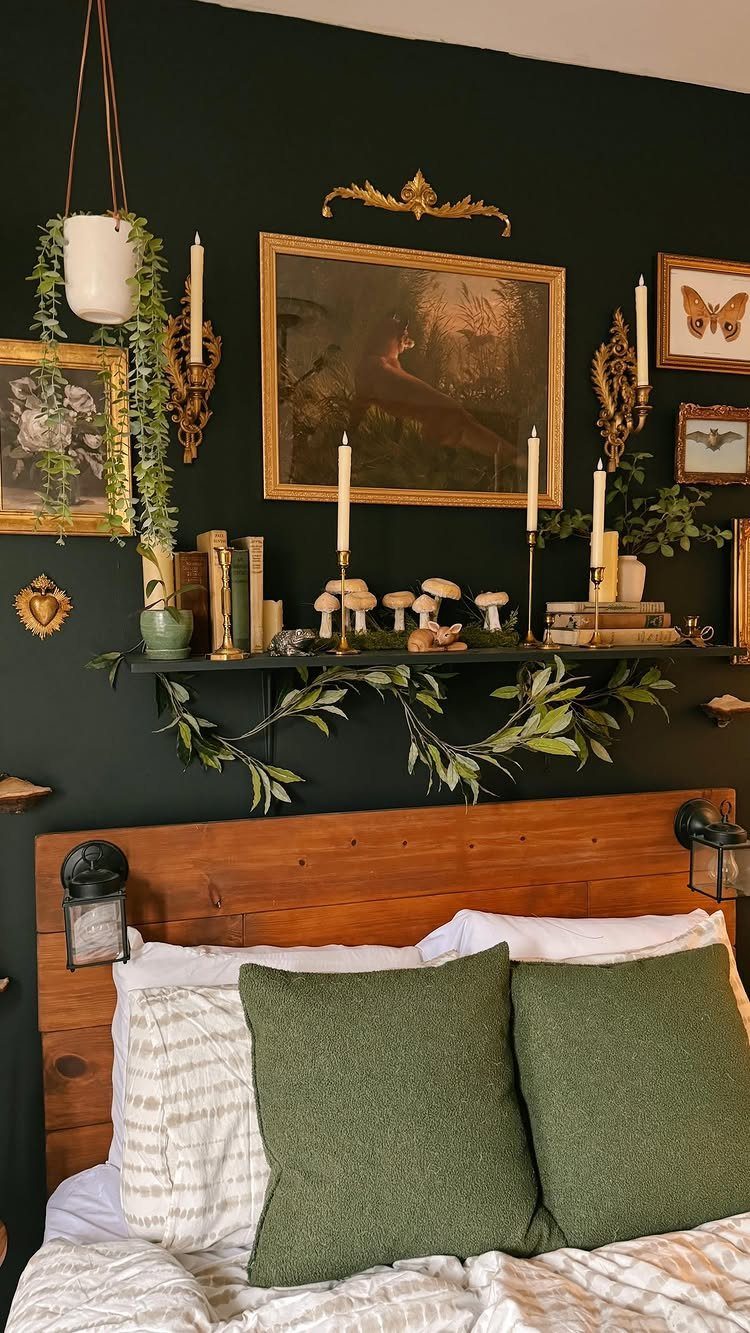
A gallery wall only works if the frames share something, even when nothing else matches.
A warm wood and gold palette against deep green needs a horizontal shelf line to hold the center; the eye needs somewhere to rest before it takes in the rest.
I would start with one anchor piece, build outward in a rough rectangle, and stop before the wall feels crowded.
Mix frame sizes freely, but keep the art itself in a single color family or mood so it reads as one gesture rather than a dozen separate decisions.
Renters can use Command strips rated for frame weight; I learned that lesson after a middle-of-the-night crash.
2. Textured Wall Panels
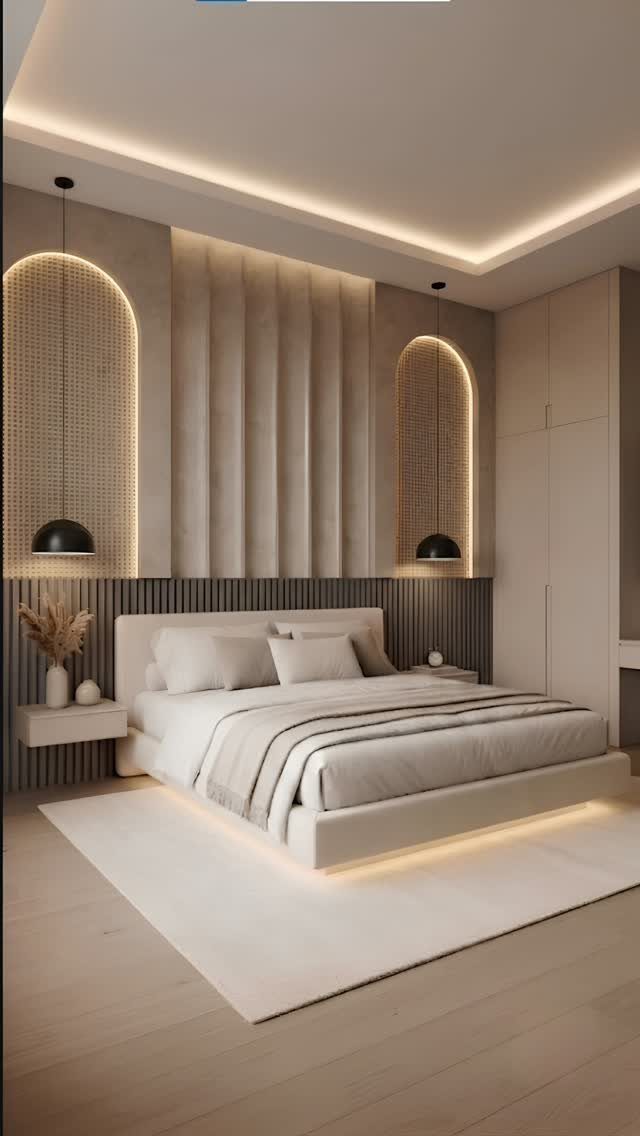
Vertical fluting catches light differently in morning than evening, which is half the appeal. Combining two panel types, upper and lower, lets the arched recesses do the actual lighting work.
Wood slat panels run less per square foot if you buy them finished; fabric panels cost more but add sound dampening that matters in thin-walled apartments. Installation takes a weekend if you are comfortable with a level and construction adhesive.
I would not attempt this on a wall you share with a neighbor’s bedroom unless you enjoy explaining drill noise.
3. 3D Wall Tiles
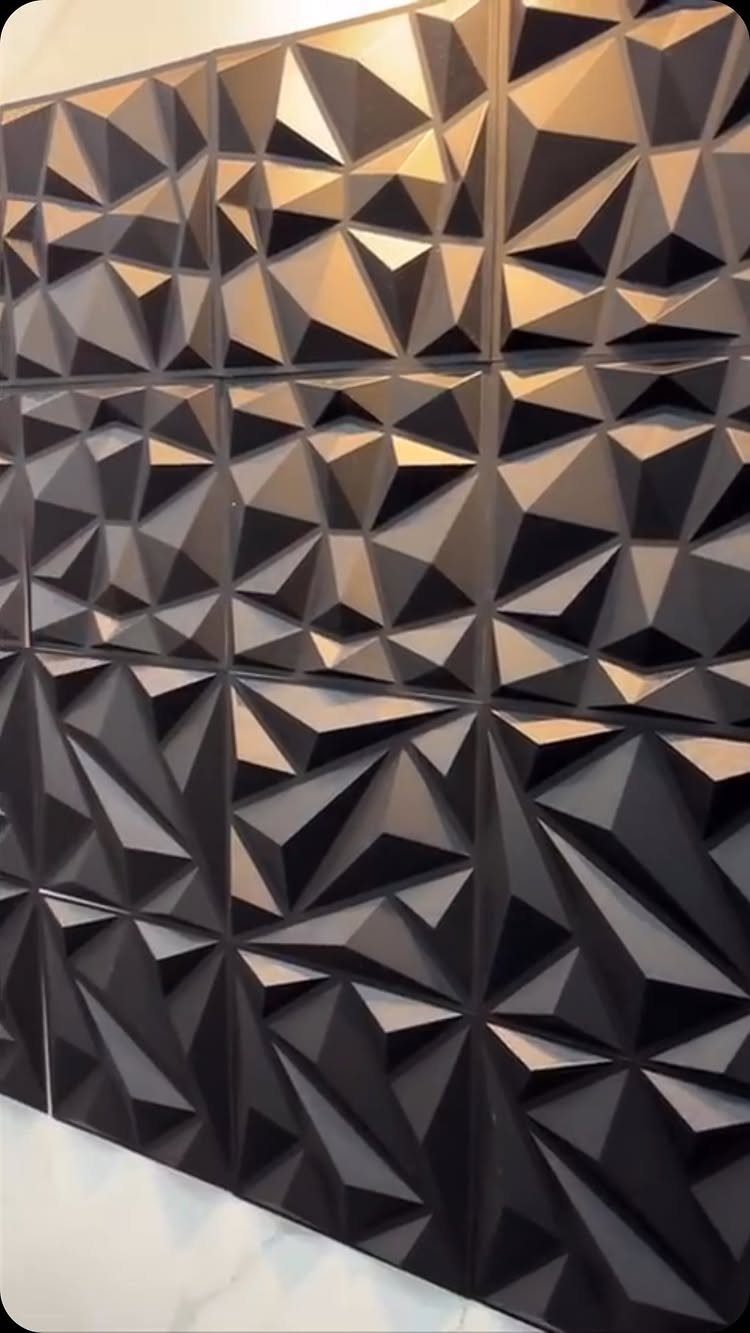
Black geometric tiles read as sculpture until you live with them, then they read as dust magnets. Sharp relief casts real shadow, which means overhead lighting becomes part of the design whether you planned it or not.
These install like standard tile with thinset, but the uneven surface demands more attention to spacing; even a slight drift shows.
I would limit this to a single wall or even a recessed niche, not a whole room, unless you want to wake up in a geometry problem.
Renters should look to peel-and-stick alternatives in PVC, which exist now at lower cost per tile.
4. Statement Wallpaper
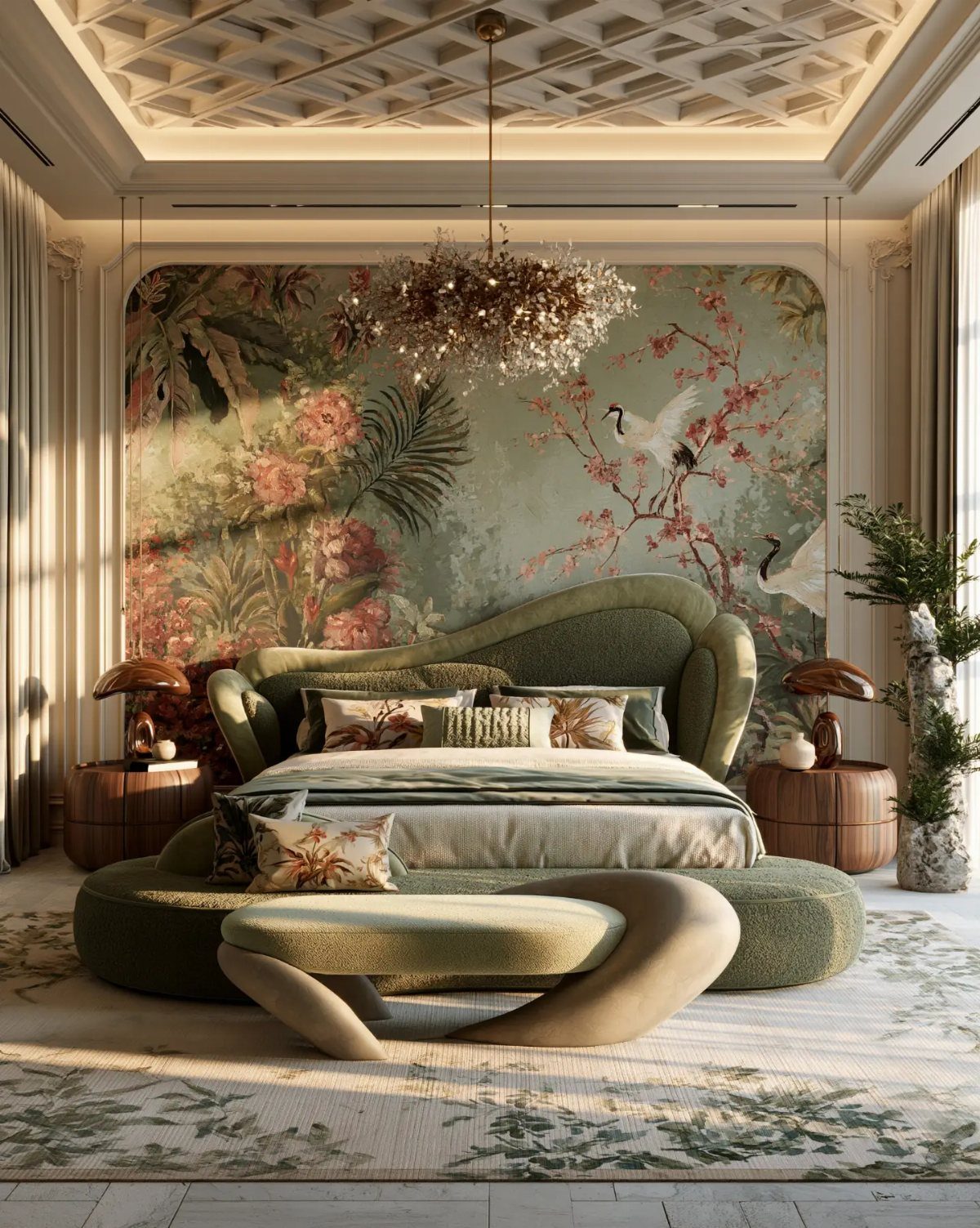
A single wall of bold paper costs less than repainting the whole room and moves with you if you choose prepasted strippable.
Order a sample first and live with it through a full day; morning light will betray colors that looked rich after dark. I have made the mistake of matching fabric to paper too closely, which flattens everything into wallpaper soup.
Better to let the wall be the pattern and keep bedding large-scale solid or simple texture.
5. Mirrors for Space
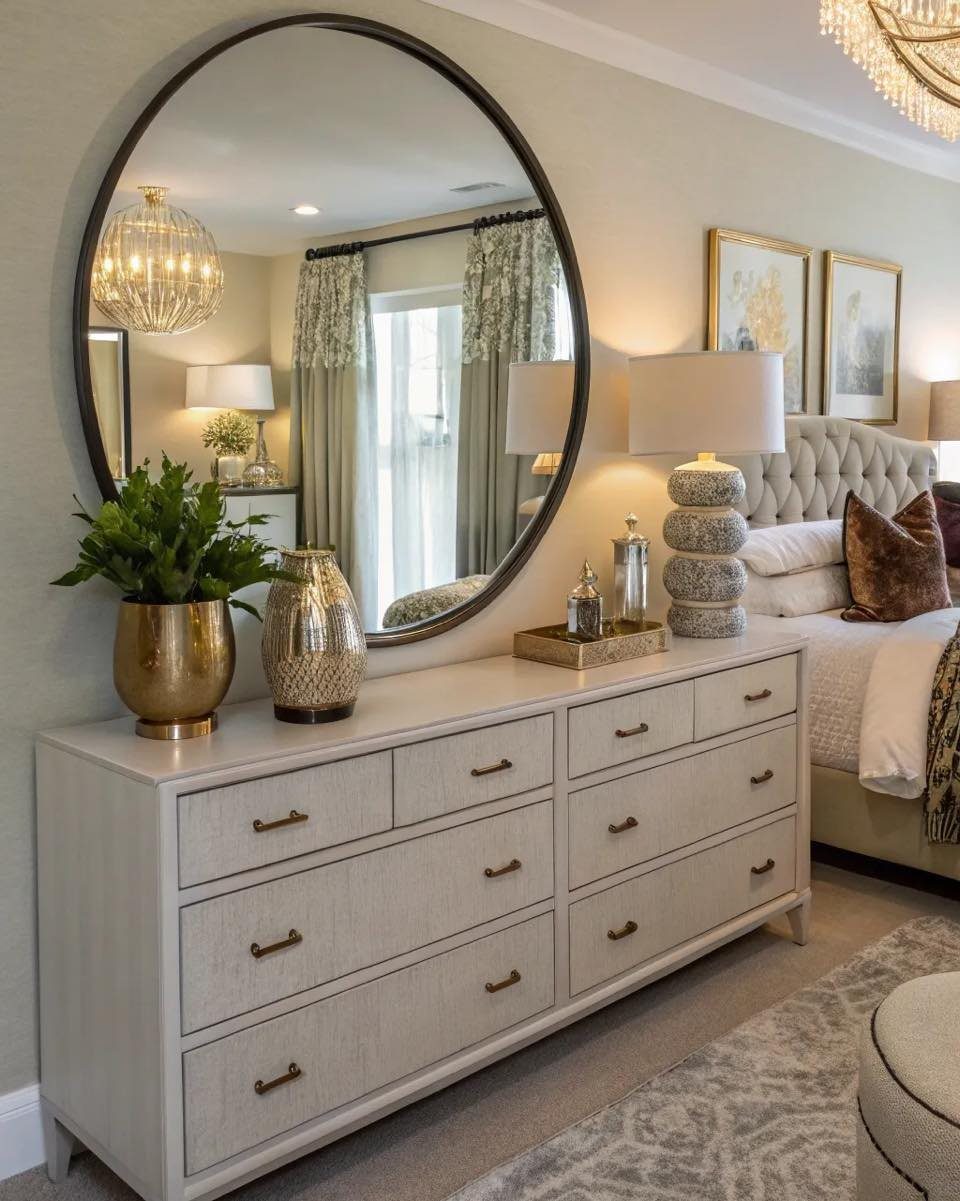
The round mirror above the dresser does not reflect the bed itself, which would feel exposed; it catches the window and the lamp, so the room doubles in light without doubling in self-consciousness.
I would hang mirrors to reflect what you want more of, usually light or greenery, never the bathroom door or the laundry pile. For small bedrooms, one large piece wins over several small ones, which read as clutter.
A mirror that size typically runs in the low hundreds; mounting hardware should hit a stud, as drywall anchors surrender slowly under bathroom humidity that travels.
6. Accent Wall Behind the Bed
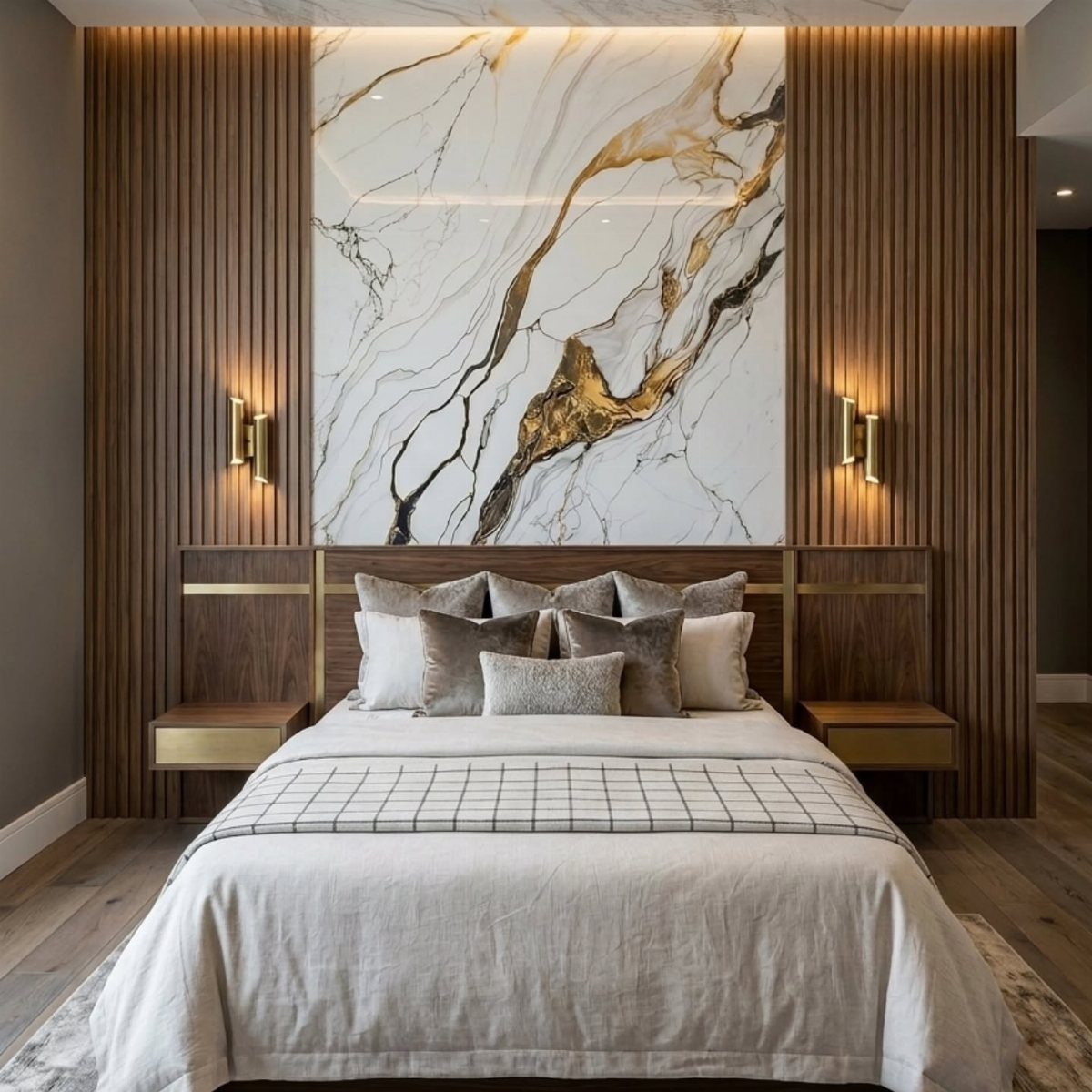
Wood slats flank it to soften the geometry and hide any slight unevenness in the tile edges. I would build the slat section first, dry-fit the center panel, then address any gap with trim painted to match the wall.
Rich colors or deep textures work because you see them in glimpses, not full frontal; you want the wall to recede as much as announce itself.
Dark walnut tones suit north-facing bedrooms that need warming; pale oak works when the room already gets harsh afternoon sun.
7. Wooden Accent Wall
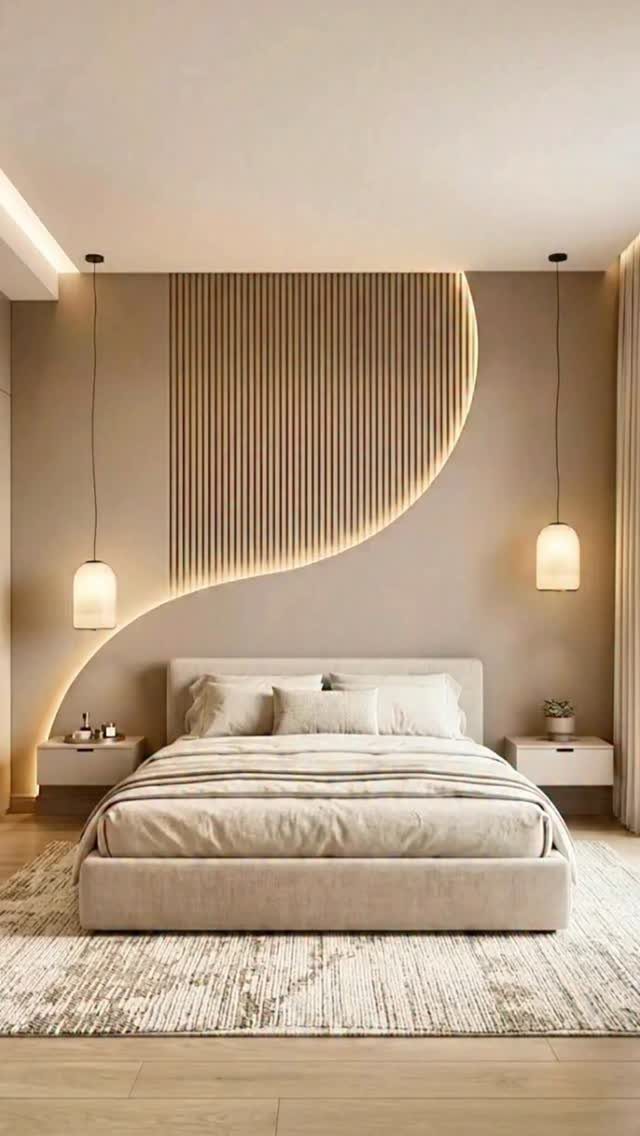
Wood on a bedroom wall still carries the smell of a workshop, and that is half the point. Slats, boards, or plywood veneer behind the bed turn a flat surface into something that catches morning light and evening lamplight differently.
Dark walnut reads rustic and heavy; pale oak or ash keeps the room breathing. Warm LEDs tucked behind the curve throw shadows between each strip, and the gaps keep the light from going flat.
That trick takes a router, a drill, and patience, not a contractor.
For renters or anyone who needs the wall back intact later, peel-and-stick wood tiles in a walnut finish give the same cabin feeling without the commitment. Keep the furniture plain.
The wall does the talking.
8. Canopy or Drapes
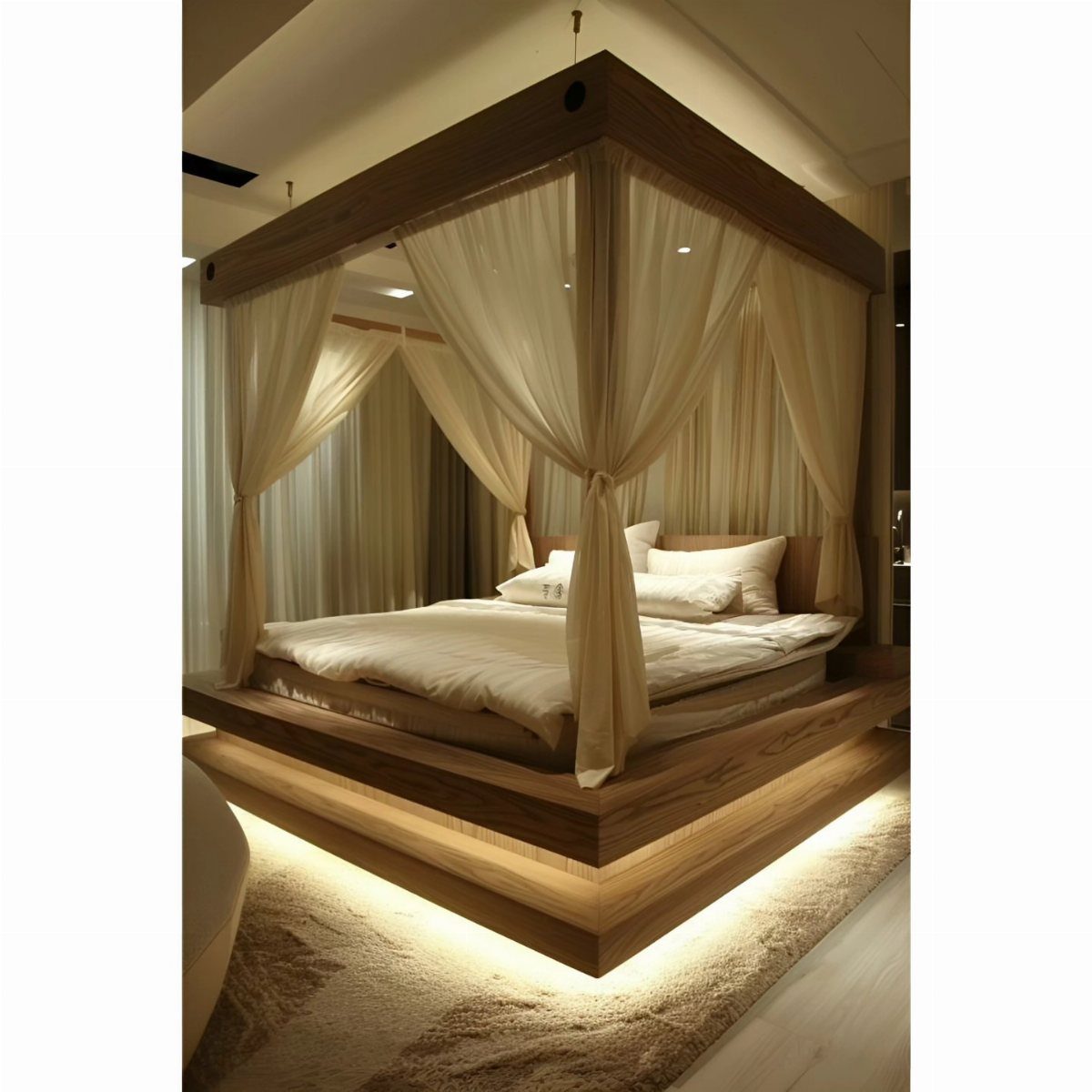
Sheer fabric hung from a four-poster frame does not block anything practical. It blocks the feeling of being watched by an open room, which is why canopy beds survive in houses with perfectly good drywall.
Cream drapes pool slightly at the corners of a raised platform bed, with under-bed lighting that makes the fabric glow from below. That warm wash turns the bed into its own zone.
Patterned fabric works for someone who wants drama; solid sheer for someone who wants sleep without visual noise.
Ceiling hooks or a simple metal frame screwed into wall studs can fake the effect on a standard bed for cheap. Take the drapes to the dry cleaner first.
Bedroom fabric collects dust fast, and washing sheer at home turns it to tissue.
9. Nature-Inspired Murals
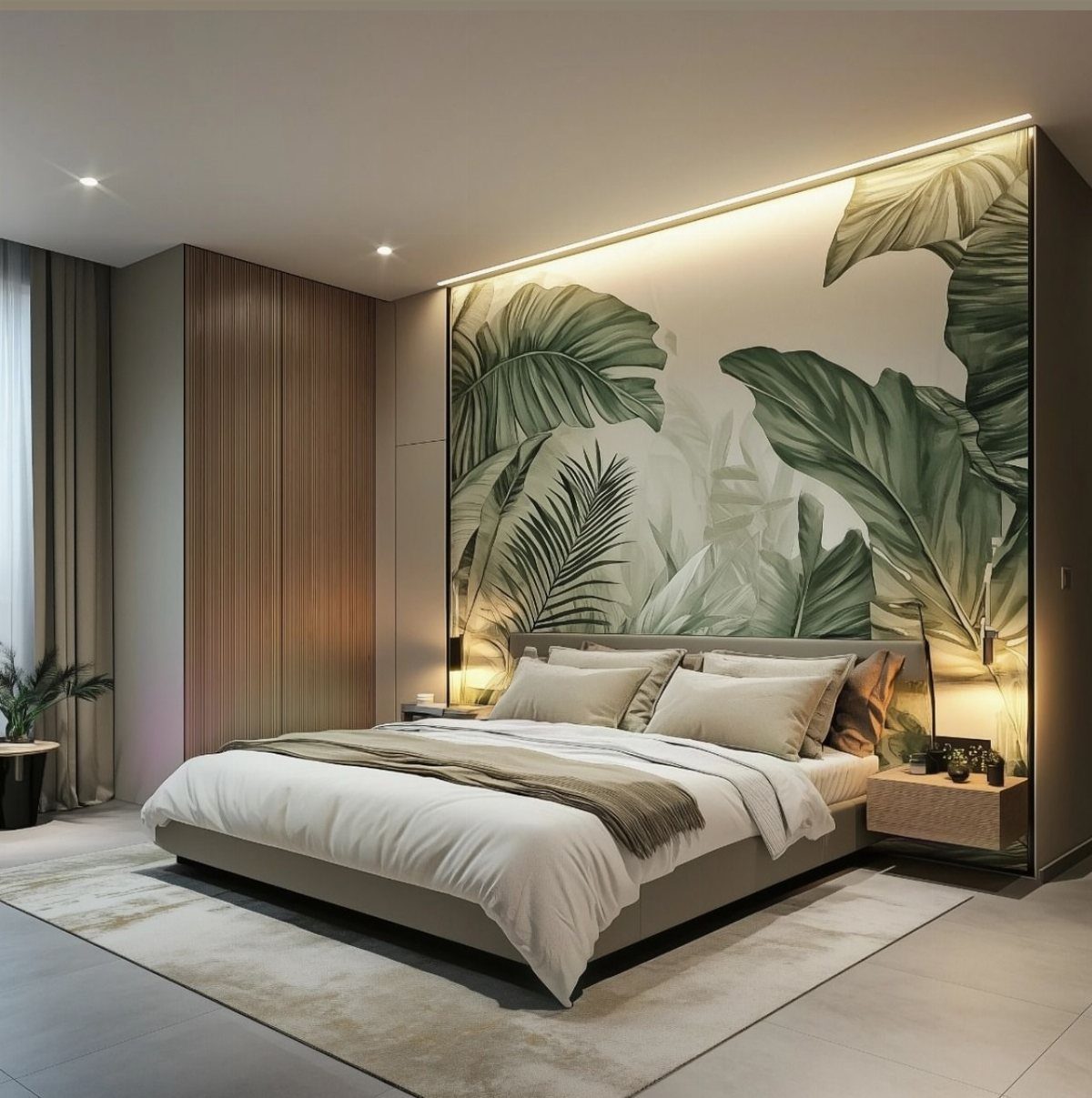
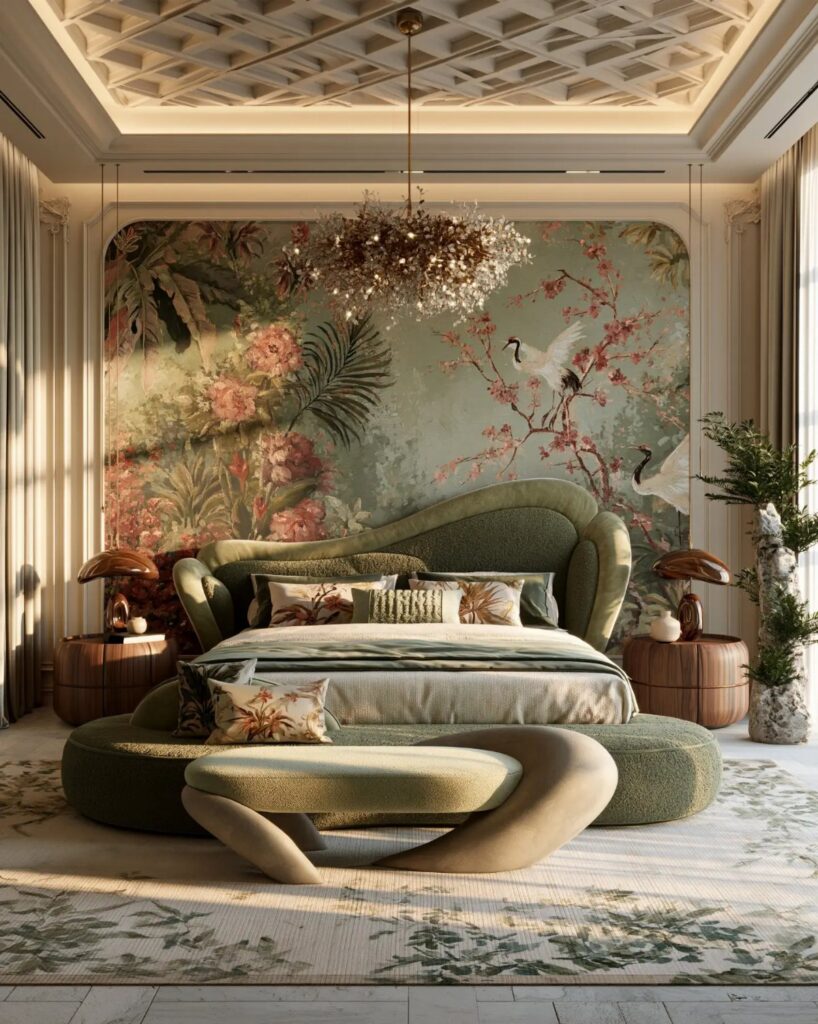
A mural of oversized tropical leaves behind the bed turns the wall into a window someone else opened.
Printed wallpaper murals install like any roll, but the impact depends on scale. Small leaves read busy; large ones read calm.
The ceiling stays plain white, and that matters. The last thing you see before sleep should not compete.
Plywood backing keeps the paper flat long-term in humid climates. For a renter, removable mural panels exist, though the good ones cost more than paint.
Spotlights above the frame draw the eye up and keep the bed from feeling buried in foliage. This one suits someone who wants nature without the watering schedule.
10. Bold Headboard
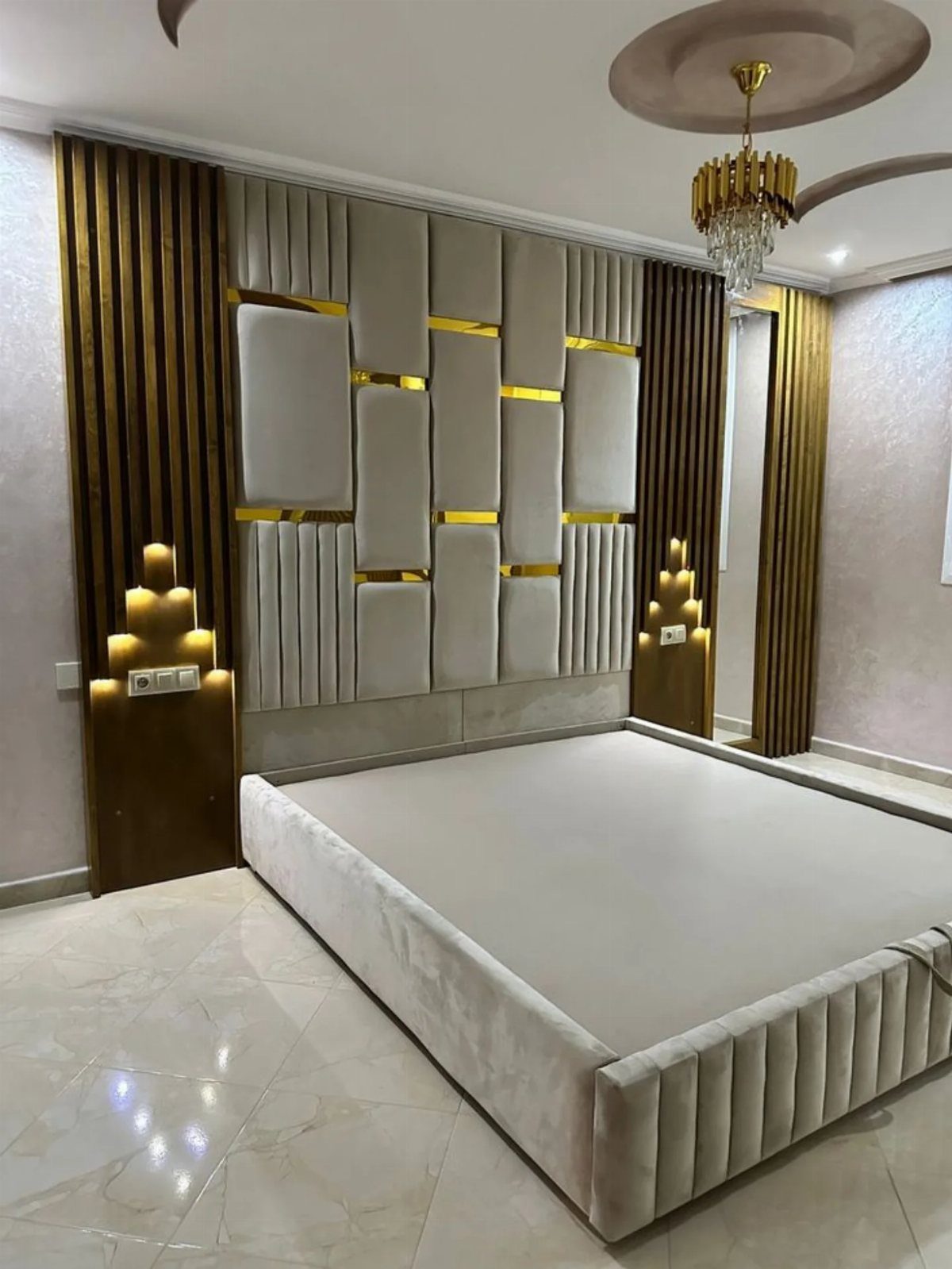
A headboard that sprawls across the whole wall behind the bed turns furniture into architecture. Vertical upholstered channels pair with gold striping and flanking wood slats, lit from within.
It reads hotel lobby, which is either aspirational or exhausting depending on your morning mood.
Painted MDF or plywood veneer can fake the grandeur for less, though the upholstered center panel demands either a staple gun and patience or a pro.
Glossy laminate on the outer sections wipes clean; fabric collects hair oil and the dust that settles on pillow-adjacent surfaces.
For humid rooms or allergy seasons, vertical tile panels in a bold pattern give the same vertical emphasis without the vacuuming. Ricco 2.0 tiles carry the look with less maintenance.
11. Upholstered Panels
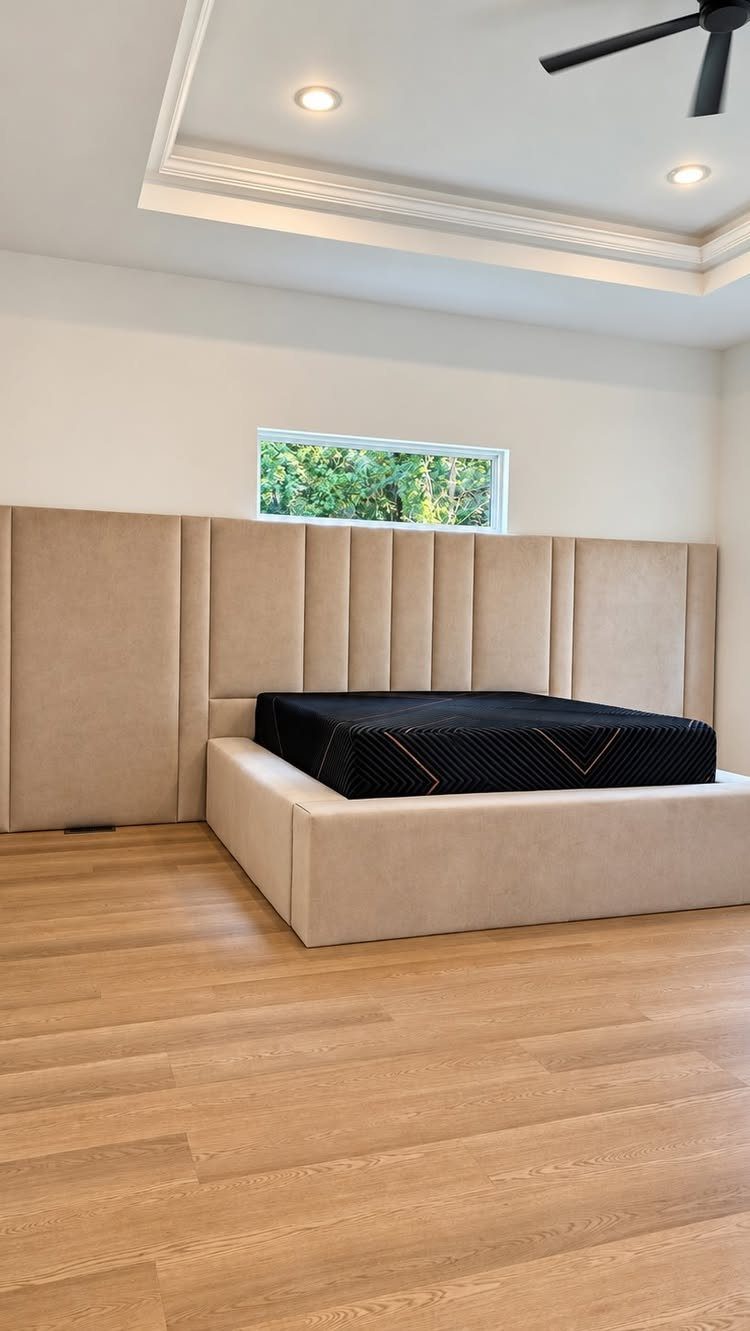
Soft panels of fabric screwed to the wall behind the bed do one thing paint cannot: they absorb sound.
In a room with hardwood floors and thin walls, that changes how the space feels to sit in, not just how it photographs.
Beige panels run wide and low, almost to the floor, with a platform bed shoved against them. Plywood backing keeps the fabric from sagging where hands push or heads rest.
Neutral colors calm; burgundy or navy dramatize.
Upholstered panels are harder to keep clean than they look. In dusty climates or pet households, the maintenance cost is real.
For the same plush effect with less hassle, consider that tile panels or veneer can mimic the geometry while shedding the lint roller dependency.
12. Built-In Shelves
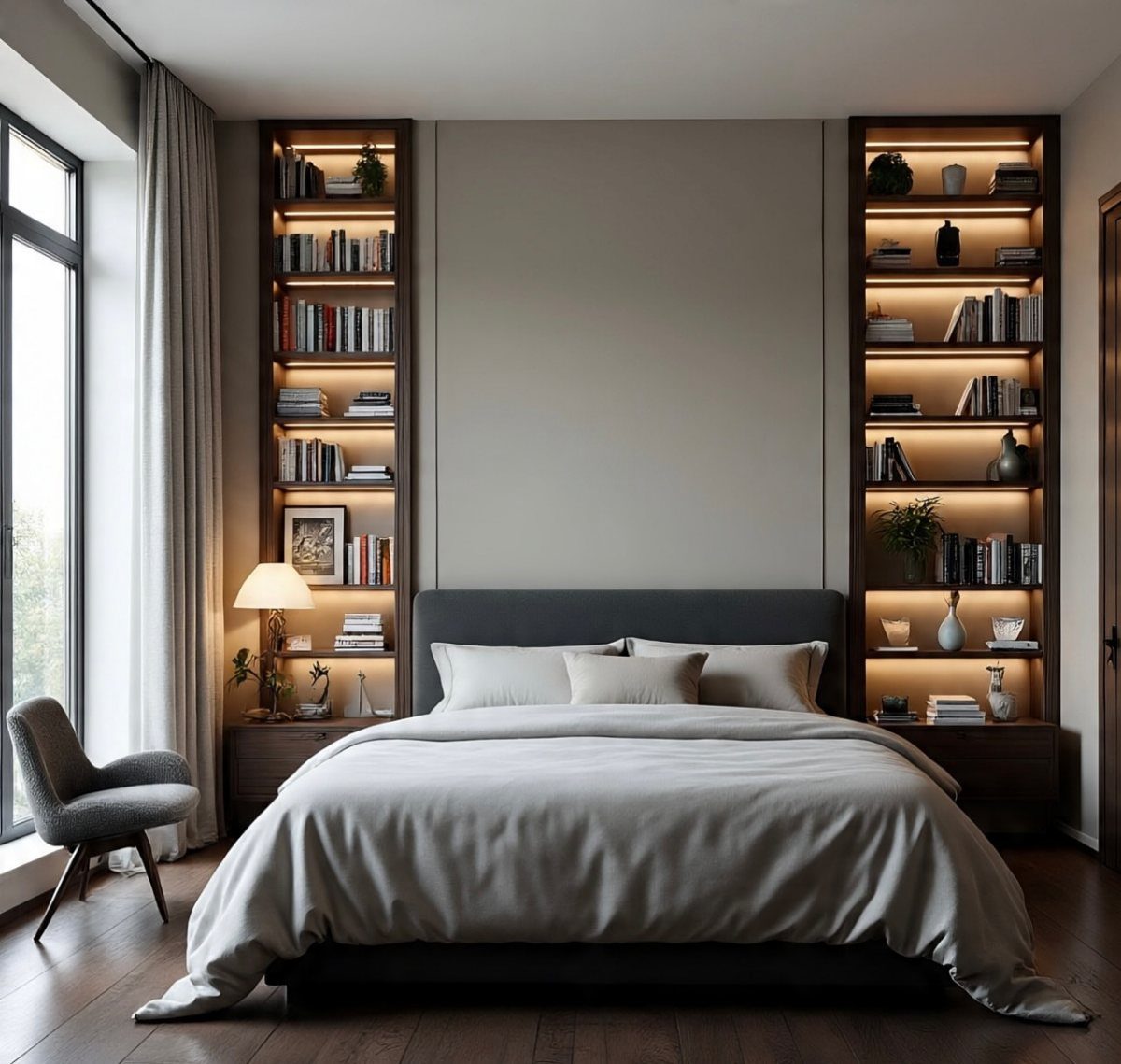
Built-in shelving on both sides of the bed turns the wall into a working unit. Tall, dark cases with warm interior lighting make the objects inside glow against the pale headboard panel.
Floating shelves read lighter visually, but they need studs or heavy-duty anchors to hold books. Plywood carcasses last longer than MDF in weight-bearing use.
Bright laminate fronts make the shelving pop; dark wood with internal lighting turns the same objects into a quieter display.
This idea trades away floor space and bedside table real estate. If you read in bed, plan where the lamp goes before the builder leaves.
For renters, freestanding bookcases flanking the bed give almost all of the look with full portability.
13. Geometric Designs
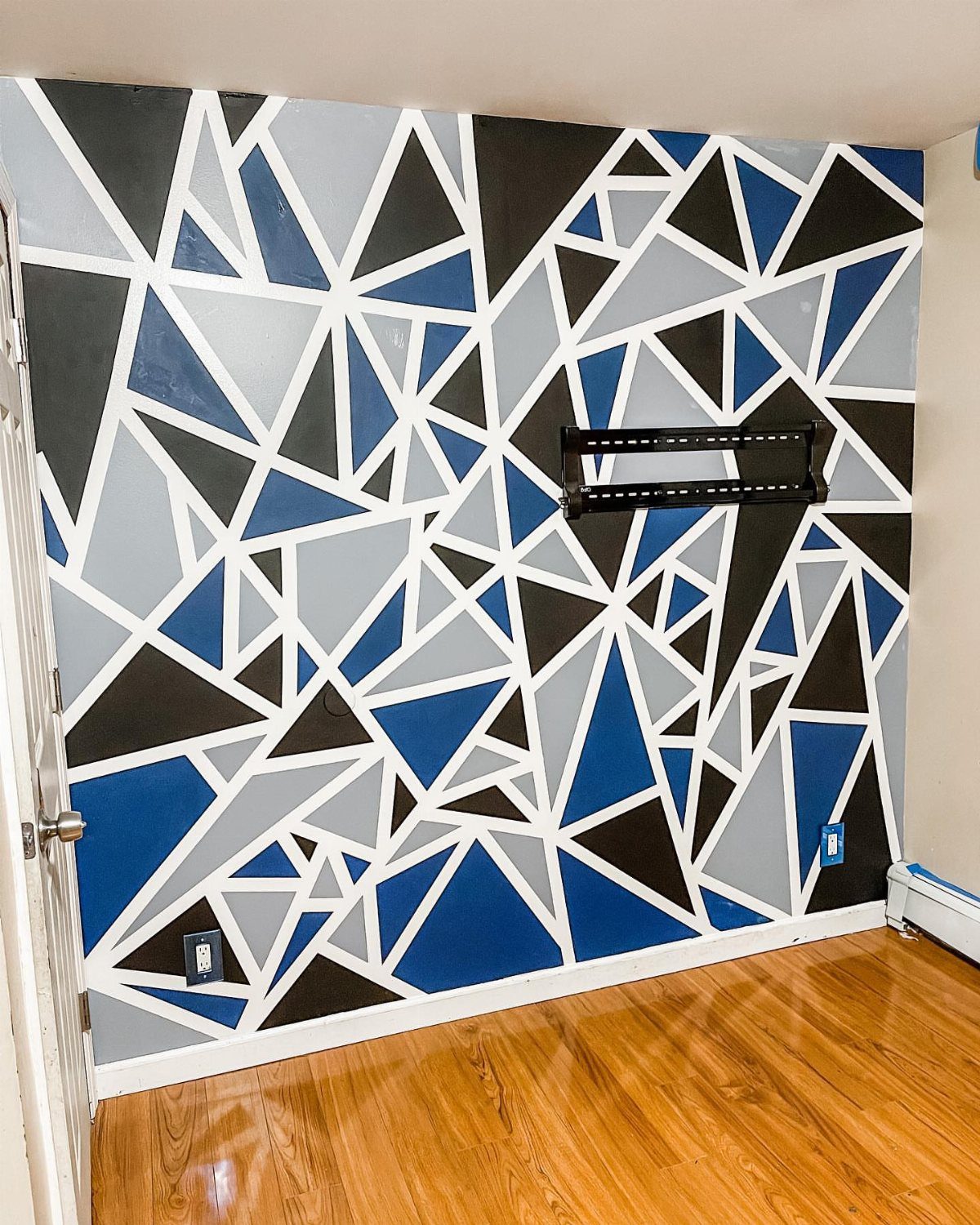
A single wall of repeating triangles in navy, light gray and black, separated by thick white lines, reads as modern without trying too hard.
I like this for renters because painter’s tape does the heavy lifting; no commitment to wallpaper or panels you’ll leave behind.
Start with a base coat in your lightest color, then map the pattern with tape strips cut from a standard roll. Fill each shape with a small roller to avoid seepage.
Two coats per triangle, peel the tape while the last color is still tacky. This takes patience; a full wall means a full day of taping and painting before you can pull the tape and see the clean edges.
I’d skip this if your ceiling is uneven; the lines will betray every flaw.
14. Woven Baskets Wall Decor
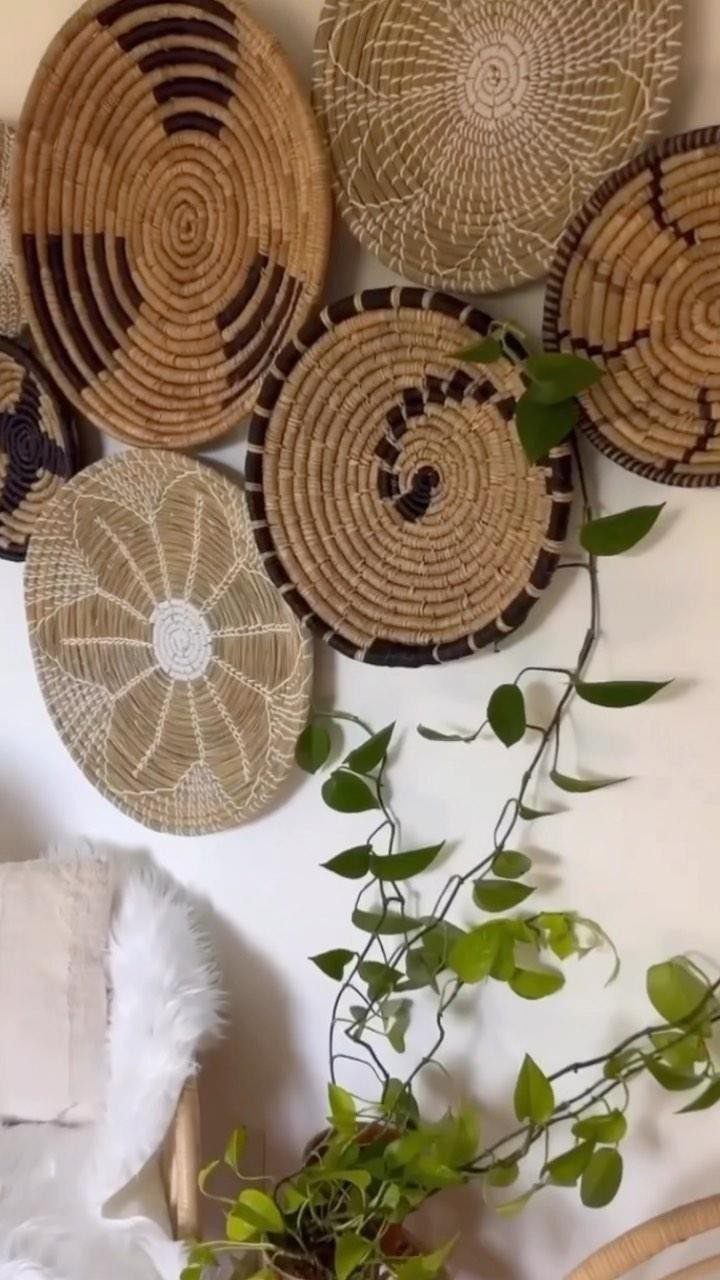
Flat woven baskets in natural, tan and black patterns turn a blank wall into something with shadow and warmth.
Thrift stores and estate sales are my first stop for this; new baskets add up fast, but I’ve found full sets at garage sales for less than the price of one.
Nail through the center weave on lighter pieces, or use a plate hanger for heavier coils. This suits bedrooms that already have clean lines and need texture without clutter.
Skip it if your walls are busy with patterned bedding or a rug that commands attention.
15. Wall-Mounted Sculptures
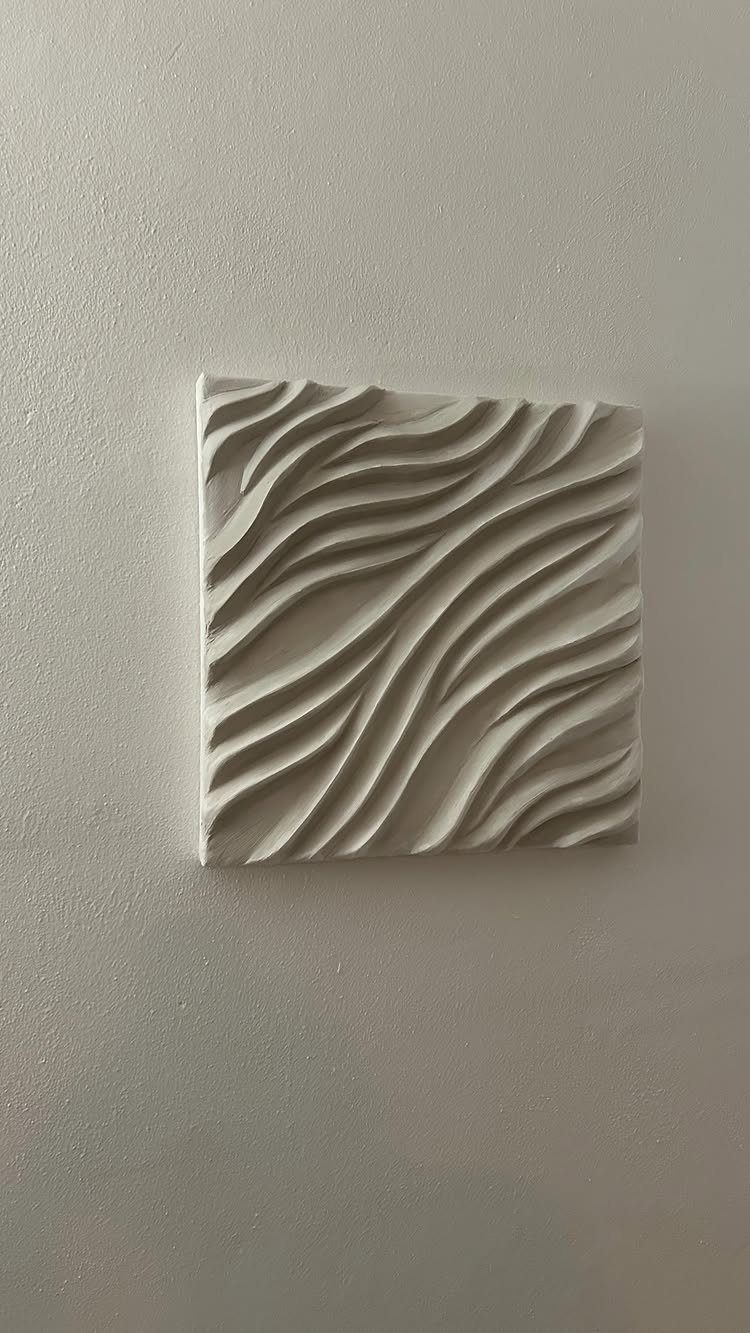
A single white relief sculpture with wave-like ridges catches light differently from every angle, which is the point of three-dimensional wall art.
I’ve seen similar work in resin, plaster and hand-carved wood; plaster is lightest for hanging, resin handles humidity if your bedroom runs damp. One large piece above the bed replaces the usual headboard or gallery cluster.
The risk is scale: too small and it looks like a forgotten tile, too large and it dominates sleep space.
I’d hang it at eye level from a seated position on the bed, not standing height, since that’s how you’ll actually see it.
16. Half-Wall Design
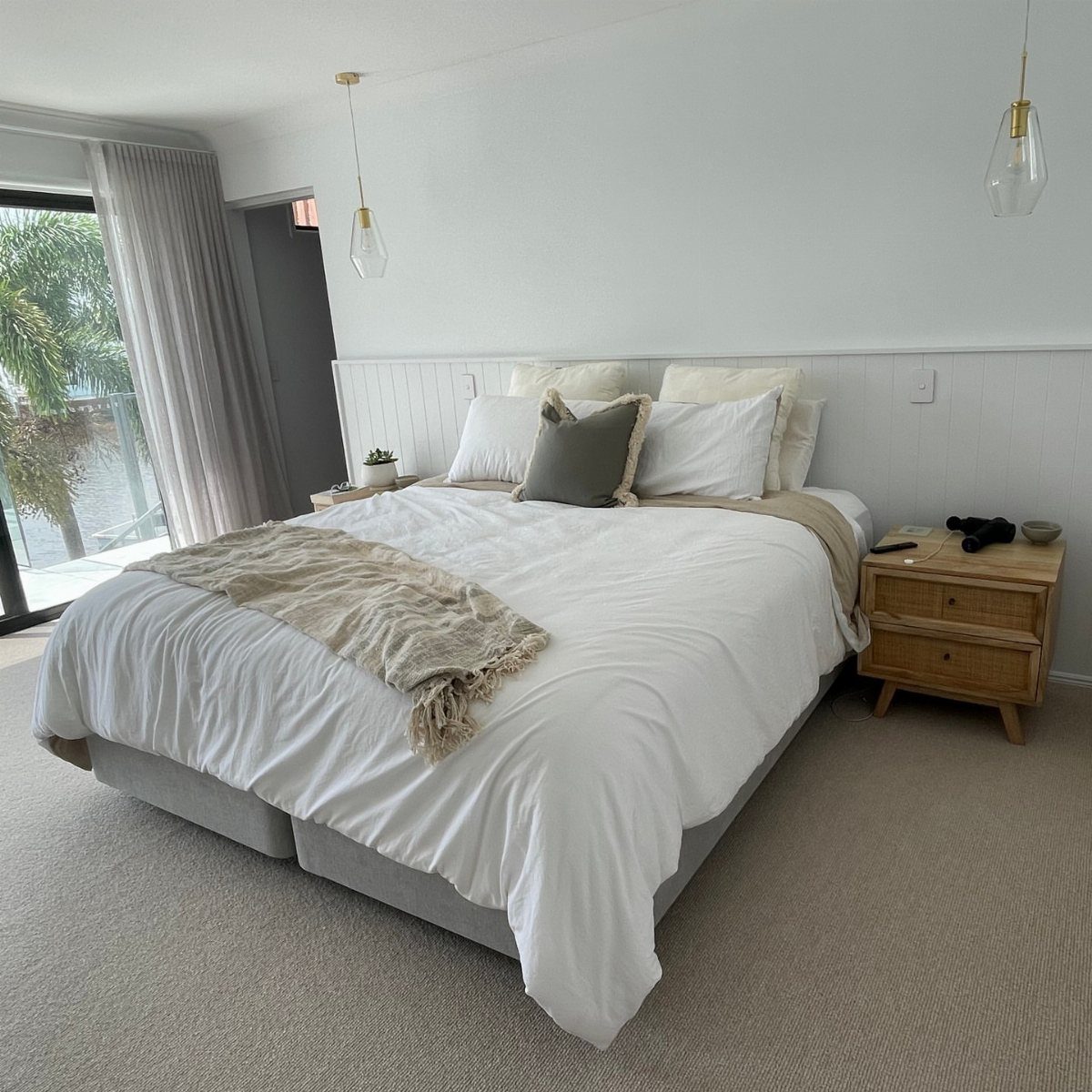
White vertical wainscoting covers only the lower half of this wall, leaving the upper portion plain and the whole room feeling taller than it is.
This is the cheapest way to get paneling’s effect; you’re buying half the material and doing half the cutting.
Standard MDF beadboard is cheap enough that even a queen-width wall behind a bed stays in the two-digit range for materials, plus trim to cap the top edge.
Paint the upper wall and lower panels the same color if you want quiet texture, or contrast them for more definition.
Peel-and-stick panels cut to chair-rail height keep this option open even in rentals; the right product lifts off clean when you move out. Best for rooms with tall ceilings, where the split has room to breathe.
17. Stone or Brick Bedroom Wall
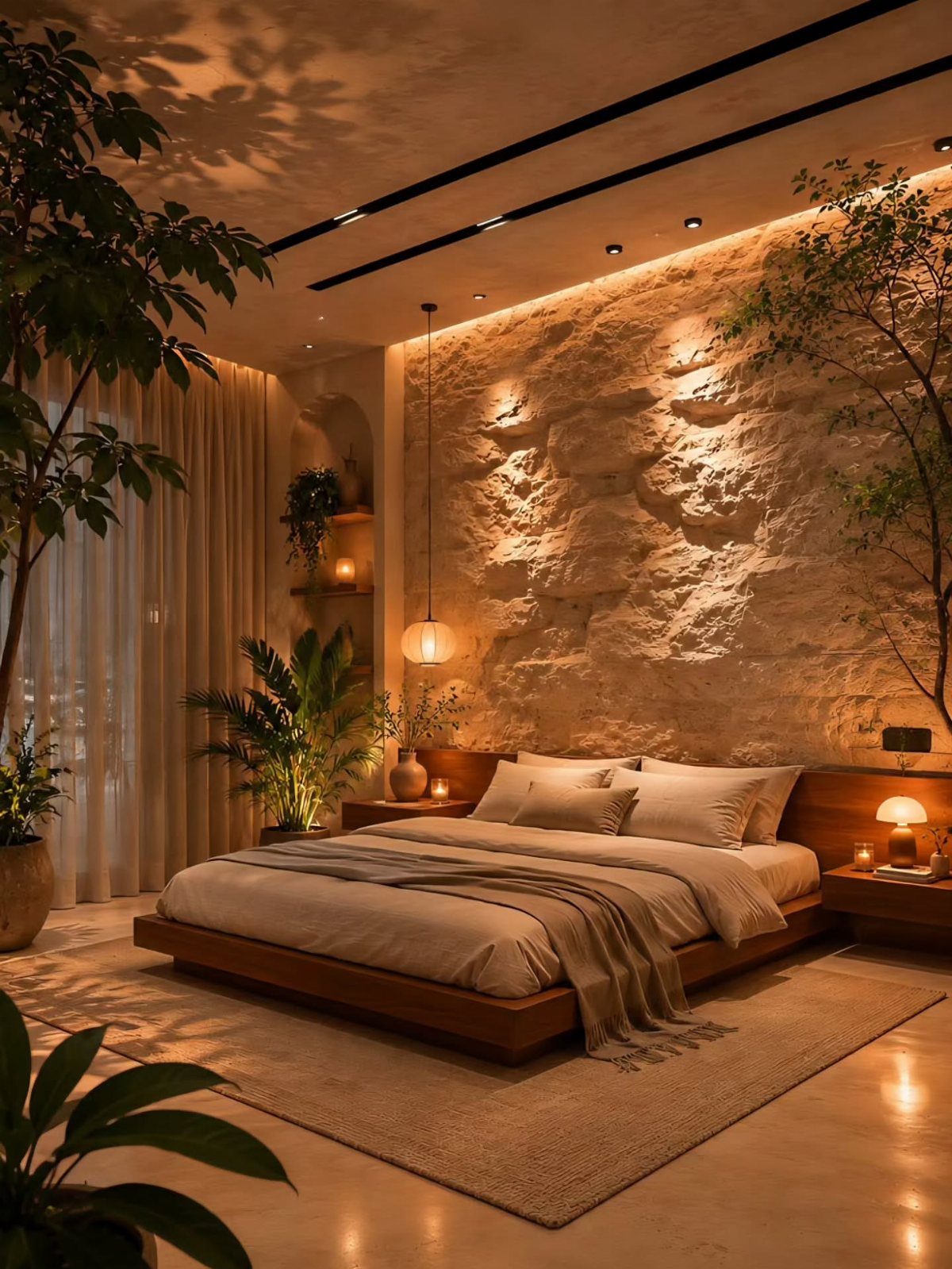
A rough stone wall behind a low platform bed, lit by warm cove lighting, creates the kind of cocoon that makes early mornings harder.
The warmth comes from the lighting as much as the material: aim for 2700K bulbs in any fixture washing upward or across the texture.
Wood furniture in medium tones balances the coolness of gray stone; too much white nearby reads sterile. I’d only do this on the wall behind the bed, not wrapping the room, or it becomes a cave.
18. Faux Marble Accent Wall
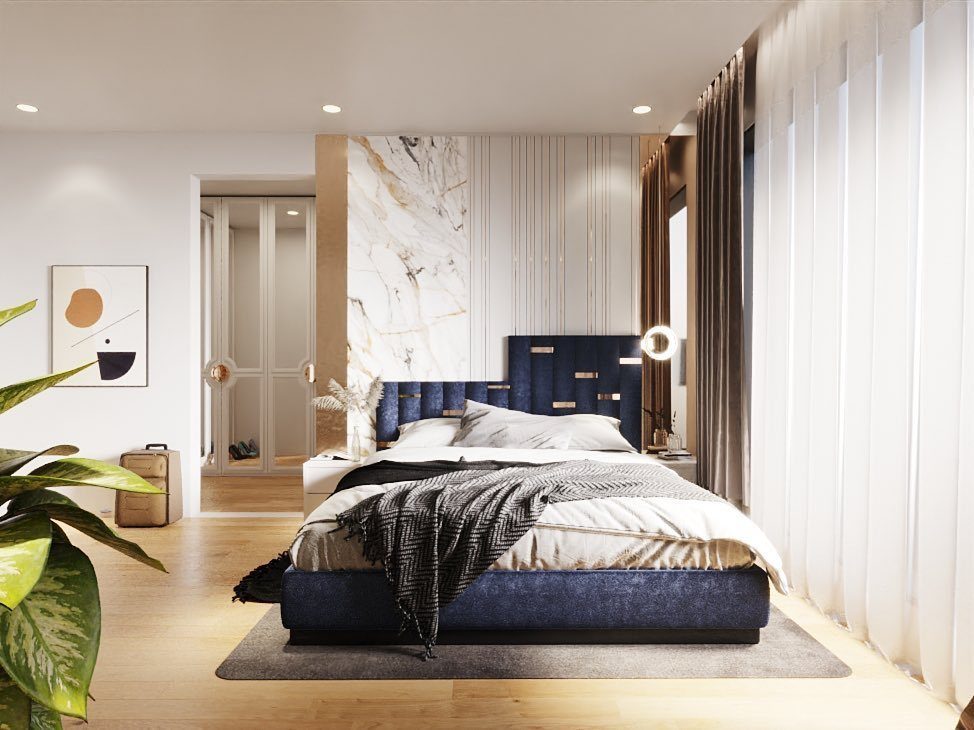
Venitto and Sparko lines mimic Calacatta’s soft gray veins with a gloss that catches window light, and they skip the sealing and staining that actual marble demands in a bedroom where morning coffee happens.
A single slab wall runs high installed, but large-format porcelain tile gets close for a lot less if you accept grout lines. Metallic accents on lamps or pulls push this toward glamour; matte black hardware pulls it back to modern.
I’d choose this for a primary bedroom with good natural light, where the stone has something to reflect. In a dim room it goes flat and reads as gray mush.
19. Oversized Abstract Canvas Art
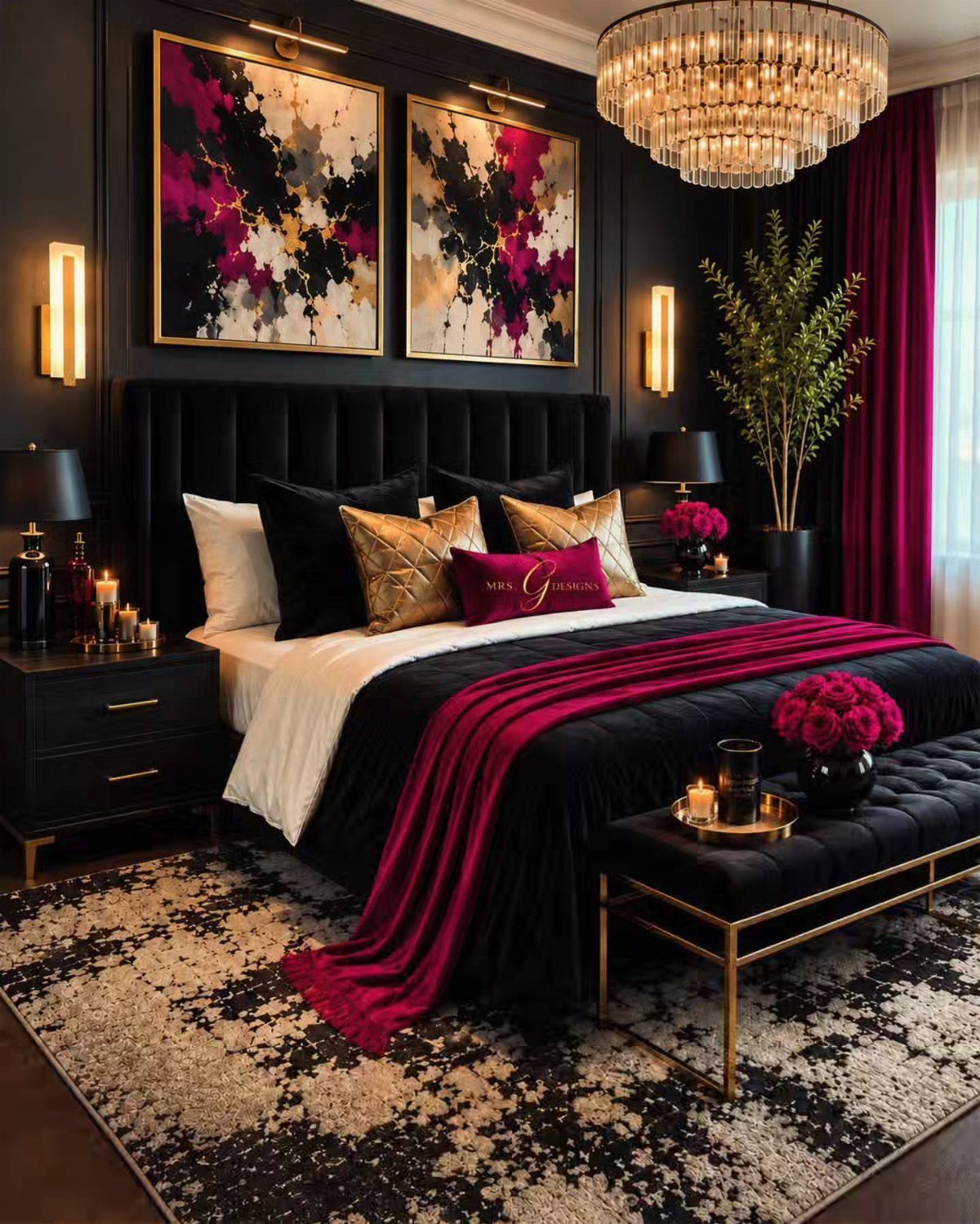
Two oversized abstract canvases hung side by side over a bed give the wall a single focal point without the fuss of a gallery arrangement.
Two matching frames with palettes that talk to each other read as one piece; I’d rather spend on one large statement than on a cluster of smaller prints that fight for attention.
Brass picture lights are a nice touch if your wiring allows, but a plug-in art light from the hardware store does the same job for cheap.
This suits renters who can patch a few anchor holes when they leave, and anyone whose bed sits against the only wall wide enough for furniture.
Ceiling height matters; with a tall headboard and a chandelier, you need breathing room above the art or the whole stack feels squeezed.
20. Fabric Tapestry Wall Hanging
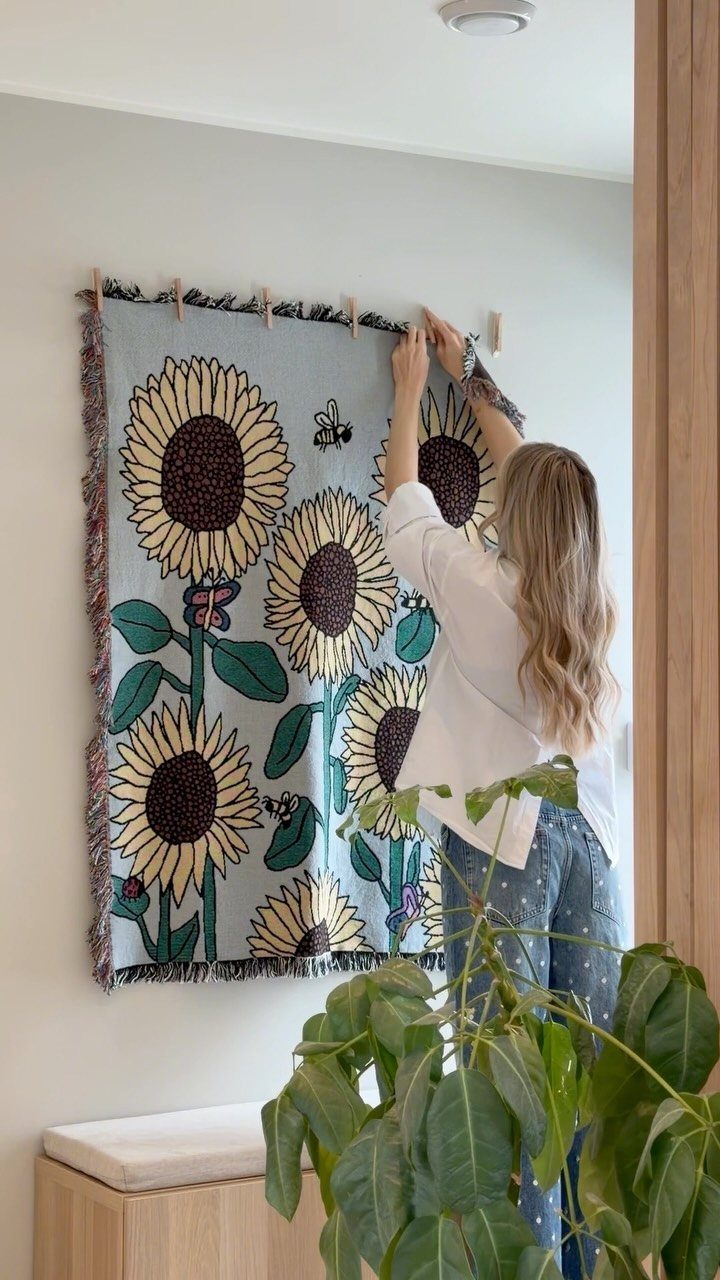
A tapestry hung from wooden clips skips the hardware store entirely.
A piece this light needs only two small nails or adhesive hooks; I’d use wooden clothespins or simple curtain rings on a dowel rod for a cleaner top edge than pegs.
Fabric stores and thrift shops are my first stops for yardage with enough pattern to carry a wall, usually cheap for a piece that dwarfs any poster.
This works for anyone who changes their mind often, since rolling and storing takes less space than a framed canvas. The casual look is the risk; it reads dorm-room if the fabric is thin or the print too busy.
I stick to heavier weaves and leave a few inches of drape at the bottom so it doesn’t hover like a beach towel.
Choosing the Right Wall Design
Start with how you actually use the room. Someone who reads before sleep needs different wall treatment than someone who watches TV in bed or rolls straight into morning yoga.
Small bedrooms benefit from light shades and minimal texture; the eye needs room to travel. Larger spaces can carry darker tones without feeling boxed in.
The wall behind the bed already draws attention by default, so it makes sense to put your effort there first: one textured or paneled surface reads as intentional, while treating every wall equally reads as none.
Match the material to your light source. North-facing rooms with limited sun need reflective or soft-color finishes.
Well-lit spaces can handle matte textures and deeper shades without turning gloomy. I tend toward wood finishes when I want a room to feel relaxed and lived-in; marble-look surfaces or geometric patterns read cleaner and more modern to me.
One statement wall with subtle surroundings beats competing patterns everywhere.
Importance of Wall Design
Walls occupy the largest visual real estate in a bedroom, yet they often get painted white and forgotten while the budget goes to furniture and bedding. That order of priority shows in the finished room.
Color sets mood directly. Lighter shades read calm and airy; darker ones bring depth and intimacy.
Texture prevents flatness, whether from paneling, fabric, or molding. A single feature wall with art, bold color, or dimensional material gives the eye a place to land and makes the whole space feel structured rather than scattered.
Function matters too. Built-in shelving, gallery arrangements, or ledges beside the bed add storage and display without eating floor space.
The wall is where personality shows most clearly, since furniture tends toward the practical. A bedroom without considered wall treatment reads as temporary, no matter how much was spent on the mattress.
Bedroom wall decor should blend both aesthetics and function. To strike the right balance for your space, take a holistic approach and consider how all the design features of the room work together.
Mixing Textures and Colors
Texture and pattern together create depth, but the combination needs restraint. A single rough surface, like fabric panels or fluted wood, gains more from smooth surroundings than from competing textures nearby.
Color works the same way. One bold element paired with neutrals carries further than multiple saturated tones fighting each other.
Dark colors and busier textures work in bigger rooms where the walls can handle the weight without closing in on you.
The bed wall is the natural place to layer, since you see it in glimpses rather than full-on. Wood-inspired finishes behind the bed warm the whole room; marble-look or geometric treatments there read as modern without coldness elsewhere.
Matte textures suit bright rooms; reflective or soft colors help dim ones. Two materials maximum on a single wall, one of them quiet, keeps the result from feeling busy.
Functional Wall Decor
Wall space that works harder than decoration alone makes sense in smaller bedrooms where every surface counts. A narrow ledge beside the bed holds a lamp, a book, and a small plant without requiring nightstand footprint.
Wall-mounted lights free the surface below for actual use.
Mirrors positioned to catch window light effectively add brightness the way a second window would. Shelving above or beside the bed stores items you’d otherwise pile on furniture.
The best functional pieces read as intentional design, not afterthought. A small shelf with a few objects you actually like looks better than a long one packed with stuff you forgot you owned.
Consider what you reach for in the first and last hours of the day, then mount it at hand height.
Frequently Asked Questions
What is the best wall design for a bedroom?
The wall behind your bed draws the eye anyway, so that is where a little work goes the farthest.
One bold wall beats decorating every surface; a gallery wall, textured panels, or statement wallpaper there sets the mood without overwhelming the room.
A small bedroom needs light colors and quiet texture to feel bigger; a larger room can take something with more heft, like stained wood slats or a stone accent.
What are some trendy bedroom wall ideas for 2026?
Textured panels, bold wallpaper, and nature-inspired designs are showing up most often in current projects. Vertical fluting and wood slat panels catch light differently throughout the day.
Oversized tropical murals behind the bed bring in pattern without the maintenance of plants. Geometric paint treatments using tape are also popular for renters who want impact without commitment.