I’ve battled black mold in carpet more times than I care to count, like that nightmare patch behind my couch after a pipe burst. Here’s what actually works. First, sniff around for that musty, earthy smell and peel back the carpet to check the padding underneath, because surface looks can fool you. Next, blast the area with dehumidifiers and fans until it’s bone-dry; moisture is mold’s best friend, and you’re cutting it off. Then suit up with an N95 mask and vacuum slowly with a true HEPA-filter machine to trap those sneaky spores. After that, spray equal parts white vinegar and water, let it sit, and sprinkle baking soda to zap odors and leftover dampness. Finally, fix any leaks, keep humidity low, and call pros if the mold has eaten deep into your subfloor. Some battles need professional backup. This method identifies and removes hidden mold that most people miss.
Find and Confirm Black Mold in Your Carpet
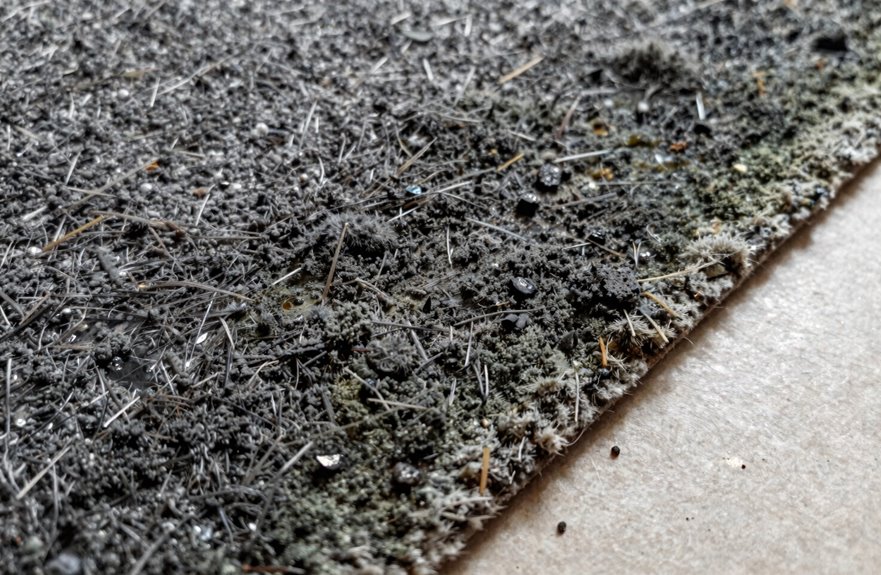
Where do I start when my nose catches that telltale musty, earthy odor from my living room floor? That musty smell is unmistakable, and I know something’s lurking beneath my feet.
I lift the carpet corner and find the fuzzy, greenish-black stuff colonizing my padding. Detection is tricky because black mold loves hiding in damp areas, spreading where I can’t see it. Visual checks aren’t enough; padding inspection reveals what’s actually underneath.
My friend ignored her exposure symptoms, including sneezing fits and chest tightness, and paid dearly. Health risks from mycotoxins are serious concerns. When serious mold growth appears, professional intervention is necessary. Some situations require professional expertise rather than DIY approaches.
Dry Black Mold Areas Completely Before Cleaning
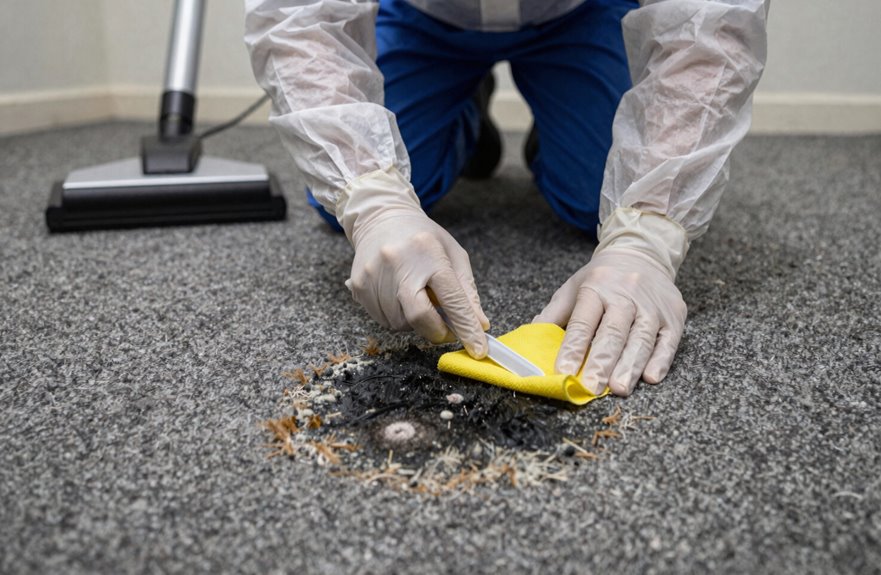
Before grabbing a scrub brush or mixing cleaning solutions, you need to address the fundamental issue: mold won’t be eliminated if any moisture remains. Mold growth in carpets thrives on dampness, so moisture removal must come first.
Use dehumidifiers and air movers while maintaining strict humidity control. Pay attention to subfloor drying as well. Peel back the carpet and check the padding. If anything feels damp, continue drying. Moisture meter readings provide accurate measurements rather than guesswork. Scrubbing wet mold causes spore dispersal and spreads contamination. Once you’ve removed all moisture and confirmed the area is completely dry through testing, you can proceed with black mold cleanup.
Vacuum Black Mold Spores With a HEPA Filter
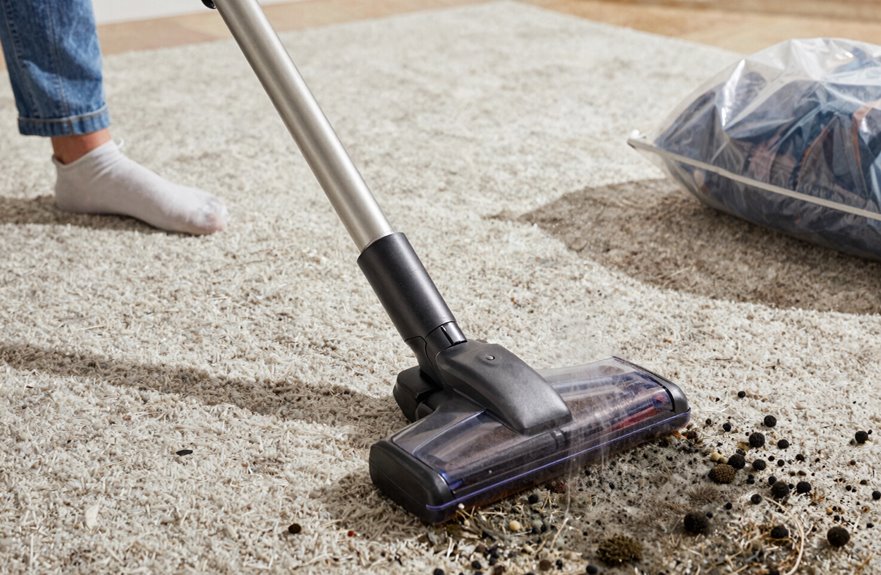
Now that surfaces are dry and ready, it’s time to remove those spores from the carpet. A regular vacuum will disperse black mold spores throughout the space, which you should avoid.
Here’s the recommended approach for spore containment:
- Suit up with protective gear, especially that N95 mask. This protects your respiratory system.
- Grab a true HEPA-filter vacuum (H13 or higher) with a sealed bag design for serious carpet mold removal.
- Work slowly across the surface; dry spores are easier for the HEPA vacuum’s suction to capture.
- Seal the used bag in a sealed container immediately, then wipe down the vacuum exterior to prevent cross-contamination.
Kill Remaining Black Mold With Vinegar or Cleaner
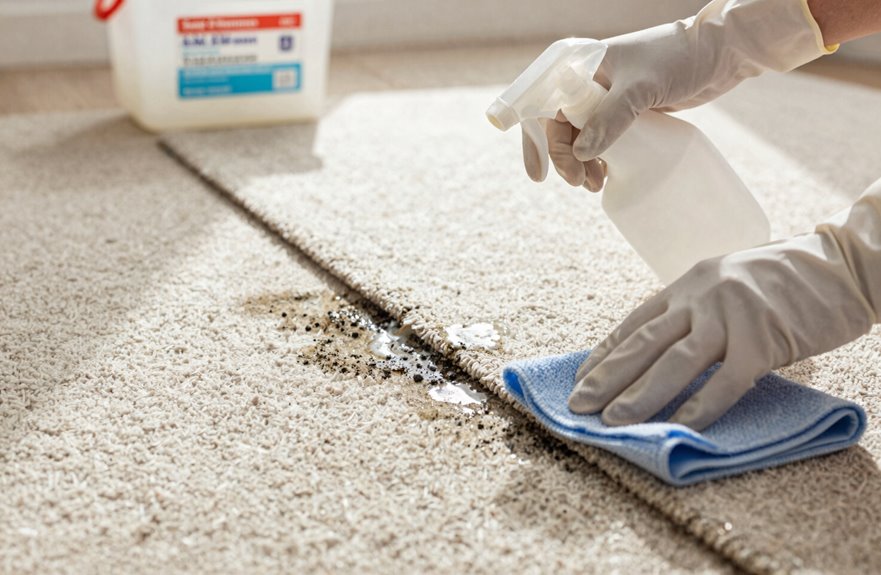
Because I just sucked up all those loose spores with my HEPA vacuum, I’m ready to attack whatever mold is still clinging to those carpet fibers. For this carpet treatment, I’m grabbing my spray bottle and mixing equal parts white vinegar and water. This DIY mold cleanup method tackles black mold without harsh chemicals. I spritz that vinegar cleaning solution generously, letting it sit. No vinegar? I’m reaching for 3% hydrogen peroxide, leaving it 10–15 minutes.
| Supply | Why I Swear By It | Pro Tip |
|---|---|---|
| Vinegar | Kills surface black mold, cheap, I’m already owning it | Don’t dilute too much, we’re not making salad dressing here! |
| Hydrogen peroxide | Backup punch for stubborn spots | Test first, I’m not trying to bleach my vintage finds |
| Baking soda | Deodorizes, sucks up leftover moisture | Sprinkle after, vacuum once dry—chef’s kiss! |
Facial protection and ventilation are essential. Wear a mask, gloves, eye gear, and open windows wide. If this black mold is deep in padding or subfloor, call professionals. Deep mold infestations require specialized equipment and expertise that DIY methods cannot address.
Keep Black Mold Out of Your Carpet for Good
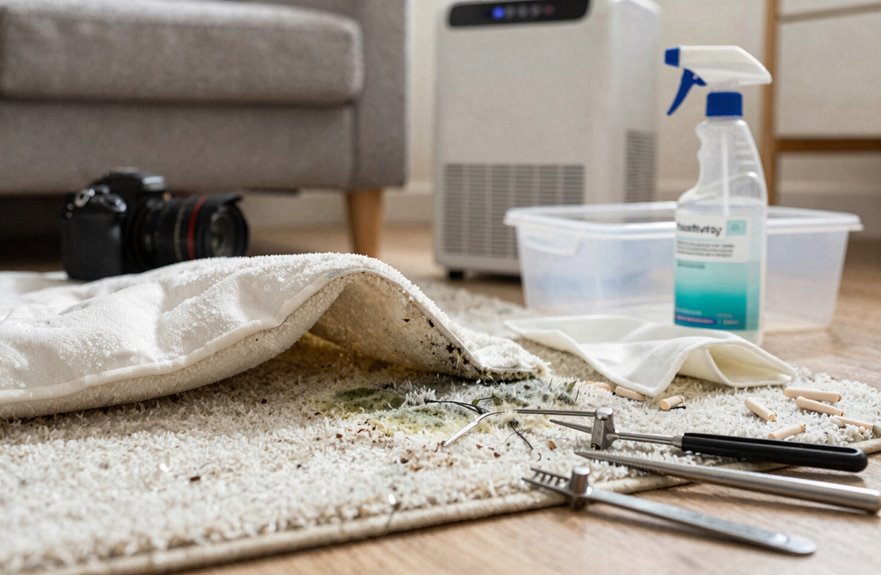
Since I’ve already fought that battle against black mold, I’m obsessed with making sure it never darkens my doorstep or my carpet again. Prevention isn’t glamorous, but it’s significantly cheaper than replacing a whole room of flooring.
Keeping mold spores at bay means getting a little obsessive about moisture. Here’s my battle-tested prevention checklist:
- I hunt down every moisture source like a detective: leaky pipes, window condensation, that weird spot by the AC unit. I fix it fast because black mold loves a good puddle party under carpet padding.
- I mastered drying techniques with industrial fans, dehumidifiers cranking, and windows open when humidity drops.
- I splurged on HEPA filtration including a vacuum and air purifier because trapping airborne troublemakers beats carpet contamination every time.
- I schedule professional mold remediation inspections yearly. Sometimes DIY courage isn’t enough, and early professional removal prevents serious damage.
Staying mold-free requires consistent attention to moisture sources and professional oversight to catch problems before they spread.