Wall paneling in a living room can run from free reclaimed lumber to interlocking tiles that cost enough to make you count the square feet twice.
What decides which route is yours: whether you own the wall or only hold the keys until next year, since some installs patch away with a little spackle and others demand commitment.
The cheapest option starts with pine boards ripped to narrow stock at the local yard, mounted on furring strips so cables can hide behind.
1. Navy Wall Paneling
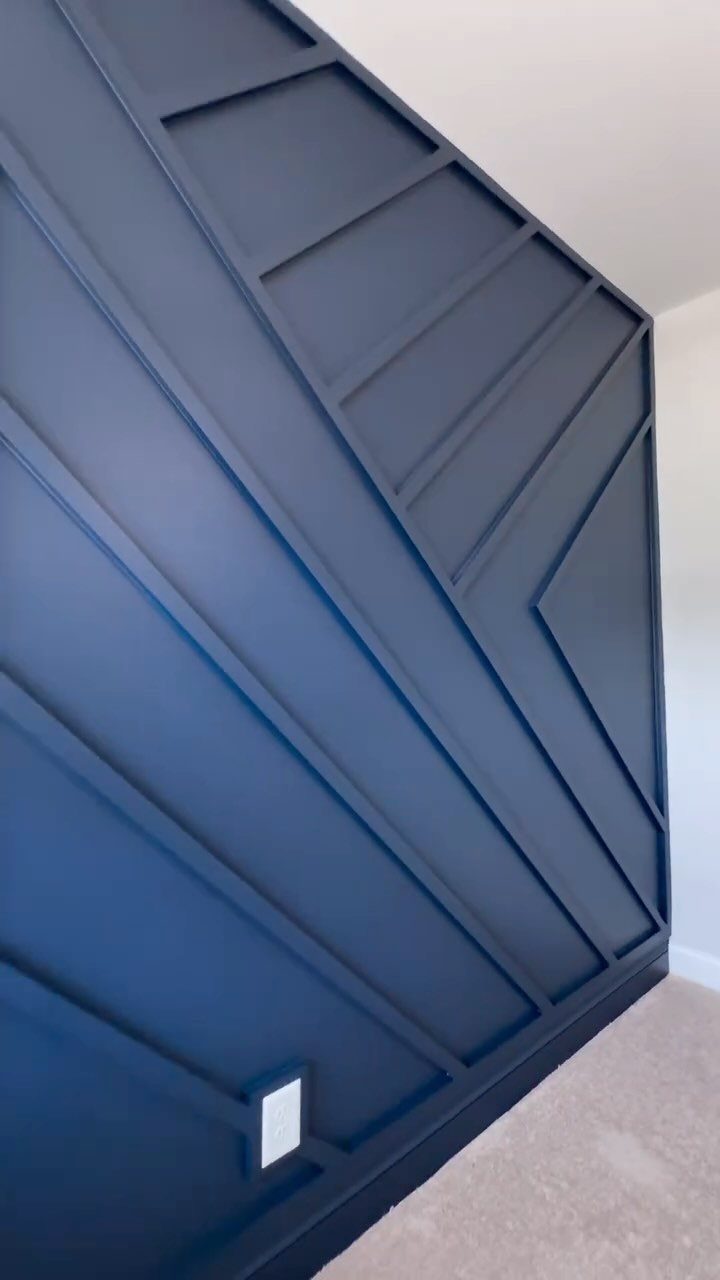
Navy wall paneling turns a geometric board-and-batten grid into something that reads as architecture rather than craft project. The depth works because the color does the heavy lifting; you are not relying on ornate molding to carry the room.
For a weekend build, paint the slats before they go up, then touch the joints after install. I would prime in a deep-base tinted toward the final shade, since navy covers poorly over white primer.
This one suits renters willing to invest a Saturday if their lease allows, or owners who want a focal wall without the cost of built-ins.
Plan your cuts before you commit to a pattern spacing, or you will end up with an outlet sitting where no slat wants to land.
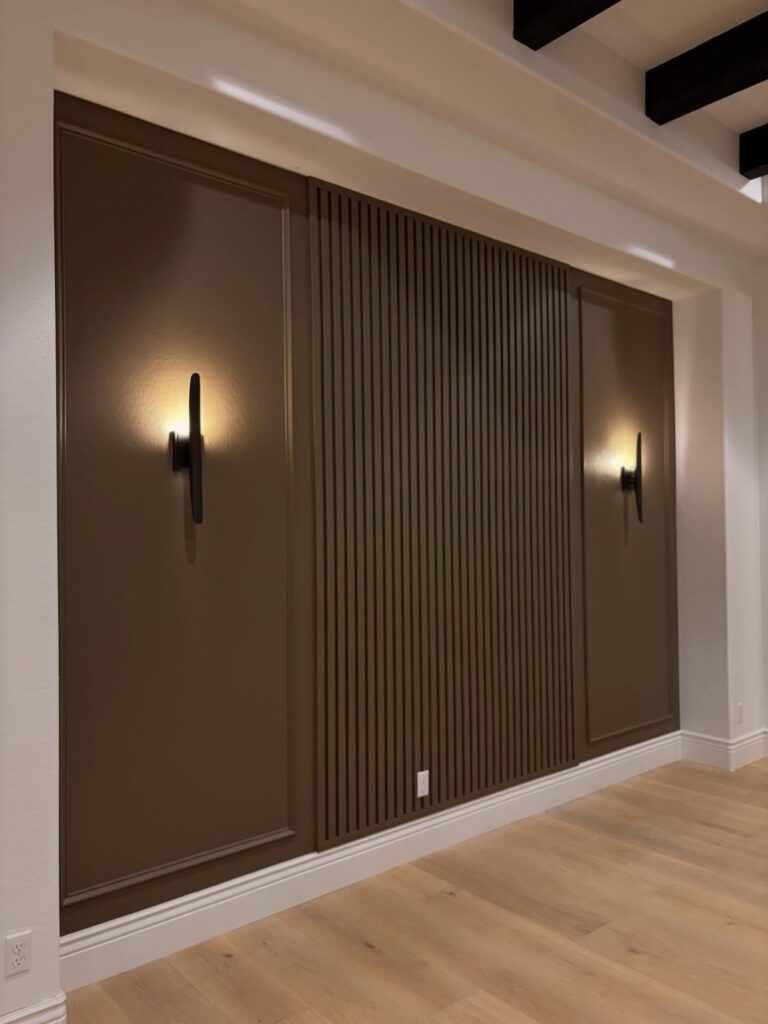
2. Vertical Slat Panels
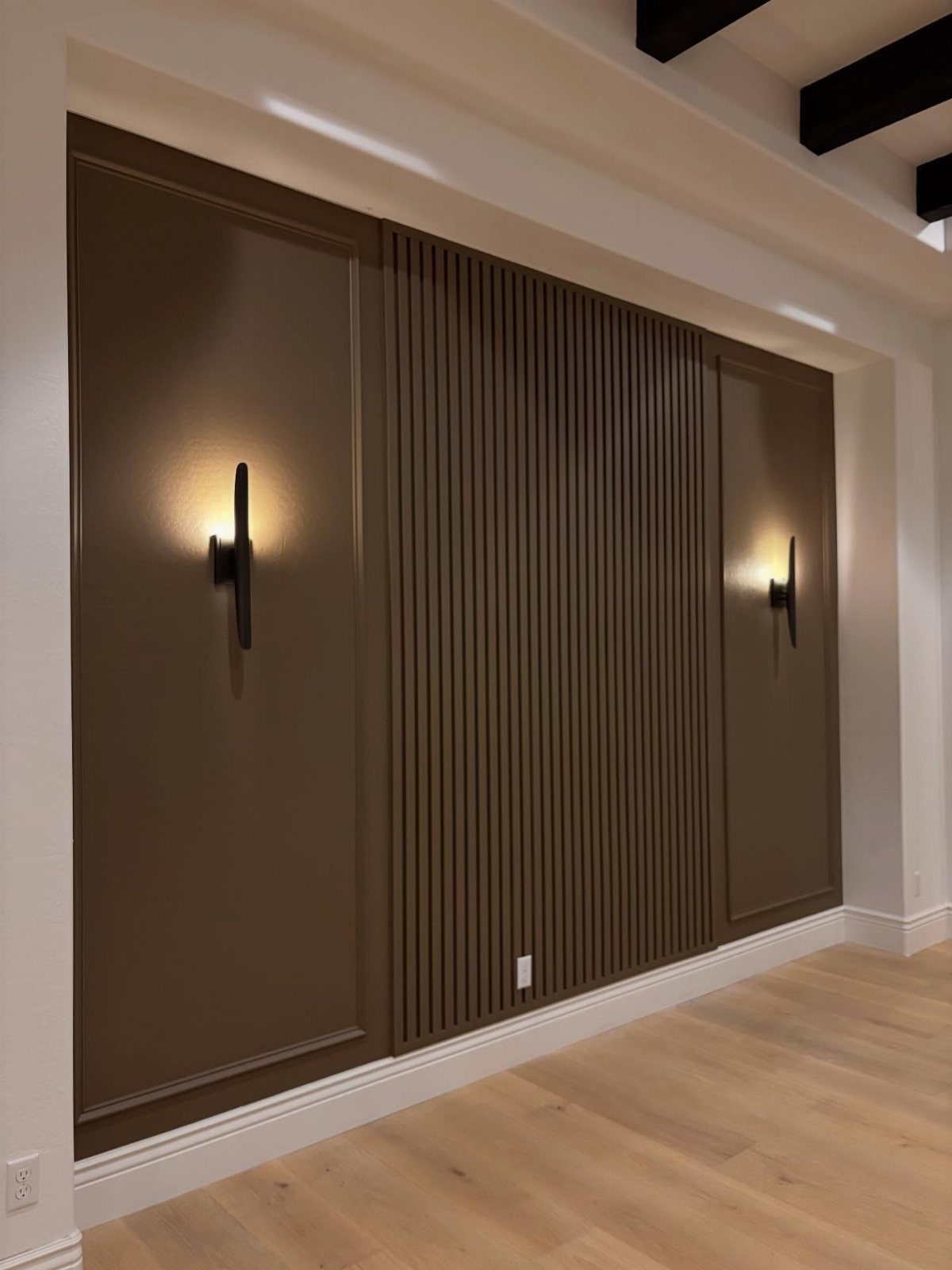
Vertical slat panels draw the eye up, which matters when your living room is the size most builders hand first-time buyers. Slats centered between traditional raised panels look sharp, but the slats alone do the work if budget is tight.
Pine boards ripped to narrow stock run cheap at the local yard; the real math is in how many slats you need across the span and what gap you can live with.
Mount on furring strips so cables can run behind. Dust settles in the gaps, so a vacuum brush attachment lives near my slat wall now.
Small rooms, low ceilings, renters who can patch screw holes later: this is their move.
3. Textured MDF Panels
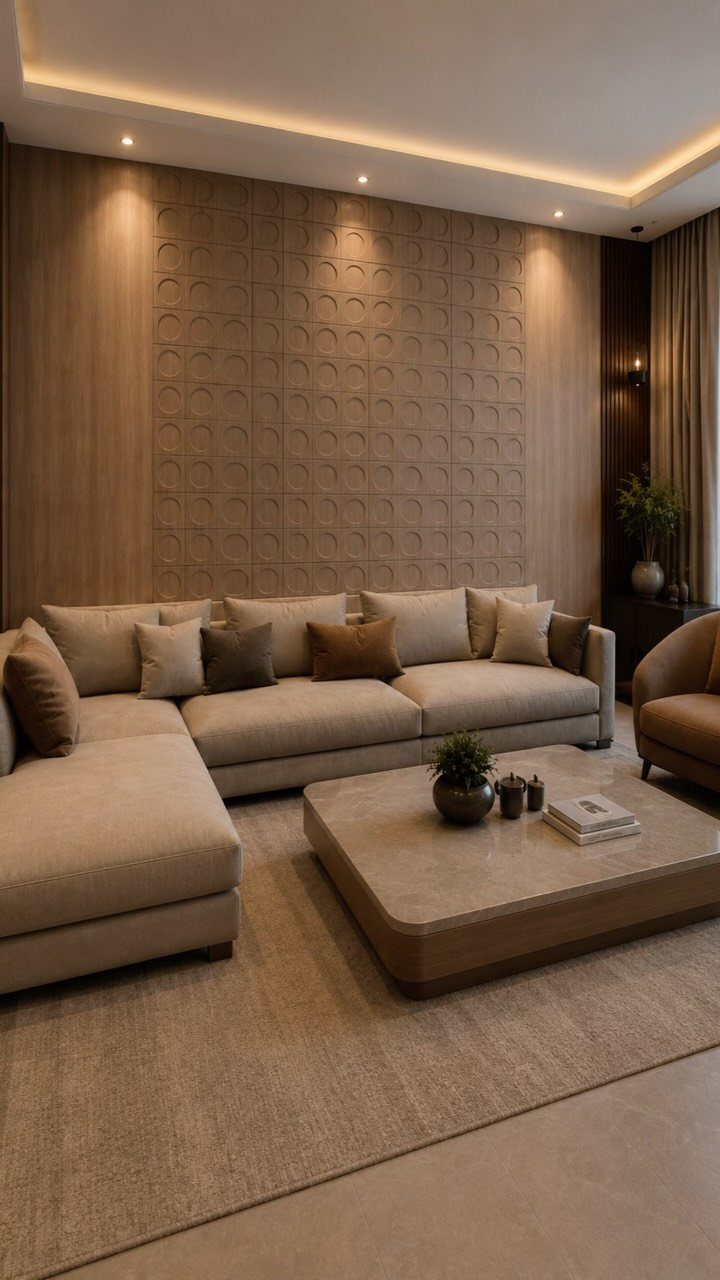
Textured MDF panels give you the geometry of carved wood at the price of pressed fiber. A circular grid reads as mid-century modern without demanding authentic teak prices.
MDF takes paint well, so the warm tone visible here is a stainable primer or a tinted lacquer, not the raw board.
Handle the dust during cutting; my first attempt coated the garage in a fine layer that lingered for months. A jigsaw with a fine blade works for the circular cuts if you lack a CNC contact.
Renters should skip this one; the weight and adhesive make it a commitment.
4. Wainscoting
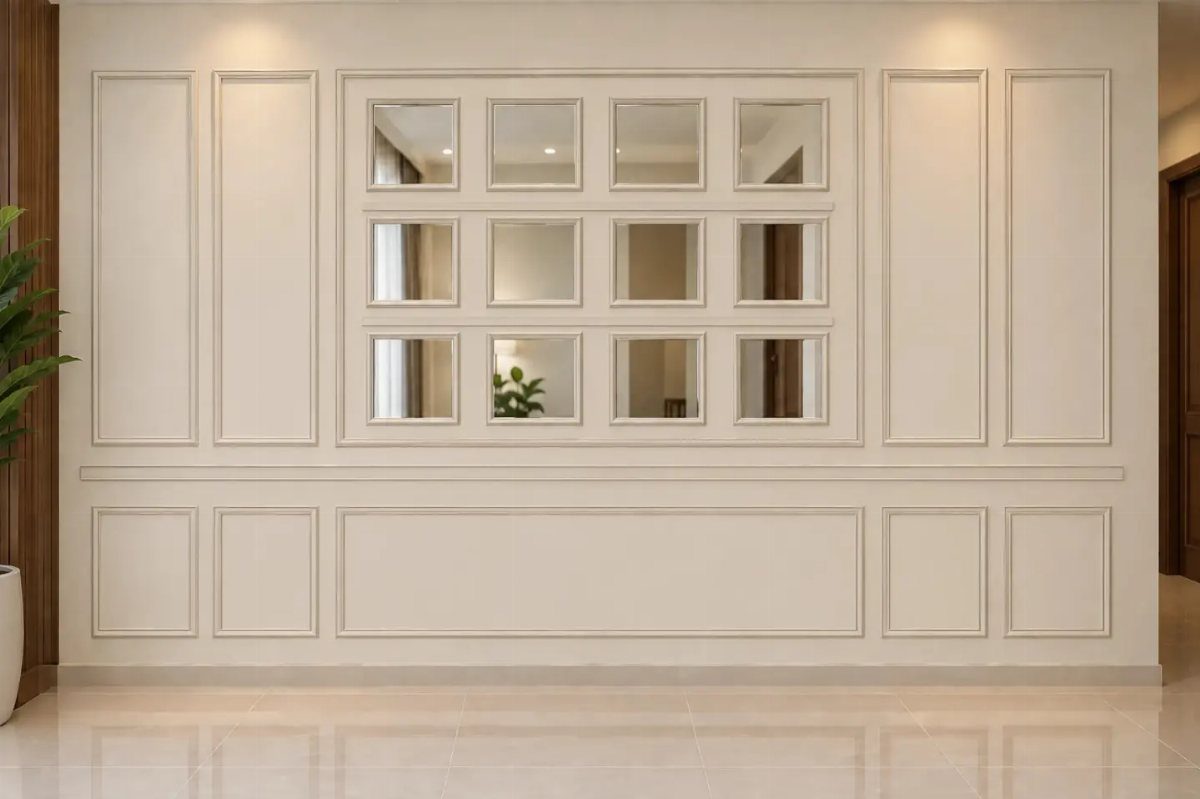
Wainscoting never left; it just waited for someone to stop painting it cream.
The grid of mirrors set into raised panels here is traditional craft, but the same molding profiles in a saturated color against white walls read as current without the formality.
Standard chair rail height is low enough to feel safe, though I have pushed mine higher in rooms with tall ceilings and preferred the proportion.
MDF molding blanks run cheap per foot; the labor is in the miter joints, not the material. Paint the panels before install, caulk after, then final coat.
This one rewards patience and a miter saw; rushed joints telegraph across the room. Best for owners who plan to stay, since the return is in daily use, not resale math.
5. 3D Geometric Panels
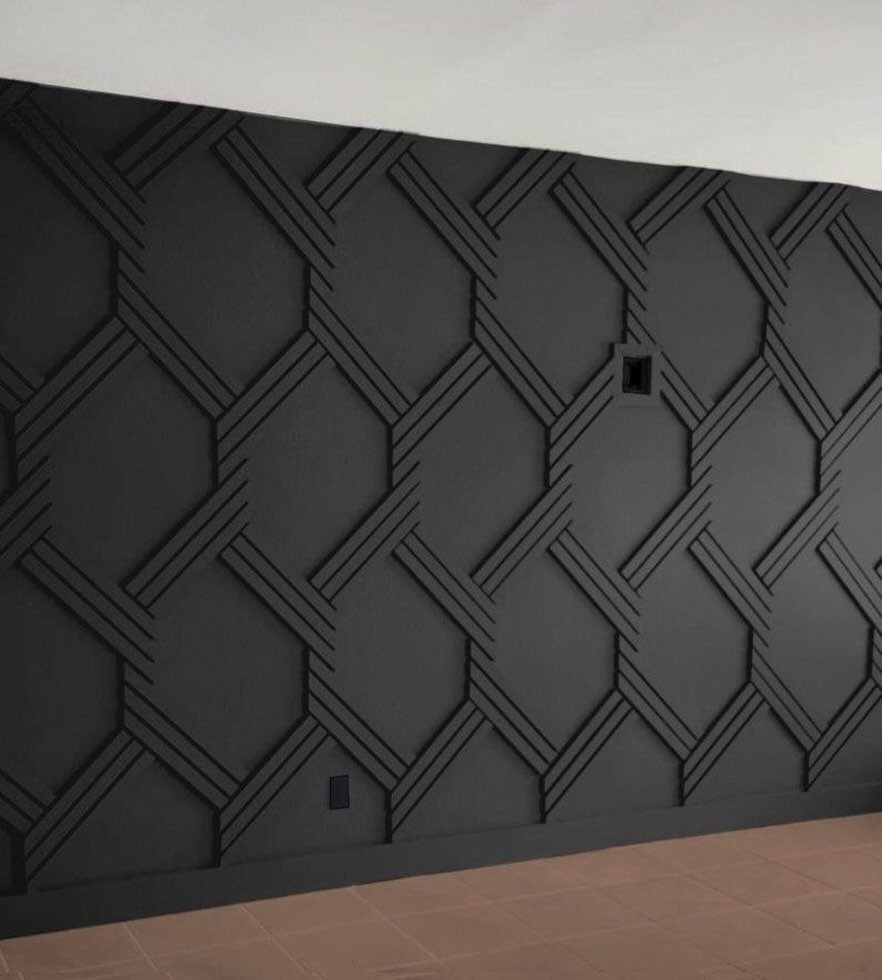
3D geometric panels need light to function; without it, a charcoal surface reads as flat texture rather than sculpted depth.
The hexagonal relief here is likely molded polyurethane or routed MDF, both available in interlocking 24×24-inch tiles that install with construction adhesive.
My preference is for the matte black finish shown, since gloss catches every imperfection in the wall behind.
In a sparsely furnished room, this becomes the entire visual program; add too much competing furniture and the eye has nowhere to rest. North-facing rooms or those with single windows should consider supplemental lighting before committing.
Cost per square foot for the tiles alone is enough to make you pause and count the area twice.
6. Reclaimed Wood Panels
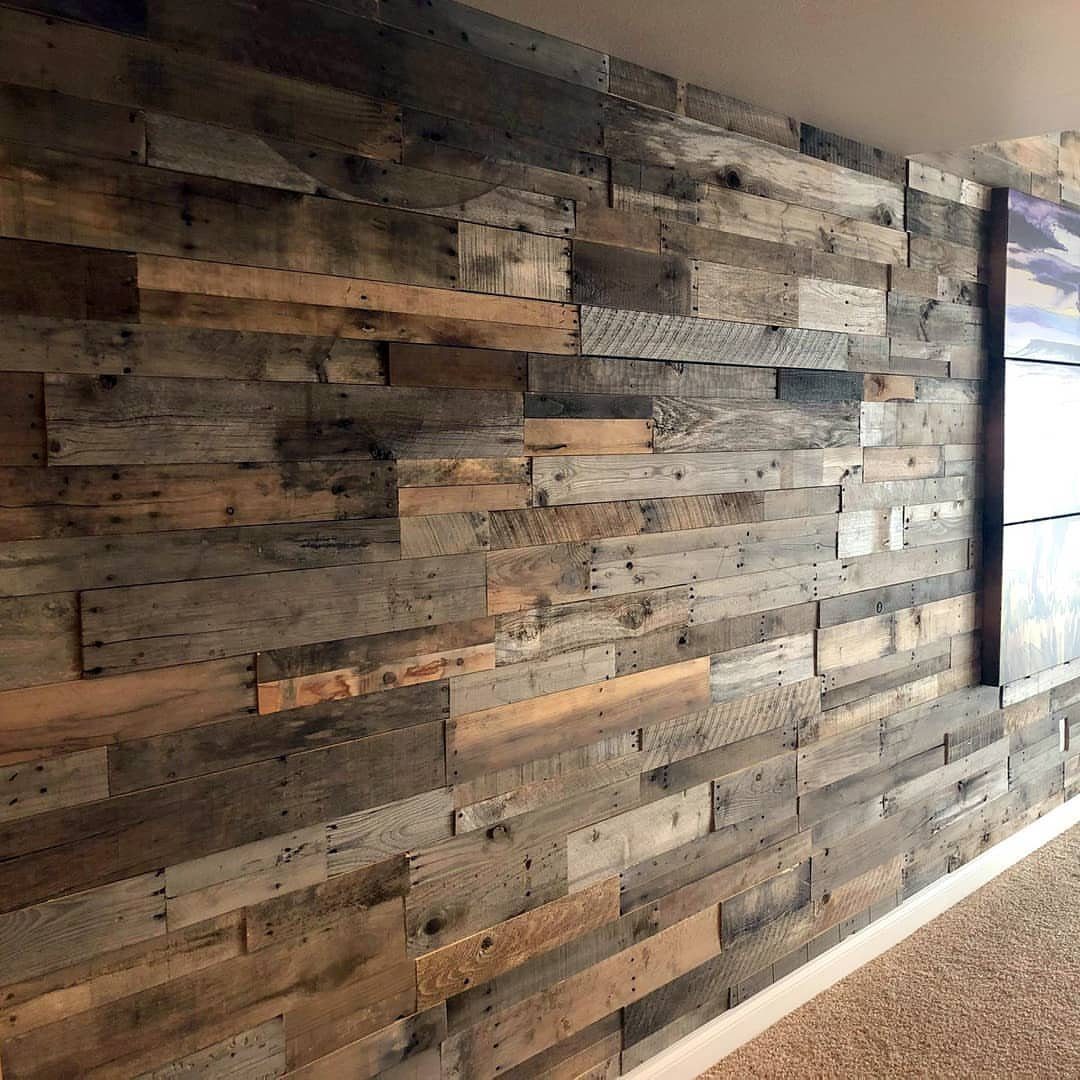
Reclaimed wood panels carry the irregularity that factory-milled boards spend money trying to fake. Varying widths, greyed patina, and occasional nail holes are features, not flaws, though they demand a level substructure since old lumber rarely is.
I have pulled barn wood that measured thick on one end and thin on the other; build your furring strip spacing to the narrowest point.
Seal after install with a matte poly or hardwax oil, since splinters from century-old oak are not romantic in practice.
Cost is variable, running from free if you have a source and a truck to salvage yard prices that add up fast once you count the square feet.
This is for owners with time to curate, not renters on a Saturday deadline.
7. Grey Grid Wall Paneling
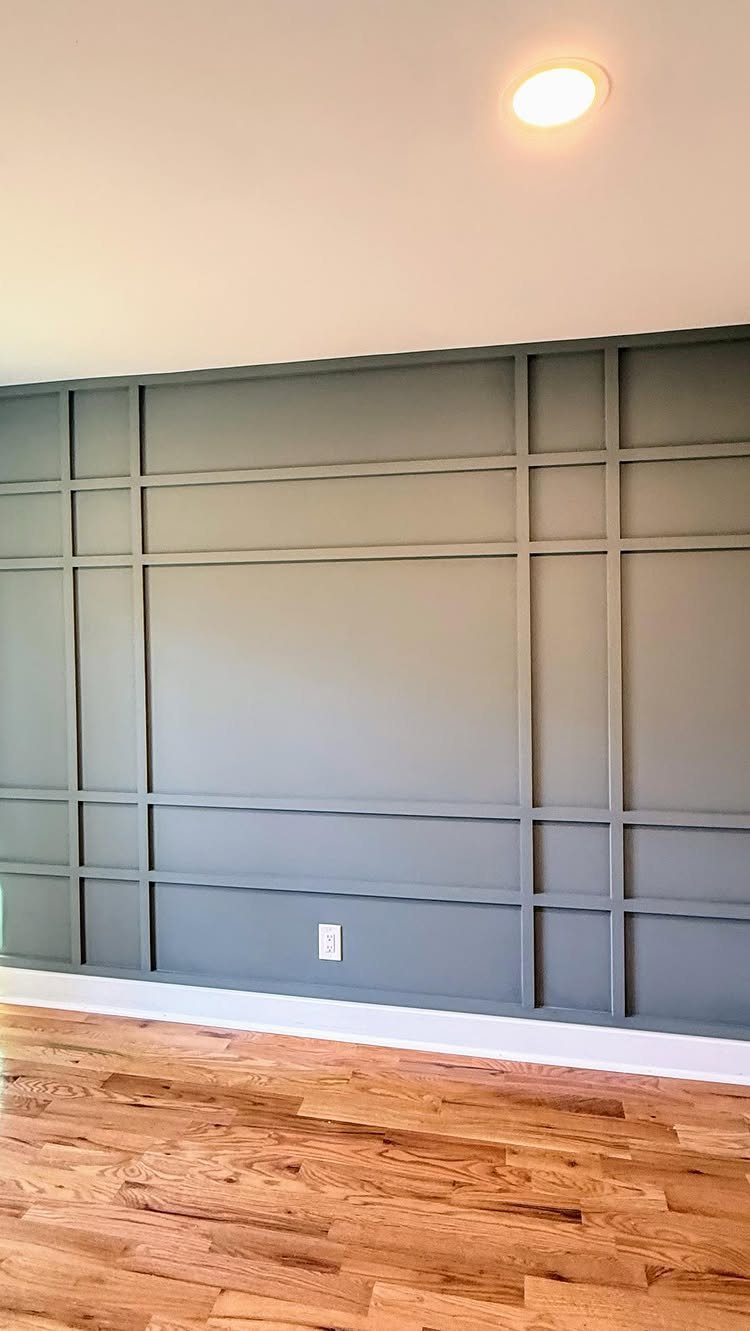
Grey grid wall paneling turns a flat wall into a shallow relief of raised rectangles without the ornate busyness of traditional molding.
Dark grey paint that reads almost charcoal hides shadows and makes the grid feel like architecture rather than decoration.
This suits renters who can patch nail holes later: the panels attach with construction adhesive and a few brad nails, and cutting the grid yourself keeps the cost in MDF strips and paint reasonable.
Prefab kits cost more but save a weekend.
Light floors help here. The contrast between pale oak and dark grey is what keeps the wall from swallowing the room.
I’d size each rectangle generous for the ceiling height; anything smaller starts to look busy.
8. Grey Fluted Wall Paneling
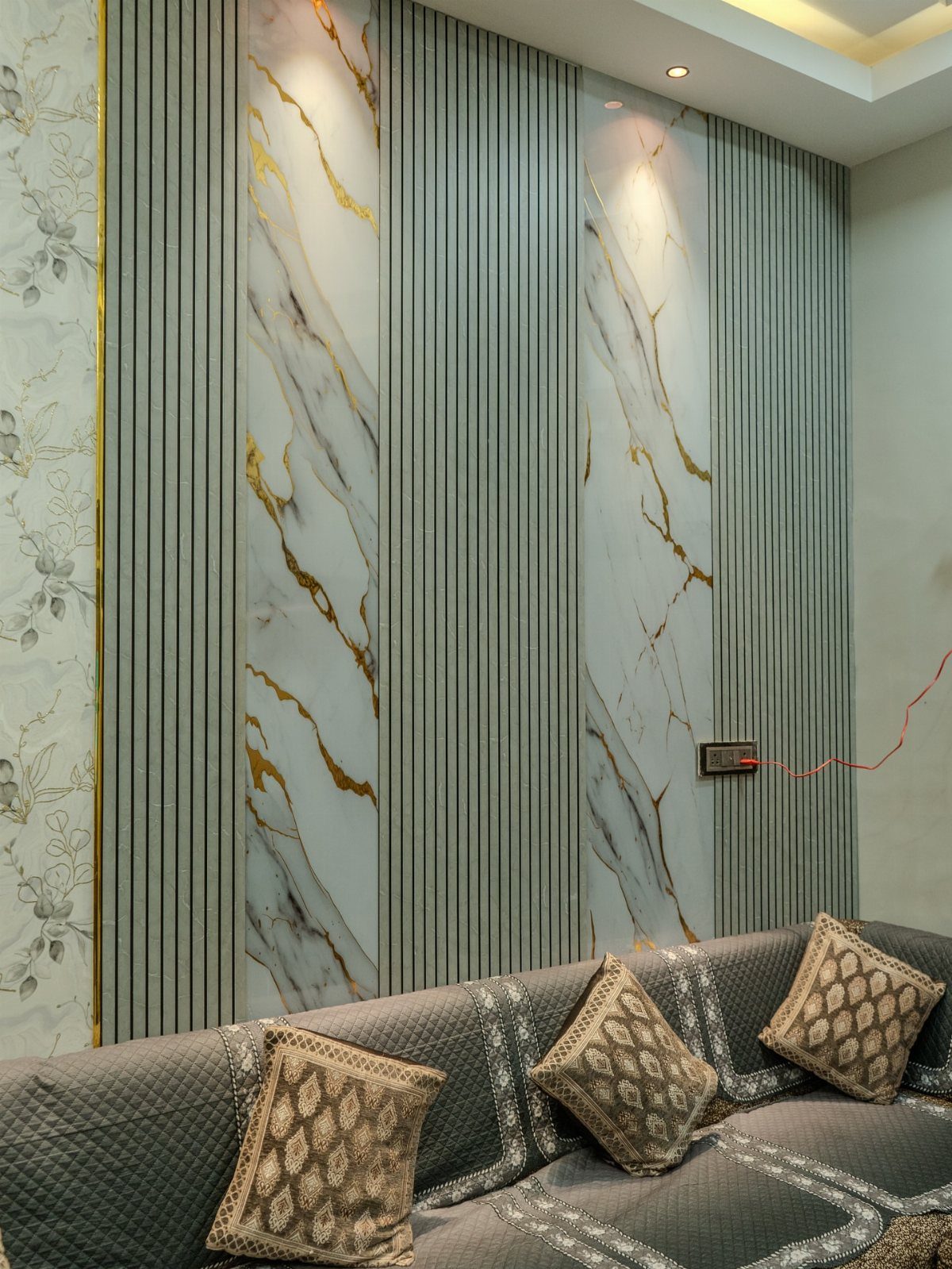
Fluted panels draw the eye upward, which matters in living rooms where the sofa usually wins attention.
Installation takes a level and patience. Each flute must sit straight or the mistake telegraphs across the whole wall; I’d dry-fit the full run before gluing anything.
Budget 2 days: 1 to cut and prime, 1 to install and touch up.
For hands that aren’t steady with caulk, skip them and paint the flutes in a single grey with a satin finish. The texture still reads, and the wall survives a spilled drink.
This one trades quiet for impact. Small rooms feel smaller behind vertical lines, so I’d keep it to the wall behind the sofa and leave the rest alone.
Frequently Asked Questions
Is panelling outdated in 2026?
No, wall paneling is not outdated. Wainscoting and board-and-batten still show up in rooms that look pulled together, not dated, when the scale and color match the space.
Navy board-and-batten grids, vertical slat panels, and grey grid systems all read as current when color and proportion are handled with intention.
Which wall panelling is best for a living room?
Navy wall paneling is trending for its bold aesthetic, though the best choice depends on your room and constraints. Match the material to your ceiling height, light levels, and whether you own the place.
Should you panel all walls in a living room?
Not necessarily. An accent wall often delivers more impact than wrapping the room, and it keeps the space from feeling closed in.
I would keep 3D geometric panels or fluted treatments to the wall behind the sofa; covering every surface risks making the eye work too hard to find a resting place.
Light floors and adjacent white walls help a dark paneled wall breathe.
Is it cheaper to panel or drywall?
Paneling can be more cost-effective depending on materials and whether you do the labor yourself. Drywall finishing with skim coats and sanding carries its own labor cost that paneling sometimes avoids.